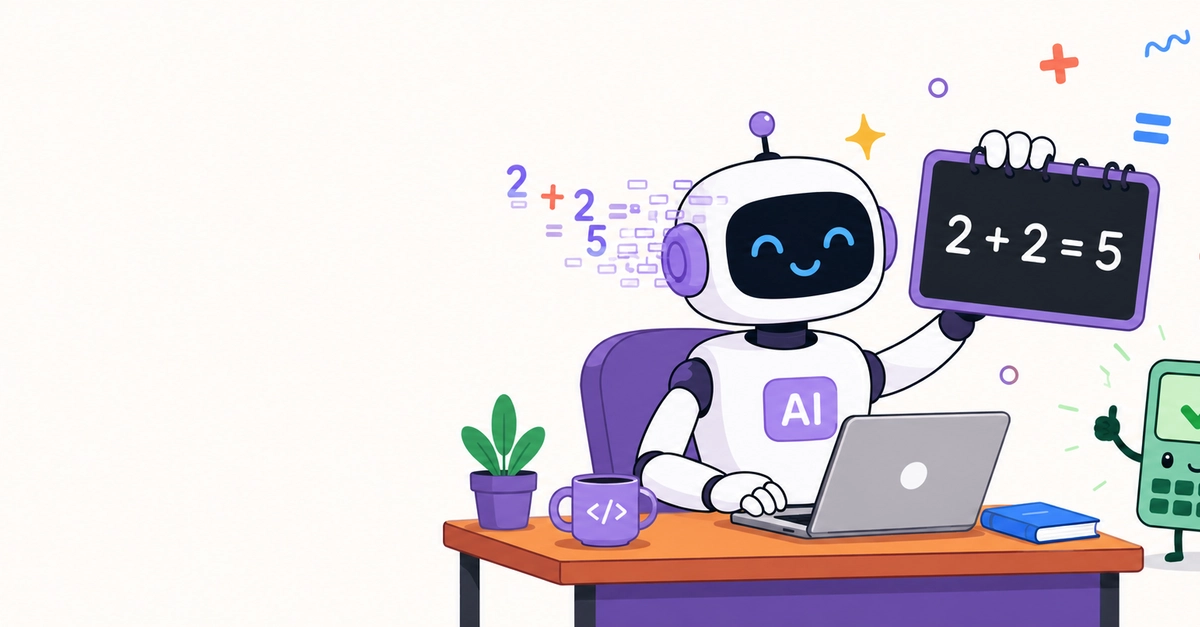
You've probably had this exact moment. You ask an AI a math question. It lays out the steps beautifully, explains the logic like a patient tutor, walks you through each stage with total composure — and then hands you a final number that's just… wrong. Not wildly wrong, usually. Confidently, plausibly, subtly wrong. The kind of wrong you might not even catch.
It feels absurd. How can something that writes working code, explains quantum physics, drafts legal arguments, and reasons through genuinely hard problems fumble arithmetic that a $2 calculator nailed in 1975?
The instinct is to think the model is "just not good at math yet" — a gap the next version will close. But that's not really it. The truth is more interesting: the AI is doing something completely different from what you assume it's doing when it "solves" a math problem. It was never calculating in the first place.
Once you see what's actually happening under the hood, the mistakes stop being mysterious and become totally predictable — and, crucially, easy to work around. Let's break it down, no math degree required.
The Core Idea: An LLM Doesn't Calculate — It Predicts