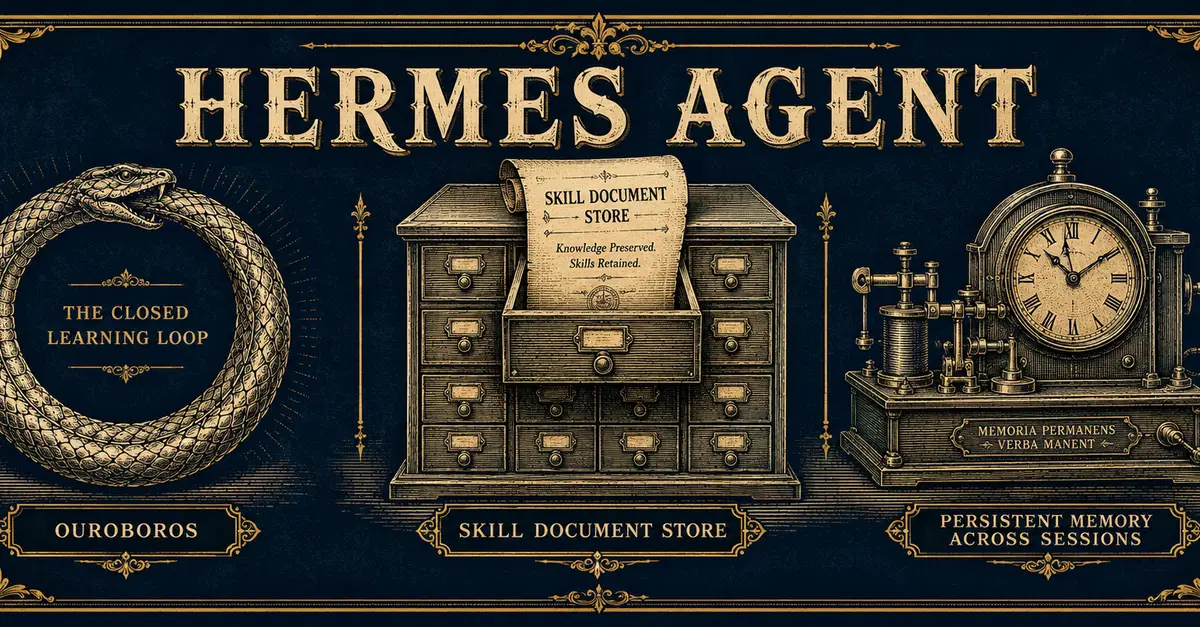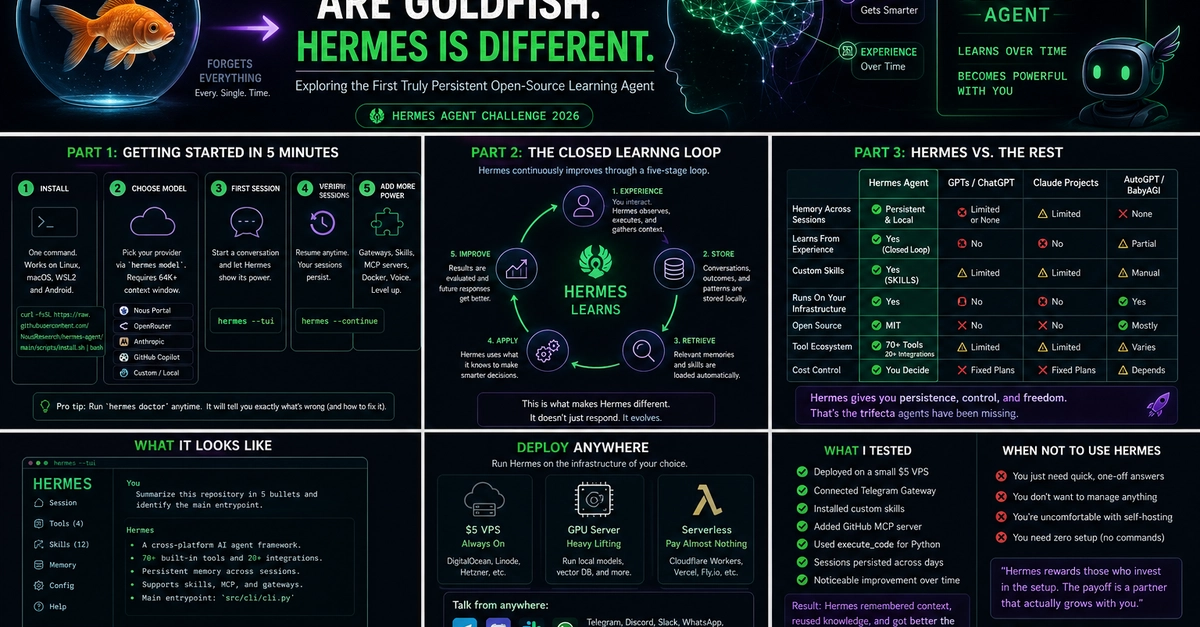
Most agent frameworks treat capabilities as static. You define tools, wire up a model, and deploy. Hermes Agent from Nous Research takes a different approach: agents that modify their own capabilities through recursive learning loops. The architectural distinction between the model and the harness becomes critical when an agent can rewrite parts of its own execution environment.
Jeffrey Quesnelle, CTO at Nous Research, discussed this boundary on Practical AI. The conversation reveals infrastructure challenges that emerge when agents move from scripted workflows to autonomous improvement cycles. This is not about model fine-tuning. This is about the plumbing needed when an agent can add tools, adjust reasoning patterns, or modify state management primitives while running.
The Model vs. Harness Boundary
Traditional agent architectures conflate two concerns:
Model capabilities: What the LLM can reason about, which tools it knows exist, how it structures responses.