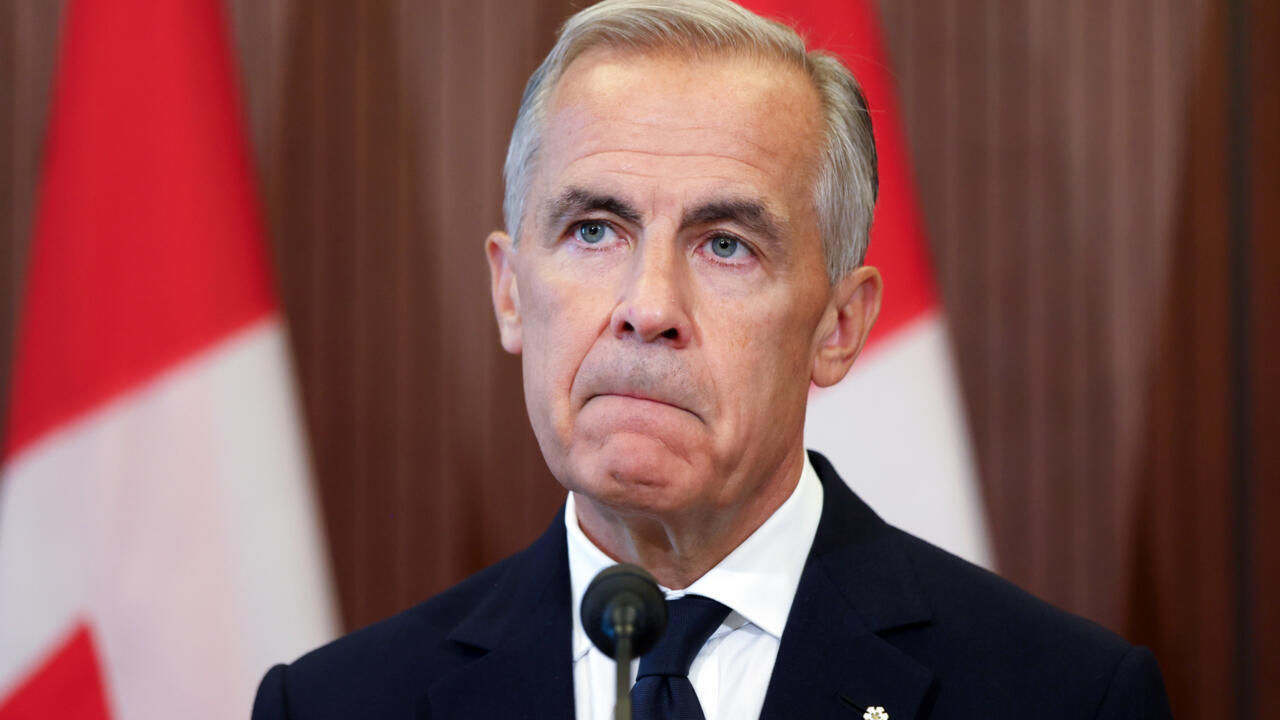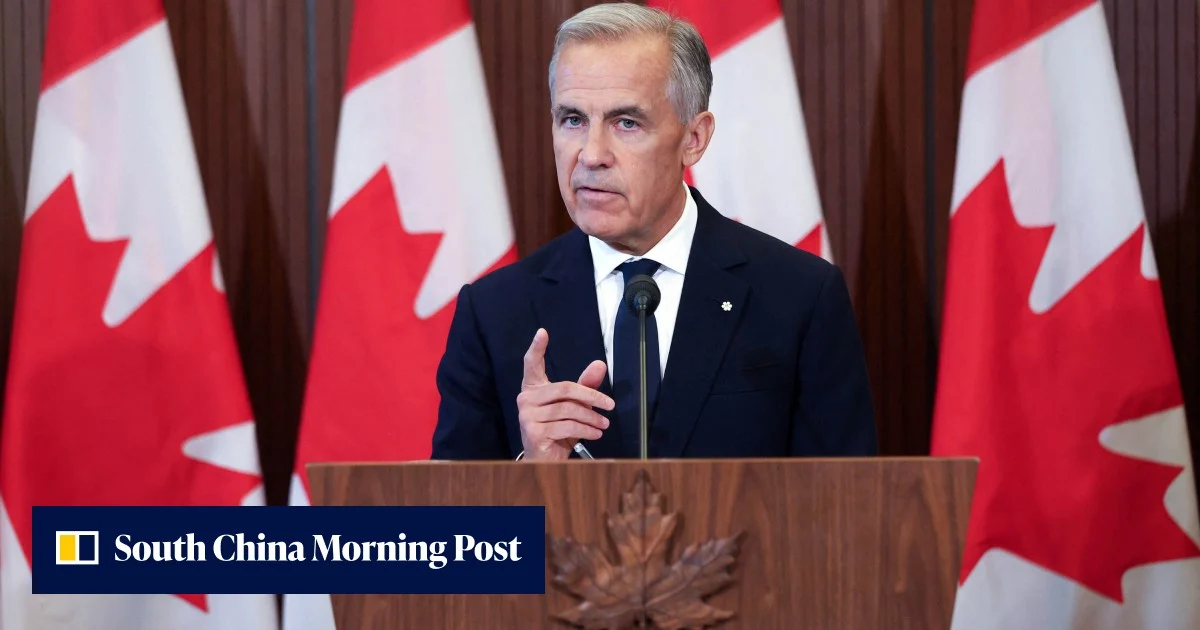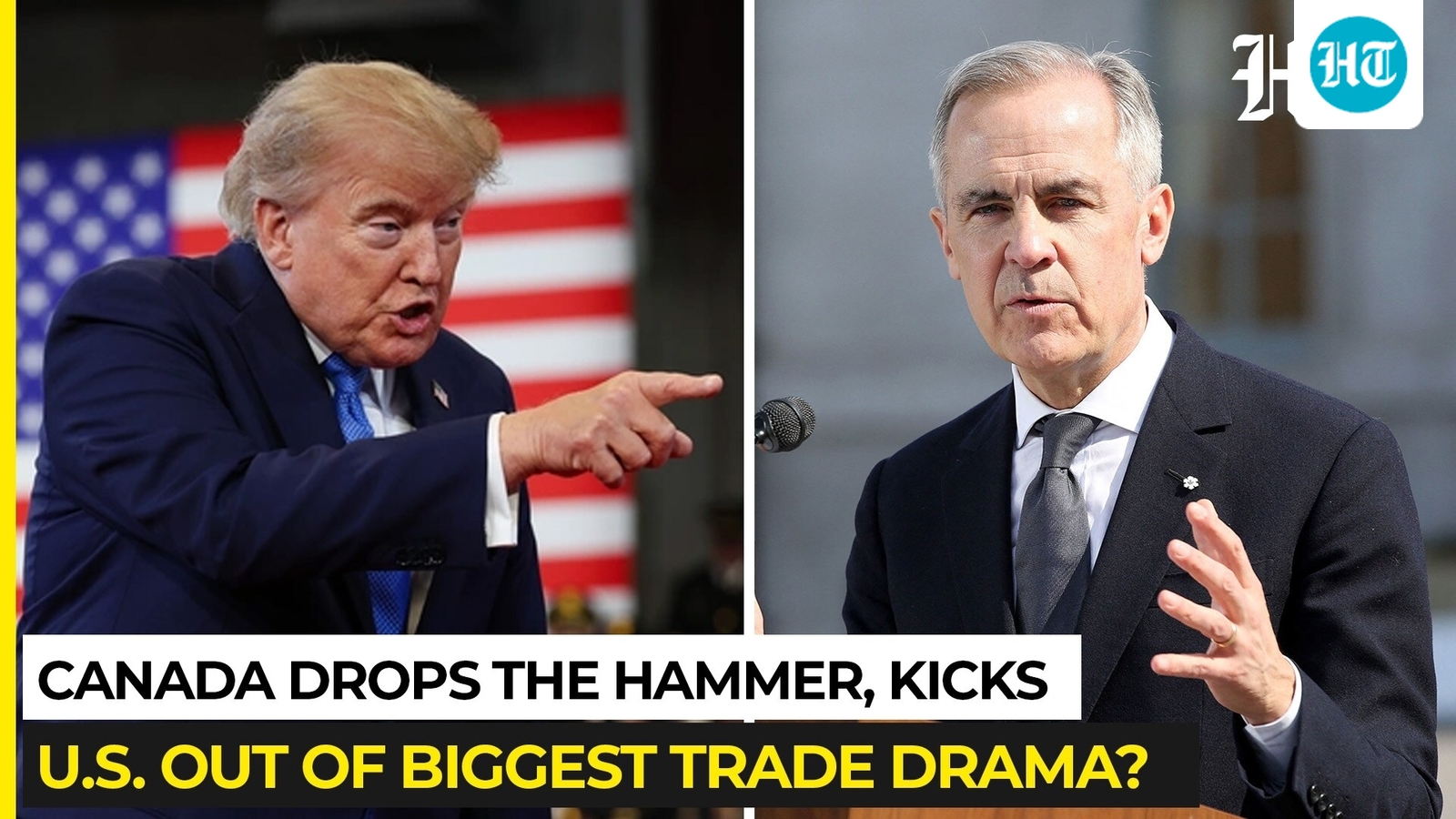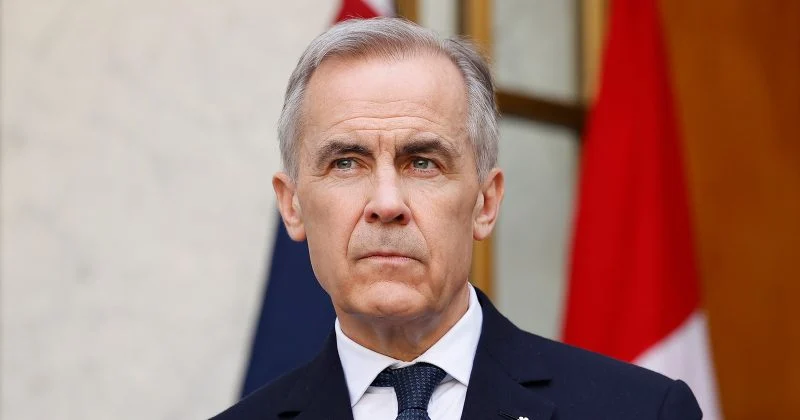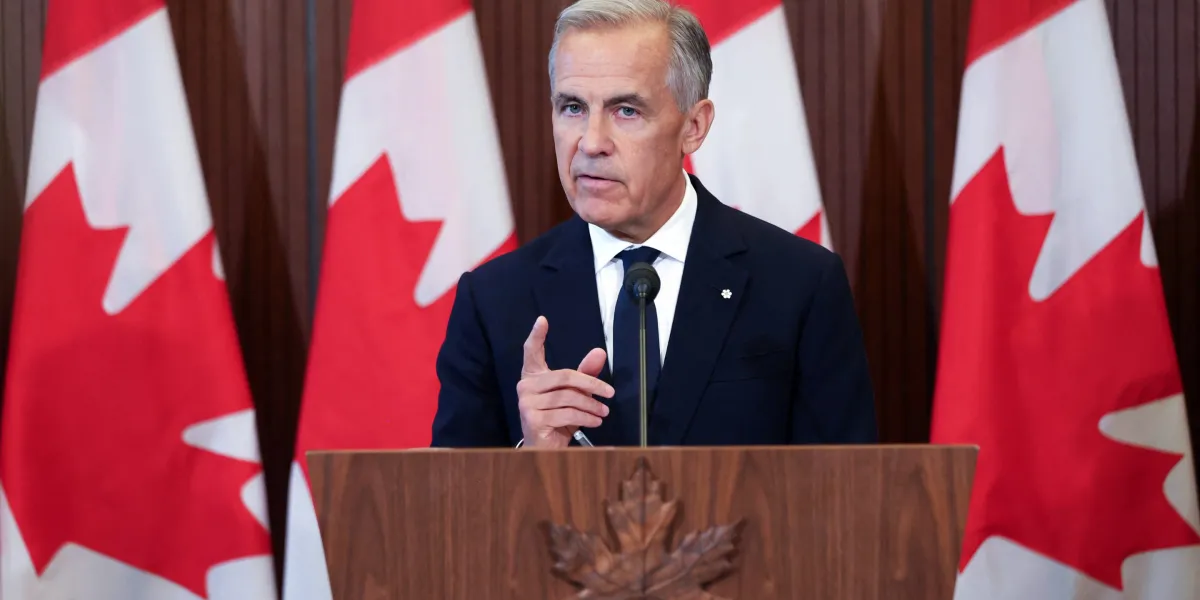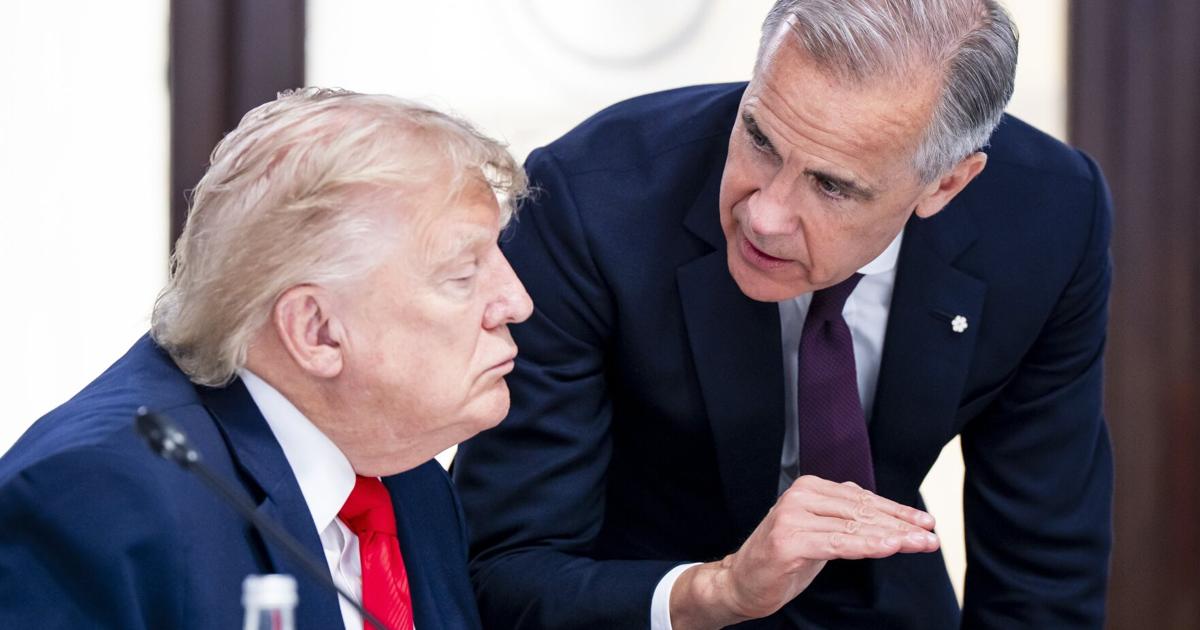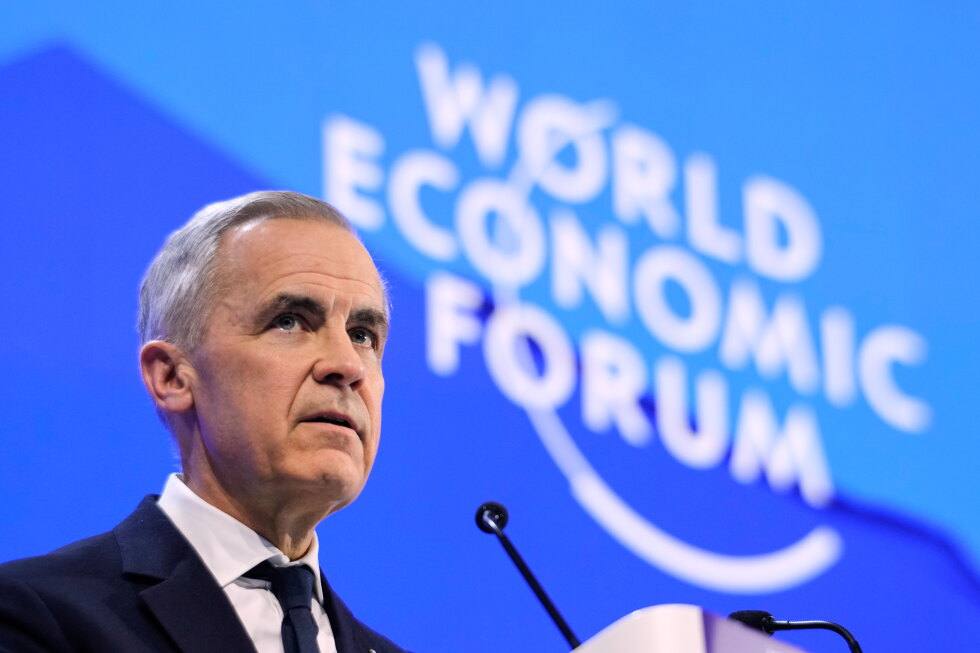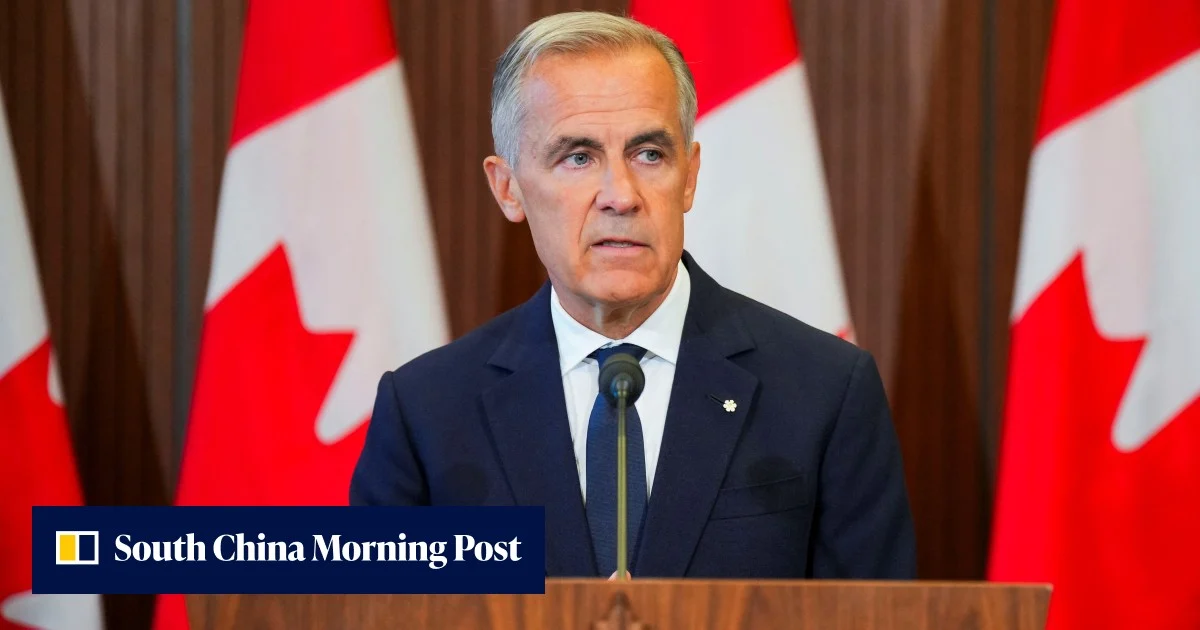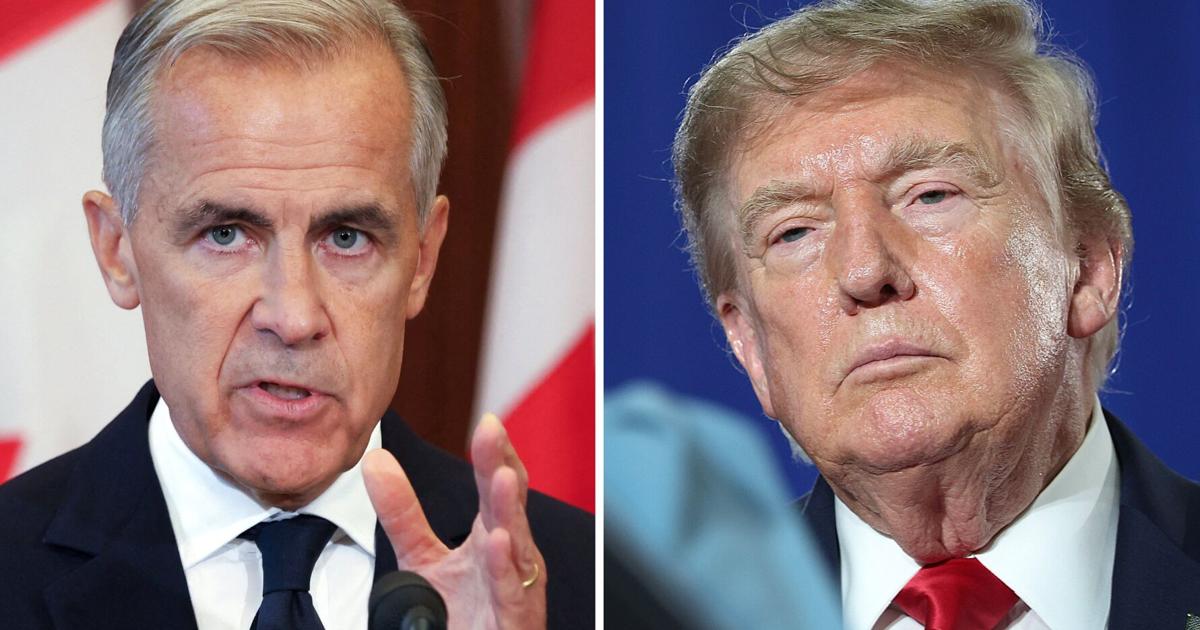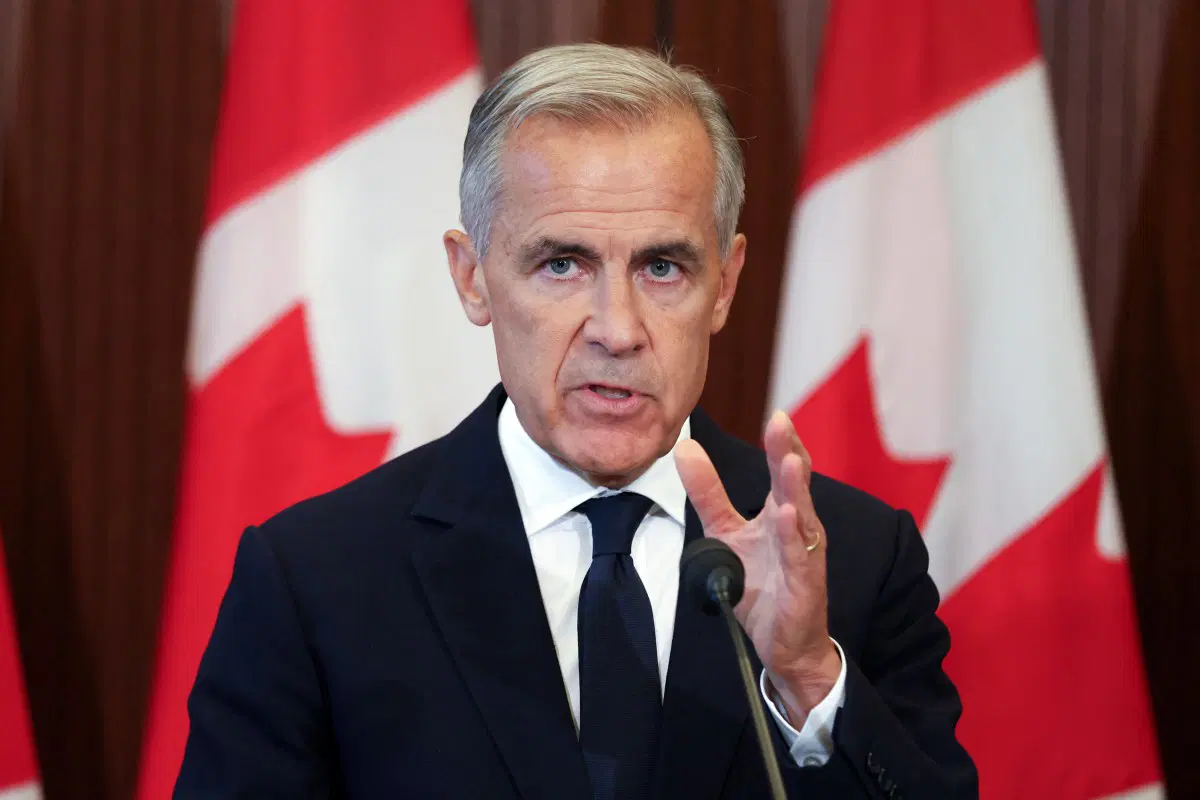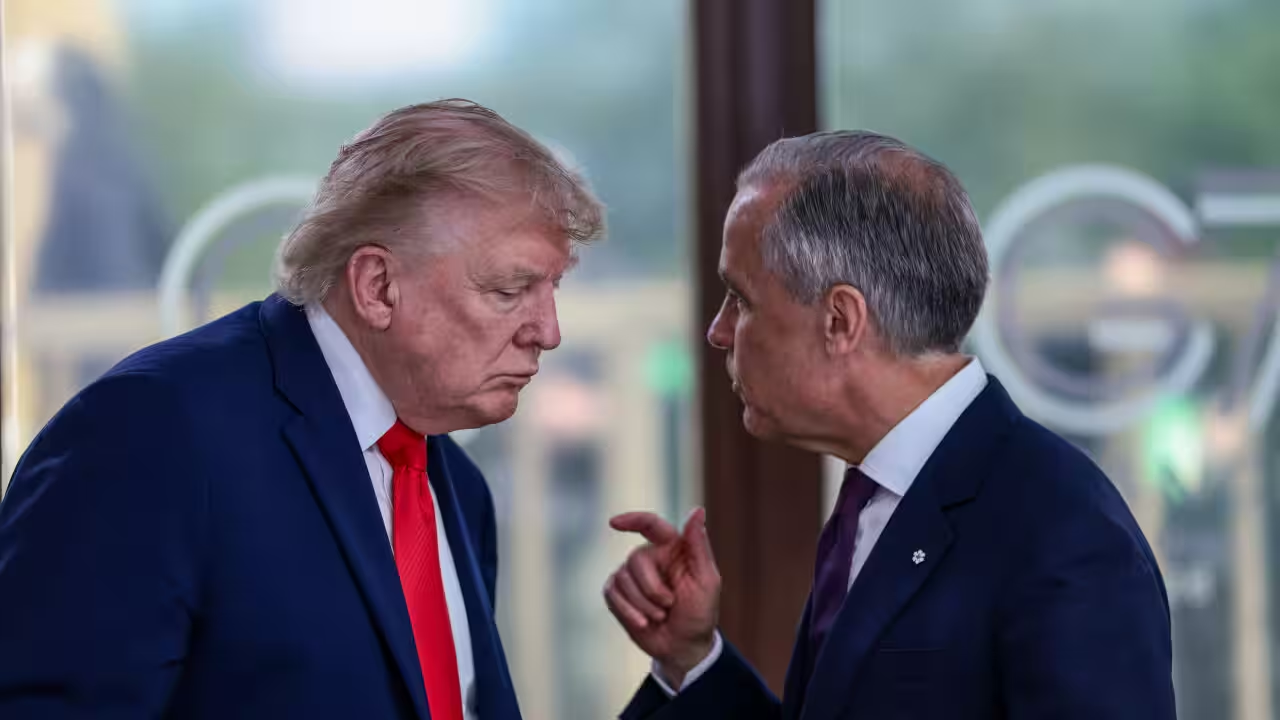
In briefAfter days of intense negotiations, the two countries did not reach a trade deal by a Saturday AEST deadline.The breakdown also complicates the future of the continental free trade pact known as the US-Mexico-Canada Agreement.Canadian Prime Minister Mark Carney announced retaliatory tariffs on the United States on Sunday, after walking away from a "bad deal" on trade in a deepening rift between the longtime allies.Negotiations between the neighbouring countries broke down on Saturday in Washington, triggering new 50 per cent US tariffs that will affect about US$20 billion ($27.9 billion) worth of goods, or 5.5 per cent of Canadian exports to the United States.Carney then announced retaliatory duties on US goods, notably steel and dairy products, to take effect on 8 September."You're at war when you get attacked. We got attacked," Carney said.Although Carney stood up to US President Donald Trump by rejecting what he called an "unfair" trade deal, this gamble could prove economically risky.News that makes senseYour trusted source for staying up-to-date with the world around you. Get free daily news updates and analysis, straight to your inbox.How did the US-Canada tariff talks break down?Canada has been seeking relief from Trump's tariffs on autos, steel and aluminium, which have battered the country's economy, forced job losses and strained what was once an iron-clad trade relationship.The White House had alleged "discriminatory treatment" by Canada against US alcohol, automobile and dairy products in introducing the duties.Trump had said Washington "should be able to have a deal with Canada," citing his "good relationship" with Carney.But on Saturday, Canada's prime minister said Trump set conditions that were ultimately unacceptable even though earlier talks had been positive."In recent days, the United States proposed new terms that were uneconomic, unfair and undermined the net benefits for Canada, and called into question the reliability of any deal," Carney said in Ottawa."We cannot accept what they've offered, and we will not give what they've asked.""Our government understood before many that America would transform all of its commercial relationships, that it would put a series of tariffs on its closest allies, and use economic integration as a weapon," Carney said on Saturday."We recognise that sometimes its signature was written in pencil."He pledged that his country would match the US tariffs "dollar for dollar to protect our workers and businesses".Is Carney following Canadians' 'hard line' sentiment?Carney, the former head of the central banks of Canada and Britain, earned full support across Canada's political spectrum, with opposition leader Pierre Poilievre calling on citizens to "stand united to defend our country against these unfair attacks on our jobs and businesses."The Globe and Mail, in an editorial, said: "In the end, Prime Minister Mark Carney took the hint from the Canadian public rather than the bait from the US president."A poll published earlier in the week revealed that 56 per cent of Canadians surveyed wanted their government to take a "hard line" and make no more concessions to the US on trade.Since Trump's return to the White House in January 2025, Canada has been in his crosshairs on the subject.The Republican billionaire was irked by Carney's widely-touted January speech at the World Economic Forum in Davos, Switzerland, in which the prime minister declared a "rupture" in the US-led world order.Trump has also repeatedly said he wants to make the Group of Seven nation the 51st US state.Canadians have taken it badly. Many provinces, which have authority over alcohol sales, removed US wine and spirits from their shelves.What could be the economic cost for Canada?The United States remains Canada's biggest trading partner by far, with Canadian exports to its neighbour representing 70 per cent of its overall total.Tariffs are already having a deep impact on key sectors in Canada such as the steel and auto industries.Standing up to Trump thus is hardly risk-free for Carney, who hopes that his plans to diversify Canada's economy by developing new trade partners will allow Ottawa to reduce its dependence on Washington.While the new US duties only affect 5.5 per cent of those exports, "the economic cost of the increase is real nonetheless," according to analysts at the Royal Bank of Canada (RBC).Quebec and Ontario in eastern Canada, the country's economic powerhouses, are expected to feel the pinch most.Beyond the immediate consequences, the Trump administration's "unpredictability" with respect to Canada "is a weight on business confidence across all trade exposed industries, not just those directly targeted with tariffs," the RBC analysts warned.Trevor Tombe, a professor of economics at the University of Calgary, said in a post on X that if the tariffs remain in place over the long run, it could result in the loss of 90,000 Canadian jobs.In recent months, Carney has faced increasing calls to play the energy card to put pressure on Trump. So far, he has not gone that far."Canada fuels American growth, supplying 99 per cent of their natural gas imports, 85 per cent of their electricity imports, 60 per cent of their crude oil imports," Carney said on Saturday."I don't think they want us to stop sending any of that energy."For the latest from SBS News, download our app and subscribe to our newsletter.
Canada's Carney stands up to Trump in an escalating trade war. Could his gamble pay off?
Mark Carney was elected last year on a promise to be a tough negotiator with Trump, and remains broadly popular in Canada.
855 words~4 min read