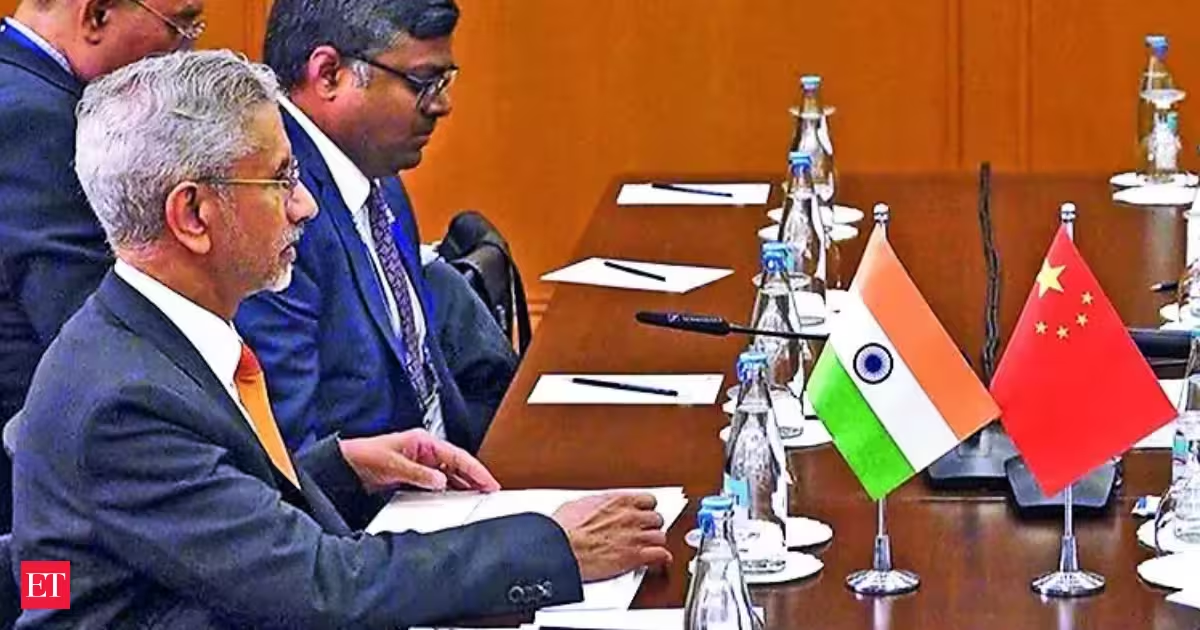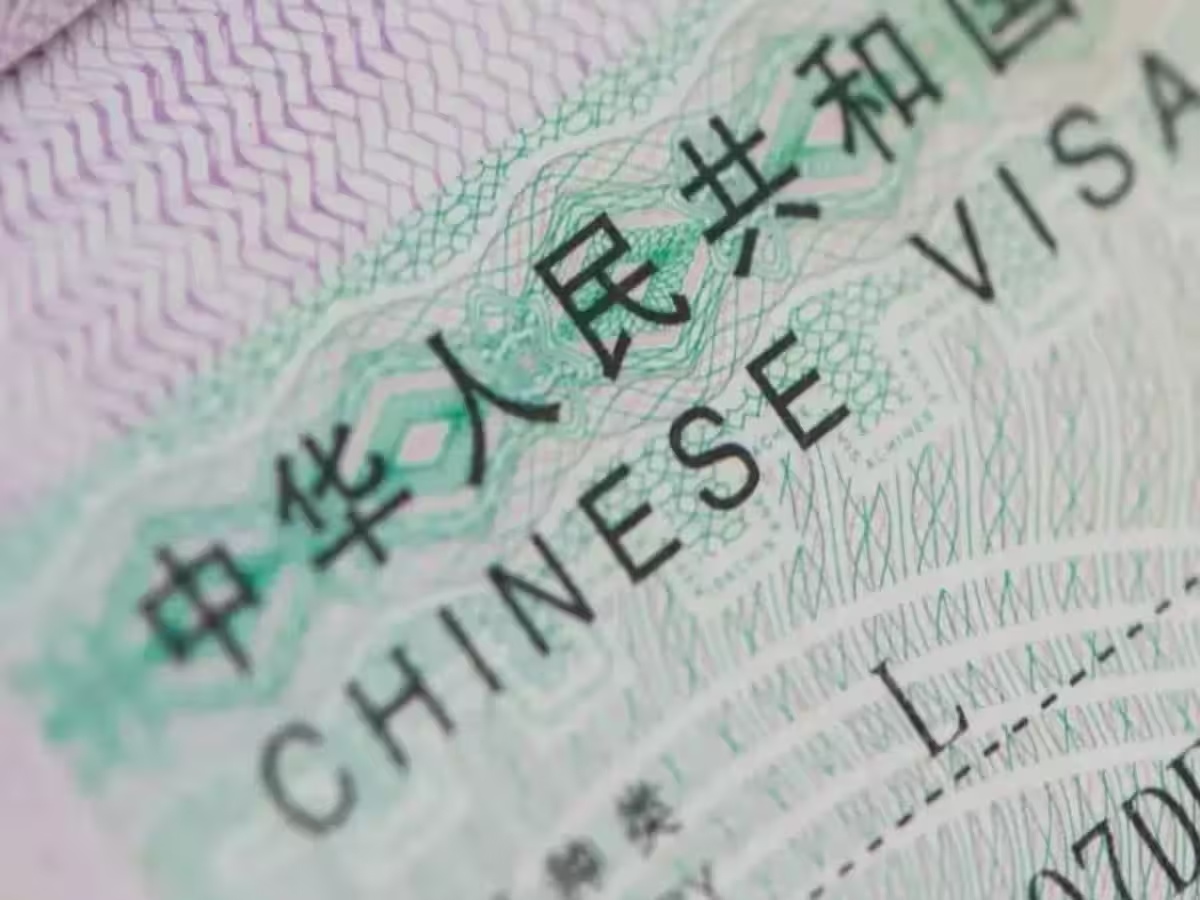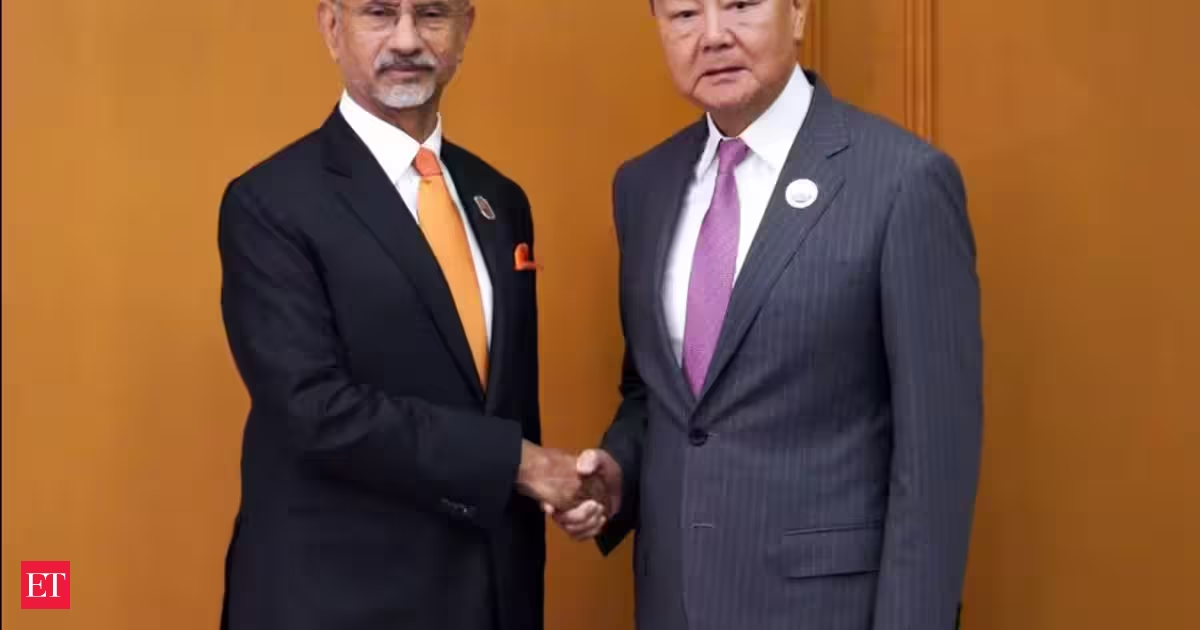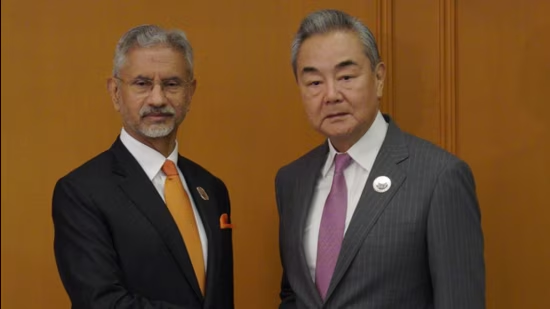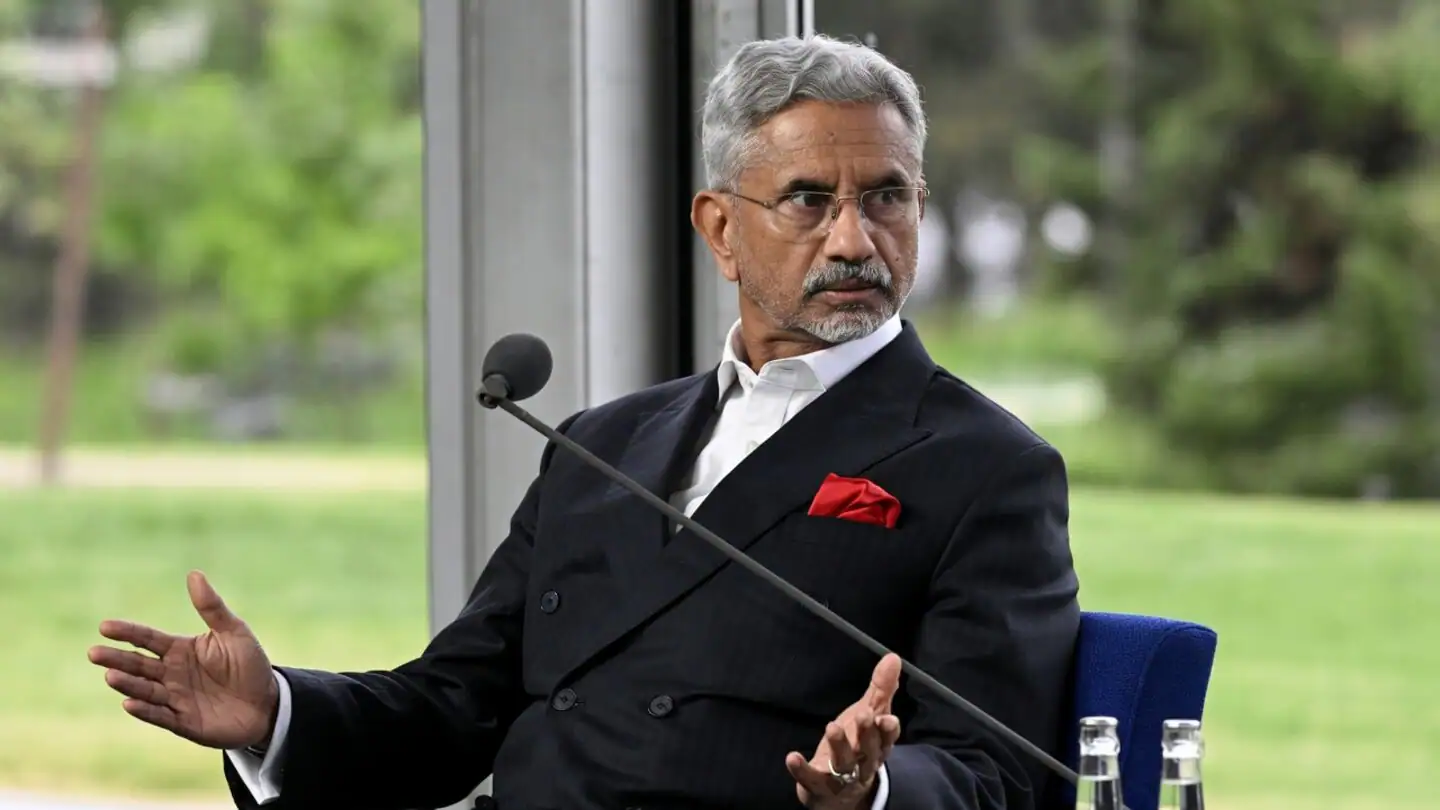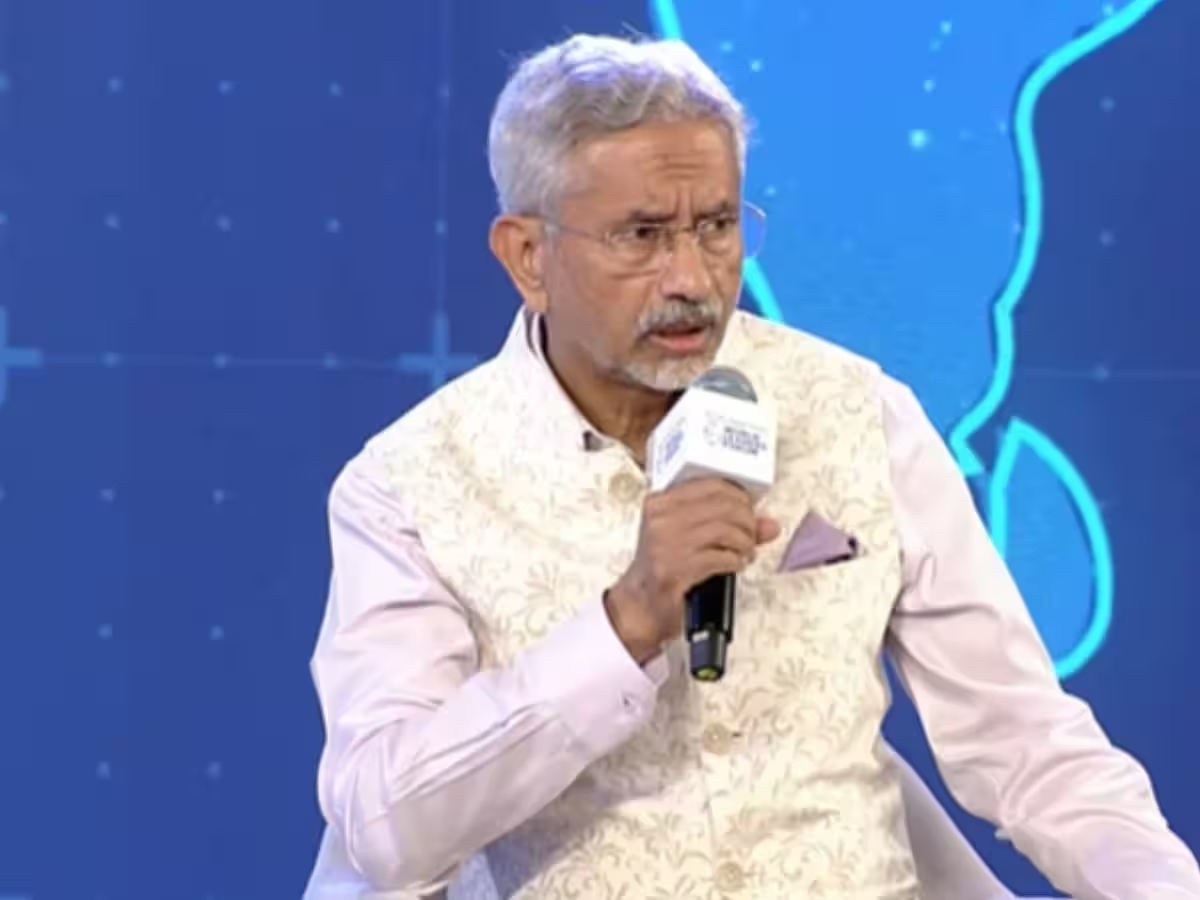
India has taken up with China the issue of denial of business visas to Indians, external affairs minister S Jaishankar said at The Economic Times World Leaders Forum on Saturday, while underscoring the need for durable peace along the border to ensure good relations between two of the continent’s largest economies.Jaishankar also outlined a four-point formula for businesses navigating a world increasingly shaped by geopolitical tensions, supply chain disruptions and market distortions caused by reasons not strictly commercial.ALSO READ | ET World Leaders Forum 2026: PM Modi vows faster reforms, says stable India can power world stabilityThe minister addressed concerns over difficulties faced by Indian entrepreneurs and executives in obtaining Chinese business visas, saying New Delhi was aware of the problem and had raised it with Beijing."So, about those stories on business visa issues, which our businessmen have been facing, we have seen them, and I want to say for those of you who may have an interest or who may have been affected, we have taken it up as well,” Jaishankar told delegates.ALSO READ | ‘Pakistan is unique': Jaishankar says no other country uses terrorism like it doesET had reported about how China has lately been denying business visas to Indians even as the bilateral economic partnership is steadily normalising.The minister said India and China had gone through a particularly difficult phase between 2020 and 2024, largely because of the border situation. “I said it then, and I continue to say it. At the end of the day, peace and tranquillity in the border areas is a prerequisite for good relations, and the state of the border, to a very large measure, naturally would determine the state of the relations,” said Jaishankar.He stressed the need for potential economic collaborations between the two countries that have been at the vanguard of global growth. "Having said that, assuming things are stable and the needle is more cooperative, we are both very big economies and in many ways, we are markets to each other,” the minister said. “They industrialised much faster, on a much larger scale and much earlier, largely because of many of the policies we now advocate.”Jaishankar suggested reducing exposure to potential disruptions as a priority for businesses and governments. "De-risking would be my biggest mantra, as you called it. And the second would be to diversify," he said.He noted, “The more partners, more sources that you have, clearly to that extent, you have re-rested,” and reduced dependence on any single source. He said diversification should form a key part of how businesses respond to a more uncertain global environment.Theory applies to govts, bizJaishankar suggested reducing exposure to potential disruptions as a priority for businesses and governments. “De-risking would be my biggest mantra, as you called it. And the second would be to diversify,” he said.He noted, “The more partners, more sources that you have, clearly, to that extent, you have re-rested,” and reduced dependence on any single source. He said diversification should form a key part of how businesses respond to an uncertain global environment.The minister suggested that companies avoid excessive dependence on individual suppliers, markets or routes, particularly as geopolitical tensions increasingly affect trade and supply chains.Jaishankar also referred to distortions in global markets, which he said are increasingly being driven by geopolitical choke points. “The third is to deal with distortions. Today, for example, we are finding a very distorted energy market, a very distorted fertiliser market, very distorted shipping,” he said. For his fourth principle, Jaishankar said businesses should move beyond the traditional idea of trusting systems while verifying them. “You know, don’t let your supply chains really be just in time any more. Don’t always assume that the lowest cost will be the determinant.”He said companies should assume that disruptions are possible and build safeguards into their planning. Jaishankar cited energy markets as an example of why companies need to rethink their approach to supply chains and costs. It helps, “the more you diversify it, the more you hedge... you can’t trust the world to work in the most efficient manner because of all these distortions,” he said.
ET WLF: India raised Chinese business visa denial issue with Beijing, assures EAM Jaishankar - The Economic Times
External Affairs Minister S Jaishankar said India has raised with China the issue of Indian businessmen facing difficulties in getting Chinese business visas.<br />Speaking at the ET World Leaders Forum, Jaishankar said stable and peaceful borders are essential for better India-China relations.
683 words~3 min read