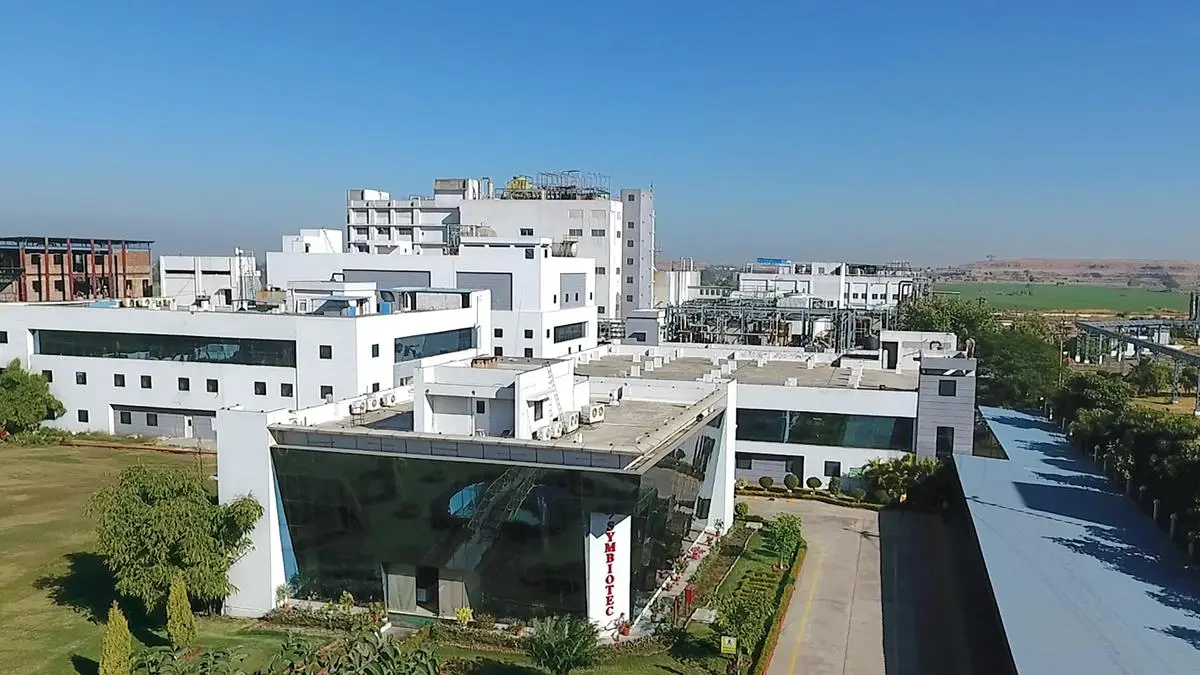
Symbiotec Pharmalab is a bio-pharmaceutical company with a leading position in fermentation-based hormone and steroid APIs. Its IPO is scheduled for August 24-27. At the upper end of the price band, the issue is valued at 57.8 times FY26 EPS. While this is a premium valuation, it is supported by several long-term growth drivers: steady expansion in the core API business, CDMO opportunities, complex injectables, and insulin and GLP-1 manufacturing.Strong R&D capabilities, which act as a moat, and an expanded asset base have helped Symbiotec build a fully-integrated operating model from raw materials to drug-device combinations(. This positions the company to benefit from rising demand for established bio-pharma products and bio-manufacturing opportunities. Investors with a three- to five-year perspective can consider subscribing to the IPO given the opportunities developed in CDMO, injectables and GLP-1 fields and scope for earnings growth over the next three-five years as the facilities ramp up. Here, we would like to bring to attention of investors that the company had issued shares in a rights issue in December 2025 at a price of ₹276 per share (compared to IPO price of ₹938 - ₹988) which was largely subscribed by the promoters and promoter group. Rights issues in general are priced at a discount to prevailing valuation though. .The IPO consists of a fresh issue of ₹150 crore (debt repayment of ₹112 crore) and an OFS portion of ₹1,607 crore, of which the promoter group accounts for ₹144 crore and the remaining from invested funds (Rosewood Investments and India Business Excellence). Strong R&D baseThe company’s capabilities span three complementary segments: Organic chemistry, biotechnology and fermentation and forward integration into complex injectables with double-chamber devices. Corticosteroids and steroidal hormones require an integrated approach that combines organic chemistry with fermentation, where microorganisms are cultivated under controlled conditions to biosynthesise the active compound. The company’s complex product basket should further benefit from its delivery technology platform of double-chamber bags, vials and syringes, which is currently under development.The company has a portfolio of over 60 APIs with leading presence in Corticosteroids (global market share of 38.2 per cent by API volume in FY26) and steroidal hormones (23.8 per cent share), which address severe inflammation, immunological conditions and hormone-based treatments. Growth driversThe base business, based on API sales , is still growing and has further potential. The leading share of Symbiotec, in a complex portfolio, allows the company to benefit from two factors — supply chain diversification away from China (which is the leader in fermentation-based production) and gaining share from Europe- and the US-based manufacturers. The company can target expanding market share in existing clients and add new clients as well and sustain the 10 per cent revenue CAGR in FY24-26.It is expanding into CDMO operations based on its established credentials in biotechnology with a commissioned capacity of 400 kilo litres (kl) fermentation capacity. Along with the 300-kl capacity for the base business, the company now has a total of 700-kl fermentation capacity. It has entered into take or pay contracts for long periods of 5-10 years for a significant part of the CDMO capacity. This includes a 10-year supply agreement for alternate protein in non-pharma CDMO service and another 10-year arrangement for fermentation-based APIs. The CDMO segment should start revenue contribution from late FY27 after completing approvals and accreditations with significant revenue ramp-up expected from FY28.With notable capability in fermentation, the company is exploring insulin and GLP-1 segments as well. It has commissioned a 14-kl fermentation capacity to manufacture recombinant insulins for domestic companies. The bio-equivalence studies should be completed by FY27 and revenue contributions expected thereon. The company is also poised to start recombinant GLP-1 manufacturing as well for domestic markets and is awaiting approval from the DCGI to shift from China-based chemical synthesis supplies to recombinant method.It has also commissioned an injectable facility with a capacity of 20 million injetables. But more importantly, it has developed a value-added delivery platform — double chamber vial DCVs, which are used for controlled release of the drug for improved effectiveness. Two products in its portfolio (Methylprednisolone Sodium Succinate and Hydrocortisone Sodium Succinate) are undergoing studies with expected DCV formulation launch in FY27-28. Parallelly, three other products from its API portfolio are also under development for DCV-based formulation launch. With a basket of API produced in-house, as the company establishes a differentiated delivery platform in DCVs (syringe and bags also in development), the company can market its own formulations in regulated markets stepping up from API markets . It has partnered with a US-based leading company in injectables for marketing under a 50-50 profit share agreement, which also includes significant milestone payments for developing and achieving regulatory steps for the portfolio.The three facilities to be used for CDMO , insulin/GLP-1 and injectables have been developed at ₹480 crore, ₹130 crore and ₹400 crore respectively. At peak utilisation in two-three years, the company should generate revenue in line with current asset turnover ratio of 1.5-2 times. Assuming a reasonable probability of execution, the assets should generate significant revenues in comparison to the FY26 revenues of ₹869 crore. Apart from the above, the company’s generic application for Premarin API (conjugated equine estrogens), derived from pregnant mares, is under evaluation. The product has innovator sales of $1 billion in the US for hormone replacement therapy, despite more than 15 years of losing patent protection. Owing to complexity in manufacturing and proving equivalence, the product has no generics. Symbiotic API under evaluation can be a large gain only if the approval goes through.FinancialsEBITDA margin for last three years has averaged around 26 per cent. This has been aided by significant backward integration for its fermentation portfolio. It is backward integrated for 80 per cent of the portfolio replacing Chinese imports. This recent development also enables the company to participate significantly in the upcoming PLI scheme for domestic bio-pharmaceutical value chain production incentives. The company reported revenue/EBITDA/PAT of ₹869/₹238/₹109 crore in FY26. Its debt is from the recently-commissioned facilities and stands at ₹377 crore of net debt (1.6 times EBITDA). The fresh issue proceeds can improve the debt metrics further.Published on August 22, 2026
Symbiotec Pharmalab IPO analysis: Key factors investors need to know before subscribing
Evaluate the potential of Symbiotec Pharmalab's IPO, backed by strong growth prospects in biopharma and innovative drug delivery solutions.
1,017 words~5 min read