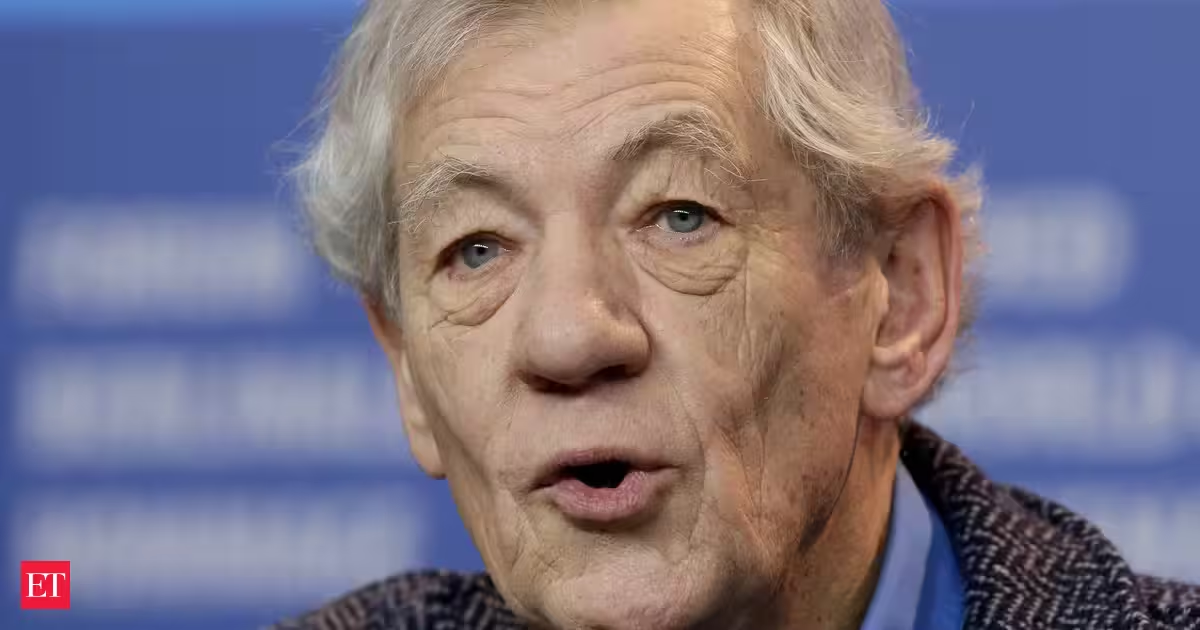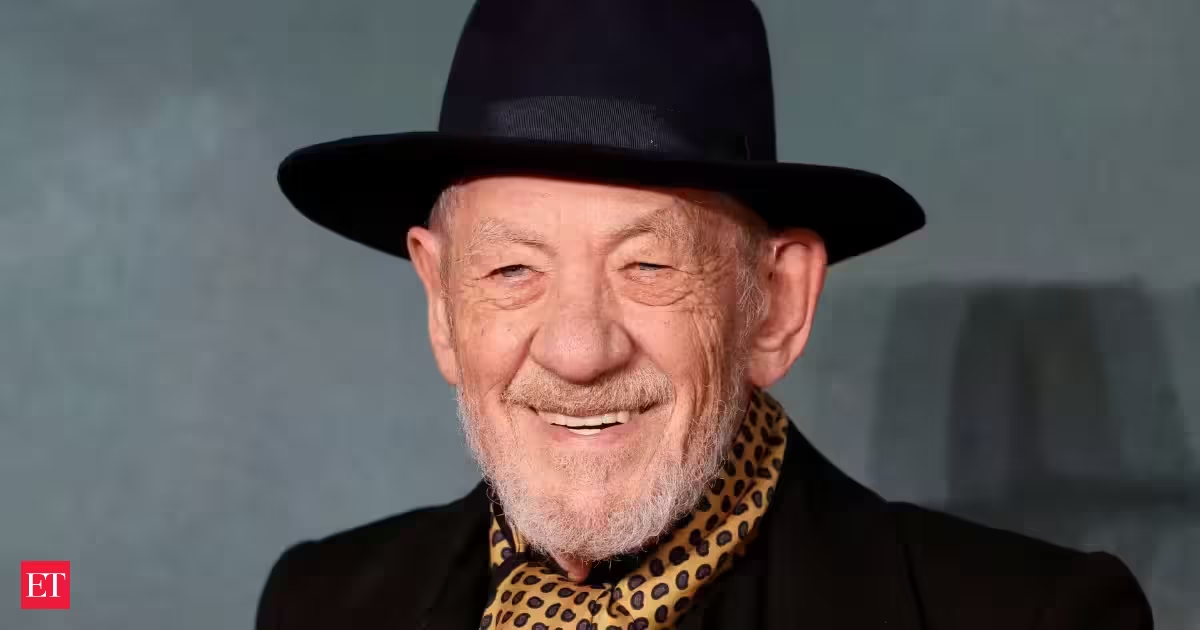
Quote of the day by Ian McKellen is about how people respond to success and hardship. Sir Ian McKellen made the remark in December 2013 while speaking to the Radio Times. His comment came after actor Damian Lewis spoke about concerns that actors could become associated with certain roles and ways of speaking. McKellen responded by defending the opportunities that can come from playing roles that bring fame. His statement also raises questions about privilege, responsibility, gratitude and how successful people should respond when they face difficulties.The quote is,“No one needs to feel sorry for me or anyone else who has fallen victim to success.”The quote is linked to Sir Ian McKellen and was made in December 2013. The statement focuses on the position of people who have achieved success and later face problems. McKellen's point was that success can provide people with resources that may help them deal with difficult situations. Fame, money and career opportunities can give a person access to support that may not be available to others.You Might Also Like:The statement does not suggest that successful people never face hardship. Instead, it asks people to look at hardship in the context of the resources and opportunities a person already has.Background to the quoteThe comment came after actor Damian Lewis spoke about actors and the effects that certain roles can have on their careers. Lewis had expressed concern about becoming associated with a particular type of theater or fantasy character. The discussion included the idea that actors who play wizards could become known for certain voices or styles.McKellen had taken a different view of his own career. He had played Gandalf in The Lord of the Rings film trilogy and later returned to the role in The Hobbit films. For McKellen, playing Gandalf was not something to regret. He saw the role as an opportunity that brought work and recognition later in his career.The exchange was followed by an apology from Damian Lewis. Lewis called McKellen and offered a sincere apology for his comments. The discussion helped provide the context for McKellen's statement about success. His words suggested that an actor should not describe career success as a problem when that success has brought opportunities.Quote meaning and relevanceThe meaning of the quote can be understood through several points.Success brings privilege: Reaching career goals can provide financial security, professional opportunities and access to resources.Hardship is universal: Success does not prevent a person from facing loss, disappointment or other problems.Pity is not always needed: People who have money, fame or professional support may have more ways to deal with difficulties.Responsibility remains: Success does not remove the need to deal with personal problems or accept responsibility for decisions.Gratitude matters: People who have received opportunities can recognise the support and advantages that helped them.Humility remains important: Success should not lead a person to expect special treatment from others.The quote remains relevant because success is often discussed as an achievement. McKellen's words add another question: what responsibility comes with that achievement?Life lessons from the quoteThe life lessons are:Stay grounded after successSuccess can change a person's circumstances. It can provide money, recognition and access to opportunities. But it does not mean that other people should solve every problem. A person can recognise what they have achieved while also accepting that difficulties are part of life.Recognise your safety netOne of the main ideas in the quote is privilege. A successful person may have savings, professional contacts, family support or other resources. These resources can help when problems occur. This does not mean hardship is not real. It means that the ability to deal with hardship can differ between people.Use success to solve problemsMcKellen's statement can also be read as a reminder to use available resources. If success has provided financial or professional security, those resources can be used to address problems instead of seeking sympathy because difficulties have occurred.Focus sympathy on people without resourcesThe quote also raises a question about where attention should go. People without financial security or access to basic resources can face problems without the safety nets available to successful people. The statement suggests that sympathy may be more useful when directed toward people who lack those resources.Keep working toward goalsThe discussion behind the quote also connects with career goals. McKellen did not treat later-career recognition as something to fear. His work in major films introduced his acting to audiences around the world. His career shows that opportunities can continue at different stages of professional life.Who is Ian McKellen?Sir Ian Murray McKellen was born on May 25, 1939, in Burnley, Lancashire, England. He became known for work on stage, television and film. McKellen attended St. Catharine's College, Cambridge. During his student years, he worked with director John Barton, who later became associated with the Royal Shakespeare Company.After receiving his bachelor's degree in 1961, McKellen made his professional stage debut in Robert Bolt's A Man for All Seasons. During the 1960s, he continued working in theater. His performances as William Shakespeare's Richard II and Christopher Marlowe's Edward II at the 1969 Edinburgh Festival brought him recognition.In 1971, he cofounded the Actors' Company. The group gave actors an equal role in decisions about choosing and casting plays and recruiting directors. McKellen left the group in 1974 and joined the Royal Shakespeare Company after an invitation from John Barton.His theater careerMcKellen worked across Shakespearean and contemporary theater. His roles included characters from plays by William Shakespeare, Anton Chekhov and Frank Wedekind. He received Laurence Olivier Awards for productions including Bent in 1979, Wild Honey in 1984 and Richard III in 1991.In 1981, he won a Tony Award for playing Antonio Salieri in the Broadway production of Amadeus. He also directed plays and wrote and performed the one-man show Acting Shakespeare.His film and television workMcKellen also built a film career alongside his stage work. His film credits included Plenty in 1985 and Richard III in 1995. He also cowrote the screenplay for Richard III. In 1998, he played director James Whale in Gods and Monsters. The performance earned him an Academy Award nomination for Best Actor.His career reached another audience through the role of Gandalf in The Lord of the Rings trilogy. He played the character in The Fellowship of the Ring in 2001, The Two Towers in 2002 and The Return of the King in 2003. His performance in the first film earned him an Academy Award nomination for Best Supporting Actor.McKellen later returned as Gandalf in The Hobbit films, including An Unexpected Journey in 2012, The Desolation of Smaug in 2013 and The Battle of the Five Armies in 2014. He also played Magneto in the X-Men films, including X-Men in 2000, X2 in 2003, X-Men: The Last Stand in 2006 and X-Men: Days of Future Past in 2014.Other film credits include The Da Vinci Code, Mr. Holmes, Beauty and the Beast, The Good Liar and Cats. On television, he appeared in Vicious from 2013 to 2016, where he starred with Derek Jacobi. The two played a couple whose relationship included arguments and affection.Awards and honoursMcKellen's career has included awards from theater, film and television.His honours include:Tony Award for Best Actor in a Play in 1981Golden Globe Award in 1997 for Best Supporting Actor in a Series, Limited Series or Motion Picture Made for TelevisionLaurence Olivier Awards for stage performancesAcademy Award nominations for Gods and Monsters and The Lord of the Rings: The Fellowship of the RingCommander of the Order of the British Empire in 1979Knighted in 1991Order of the Companions of Honour in 2007Why the quote still matters?The central idea behind the statement is about perspective. People can experience the same type of hardship under different circumstances. Someone without savings, stable housing or access to support may have fewer ways to recover from a setback.A person who has achieved financial and professional success may have more options. The quote therefore connects success with responsibility. It suggests that people should recognise their position and use the resources they have.It also connects with humility. Achievements can provide comfort, but they do not make a person immune to problems. At the same time, problems do not erase the advantages that success has created. That balance is the main lesson behind McKellen's words.
Quote of the day by Ian McKellen: 'No one needs to feel sorry for me or anyone else who has fallen victim to success.' Life lessons from inspirational quote on hardships, success, goals, responsibility, gratitude and humility
Quote of the day by Ian McKellen reflects on success, hardship, privilege and responsibility. The actor said people who have experienced success do not need sympathy when they face problems. His words point to gratitude, humility and accountability. The quote also came from a discussion about actors, fame and the opportunities that come with successful careers.
1,367 words~6 min read