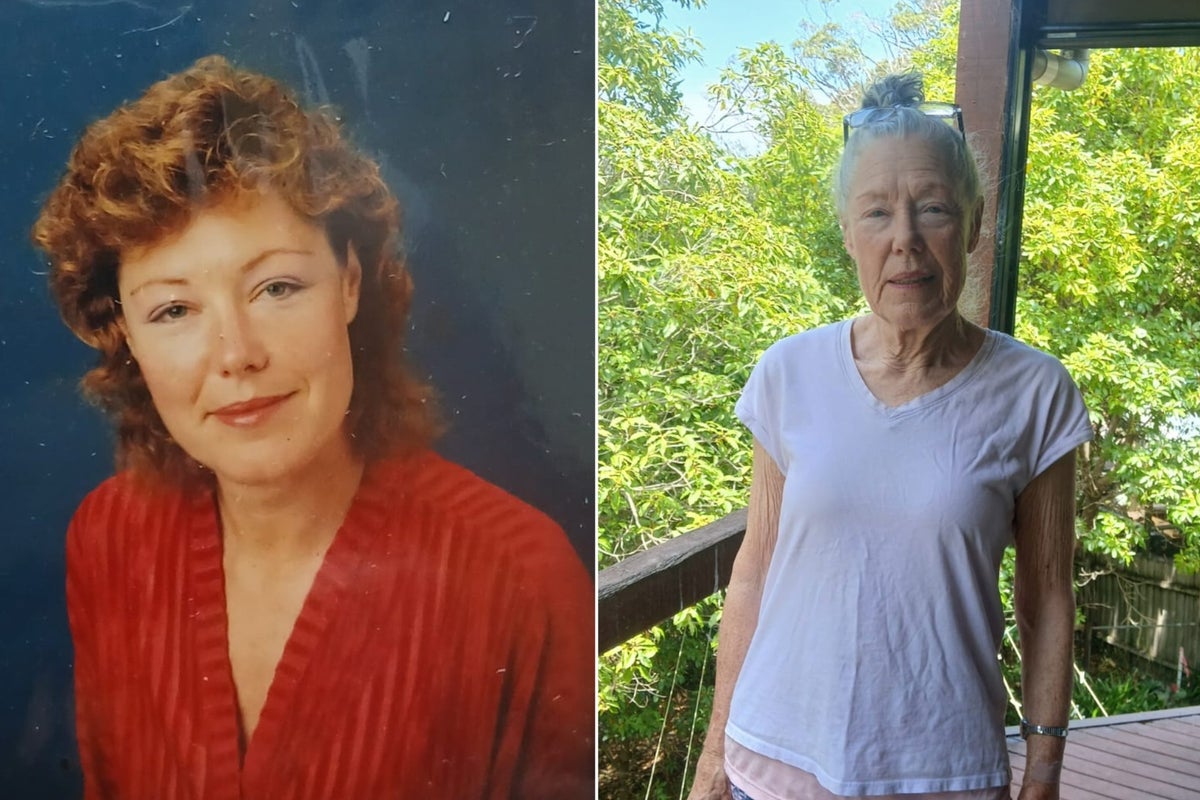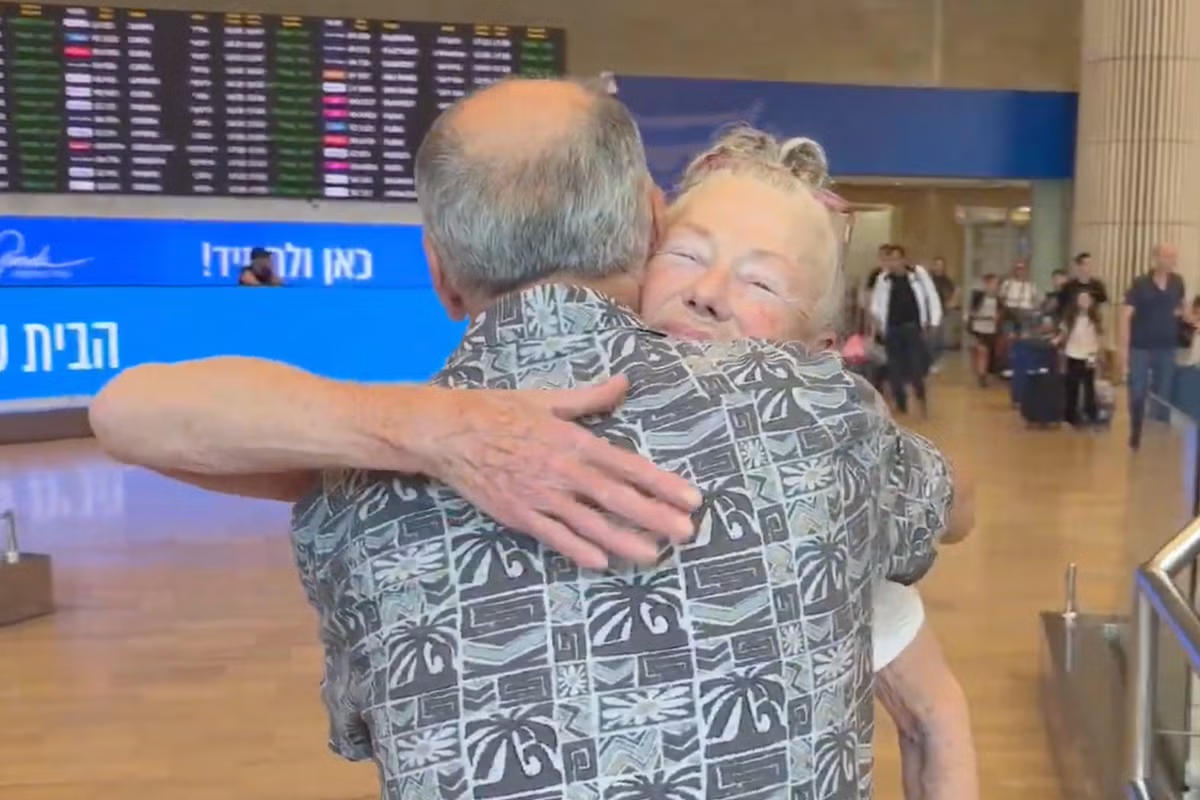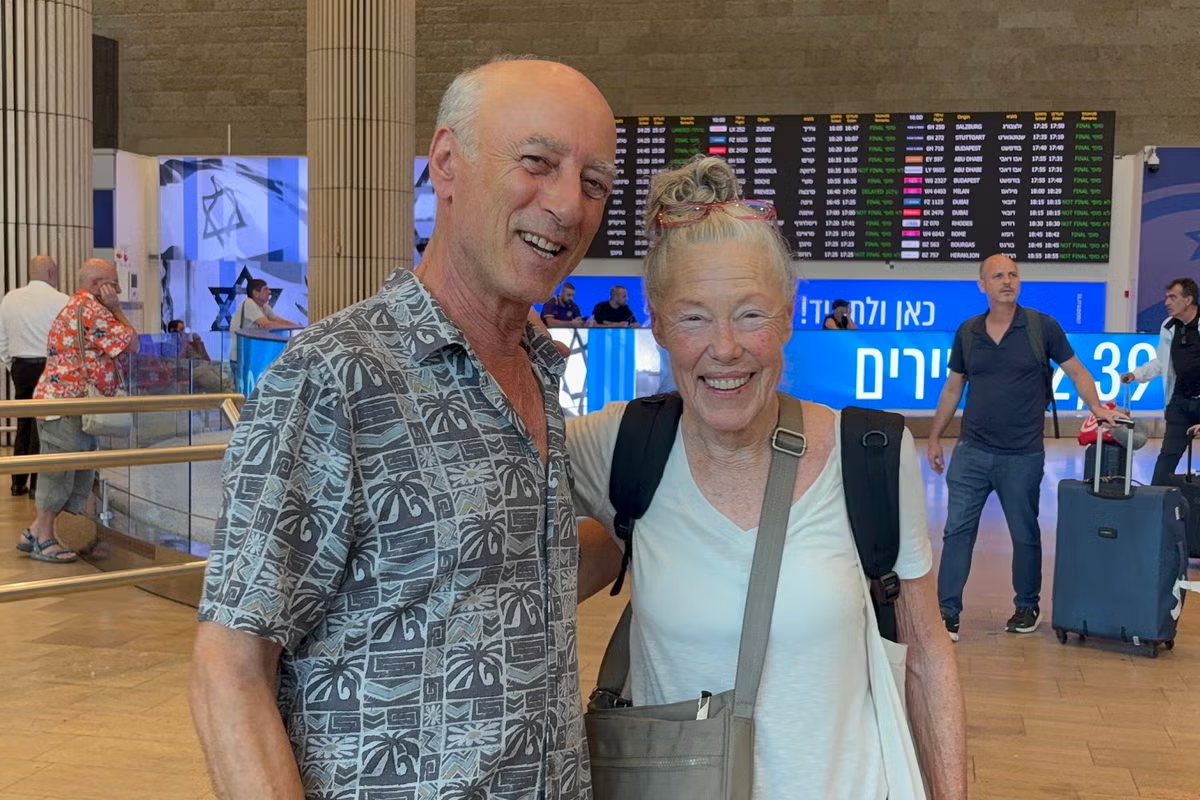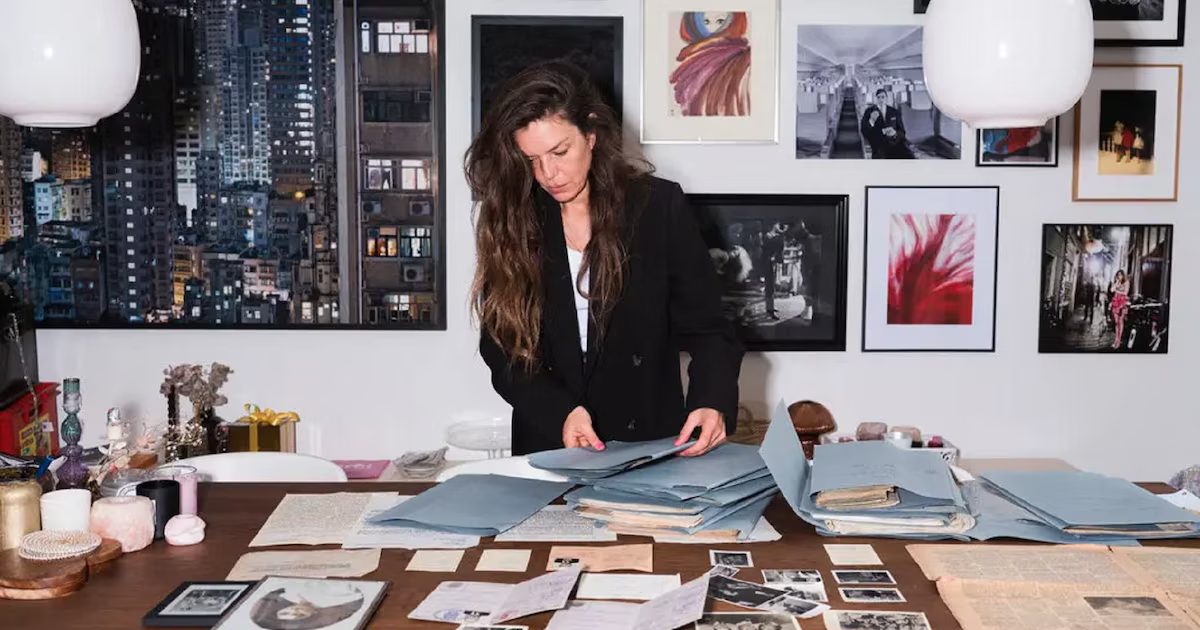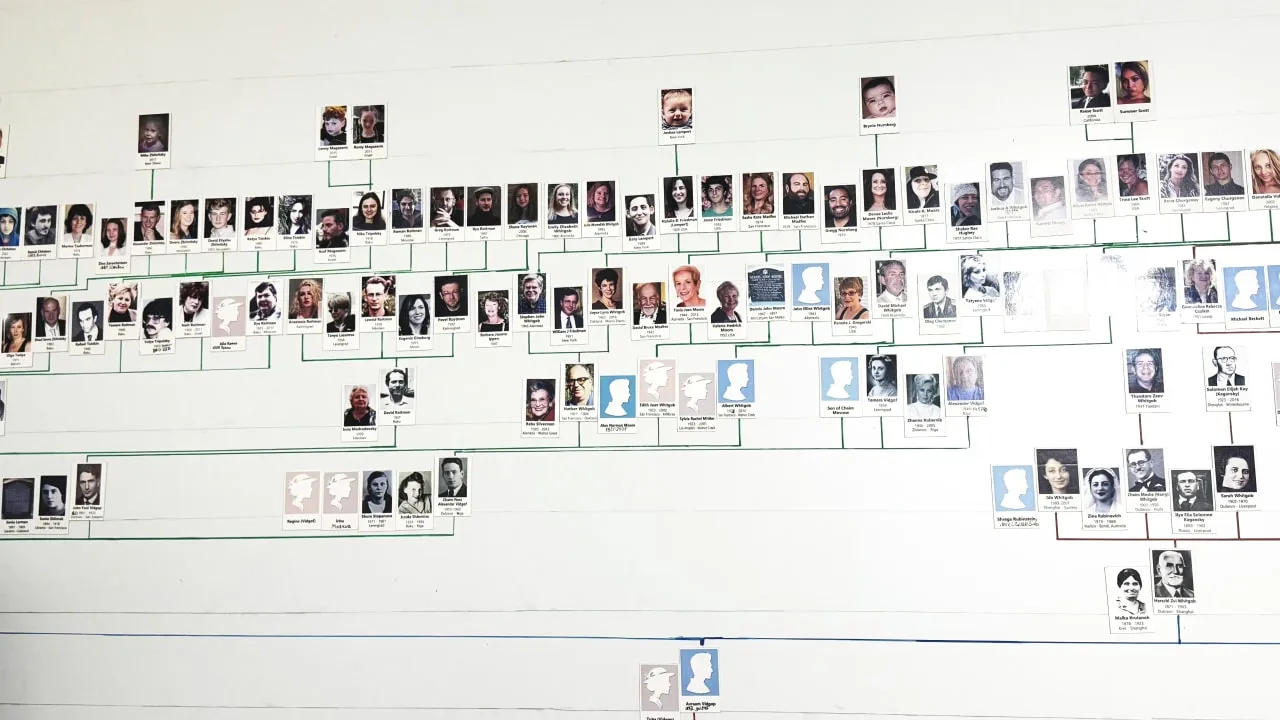
ByGREER FAY CASHMANAUGUST 22, 2026 17:14This year is the 50th anniversary of the publication of Alex Haley’s widely acclaimed, best-selling book Roots – The Saga of an American Family. Roots, which was also made into a miniseries, set off an ongoing global trend of tracing family origins.Not all such searches are for positive reasons. Many German citizens want to know if their grandparents or great-grandparents were Nazis. Now, with access to the US National Archives catalog, they can find out. In some cases, it’s merely curiosity about a long-held family secret and a desire to know the truth. In others, it’s fear that they may have inherited the evil DNA.Among Jews, tracing ancestry is a voyage of discovery. Many Jews of European background grew up believing that all their relatives on both sides of their families had been murdered during the Holocaust.The Hall of Names at the Yad Vashem Holocaust Memorial museum in Jerusalem on April 12, 2026, ahead of Israeli Holocaust Remembrance Day. (credit: YONATAN SINDEL/FLASH90)Nonetheless, some such Jews join genealogical societies to seek pre-Holocaust information about their forebears.Many have discovered through DNA tests and other means that some of their relatives survived the Holocaust and, together with their progeny, are living in another country or even close by.In Israel, a long-overdue family reunion is taking place this month. Facilitated by MyHeritage, one of the myriad Jewish genealogical organizations, its key players are Adrianna Turk, 74, from Australia, and Raanan Gidron, 73, from Israel. The two are second cousins. Her grandmother and his grandfather were siblings.Turk and Gidron have more than 50 other relatives around the world. Turk, the daughter of a Jewish father, grew up in New Zealand believing that no one from her father’s family was left.Gidron’s mother had miraculously survived Theresienstadt and Auschwitz.After learning from her DNA test that she had relatives abroad, Turk reached out to some of them through social media. She met Gidron virtually several months ago and met him face-to-face in Israel earlier this month.Countless similar reunions have taken place in Israel and around the world since the Holocaust.In Israel, there was a special office dedicated to searching for relatives of Holocaust survivors. The searches were broadcast on the radio and often published in newspapers.That was long before the founding of the International Association of Jewish Genealogical Societies (IAJGS) in 1988. There were Jewish genealogical societies before that, but they operated without an international roof body.There are an abundance of stories about family reunions and the tracing of family histories.One heart-warming Israeli story is about two elderly men who shared a bench in a shopping center. They began a conversation. It transpired that both were Holocaust survivors from Romania. Each thought that he was the sole survivor of his family. As the conversation progressed, each spoke of the place in which he was born and raised. It happened to be the same village.Both had adopted Hebrew surnames. Then each stated his original name.They found out they were brothers who had lived around the corner from each other for years. Their appearances had radically changed with time, which is why they had not recognized each other.But the most amazing story is that of Genie Milgrom, a Cuban-born American woman of Spanish ancestry, who was raised Catholic but did not feel comfortable as a Christian. Her family kept certain Jewish customs without knowing their background.Curiosity drove Milgrom to begin exploring her ancestry.She learned that she was descended from conversos. More important was the discovery that she was descended from a 22-generation maternal line of women that went back to pre-Inquisition Spain and Portugal.Milgrom has spoken at many genealogical gatherings and has won awards for her research. To help other descendants of Jews from Spain and Portugal, Milgrom has written books with guidelines for the accessibility of birth, marriage, death, and Inquisition documents.From the past to looking toward the futureThe major obstacles for researchers are the different spellings, abbreviations, and translations of surnames.For instance, Cohen can also be Cohn, Kohn, or Cowen. In my own family, my maternal grandmother’s maiden name, Joskowitz, had been abbreviated to Joske and Joss.In Israel, someone whose last name is Shahor may have previously been called Schwartz or Black.IAJGS has published extensive material on surnames.The umbrella organization was founded with the help of Sallyann Sack, a veteran genealogist, clinical psychologist, and editor of Avotasynu, a journal on Jewish genealogy, and the late Rabbi Malcolm Stern, a long-time genealogist with the American Jewish Archives,IAJGS collects, preserves, disseminates, and researches Jewish ancestry and promotes public access to records containing genealogical data relevant to Jews.Some 90 societies now come together under the IAJGS banner.Current IAJGS president Susan Weinberg of Minnesota is in the planning stages of the organization’s 46th annual conference, which will run from April 4-6, 2027. The planning committee is calling for new ideas and for people to present papers, tell stories, or run workshops.The best-known Jewish genealogical societies are JewishGen, MyHeritage, IGRA, LitvakSIG, and JRI Poland. Most genealogical societies are non-profits.One of the world’s largest, which does operate for profit, is Ancestry, which boasts more than 70 billion records, including those of Jews.Genealogy dates back to ancient Jewish times.The Bible is full of details of who begat whom, plus the names of all the important members of the 12 tribes, and before that – Adam and Eve and their children, Abraham, Isaac, and Jacob and their wives and offspring, and later the family of Moses.Interest waned in the post-biblical centuries. Families in which distinguished positions were passed on from generation to generation were among the rare exceptions, and some of their family trees can be found in Israel’s National Library in Jerusalem.The Holocaust, with its enormity of family tragedies, rekindled interest in the desire to know about past generations from which individual Jews were spawned.Young children nowadays know both their grandparents and their great-grandparents. Few Jews born between 1930 and 1950 knew their grandparents, and in many cases were not even aware of their great-grandparents’ names.Longevity now enables in-the-flesh connections between young people and their great-grandparents. Young members of four-generation families not only know the names of their great-grandparents but also how they look and how they sound.Yet for all that, and the significant number of professional and amateur genealogists, if one were to stop people at random, in the street or on public transport, and ask them to name all of their great-grandparents, it’s doubtful that anyone would be able to.That is likely to change in the future.According to the Central Bureau of Statistics, there are more than 3,300 people in Israel who are over the age of 100.There are many more nonagenarians, so it stands to reason that many more future generations will have relationships with their great-grandparents at family gatherings.Until recent years, IAJGS held its annual conferences in a different city every year. Most conferences were in the US, but have also been in Jerusalem, London, Warsaw, Paris, and Toronto.Epidemics and travel restrictions prompted virtual conferences, allowing for many more participants.Next year’s conference will also be virtual.Detailed information is available from the Program Committee at Program@IAJGS.orgFollow us on Google
Why every Jew should reclaim family histories disrupted by the Holocaust | The Jerusalem Post
Among Jews, tracing ancestry is a voyage of discovery. Many Jews of European background grew up believing that their relatives on both sides of their families had been murdered during the Holocaust
1,182 words~5 min read