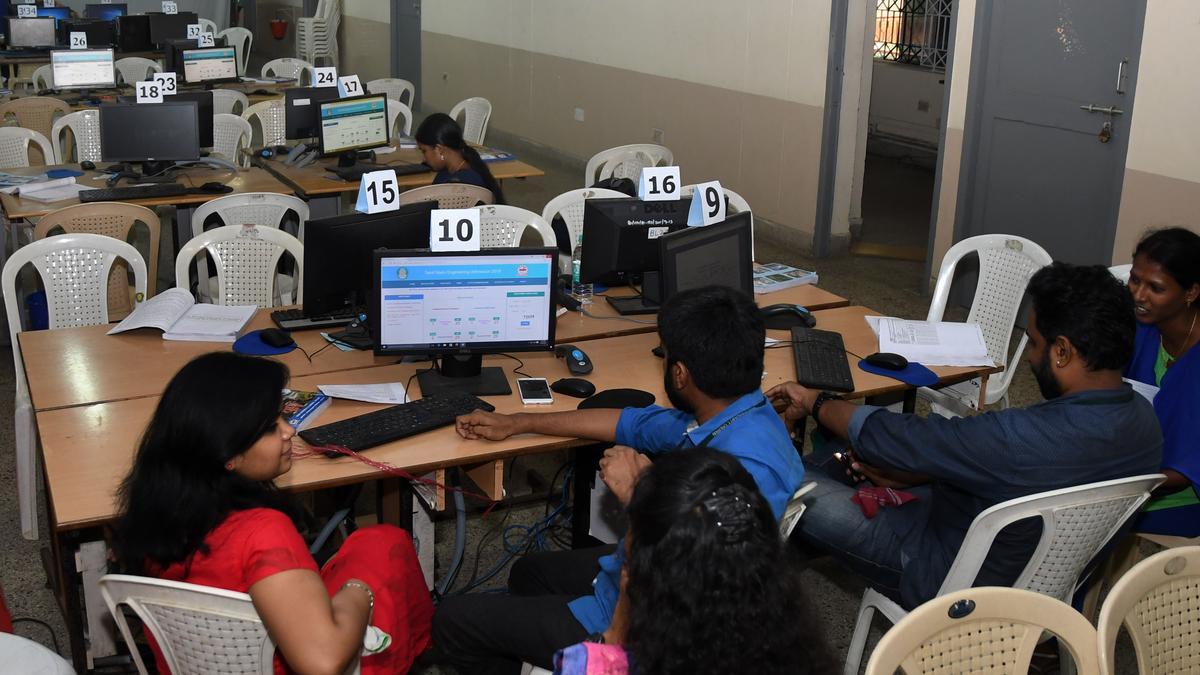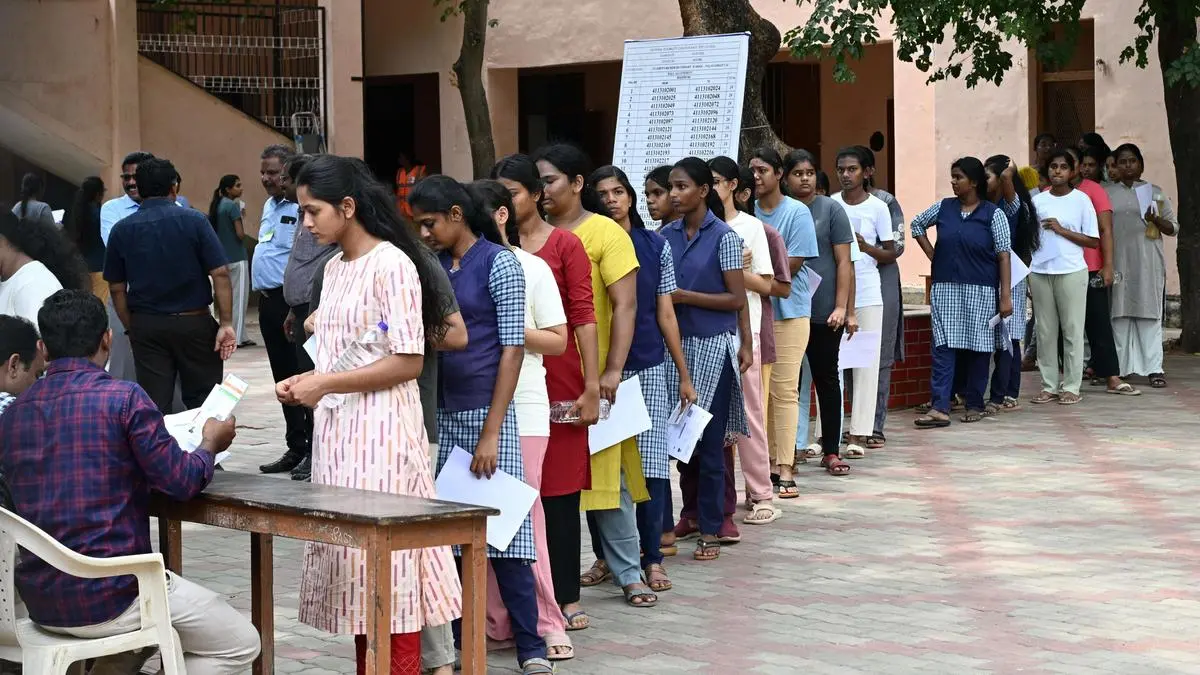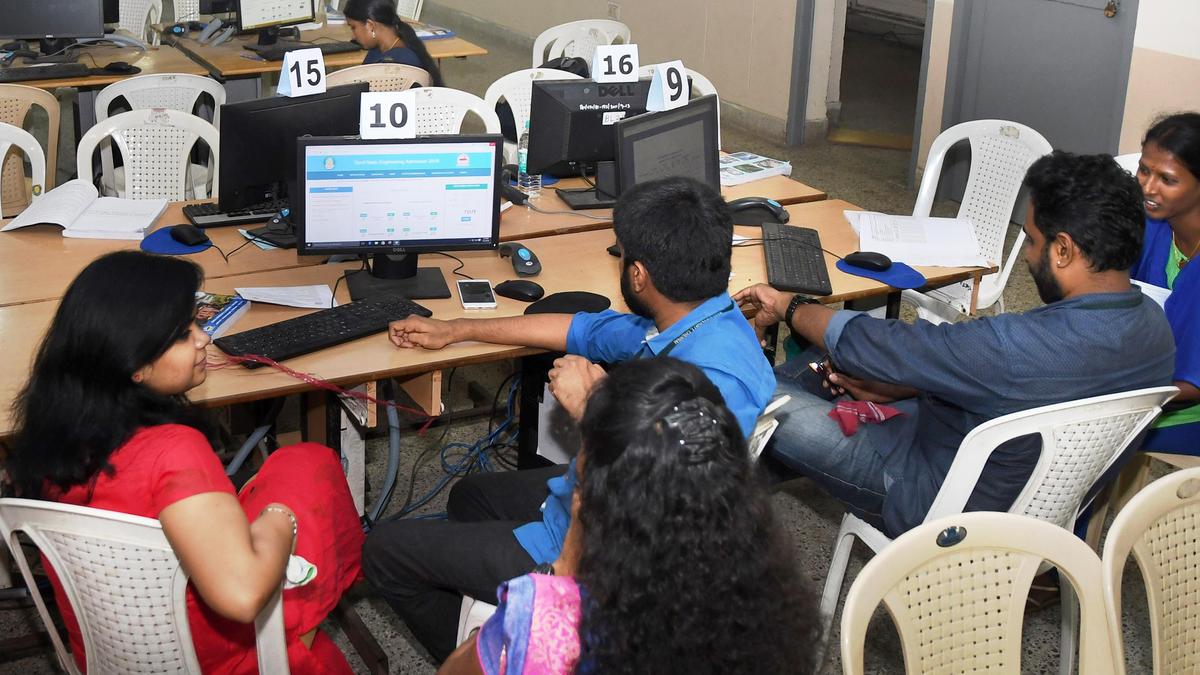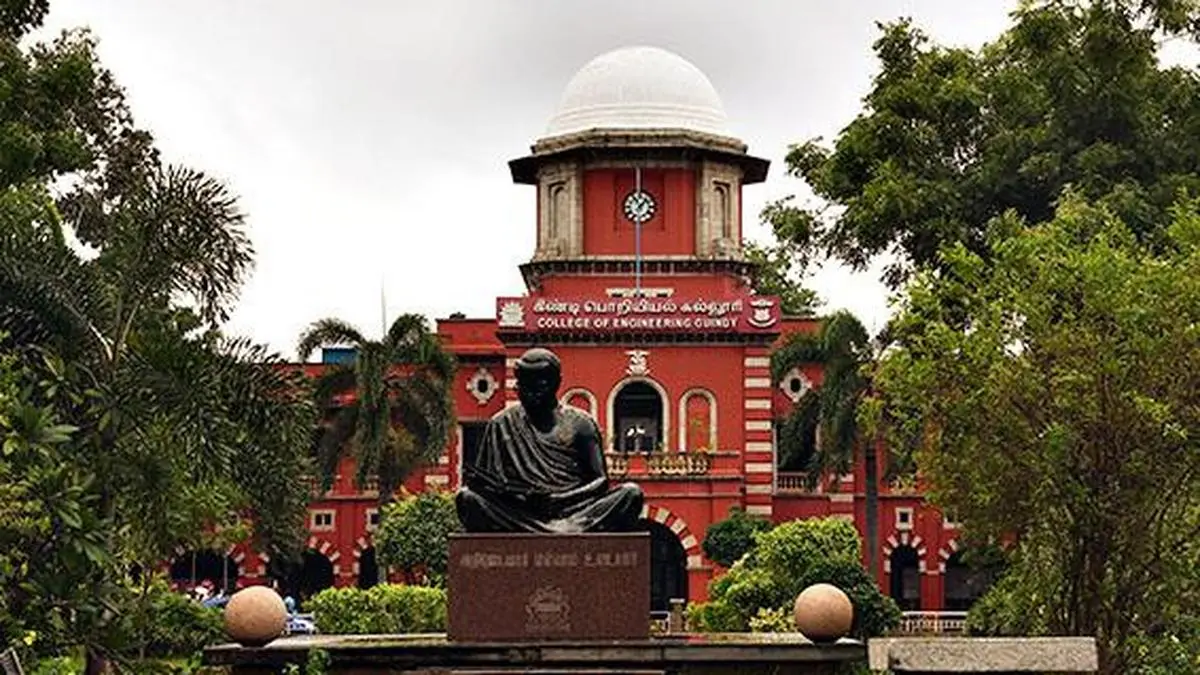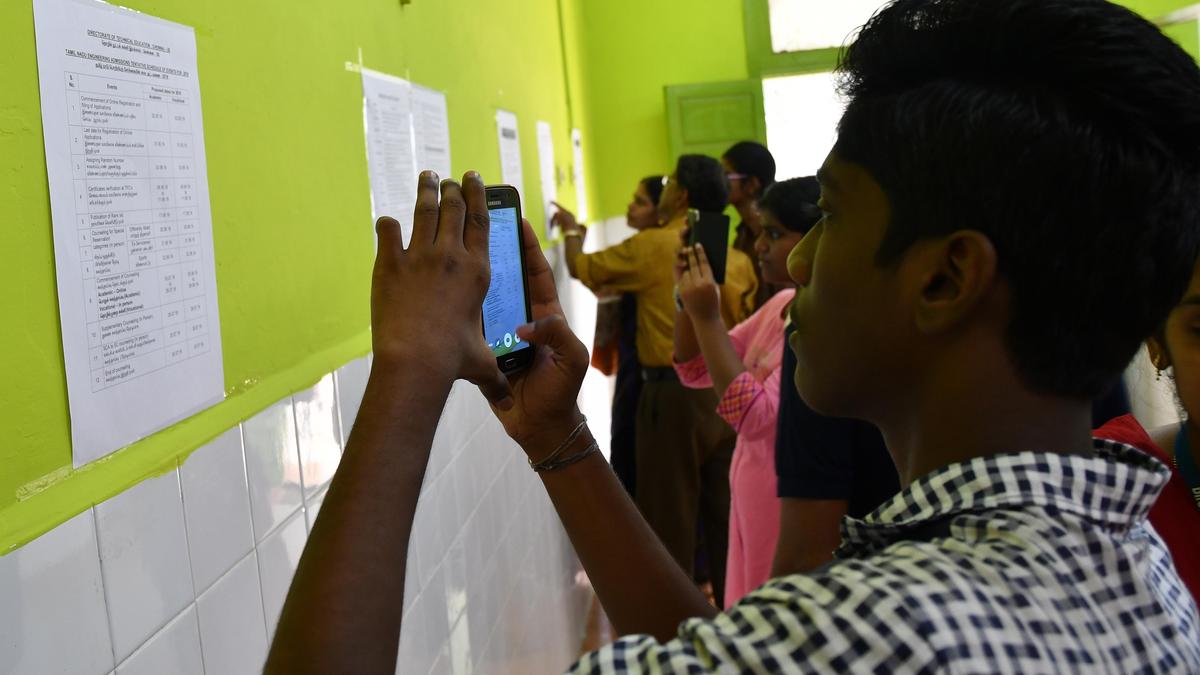
For a student in Tamil Nadu, choosing an engineering seat comes with its own challenges. While on one side is the burden of choosing a course that would yield a job, on the other side is the challenge of navigating an online system to land the preferred seat at the preferred institution. The twain, often, does not match for many.Tamil Nadu inducts its engineering students into Anna University, the State’s public technical university, and its affiliated institutions through a fully online, single-window system, which is carried out by the Tamil Nadu Engineering Admissions (TNEA) committee under the supervision of the Directorate of Technical Education (DoTE).Students are to create a login for themselves on the TNEA website, fill in their details in the forms available, upload certificates, and pay the counselling fees. A merit list is released on a designated date, calculating their cut-off marks based on Higher Secondary marks using the formula Maths + (Physics+Chemistry)/2. The next step in the process is choice filling, where students are expected to fill in their choice of seat and institution. This is a critical point where many falter.Here’s how this process works. The student fills in their choice of seats and institutions and locks it. At the time of allotment, if the seats of choice are already taken by candidates with higher ranks or cut-off marks, the student is not allotted any seat in the current round but can participate in the subsequent rounds.Making a choiceChoice filling, thus, becomes a crucial component of the counselling process where dreams are often broken or made. In an event organised by The Hindu Education Plus a few months ago, T. Purushothaman, Secretary, TNEA, had made a detailed presentation on the counselling process where he underlined the importance of this stage. Students are allowed to exercise any number of choices, he had said. To emphasise his point, he had offered a snippet from the TNEA 2025 counselling process: one of the students had entered 1,502 choices!He had urged students to fill in as many combinations as they could, depending upon their cut-off marks. The lower the marks, the more choices there should be, was his message. In 2025, a little less than 1,000 students who participated in the first round of counselling were allotted seats in the second round, said Jayaprakash Gandhi, a long-time career guidance counsellor. The figure was a little above 600 this year, showing an improvement, but the concern remains about a greater divide between the rural and urban students.Officials of the TNEA committee, however, say that they have noticed an improvement in the choice filling pattern of students of late. The School Education Department, they said, organised training programmes for district-level education officers, inviting resource persons from the TNEA, the Directorate of Medical Education (for NEET), and Tamil Nadu Agricultural University. Besides, the TNEA Facilitation Centres, some of which have been modified in recent times, have done well to cater to the needs of the students. The strategies exhibited by students for choice filling were better than in previous years as those with lower cut-off marks have been opting for a greater number of choices.Rural students at a disadvantageE. Balagurusamy, former Vice-Chancellor of Anna University, agrees that the rural-urban divide is real. “Rural students do not have the support structure of their urban counterparts, such as educated parents, career guidance counsellors at school, and access to specialised coaching. They are often influenced by misleading advertisements and social media posts,” he avers.This information asymmetry also plays a big role in the student’s choice of course of study, Prof. Balagurusamy says. The noticeable uptick in the number of students opting for Computer Science and Engineering (CSE) and related fields in the past few years was a case in point.Any trend in the choice of engineering seats depends upon placement, he notes. Although placements in the service industry have increased, the sector was already showing signs of saturation. “This is wrong. The manufacturing industry is not growing as fast, both at the State and the national levels, but how much can the service industry take? I met a food delivery worker recently who greeted me, saying he could not find a job for over a year and took up the gig work as a desperate measure,” the retired professor says.This underemployment wasn’t a one-off instance, but was prevalent quite widely among CSE graduates, especially from rural institutions, he points out.Mr. Gandhi’s assessment of the situation doesn’t paint a rosy picture either. He says, “The year-on-year expansion of CSE and allied branch seats will flood Tamil Nadu with computer science graduates by 2030, presenting severe placement challenges for tier 2 and tier 3 colleges as software hiring normalises.”Pointing towards another related trend, Prof. Balagurusamy said that the advent of Artificial Intelligence (AI) has led to “computer science students going crazy”. AI, he maintained, was a tool, the knowledge of which should be made available to all core engineering streams and even to the medical profession.Over half opt for Computer ScienceIn 2025, about 55% of the total seats filled in engineering colleges were CSE and related fields. The figure crossed 50% in the previous two years as well, according to R. Ashwin, an independent career guidance counsellor. Along with CSE, Electronics and Communication Engineering (ECE), too, was attracting about 15% of students, thanks to the Union government’s push for semiconductor manufacturing with the establishment of the India Semiconductor Mission. Last month, the Cabinet cleared an outlay of ₹1.27 lakh crore for Semicon 2.0 with multiple plants for chip design, fabrication, equipment manufacturing, and R&D.Conversely, core engineering streams such as Civil Engineering (CE) and Mechanical Engineering (ME) have been facing rough winds for the past few years, with the intake going down steadily year-on-year. The intake for Civil Engineering hovered around 4% in the previous years, and that for Mechanical Engineering stood at around 8%.This year, as the third round of counselling is in progress, the trends seem to have shifted marginally for the better for Electrical and Electronics Engineering (EEE) and ME streams, while Information Technology (IT) and Computer Science and Business Systems (CSBS) registered a slight downward preference.This year, about 1.8 lakh engineering seats are on offer in the 420-odd colleges in the State through the single-window counselling process. As things stand, over 68,000 students secured tentative allotments in round three of the TNEA counselling, taking the total number of allottees to over 1.5 lakh.Vacant seats and the qualityEven if all the allottees confirm their seats, which is never the case, there would still be a substantial number of engineering seats that would go abegging. This has been a trend year after year in Tamil Nadu which, educationists say, is a matter of grave concern. Prof. Balagurusamy says that the All India Council for Technical Education (AICTE) often permitted additional intake in popular courses for the better-performing colleges while tier 3 colleges struggled to fill up seats.“In Tamil Nadu, the capacity is more than the demand, so seats will go vacant. Colleges that struggle to attract students often have poor infrastructure, faculty, and library facilities. What do you think will be the quality of education? There is a need to identify these colleges and close them down to protect the future of students,” Prof. Balagurusamy suggests. Citing instances from the time he was the Vice-Chancellor of Anna University, he said that he had once shut down four colleges, some of them owned by powerful politicians of the then ruling party. A few years ago, he recalled that Anna University had issued deficiency notices to about 200 colleges in the State after inspection teams found that they failed to meet the necessary standards. “They had 40 days to respond to the notices, but nothing came out of that exercise,” he laments.Mr. Gandhi has a different view of things in this matter. He believes that controlling institutional capacity goes a long way in maintaining the quality of education. “We should ask why top institutions in the country aren’t going for higher intake. IIT Bombay, for example, never increased seats in CSE. It is still less than 100. This is the fallout of commercialisation of education. We should be concerned about how we can save engineering education,” he observes. As for colleges that struggle to fill half of their sanctioned seats, Mr. Gandhi suggests handholding by Anna University to help these institutions upgrade their facilities.No easy solutionThere is no simple panacea for the problems facing engineering education in the State. The State’s premier technical public university has been without a Vice-Chancellor since Prof. R. Velraj completed his term in August 2024 due to a fallout between the Governor and the State government over the powers to appoint Vice-Chancellors.While day-to-day functions like the pushing of files are carried out by a three-member convener committee – the Higher Education Secretary is the convener and the Director of Technical Education is a member – the absence of academic leadership is quite palpable. The university itself has been functioning with barely half of its sanctioned faculty strength, with little or no effort to fill the vacancies.In December 2023, the State Planning Commission published a study of its analysis of semester-end engineering question papers, stating that the assessment quality was largely below par. The questions mostly conformed to the lower cognitive levels of Bloom’s Taxonomy while lacking analytical depth. The clamour for the need for reforms has been gaining ground since then, but a curriculum revamp has been long overdue.Successive governments had in the past given in to status quoism, while indulging in chest thumping over the State’s reported 52% Gross Enrolment Ratio in Higher Education. The new dispensation and its will to effect change will be tested as it presents its Demand for Grants for Higher Education in the Tamil Nadu Assembly on Monday (August 24, 2026).
Lost in the seat matrix: engineering season begins in Tamil Nadu
Explore the challenges Tamil Nadu students face in engineering admissions amid a crisis in the education sector for 2026.
1,633 words~7 min read