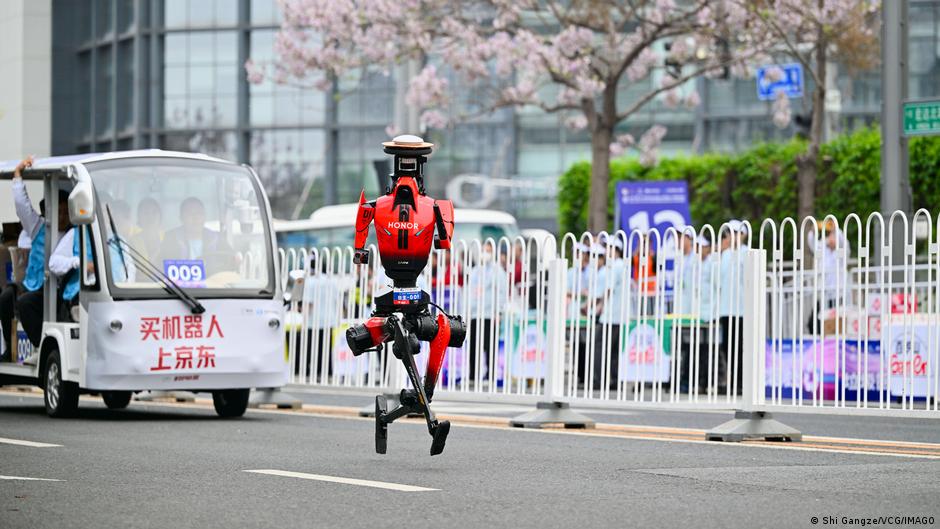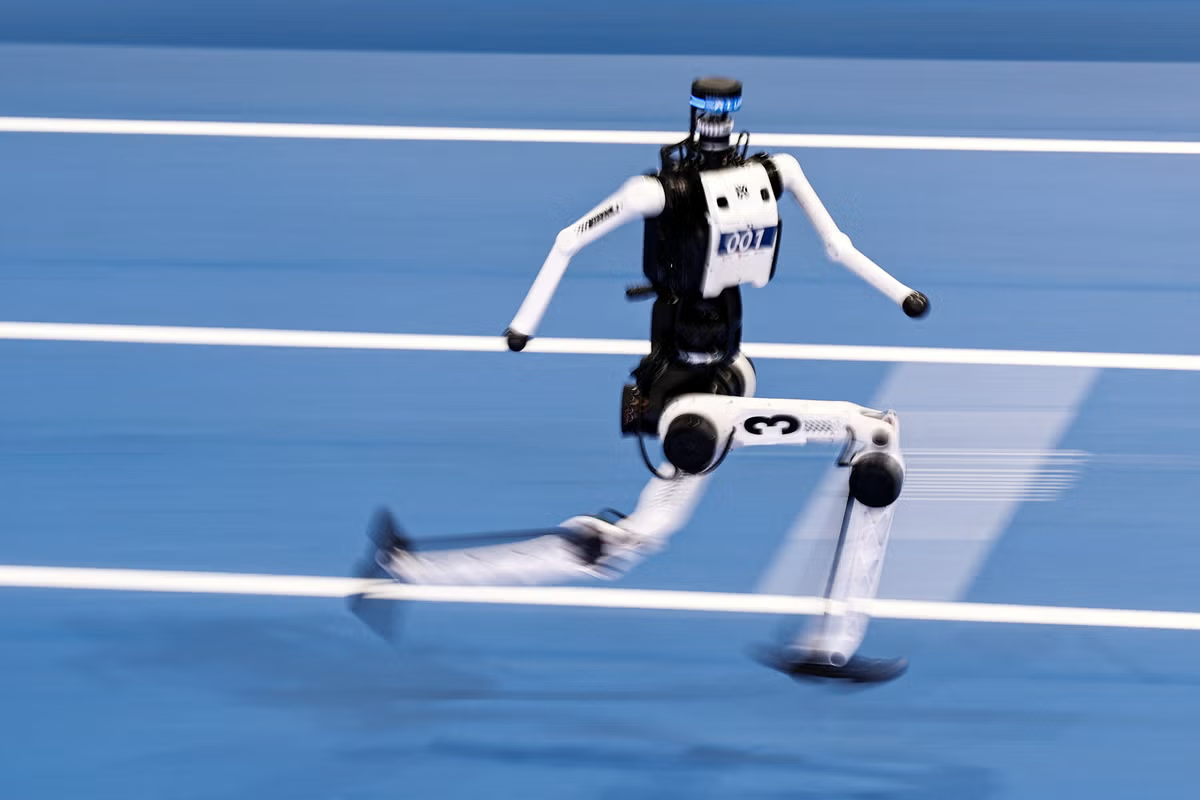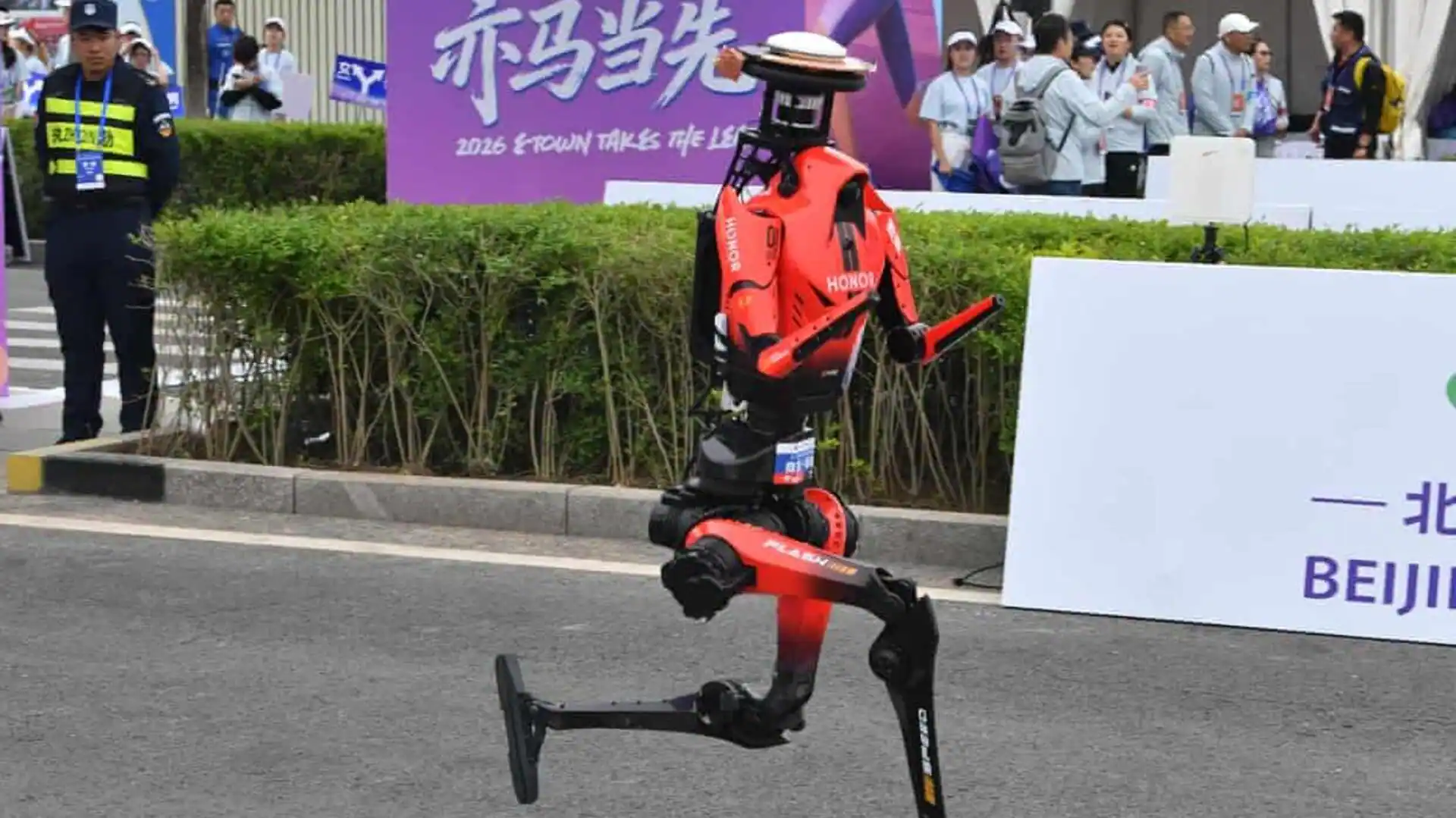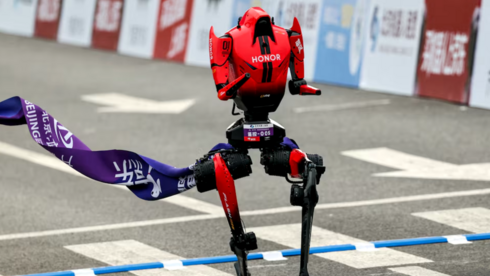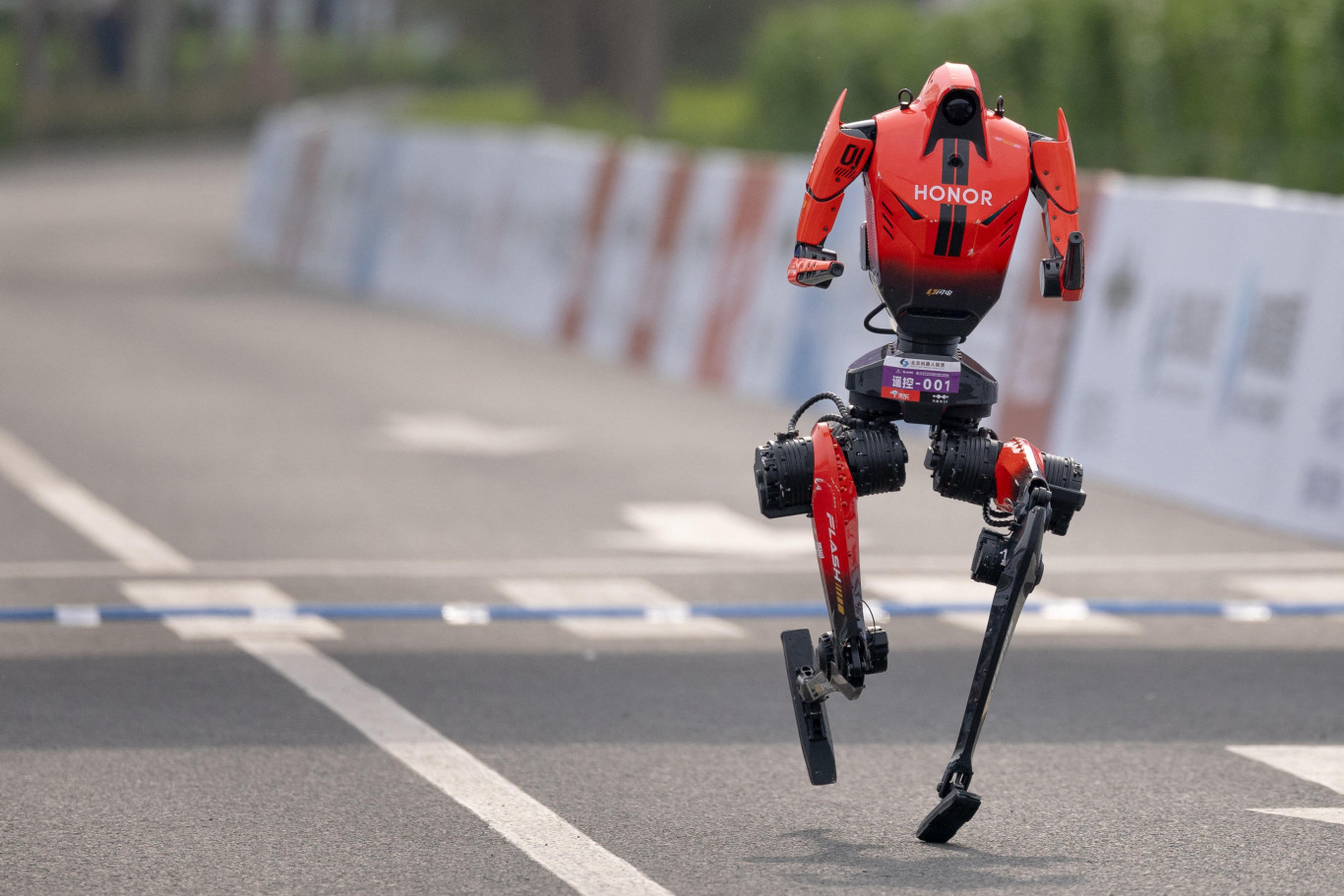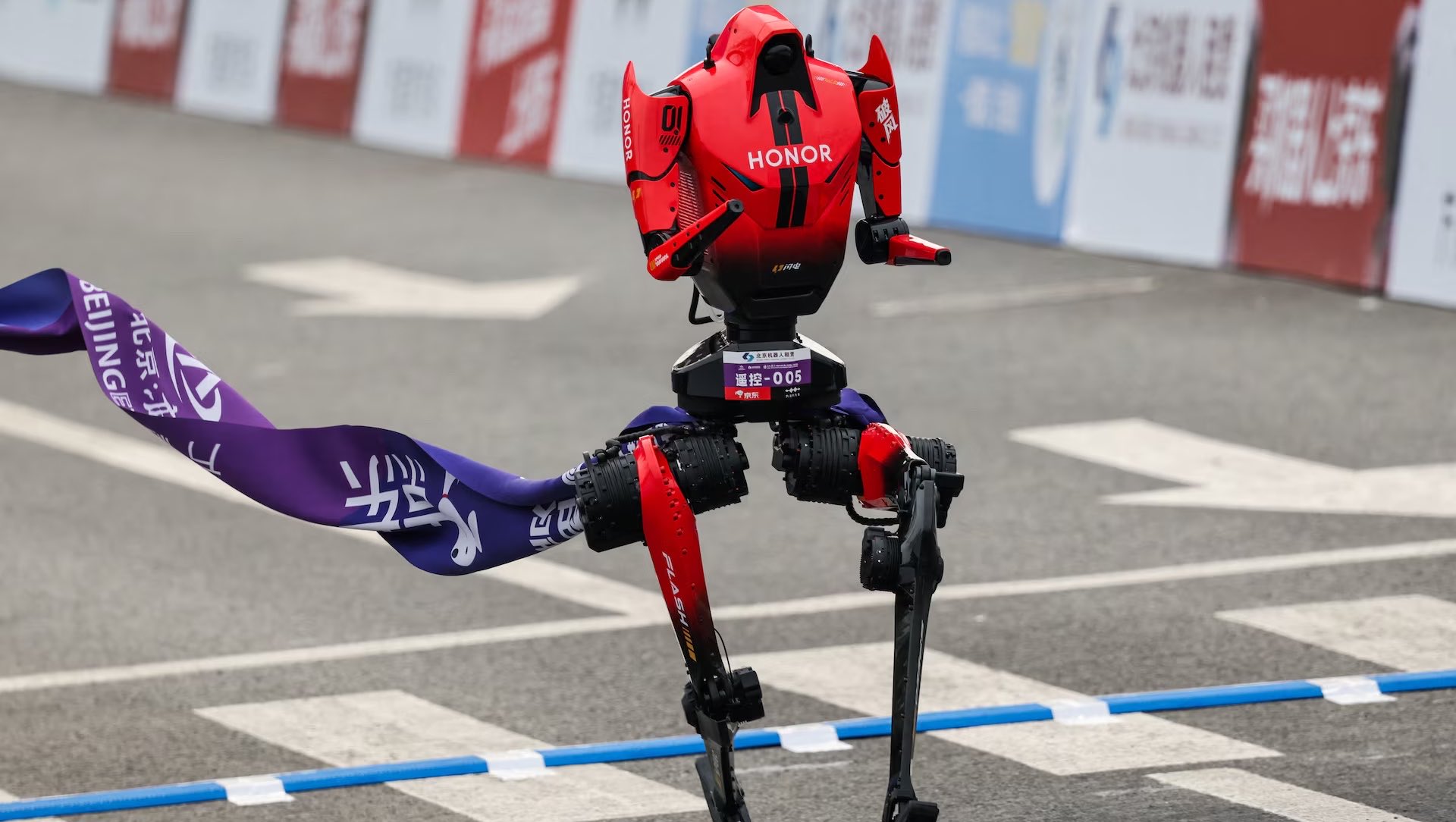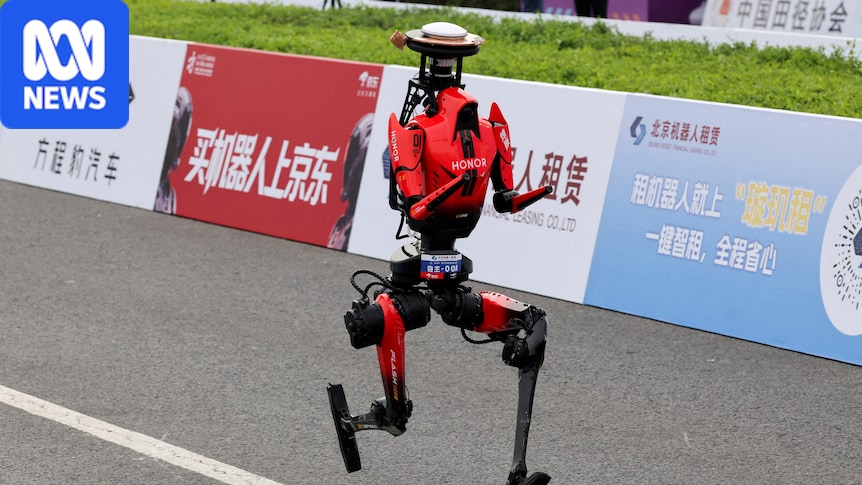
Posted Sat 22 Aug 2026 at 11:38pmSat 22 Aug 2026 at 11:38pmLightning also won the 21-kilometre Beijing half-marathon in April this year. (Reuters: Maxim Shemetov)In short:A robot dubbed "Lightning" has beaten the 100 metres human world record held by Jamaican sprinting great Usain Bolt at this year's World Humanoid Robot Games.The robot ran 100 metres in 9.32 seconds during a preparatory test event for the games — faster than Bolt's record of 9.58 seconds.What's next?The World Humanoid Robot Games run through to August 26.A humanoid robot developed by Chinese smartphone maker Honor has beaten Jamaican sprinting great Usain Bolt's 100 metres world record at this year's World Humanoid Robot Games.The robot — dubbed Lightning — ran 100 metres in 9.32 seconds and reached a peak speed of 14.5 metres per second during a preparatory test event for the games, China's state broadcaster reported on Saturday.The performance surpassed the 9.58-second men's 100m world record set by Bolt at the World Athletics Championships in Berlin in 2009.Lightning also won the 21-kilometre Beijing half marathon in April in 50 minutes and 26 seconds, faster than the elite men's human world-record pace.The robot stood 169 centimetres tall and had 95-centimetre legs at those games.Researchers lengthened its legs by 10 centimetres ahead of the World Humanoid Robot Games which opened in Beijing on Saturday, China Central Television reported.The 'Robot Olympics'This year's World Humanoid Robot Games opened on Saturday. (Reuters: Florence Lo)It's been called the Robot Olympics. But unlike the human Olympics, Team China is collecting almost all the medals.Running from August 22 to 26, this year's World Humanoid Robot Games mark the second edition of the latest and biggest incarnation of China's robot games, which have been taking place for the past decade.The 2026 games add a challenge for robotic hands, with robots judged on their speed and accuracy in precision tasks: tightening screws, opening bottles and picking up beads with tweezers.The shift to work tasks in the games reflects the increasingly crowded industry's biggest problem: showing prototypes can work in the real world.Robotic competitions in China have provided a window into the advances of a now surging sector — and the importance of its success as a strategic industry singled out by President Xi Jinping.Once a curiosity organised by academic teams and hobbyists, China's robot games have become a national showcase celebrated by state media — and, increasingly, a proving ground for commercial products from companies looking to show real-world applications beyond the spectacle.China has been promoting humanoid robots as a strategic emerging industry, with policymakers and companies betting that advances in AI and hardware will accelerate their deployment in manufacturing, logistics and consumer applications.Reuters
'Lightning' the Chinese robot beats Usain Bolt's 100m world record
A robot dubbed "Lightning" has beaten the 100 metres human world record held by Jamaican sprinting great Usain Bolt at this year's World Humanoid Robot Games.
441 words~2 min read