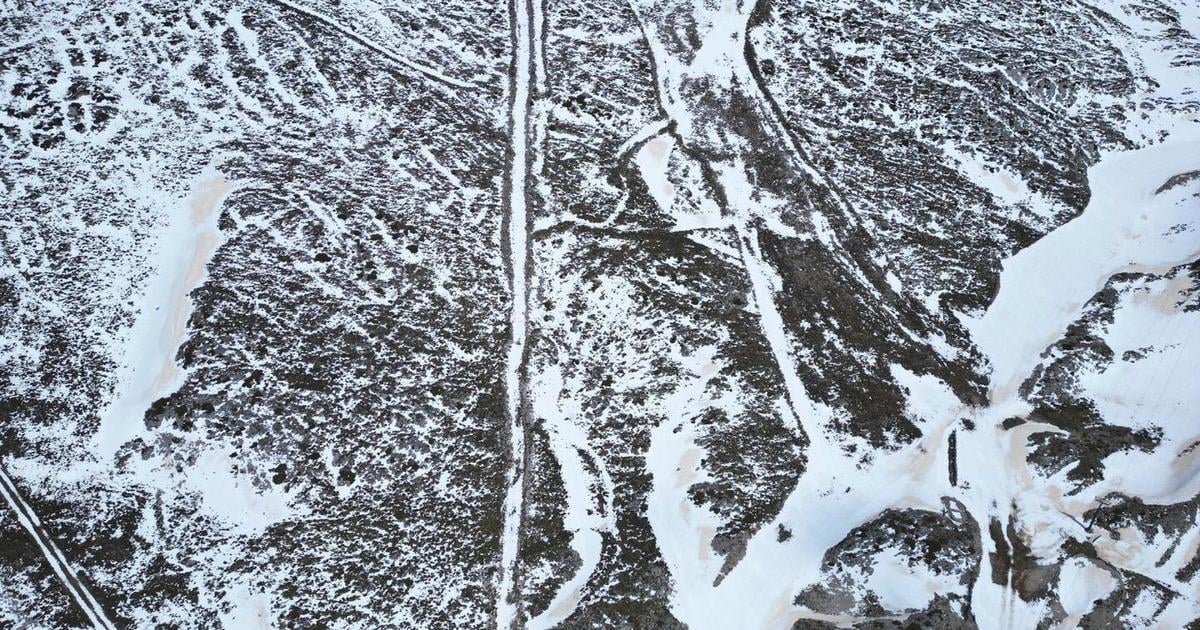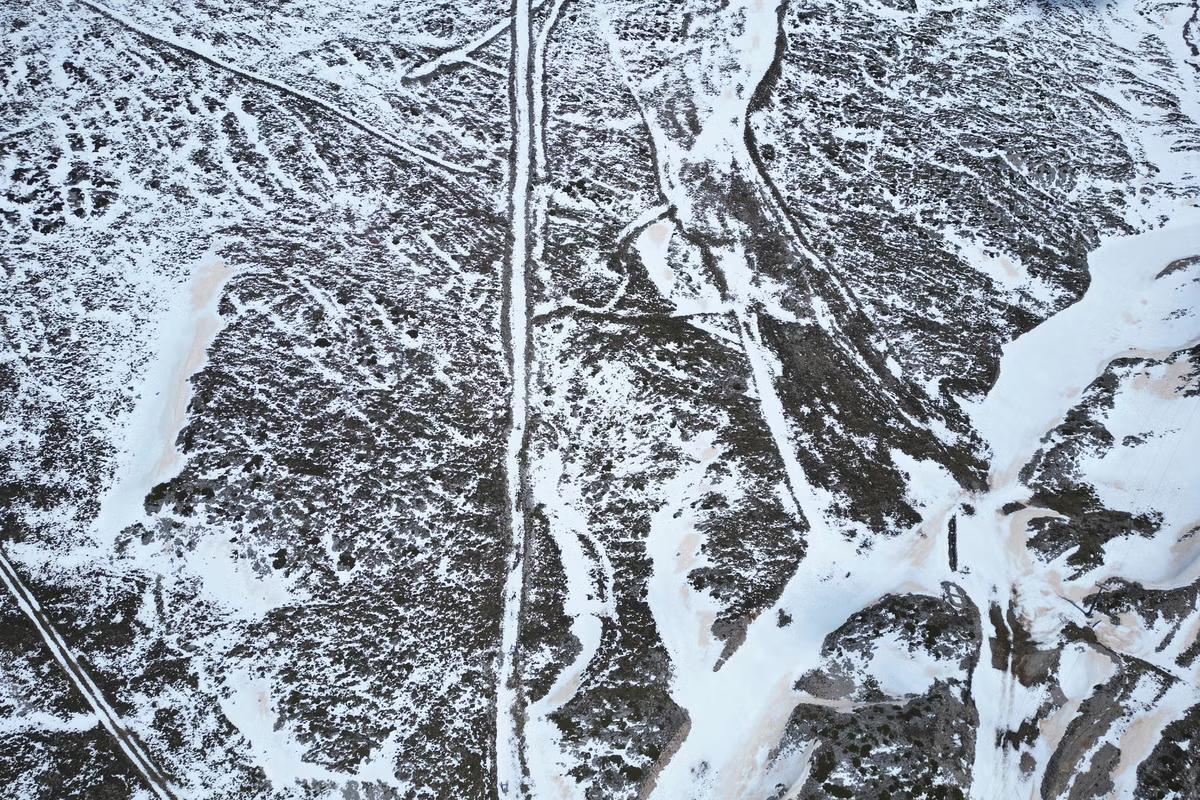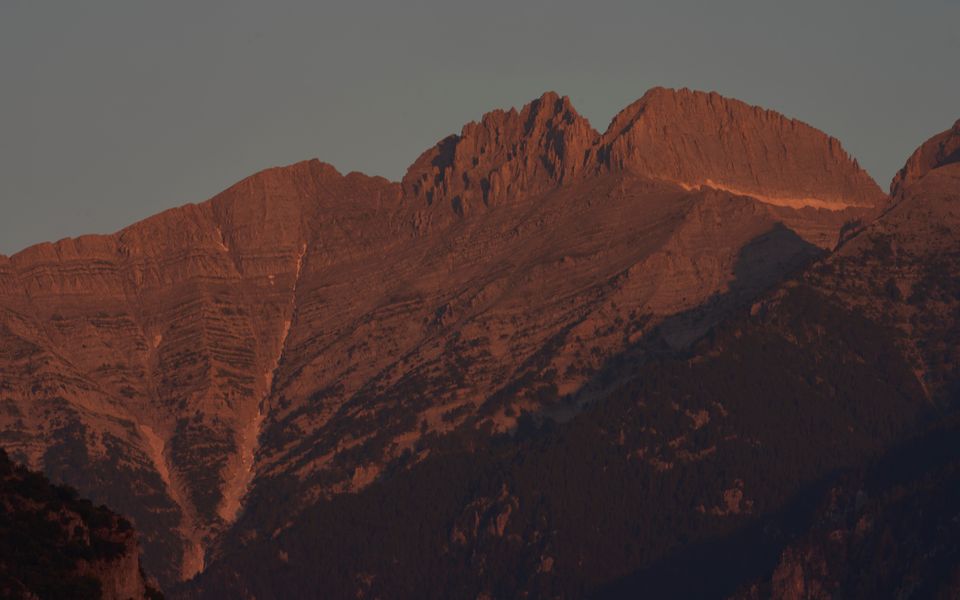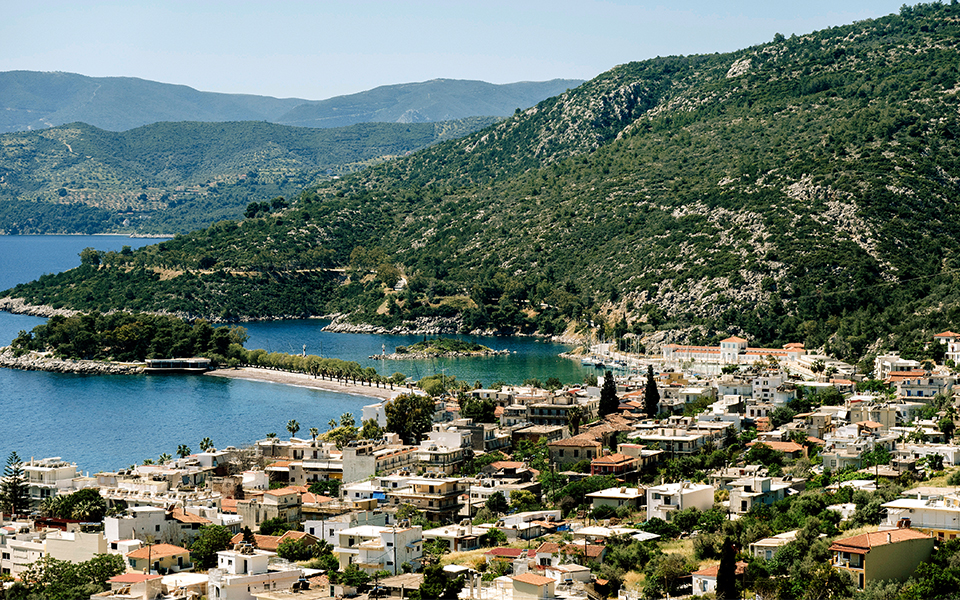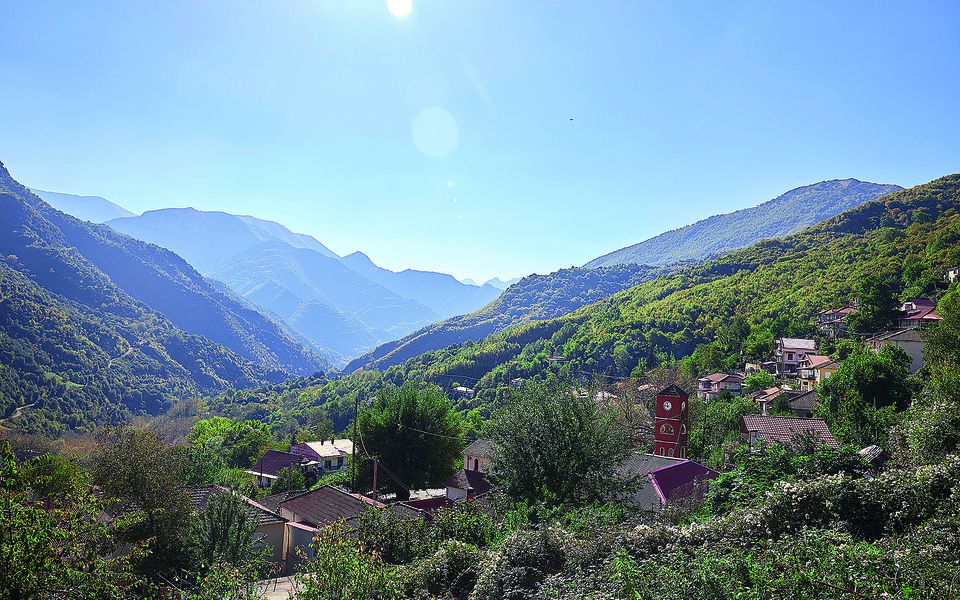
Like the hamlets of Argithea in central Greece, seen here in a 2022 file photo, hundreds of remote mountain villages across the country must wait for summer for life to return to their houses and streets. [Intime News]
Perched at an altitude of 1,060 meters, the hamlet of our story, one of the Argithea cluster in the area of Agrafa in central Greece, is a challenging destination. It may be 57 kilometers from the city of Karditsa, but the drive takes well over an hour. Its handful of houses – most of them modest dwellings designed for different times, when entire families were packed into one room, and the other was used for sheltering animals and storing crops – are scrambled across the hillside and connected by a labyrinthine network of narrow, snaking streets that follow old walking trails.
For most of the year, the hamlet is practically deserted. Its remote location, the absence of a school and harsh winters that bring snow and landslides that often cut off access entirely make it hostile to the modern way of life. Some of its people come and go, sharing their time between their native village and more developed locations, and a handful of elderly locals spend the balmier months here. But in August, oh, in August, it’s like an invisible force draws them all back home: from the oldest, some almost a hundred years old, to the youngest babies of just a few days. Grandfathers and grandmothers sit at the kafeneio and in their courtyards and listen. They listen to the laughter of children running around, meeting up with their friends, making their way down to the ravine and splashing around in the river.