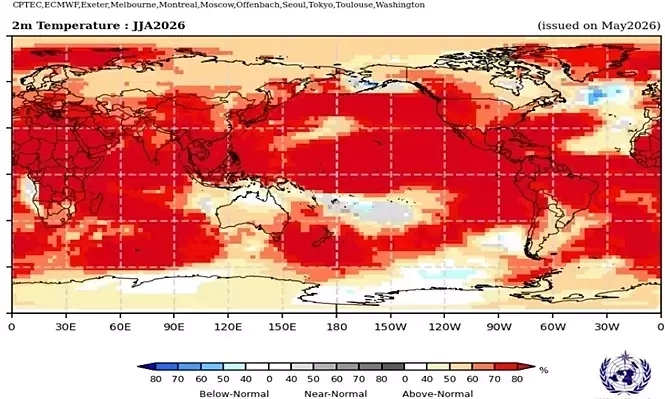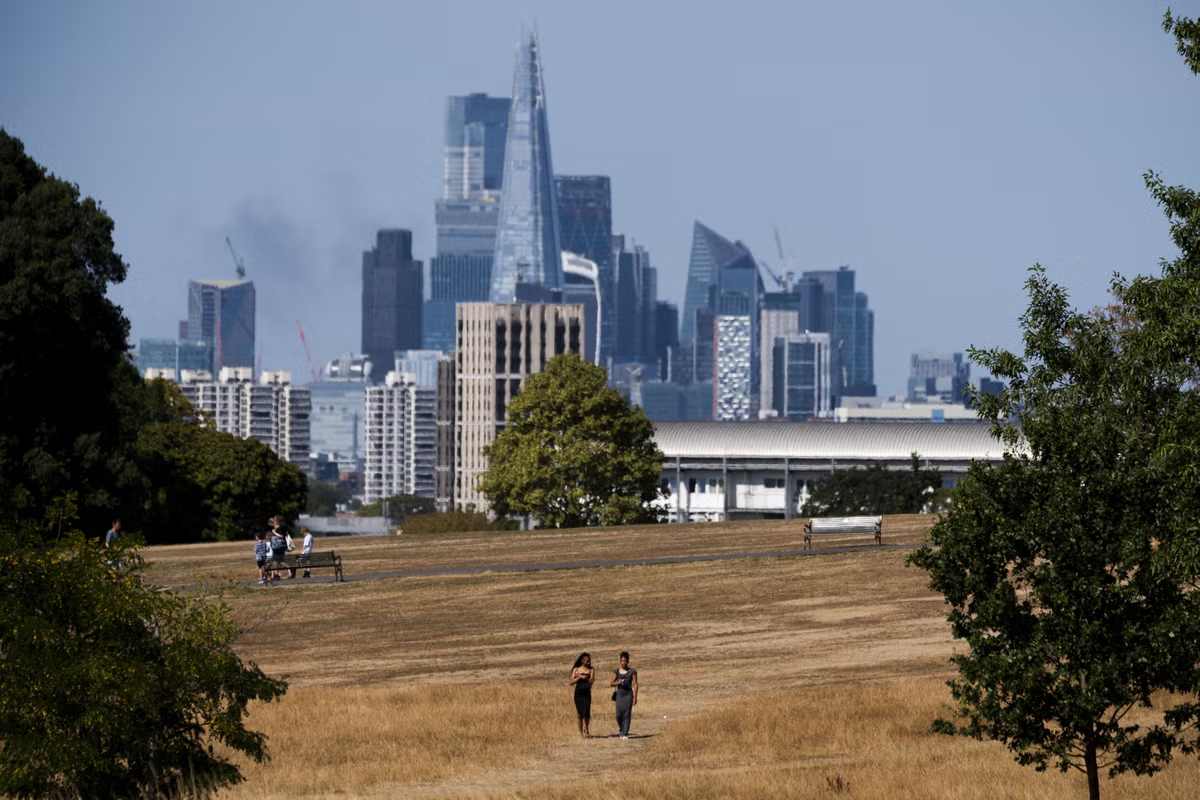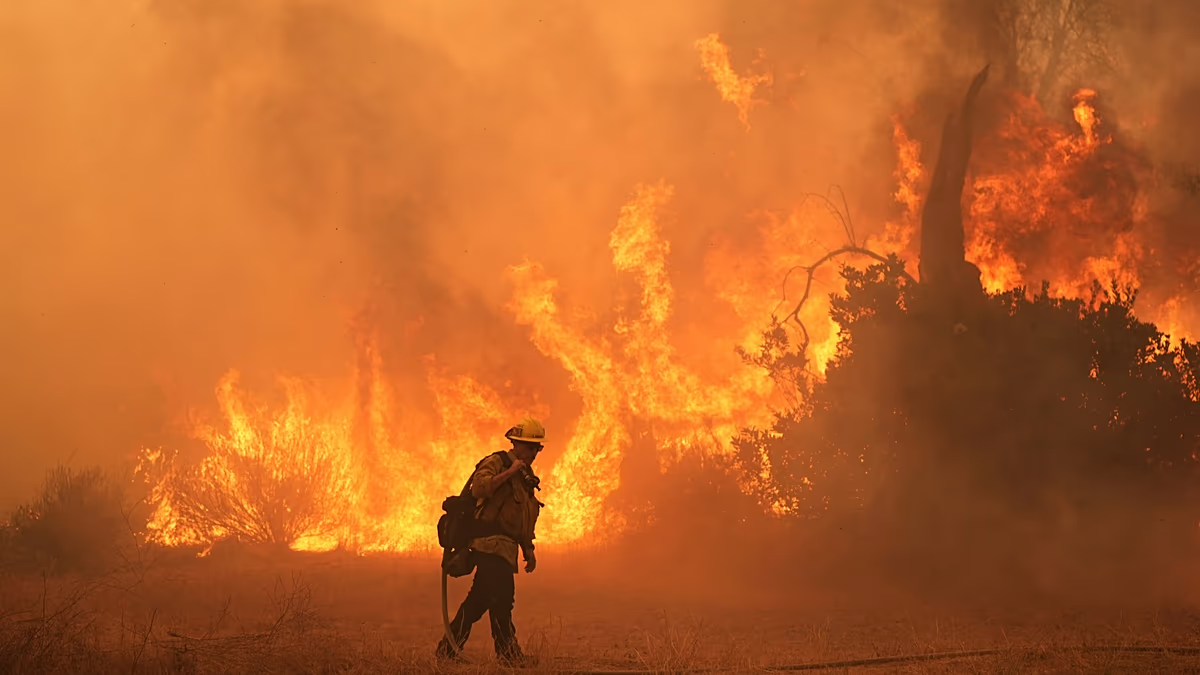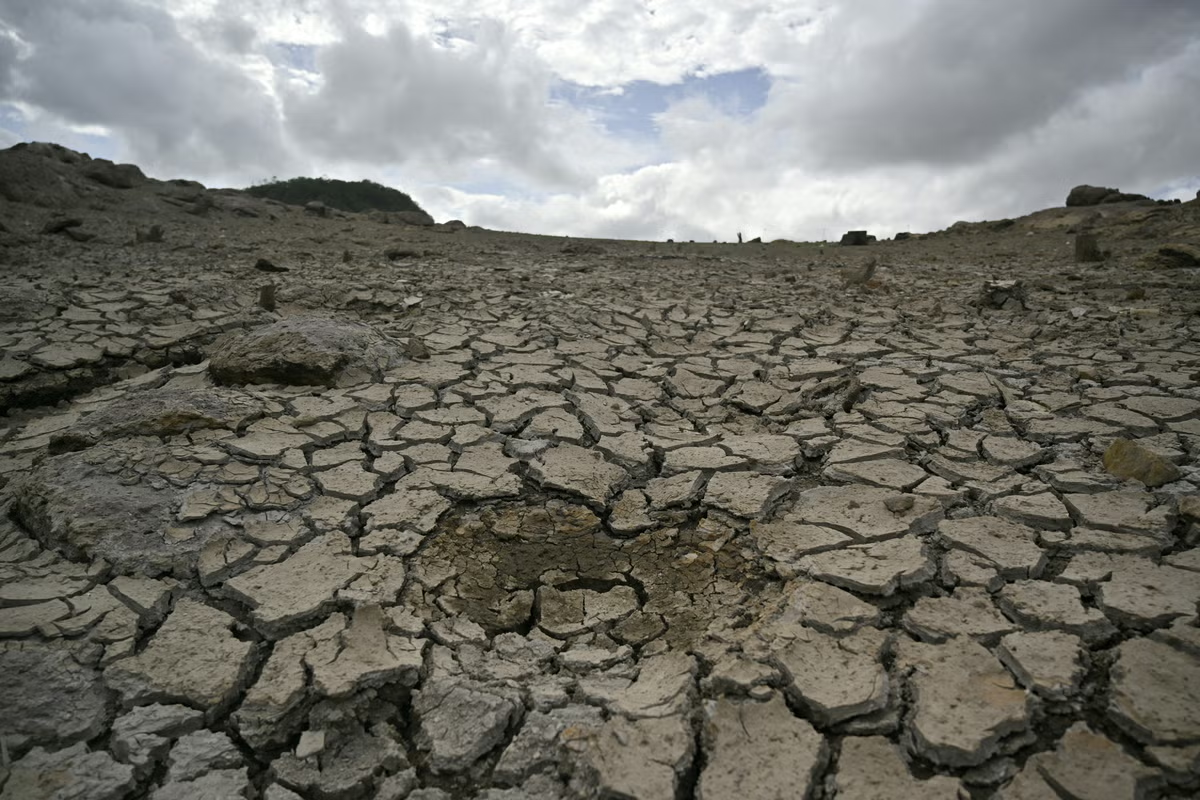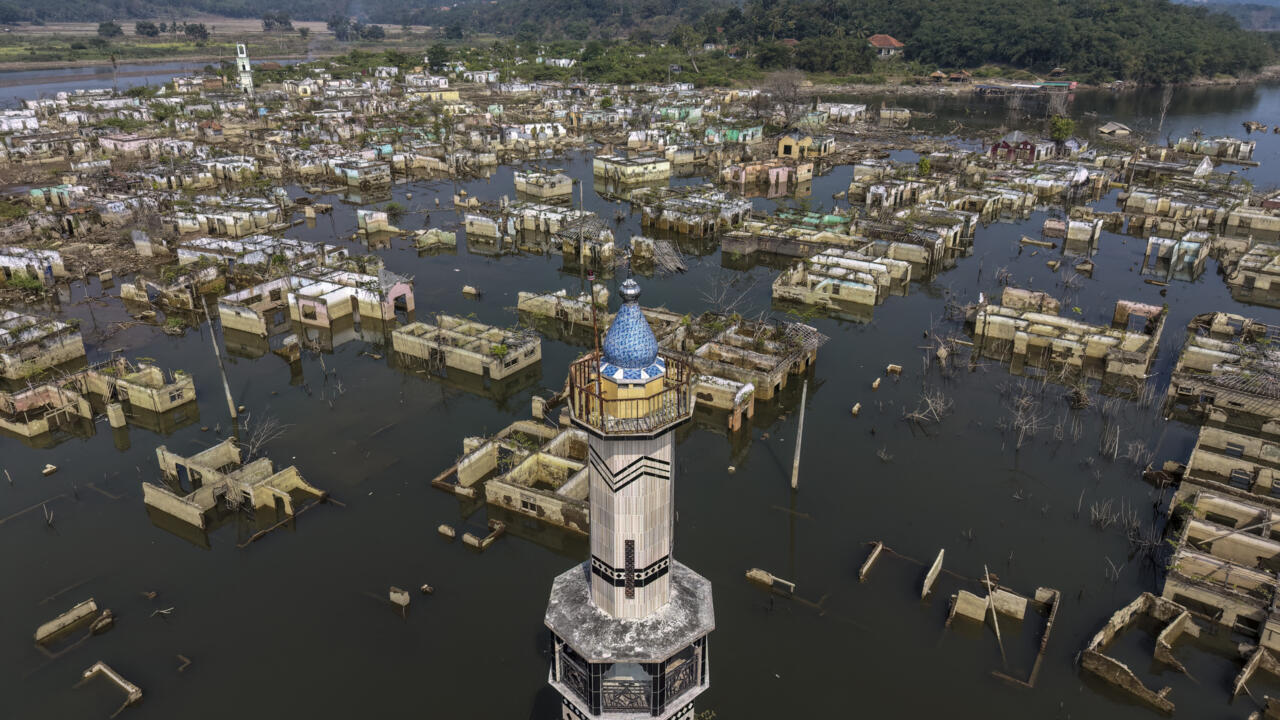
El Niño typically brings drier conditions to Southeast Asia, Australia, southern Africa and northern BrazilA potentially record-breaking El Niño could make 2027 the hottest year on record, with Britain's Met Office forecasting the strongest such event in more than a century and warning of severe droughts and extreme rainfall in parts of the world. India is already seeing below-normal rainfall as the weather pattern develops.The weather agency said the El Niño is expected to intensify over the coming months, potentially pushing Pacific Ocean temperatures more than 3°C above the norm. The resulting changes in atmospheric circulation could have far-reaching effects on weather patterns across the globe.Adam Scaife, head of long-range forecasting at the Met Office, said the agency was expecting an exceptionally strong event. “We are expecting the biggest El Nino for over a century, peaking at something over three degrees -- that is unheard of in modern climate records,” Scaife told the BBC.Pacific waters are currently around 2.6°C above a rolling 30-year average, according to the Climate Brink dashboard, which uses data from the US National Oceanic and Atmospheric Administration.Forecasts aggregated by the dashboard suggest the temperature anomaly could peak at around 3.9°C in November, well above the more than 3°C anomaly recorded during the strong 2015 El Niño.“We should be clear that this is an unprecedented event,” Scaife said in a Met Office blog, adding: “I have never seen an El Nino signal this intense in our forecasts.”Even a 2°C rise would constitute a “really big event”, he said.India, Asia could see rainfall shiftsThe developing El Niño is already affecting weather patterns, with the Met Office saying it is causing “well below normal rainfall in India.”El Niño typically brings drier conditions to Southeast Asia, Australia, southern Africa and northern Brazil, while increasing rainfall in the Horn of Africa, the southern United States, Peru and Ecuador.Scaife said the unusually strong event was likely to have particularly pronounced effects across the tropics, with forecasters expecting “really severe droughts in places like South America, and the West Pacific.”The weather pattern could also bring increased rainfall and storminess to the UK around November, he said.El Niño occurs when sea-surface temperatures in the tropical eastern Pacific rise at least 0.5°C above the baseline. While it is part of a natural climate cycle, scientists say climate change can amplify its effects.The Met Office said a record-strength event would add to the stresses of climate change following a summer of heatwaves across Europe.However, the strongest effects could extend beyond individual weather events, with the El Niño expected to push up global average temperatures.Met Office scientist Nick Dunstone said 2027 was “very likely to replace 2024 as the warmest year on record.”Global temperatures in 2024 exceeded 1.5°C above the pre-industrial period, the threshold referenced in international efforts to limit global warming. Last year was the third-hottest year on record.The British forecast is broadly in line with other projections. Carlo Buontempo, director of the European Union’s Copernicus Climate Change Service, said earlier this year that 2026 could be “another record-breaking year.”El Niño events generally occur every two to seven years as part of a natural cycle involving warmer and cooler Pacific Ocean conditions. The opposite cooling phase is known as La Niña.
'Biggest El Niño' in over a century could make 2027 hottest year on record
A potentially record-breaking El Niño could make 2027 the hottest year on record, with Britain's Met Office forecasting the strongest such event in more than a century and warning of severe droughts and extreme rainfall in parts of the world. India is already seeing below-normal rainfall as the weather pattern develops.
535 words~2 min read