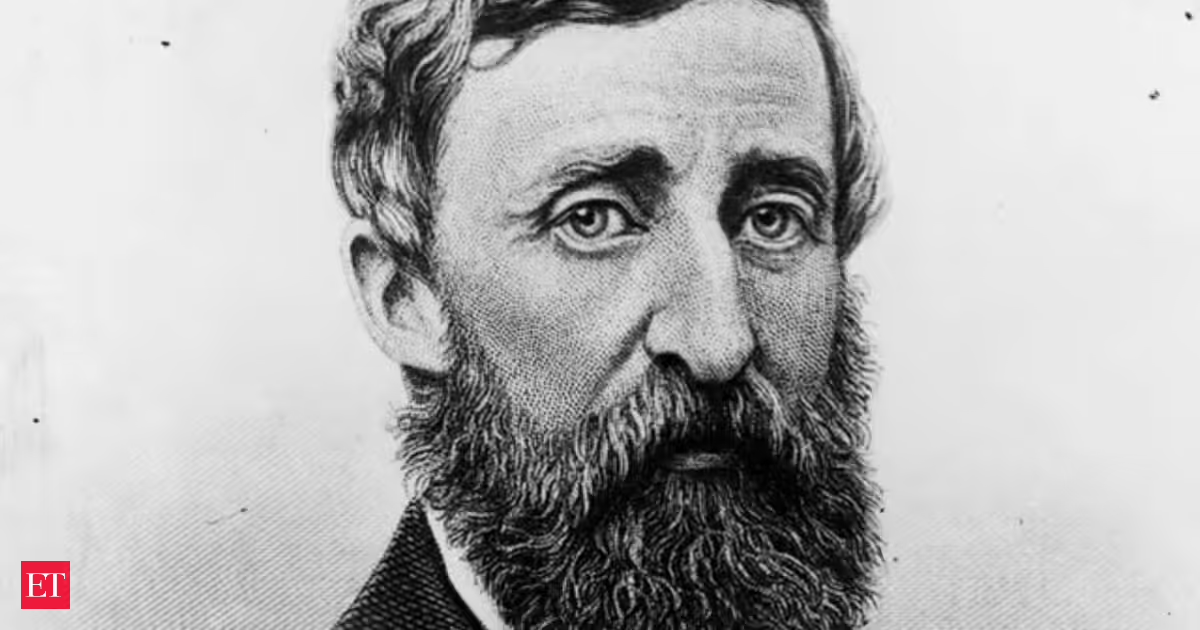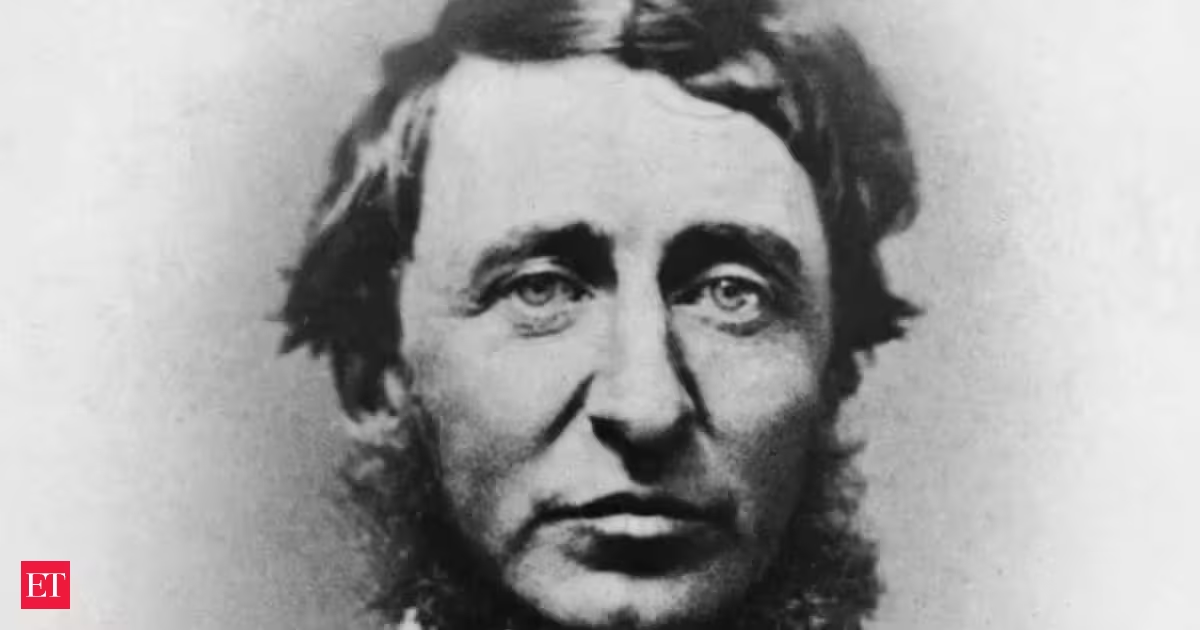
Quote of the Day: There are moments when staying where you are feels safer than taking a chance on the life you actually want. You may have a job that pays the bills but leaves you restless, a goal you keep postponing because you are not sure you can achieve it, or a dream that has slowly become something you tell yourself you will pursue “someday.”Then, one day, someone finally decides to act. They start applying for the job they thought was beyond their reach. They begin writing the book they have talked about for years. They leave behind a familiar routine to build something of their own. The first steps may not look like success at all. There may be rejection, uncertainty and plenty of reasons to turn back.But sometimes, moving consistently toward a life you genuinely want creates opportunities that could never have appeared while you were standing still.Quote of the Day by Henry David Thoreau: “If one advances confidently in the direction of his dreams, and endeavors to live the life which he has imagined, he will meet with a success unexpected in common hours.”The quote comes from Henry David Thoreau's Walden: Or, Life in the Woods and remains one of his most widely remembered reflections on ambition, purpose and the courage to live deliberately. Its appeal lies in a simple idea: pursuing a meaningful life can yield forms of success that are impossible to predict in advance.Thoreau was not promising that every dream automatically comes true. Instead, he was suggesting that commitment changes what becomes possible.Also Read: Quote of the Day by Paula Radcliffe, the ‘greatest British female marathon runner’: ‘You can be strong and true to yourself without being rude or loud’What the quote is actually suggestingThoreau begins with movement: “advances confidently in the direction of his dreams.” That distinction matters. He does not say a person must know exactly how the journey will end. He says they must move in the right direction.In everyday life, this can mean taking the first practical step toward something that matters. Someone who wants to change careers might start learning a new skill after work. Someone who wants to become a writer might begin with 500 words a day. Someone who wants a healthier life might simply start walking every morning.None of those actions guarantees success. But they create momentum.The second part of the quote is equally important: “endeavors to live the life which he has imagined.” Thoreau is talking about more than achieving a particular goal. He is talking about building a life that reflects what a person genuinely values.That can be difficult because people often confuse their own ambitions with expectations imposed by others.A person may pursue a prestigious career because everyone around them considers it successful. Someone else may remain in an unhappy situation because changing direction feels like failure. Another person may spend years chasing money without ever asking what they actually want their life to look like.Thoreau's argument challenges that habit. The imagined life does not have to be extravagant. It could mean a quieter existence, meaningful work, time with family, creative freedom or simply greater control over how one's days are spent.The unexpected success he describes can also arrive in forms that were never part of the original plan. A failed application can lead to another opportunity. A small personal project can become a career. A difficult decision can introduce a person to people, places and experiences they would never otherwise have encountered.The important part is that none of this happens while standing still.Henry David Thoreau: The thinker behind the ideaHenry David Thoreau was born in Concord, Massachusetts, in 1817. He became one of America's most influential writers, philosophers and advocates of living deliberately.Thoreau studied at Harvard before returning to Concord, where he developed close intellectual ties with Ralph Waldo Emerson and became associated with the American transcendentalist movement.His best-known experiment in simple living took place at Walden Pond. Beginning in 1845, Thoreau lived in a small cabin on land owned by Emerson, using the experience to examine society, work, nature and the way people choose to live.The experience became the foundation for Walden, published in 1854. Thoreau also wrote extensively about individual conscience and political responsibility. His essay on civil disobedience became particularly influential, arguing that individuals should not surrender their moral judgment simply because a government demands obedience.His writing combined observations of nature with larger questions about freedom, purpose and human existence. He died in Concord in 1862, but his ideas continued to influence writers, activists and readers around the world.Henry David Thoreau’s thinking style and philosophy behind the quoteThoreau's philosophy repeatedly returned to the question of whether people are actually living their own lives or simply following routines established by society.That concern is central to Walden. For Thoreau, simplicity was not merely about owning fewer possessions. It was about stripping away distractions so that a person could determine what genuinely mattered.His idea of advancing toward one's dreams fits into that larger philosophy. A meaningful life requires intention. Without it, people can easily spend years moving toward goals they never consciously chose.That does not mean Thoreau believed life would become easy once someone followed a dream. His own life was hardly a conventional model of financial or professional security. His writing instead suggests that uncertainty is part of choosing one's own direction.The phrase “success unexpected in common hours” is especially powerful because it does not portray success as something that always arrives on schedule.Sometimes the most important results appear after years of seemingly insignificant effort. A person may not notice the change as it happens. Then, looking back, they realize that a decision made years earlier quietly redirected their entire life.Why this idea still matters todayThoreau's words feel particularly relevant in a world where people are constantly encouraged to measure their progress.Social media makes other people's achievements visible every day. Career platforms can make professional success appear like a race. Friends and relatives may ask about promotions, marriage, income or other conventional milestones.That pressure can make people abandon their own definition of a good life. Thoreau offers a different question: What direction are you actually trying to move in?For someone unhappy with their career, the answer might be to acquire a new skill rather than immediately quitting. For a parent, it might mean making more time for family rather than constantly chasing professional recognition. For someone with a creative ambition, it might mean finally giving that ambition a small but consistent place in everyday life.The lesson is not that every dream will come true. It is that a dream cannot influence your life if you never move toward it. Sometimes the biggest change begins with a decision that looks almost insignificant at the time. One application. One page. One conversation. One morning spent doing something differently.
Quote of the Day by Henry David Thoreau: ‘If one advances confidently in the direction of his dreams, and endeavors to live the life which he has imagined, he will meet with a success unexpected in common hours’
Quote of the Day by Henry David Thoreau: Taking the first step toward desired goals builds momentum and opens new possibilities. Living a life that reflects personal values is more important than external expectations. Unexpected success often emerges from consistent, deliberate action over time. Henry David Thoreau's philosophy encourages intentional living and pursuing personal dreams. This idea remains relevant today, urging individuals to define their own success.
1,136 words~5 min read