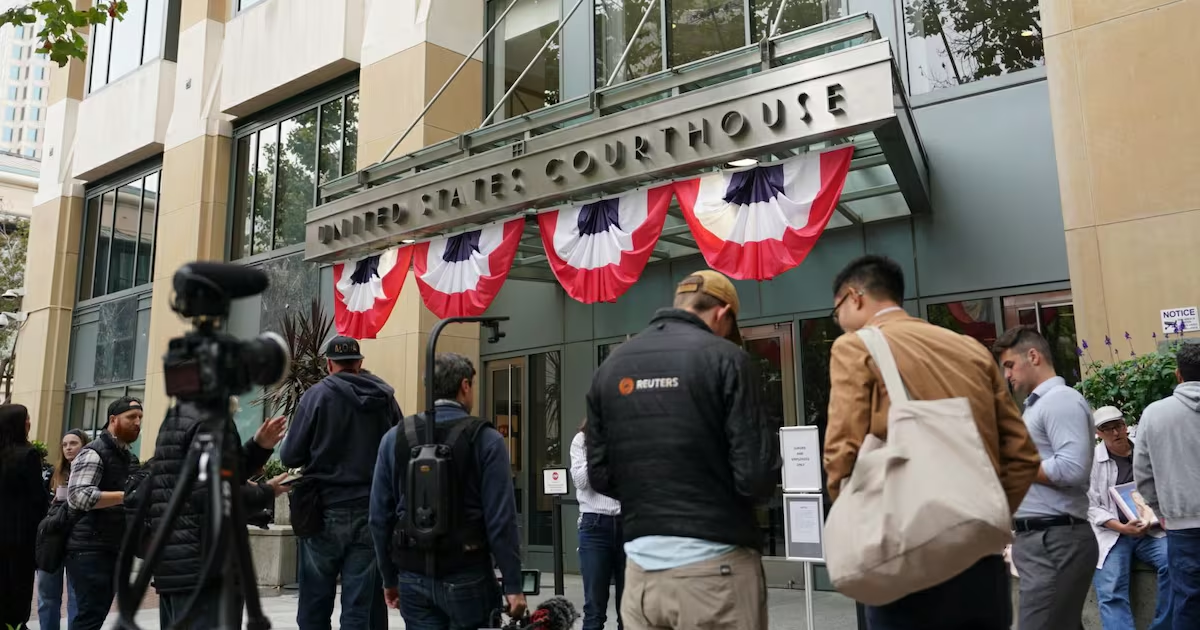
The lawsuit alleges that Meta designed and monetised Facebook & Instagram to encourage compulsive use among young people (representative image)Meta is facing a landmark legal challenge in the US that could have far-reaching implications for how Facebook and Instagram are designed and operated, after 29 states accused the company of deliberately creating products that exploit the psychological vulnerabilities of children and teenagers.The jury trial began this week in federal court in Oakland, California, and is expected to last six to eight weeks. California, Colorado, Kentucky and New Jersey are leading the case on behalf of the 29 states.The 233-page lawsuit, filed in 2023, alleges that Meta designed and monetised Facebook and Instagram to encourage compulsive use among young people, concealed internal research about potential harms and violated laws protecting children's personal data.Meta strongly denies the allegations.What the 29 states are allegingThe states' case centres on four main claims.The first concerns what they describe as exploitative and addictive product design. The states allege Meta deliberately engineered features to stimulate compulsive engagement and encourage users to spend more time on its platforms.These features include infinite scrolling, autoplay, persistent push notifications, “likes” and visual filters that the states say can contribute to body image problems.According to the lawsuit, internal Meta documents show the company studied adolescent brain development, including lower impulse control and greater sensitivity to rewards, and used that knowledge in designing its products.California deputy attorney general Megan O'Neill described the alleged business model during opening arguments as a process to “hook” users, “hold” them for as long as possible, “harvest” their data and “hide” information about the risks.The second claim alleges that Meta concealed internal research showing links between Instagram use and depression, anxiety, body image problems and self-harm among teenagers.Lawyers for the states told jurors that internal documents included statements suggesting the company knew some teenagers were continuing to use Instagram despite negative effects.The third allegation concerns children's privacy. The states claim Meta collected personal data from children under 13 without obtaining verifiable parental consent, in violation of the Children's Online Privacy Protection Act.The fourth relates to alleged violations of state consumer protection, fair-trading and fraud laws.Meta rejects allegationsMeta has strongly rejected the claims and argued that the states' case relies on internal documents and emails taken out of context.During opening arguments, Meta lawyer Paul Schmidt said the company had recognised that some people could struggle with their use of social media and had tried to develop tools to help them.“There can be no dispute that Meta has both recognised that people can struggle with their use of social media and tried to come up with tools to help them,” Schmidt said.According to The Guardian, Schmidt also told jurors that Meta had disabled more than 1 million accounts belonging to children under 13 and was “acting in a meaningful way to remove” young users.A Meta spokesperson said the states were pursuing an “outlandish payout” and argued that their claims were unsubstantiated and that their financial demands were disproportionate.Damages could run into hundreds of billionsThe financial stakes in the case are substantial.California Attorney General Rob Bonta and lawyers representing the other states told the presiding judge that Meta had warned potential damages could reach $1.4 trillion. However, the states said a more realistic figure would be around $200 billion.That would be close to the $206 billion settlement reached in 1998 between 52 US state and territory attorneys general and the country's four largest tobacco companies.The Guardian reported that the states estimate potential damages at up to $200 billion, an amount equivalent to Meta's 2025 annual revenue.However, the states are seeking more than financial penalties. They also want the court to order changes to how Facebook and Instagram operate.Could Facebook and Instagram be redesigned?The states argue that financial penalties alone would not address the alleged harms and are seeking court-ordered changes to Meta's products.Among the changes they have proposed are removing infinite scrolling for young users and ending what they describe as deceptive representations about platform safety.A ruling requiring product changes could have implications beyond the US. Maintaining separate, safer versions of Facebook and Instagram exclusively for US users could be technically and economically impractical.The case could therefore affect how Meta designs its platforms for users in other markets as well, depending on the scope of any eventual court order.The trial's potential impact extends beyond Meta's financial liability because a court-ordered redesign could affect some of the core features through which users interact with Facebook and Instagram.Former Meta engineer among key witnessesOne of the states' key witnesses is former Meta safety engineer and whistleblower Arturo Béjar.Béjar was the first witness called by the government after opening statements. The jury is also expected to hear testimony from Meta CEO Mark Zuckerberg, Instagram CEO Adam Mosseri and other company executives.The states' lawyers are expected to rely on internal company documents and witness testimony to support their allegations that Meta knew about potential harms to young users but failed to adequately address them.Meta, meanwhile, maintains that it has studied the experiences of young users and developed measures intended to support teenagers on its platforms.Trial comes as countries consider social media safeguardsThe case is being closely watched alongside broader efforts to address alleged harms associated with social media.A report published in The Conversation highlighted a “digital duty of care” as one alternative approach. Under such a system, social media companies would be required to build products with safety standards from the outset rather than governments responding to individual harms through separate laws and regulations.Australia is among the countries that has already committed to such an approach.The outcome of the Oakland trial could therefore be significant not only for Meta but also for governments considering how to regulate social media platforms and protect children online.
29 states vs Meta: How a landmark child safety trial could reshape Facebook and Instagram
Meta is facing a landmark legal challenge in the US that could have far-reaching implications for how Facebook and Instagram are designed and operated, after 29 states accused the company of deliberately creating products that exploit the psychological vulnerabilities of children and teenagers.
958 words~4 min read