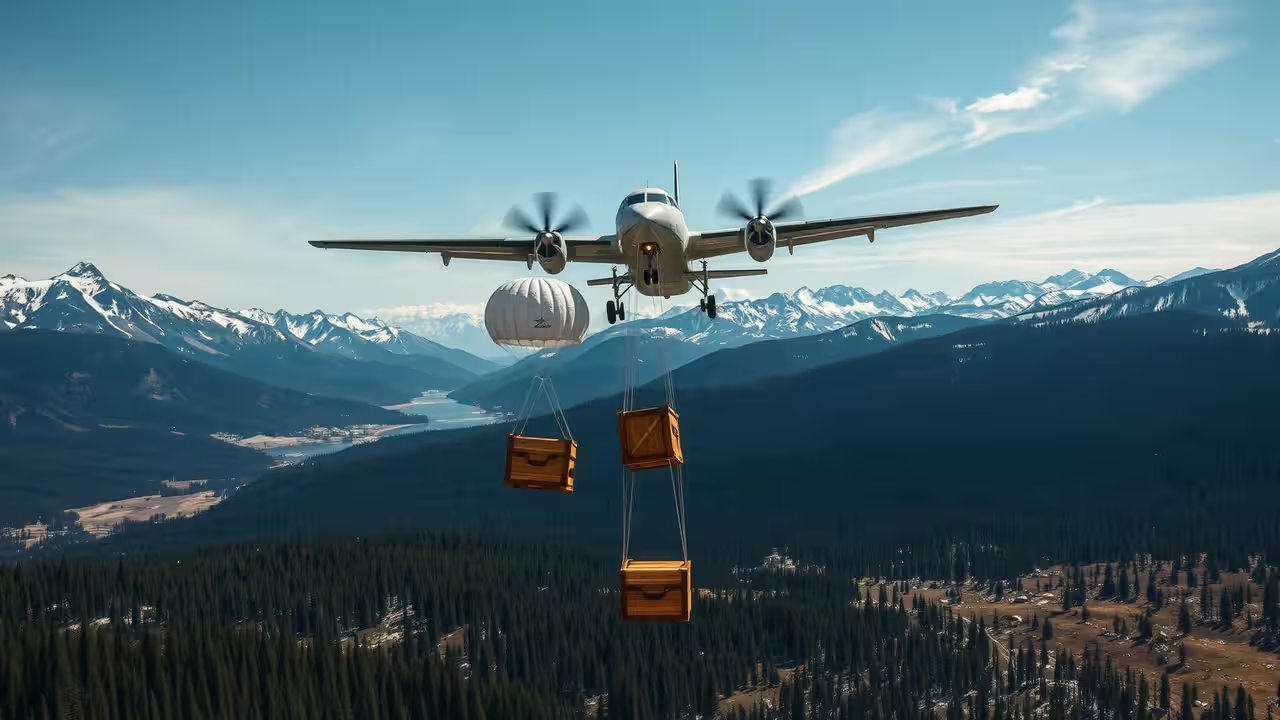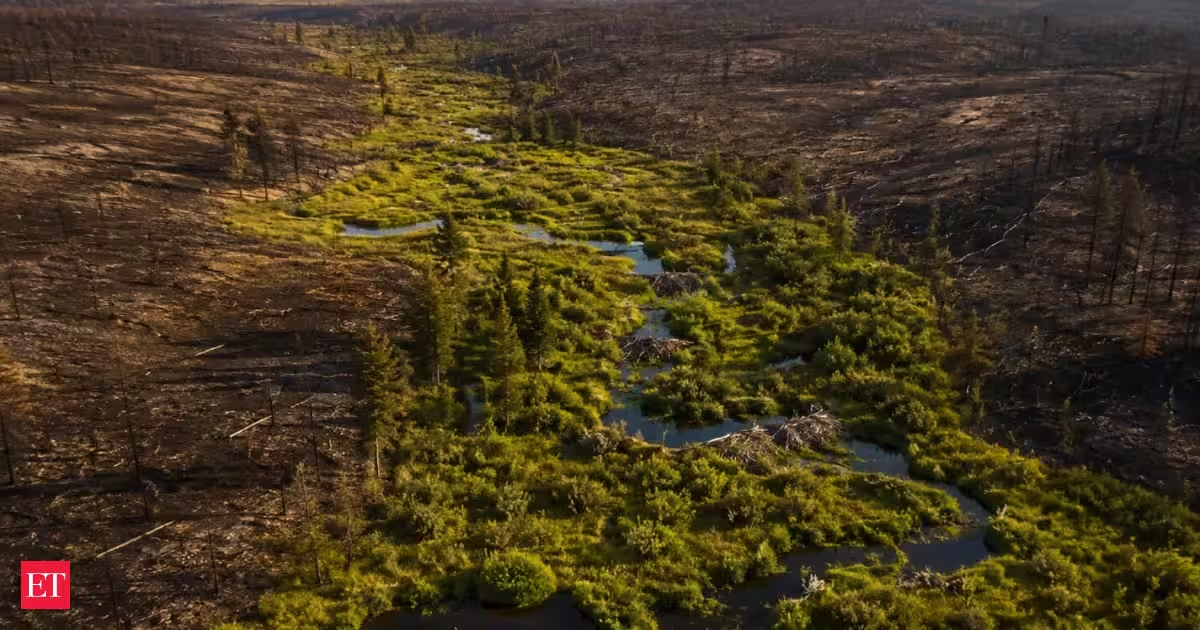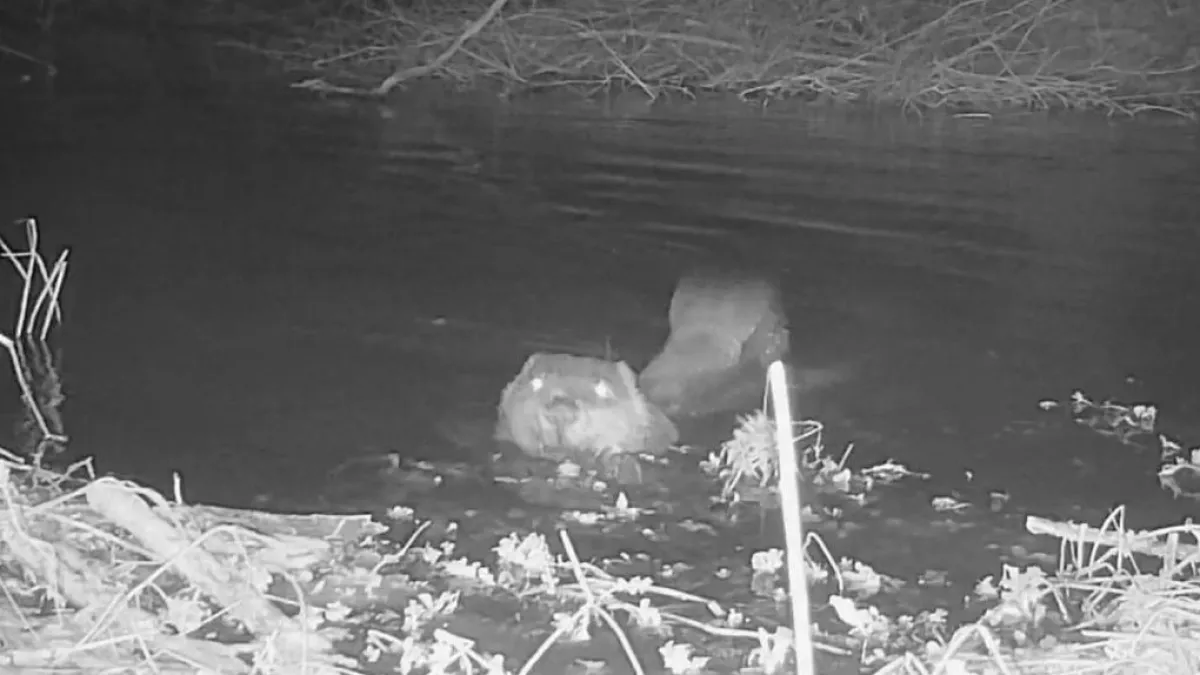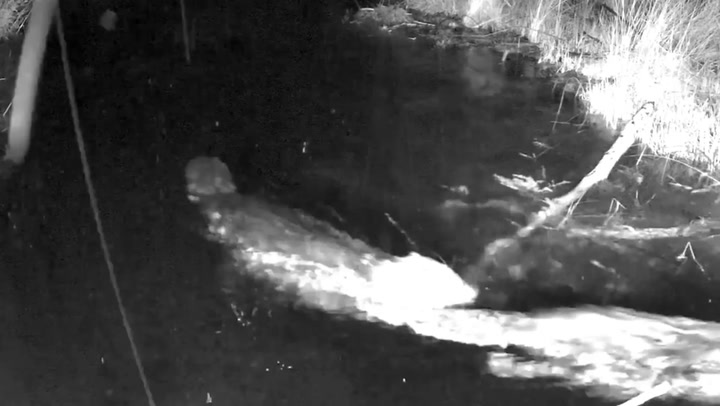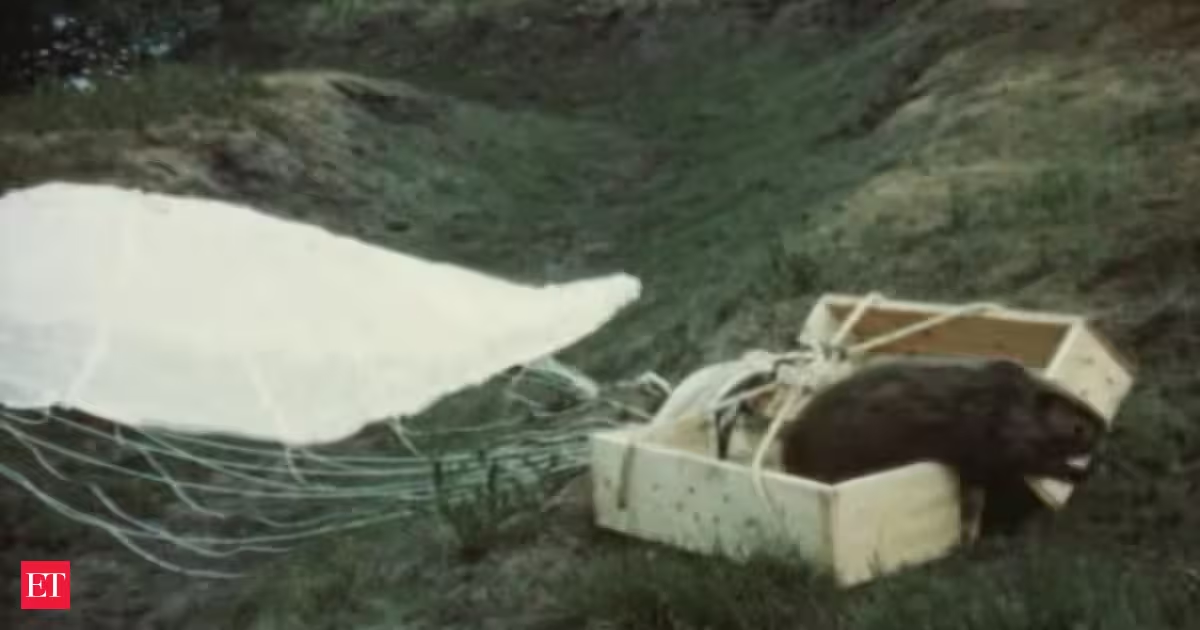
What do you do when a growing beaver population starts causing problems for newly settled communities, but killing the animals is not the answer? In 1948, an Idaho game warden came up with a solution that sounded almost absurd: put the beavers inside specially designed wooden boxes, attach parachutes and drop them from an airplane.The unusual plan was developed by Idaho Department of Fish and Game employee Elmo W. Heter, who was seeking a faster, safer way to relocate beavers to remote parts of the state.What followed became one of the strangest wildlife-management experiments in American history, and, remarkably, it worked.Why Idaho wanted to move the beaversAfter World War II, more people began moving away from Idaho's capital, Boise, toward rural areas, including Payette Lake and McCall. But those landscapes were already home to established beaver populations.The animals were causing complaints because their tree-cutting and dam-building activities could affect private properties and alter water flows.Yet wildlife officials understood that beavers were not simply pests. They are considered ecosystem engineers, capable of reshaping waterways and creating habitats that benefit other species.Relocating them, therefore, made more sense than exterminating them. It could also save the state money by allowing the animals themselves to perform some of the work required to stabilize water supplies.Beavers had already demonstrated their value elsewhere. As TIME summarized in an April 1939 article, “Beaver dams are useful to man. They catch fine silt that otherwise would wash down stream. Beaver ponds may provide water for livestock, and conserve moisture in dry areas.”The game warden who thought of a parachuteThe first relocation attempts were far less dramatic. Captured beavers were transported by horse, mule and truck toward their new homes. But Idaho's mountainous terrain made the journeys slow and difficult. The animals could also become overheated inside their carrier boxes.Heter believed there had to be a better way. His answer was to transport the beavers by air.Instead of carrying the animals across difficult terrain, Heter proposed placing them inside hinged wooden boxes equipped with surplus wartime parachutes. The boxes were designed to open after landing, allowing the beavers to emerge once they reached the ground.The idea sounded bizarre. So the team began testing it.Geronimo became the first parabeaverBefore risking a full relocation operation, the team conducted tests using dummy weights. Then came the more unusual part of the experiment. An old male beaver was selected as the test subject and given the name Geronimo, a reference to the famous exclamation associated with parachute troops during the Second World War.Geronimo was placed inside the parachute-equipped box and dropped repeatedly over a flying field.The tests were intended to determine whether the container, parachute and release mechanism would work safely.They did. The team also experimented with different types of containers. Woven willow boxes were rejected after it became apparent that a determined beaver could chew through one.Eventually, the planners settled on a sturdy crate resembling a suitcase. It had a hinged base that opened when the box hit the ground.The basic idea was simple: make the journey through the air short, controlled and considerably less stressful than transporting the animals by land.76 beavers were dropped into the Idaho wildernessIn August 1948, the experiment moved from testing to an actual wildlife relocation operation. A Beechcraft aircraft took off carrying eight crates containing beavers, along with a pilot and a conservationist.Over the following days, 76 beavers were parachuted into the Chamberlain Basin, in the Sawtooth Mountain Range of central Idaho.The operation was designed to move the animals into an area where their natural dam-building abilities could benefit the landscape.Almost all of the animals survived. Only one beaver was lost during the operation.For a wildlife relocation project conducted in the late 1940s using parachutes and aircraft, the results were striking.What happened after the beaver drop?The beavers did more than simply survive their unusual journey. They settled into their new environment and began doing what beavers naturally do: building dams, creating ponds and reshaping waterways.That was precisely what Idaho wildlife officials had hoped would happen. Rather than spending large sums of money to engineer every part of the landscape themselves, officials could allow the animals to modify their surroundings naturally.The long-term ecological value of that work became even more apparent decades later.In 2018, a wildfire swept through land near Baugh Creek, a tributary of the Little Wood River in the Sawtooth National Forest. Much of the surrounding landscape was burned, but areas close to the river remained comparatively untouched.Aerial imagery from NASA's Earth Observatory showed a striking difference in vegetation between areas with beaver activity and those without.NASA satellite view shows green areas protected by beaver activityThe comparison offered a dramatic illustration of how beaver-created wetlands can help retain water and maintain greener patches of vegetation across otherwise dry landscapes.Why the Parachutes made sense at the timeThe bizarre method becomes easier to understand when compared with the alternative. As Heter later explained in a 1950 article for The Journal of Wildlife Management, Idaho's previous system involved trappers catching beavers and handing them over to a wildlife trooper or forest ranger.The animals would then be transported by car before continuing on horseback or on muleback into remote areas.Heter described the process as “arduous, prolonged, expensive, and resulted in high mortality among the beavers.”The animals could die from overheating and stress during the prolonged journeys.The parachute system was therefore not designed simply because it was unusual. Heter believed it could reduce the amount of time the animals spent being transported and lower the risks associated with the journey. And the experiment suggested that he was right.The lost film that brought the beaver drop back to lifeFor decades, the parachuting beavers remained an obscure chapter in Idaho's wildlife-management history. Then, in 2015, a historian made a remarkable discovery.Historian Sharon Clark found a mislabeled canister containing 16mm film. Inside was a 14-minute documentary short titled “Fur for the Future.”The footage showed the beaver-drop operation, including parachutes descending toward the ground and the crates opening after landing.The film appears to include a recreation of the operation for documentary purposes, something that was common in films of that era. Nevertheless, it gave modern audiences an extraordinary visual record of a wildlife experiment that had previously existed mainly through written accounts.The Idaho State Historical Society later uploaded the film, the story of Idaho's "parabeavers," to YouTube to reach a much wider audience.
An Idaho game warden in 1948 put a male beaver named ‘Geronimo’ in a parachute box and dropped it from a plane; 76 beavers later faced the same fate and eventually transformed a landscape
Idaho's game wardens introduced an innovative approach in the late 1940s, using parachutes to relocate beavers. They engineered unique boxes to ensure the safe aerial transport of these animals to remote locations. Once settled, the beavers promptly engaged in their natural behavior of reshaping waterways, contributing significantly to their new habitats. A rediscovered film ultimately showcased this fascinating, albeit unconventional, wildlife management strategy.
1,059 words~5 min read