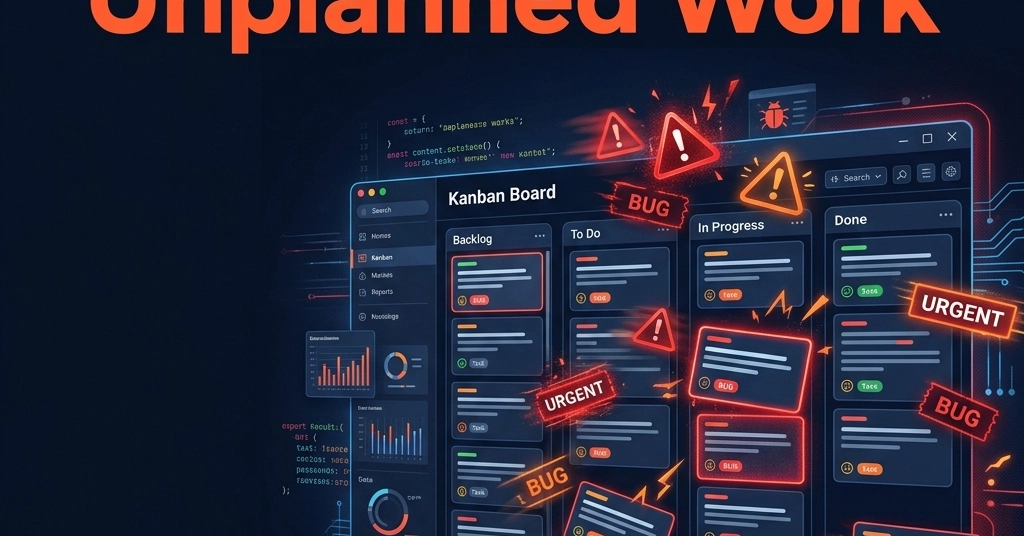
One year after replacing sprints, our platform team kept the limits and lost the theatre.
On 19 August 2025, we deleted the remaining two-week sprint from our platform board while seven tickets were still marked “in progress.” Two were waiting on product teams, one was a certificate renewal nobody had planned, and one was a fairly ordinary Terraform change that had somehow acquired four assignees.
We had spent six months pretending this was a planning problem. It was an interruption problem.
Our nine-person platform team supports 36 production services, a shared Kubernetes cluster, identity, CI runners, and the collection of internal tools that only become visible when they fail at 03:00. Sprints made the work look orderly for roughly a day and a half. Then an incident, an access request, or a release deadline arrived and the board became historical fiction.
We moved to kanban with a hard WIP limit, an expedite lane, and a promise to stop calling unfinished work “carryover” as if it had merely missed a train. One year later, we’d grade the decision a B. The board changed how we start work and how we argue. It also created chores we had not put on anybody’s capacity plan.