Originally published on tamiz.pro.
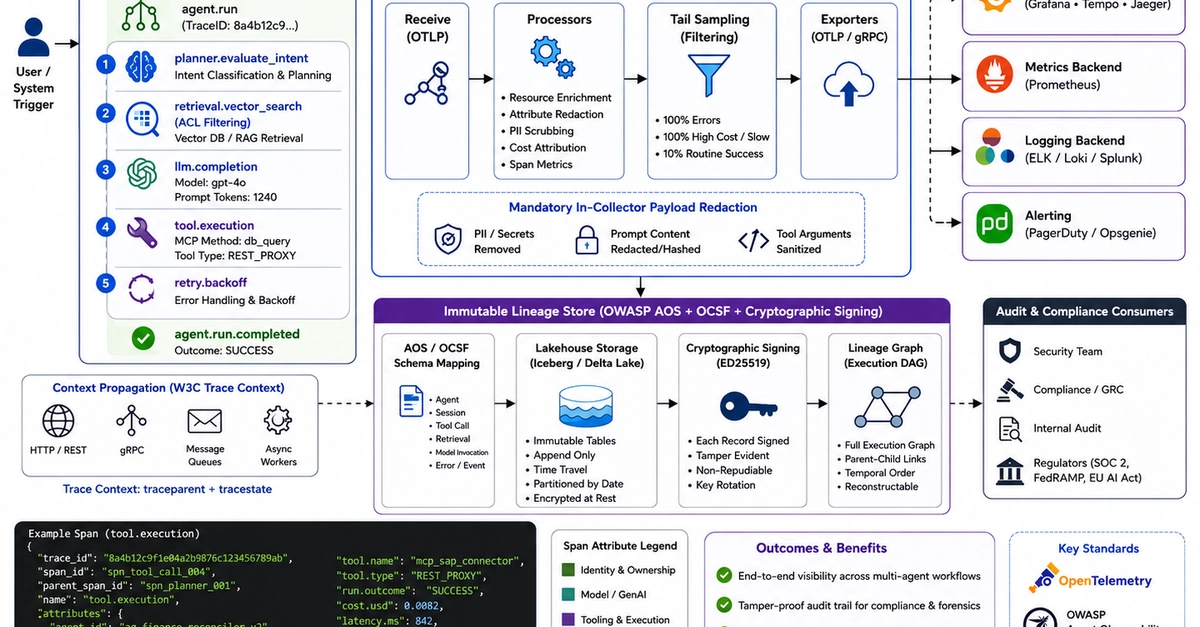
Observability in software engineering has long been the domain of metrics, traces, and logs. OpenTelemetry (OTel) democratized this stack, becoming the de facto standard for distributed tracing. But as we push into the era of AI-native applications—Large Language Models (LLMs), agentic workflows, and RAG pipelines—the traditional OTel model is showing significant cracks. It struggles with probabilistic outputs, context leakage, and the sheer volume of unstructured data generated by modern AI agents.
Relying solely on OTel for AI observability is like trying to measure the temperature of a black hole with a ruler. You need a specialized pipeline that combines structured tracing with semantic understanding, privacy-preserving architectures, and robust tooling. This guide details how to build a resilient AI engineering pipeline that extends beyond OTel, leveraging Langfuse for LLM-native observability, zero-knowledge principles for security, and lightweight Language Server Protocols (LSPs) for developer velocity.
The OTel Limitation in the Age of LLMs
To understand why we need a hybrid approach, we must first dissect where OpenTelemetry falls short in the context of Generative AI.