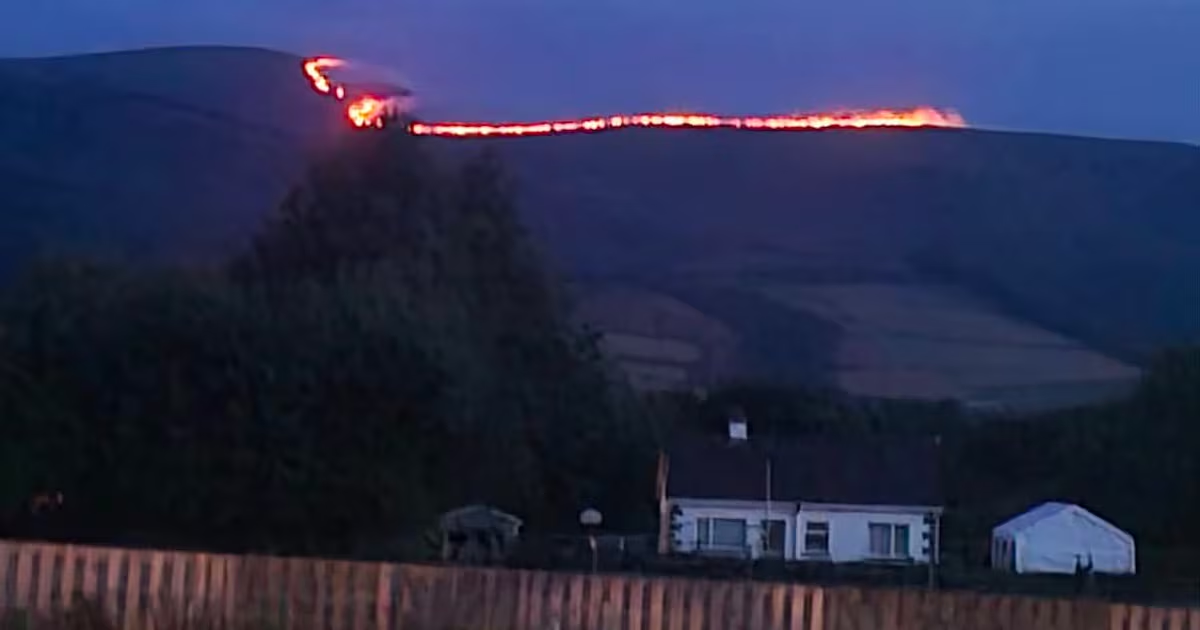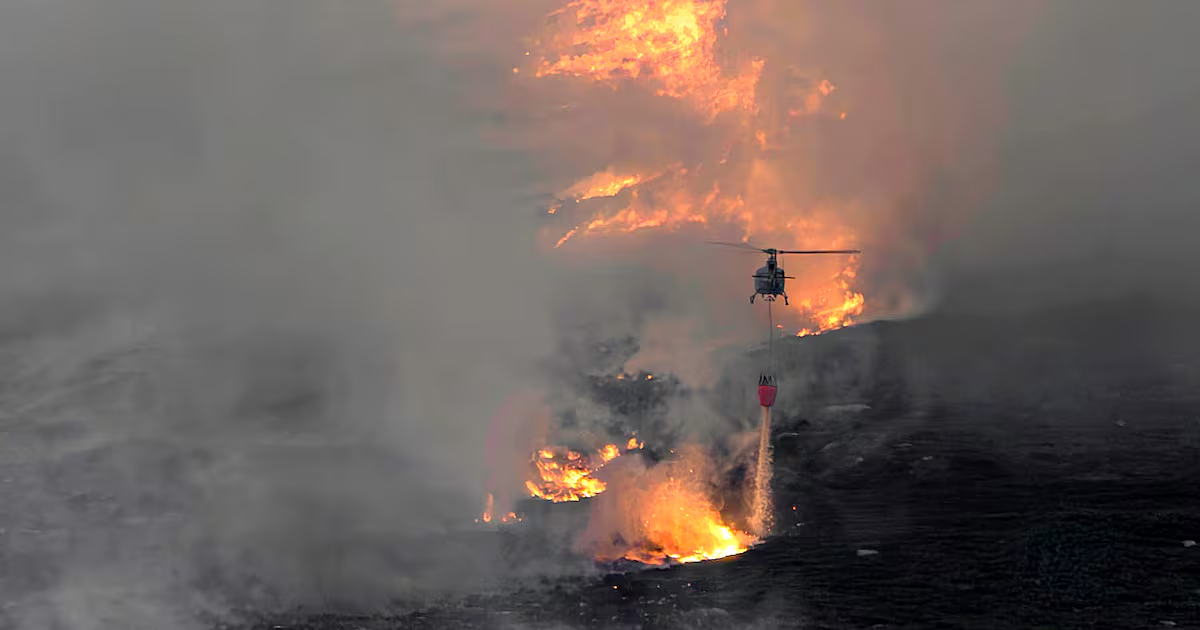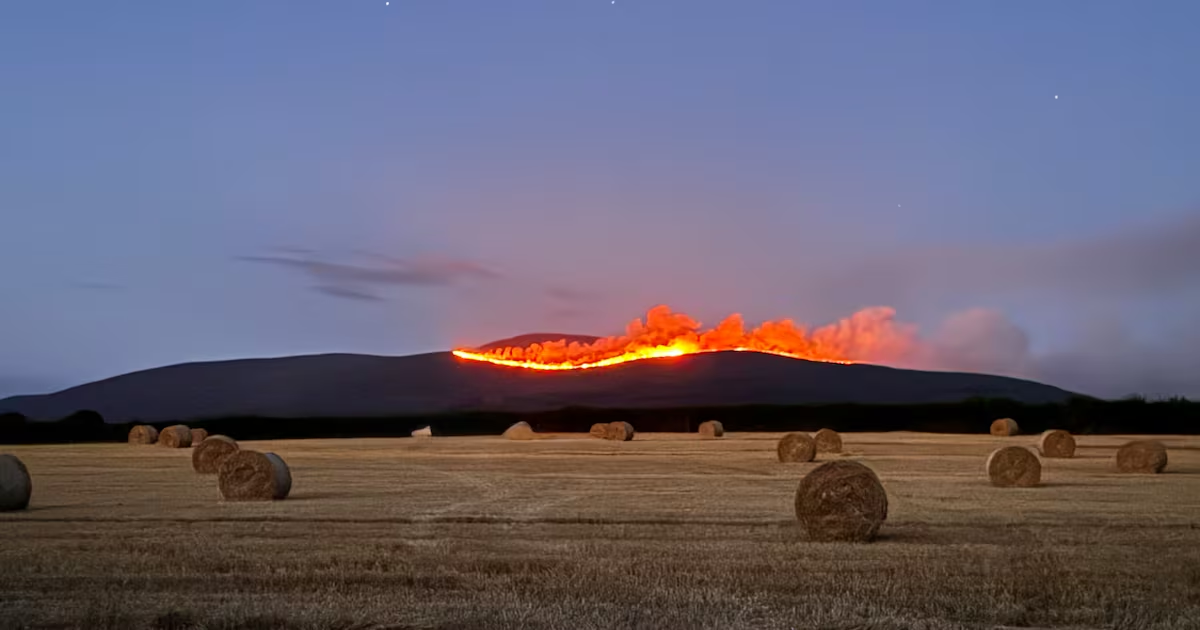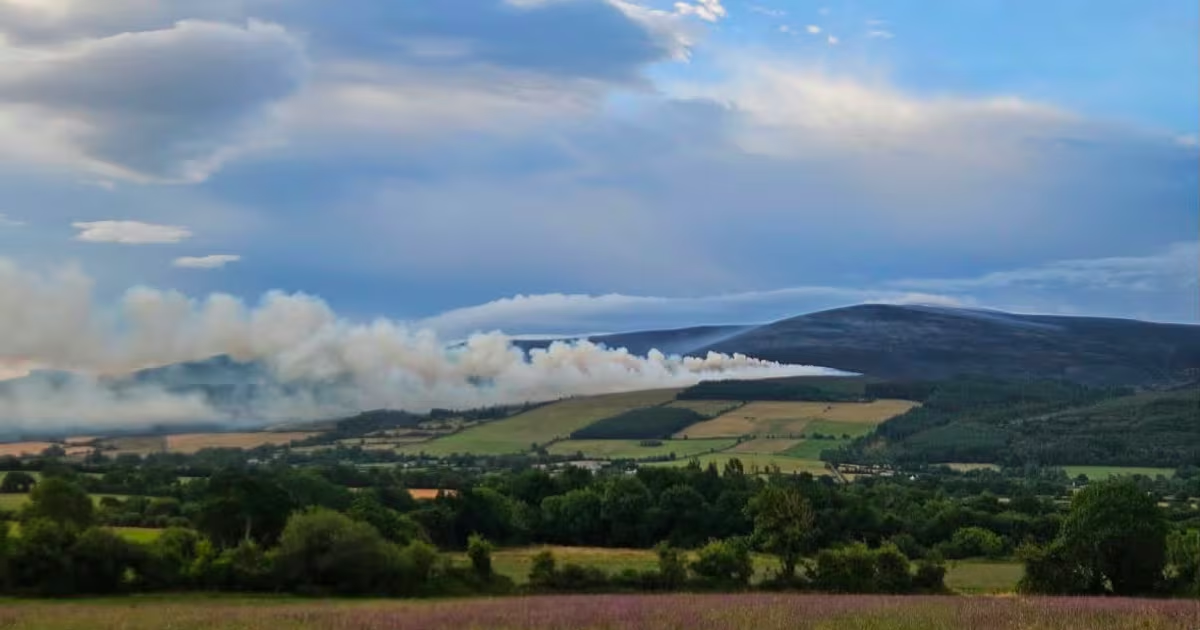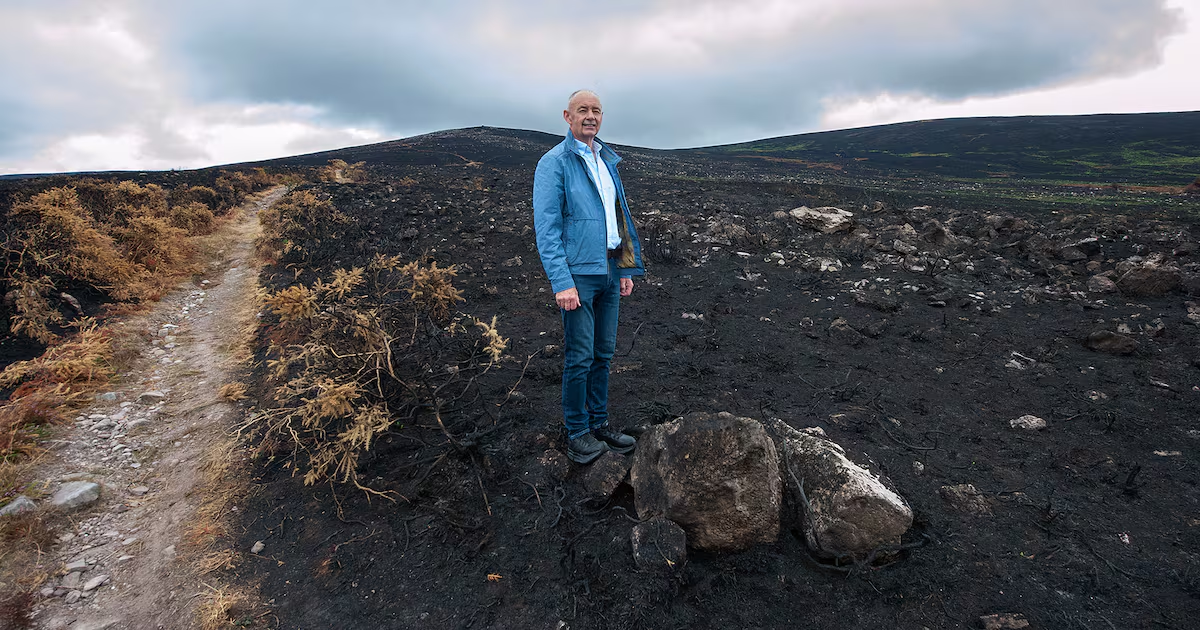
On the western side of Slievenamon, Co Tipperary’s mythic mountain, Billy Prout is attempting to explain what it means to be “from the hill”. Generations of his family have lived here, close to the village of Killusty. It is in the genes; it’s bred into the people. “You have a passion and a love for [the mountain]. A complete love for the area, for this road, for all the history of the area, for the folklore of the area, for everything. It’s part of your DNA,” Prout says, standing a short distance from his home in the foothills of Slievenamon. Over the six decades Prout has lived here, the population on the mountain has dwindled. “I was really lucky ... it was a lot of hard effort that we stayed up here ... My family never moved out of here. I just loved it so much, I couldn’t.”It was for these reasons, Prout says, that he could not face leaving his home, even as a huge wildfire – one of a scale not previously experienced by current Slievenamon residents – ripped across the mountain late last month. “For us to take off and not stay here ... we wouldn’t dream of it. We had to stay,” says Prout, a self-employed plumber. It was early on July 20th when the first firefighters sped past Prout’s bungalow, after reports of flames on the mountain were called in. Prout stayed and did whatever he could – providing directions or space to park their vehicles – to help firefighters and other personnel responding to the blaze, he says. However, such was the intensity of the fires, that his wife Josephine admits they considered the possibility that they would be forced to leave their home. “It was scary,” she says, sitting at her kitchen table, over tea and brack. “I was thinking: ‘What will I take with me [from the house]’?” She gestures to their dog, Jesse. The fire was ultimately contained about 600m from the Prouts’ bungalow. A short hike up the mountain reveals the extent of the damage. An expanse of blackened, barren ground stretches out in front of Prout. About 1,500 hectares of the mountain were burned by the wildfire.“It’s completely devastating,” Prout says. Billy and Josephine Prout outside their home in the foothills of Slievenamon, near Killusty, Co Tipperary. Photograph: Jim Campbell The blaze at Slievenamon was the most severe of several significant wildfires in counties Tipperary, Waterford, Dublin, Kilkenny, Wicklow and Kerry last month and early this month. The fires were exacerbated by extended periods of dry weather across the country this summer. According to Met Éireann, July was one of the hottest, driest and sunniest months on record. In a series of interviews with The Irish Times this week, people in affected regions have been reflecting on the responses to and damage caused by the wildfires, as well as the fear that such events may become more common. A five-minute drive from the Prout household, on the southern side of Slievenamon, dairy farmer Perry Commins is out on the farm, using a digger to lower a drain into a trench. The blackened mountain looms above his farmyard. It was July 22nd, two days after the fire started, that people on this side of the mountain began to worry. By then, the flames had spread from the gorse and heather on higher ground to forestry closer to the foothills and then to several houses and Commins’s farm.Commins realised the flames had reached the forestry when he heard “crinkling” noises. “I was really worried about losing my milking parlour and my feed stores and everything like that,” Commins says, sitting in his Ford pickup. “They’re right up against high ditches, so it would have been very, very serious.”Fire services battling flames at Slievenamon in Co Tipperary last month. Photograph: Seán Ryan A helicopter carries water towards the wildfire burning across Slievenamon last month. Photograph: Eamonn Farrell/RollingNews.ie The spread of the flames intensified the response. Helicopters provided by the Defence Forces and State-owned forestry company Coillte were drafted in to assist, collecting water from nearby sources with specialised buckets to stem the encroaching flames. “I’ll never forget that evening for the rest of my life. The helicopters were flying straight over the farmyard above. It was just nuts, like. It was like something from a film. It’s the best way of putting it. A surreal experience,” says Commins. “You could feel the panic coming on even the helicopter drivers, without talking to them. You could feel they were going quicker, and they could see what was going to happen.” Commins was among a cohort of local farmers who used slurry tanks filled with water in an effort to protect houses closest to burning forestry. “I was really worried for those houses. They were right in the wood, right up against the forestry. At one stage, the trees were burning so hard, when a gust of wind would come I could feel the heat of the fire. I must have been 300 to 400 metres away from it, I could still feel the heat off the fire on my face. I said: ‘You know something, this is really getting serious’.” Commins says it was just very, very lucky. [There] could have been six or seven houses destroyed.” It is not possible to say definitively how the fire was started. Coillte, while noting most wildfires are caused by human activity, says the fire “appears to have originated on open mountain habitat before spreading into adjoining forest areas”.A helicopter drops water on a wildfire on Slievenamon last month. Photograph: Phil Greaves Contingency measures were kept in place, but ultimately the fire did not require the evacuation of any mountainside homes, says John Shinners, chief fire officer at Tipperary Fire Service. While the service has dealt with multi-day fires at Slievenamon in the past, various factors meant this blaze burned for longer, and across a larger area. These factors included difficulties in accessing the affected areas, stronger winds at higher altitudes and the prolonged preceding dry spell. About 25 per cent of the fire service’s resources were tied up in fighting the blaze for more than a week, Shinners says. At Killurney Community Centre, close to Commins’s farm, community activists Ann Grant and Susan Laste sit in the hall where firefighters slept after long days on the mountain. Acknowledging their sacrifice, Grant says firefighters who responded to Slievenamon were part-time and employed on retainer contracts.As the fire continued, people from all over called into the centre with hot food and other supplies for the responders, she says. The generosity was indicative of the wider community response to the crisis. Aftermath of Glencullen fire in Dublin mountains Video: Bryan O'Brien Editor: Eoin Ronayne “We know how lucky we are in this community. It’s a very helpful, supportive place. I know if anything happened in the morning, I know if I needed help, I could contact anyone, and they’d come and they’d help me,” Laste agrees. In Glencullen, in the Dublin mountains, Matt Davy also credits local support in stopping a wildfire from reaching his forestry plantation and adjoining adventure park business. Matt Davy: 'I don’t remember a fire doing this deep of a burn into the ground. Normally you come up and you put a fire out and it would be out and that would be the end of it. This just isn’t.' Photograph: Bryan O’Brien Weeks on from the peak of the fire, Davy says he is “convinced” the flames would have reached his Glencullen Adventure Park had it not been for a collective effort by the local community, friends, the fire service and aerial support. “I didn’t realise at the time [the risk of incursion] because I was like a lunatic trying to stop it,” he says. “You didn’t really notice what was going on around you that much. You were just determined to make sure it stopped.”Davy is standing above the burnt area of commonage destroyed by flames that raged for several days late last month. Mist lies close to the still-smouldering, sloping peatland, almost indistinguishable from the wisps of smoke rising from the ground. As well as Davy’s business, the flames came close to several houses neighbouring the commonage. “The whole community got together and did some savage work,” he says.As Davy speaks, some distance away, a flame leaps up from the ground, before subsiding again. Fires on peatland can be particularly destructive, as in Glencullen, with an ability to continue smouldering underground after the surface fire has been extinguished.A burnt area in Glencullen still smouldering this week after the recent fires. Photograph: Bryan O’Brien “We’re here all our life. There have been fires here in the past, but I don’t remember one that is doing this deep of a burn into the ground. Normally you come up and you put a fire out and it would be out and that would be the end of it. This just isn’t,” Davy says.“The problem is that we genuinely have never had a fire in these dry conditions. Like before, every other fire that we’ve had out there we’ve been able to keep under control,” he says, driving his van back down the slope.For Davy, there remains a fear that the fire will take hold again. Oisín Ó Néill of the Irish Wildlife Trust says the recent wildfire events are a “symptom of a changing climate”. “It’s very upsetting to see the wildfires in Ireland because we traditionally wouldn’t have been a country that would have dealt with wildfires,” he says. Ireland’s landscape, for various reasons, is particularly vulnerable to wildfire events, Ó Néill says. “The majority of our forestry is non-native conifer plantations. Anyone who’s familiar with these conifer plantations will tell you: it’s a tinder box. “You go in, there’s no understorey. There’s no vegetation at the bottom of the forest. There’s very little water being held in the forest. It’s just a carpet of pine needles that are very flammable.”‘I stopped to look at [a butterfly and a bumblebee], you know? And I thought, it was very sad. Like, how are they going to survive?’— Billy ProutEcosystems encompassing native tree species such as oak, birch, ash and holly retain lots of water, providing a natural resilience to fire, Ó Néill says. However, centuries of forest clearing means just 2 per cent of the country’s forests are native woodland. The Irish Wildlife Trust, along with other conservationists, advocate for a rewilding of Irish landscape and a return to native, fire-resistant woodlands. Historic damage to the country’s peatlands – in particular, the draining of water from bogs in the course of peat harvesting – is another factor that leaves the landscape vulnerable to fire, Ó Néill says. Overgrazing by sheep and deer is also an issue. “We have thousands and thousands of non-native deer and sheep eating everything in the uplands, so you get [a] situation where the uplands are dominated by gorse, by grass, and by other combustible vegetation. What you’re left with is a highly combustible landscape that is very, very vulnerable to fire.”A burnt-out area in the Dublin Mountains still smouldering this week. Photograph: Bryan O’Brien After the fires, Billy Prout walked to the Holy Year Cross, erected atop the mountain in 1950. Despite the extensive burning on the mountaintop, the cross and surrounding grass was untouched, Prout says.On his descent through the scorched landscape, he noticed a butterfly and a bumblebee. “I stopped to look at them, you know? And I thought, it was very sad. Like, how are they going to survive?” he says, walking down the same mountain path. “Eight hundred hectares [burned] is a huge amount of food, wildlife, heather. It’s a huge amount.”The damage is similar in scale on the Killurney side of the mountain. “The destruction up there is unbelievable, the amount of trees that are burnt is phenomenal ... hundreds of acres of trees,” Commins, the dairy farmer says. “To see it burnt is terrible sad. Imagine all the little habitats up there and everything.”[ Risks from Ireland’s ‘fire triangle’ are being exacerbated by human actionsOpens in new window ]A spokeswoman for Coillte said that, while the “full environmental impact” of the Slievenamon fire is not yet clear, “there will inevitably be short-term impacts on vegetation, habitats and biodiversity including some species of wildlife”. [ ‘What was a beautiful habitat now is black soot’: Ireland’s wildfires devastate wildlifeOpens in new window ]Wildfires can have a devastating, domino effect on local ecosystems, says Ó Néill.“We need to restore landscapes, we need to rewild landscapes, we need to give them a chance to recover. This would make them more resilient long term in terms of the wildfires, which are unfortunately probably going to be a recurring feature now going forward.” The Coillte spokeswoman said wildfires in Ireland were “overwhelmingly” linked to human activity, rather than natural causes. “However, weather conditions play an important role in determining how fires behave and spread once ignition occurs,” she said.“Periods of prolonged dry weather can create conditions where vegetation becomes more susceptible to ignition and rapid-fire growth. As a result, wildfire preparedness forms an increasingly important element of sustainable forest management.”Asked if it was seeking to increase resources at its disposal for fighting wildfires, Coillte said it has “robust” forest fire preparedness measures in place. “These include trained personnel and contractors, specialist equipment, fire-management planning, strategically located fire breaks, enhanced monitoring systems, digital mapping technologies and the use of drones during periods of elevated risk,” the spokeswoman said.Coillte said it was continuing to monitor sites of various wildfires, prioritising public safety and preventing risk of reignition.“Once sites are fully stabilised, Coillte will undertake detailed assessments to determine the full extent of the impact on forests. These findings will inform forest restoration and replanting plans, which will be developed in line with Coillte’s sustainable forest management objectives,” the spokeswoman said.Shinners, the chief fire officer, says it is difficult to say whether Irish fire services should expect to be battling increasing wildfire events in the future. “We definitely have an open mind to where we’re going with wildland fires in the future. It’s very important not to have a knee-jerk reaction as to how you respond to something. We tend to look at trends over a number of years,” he says. “But I think common sense would dictate that if we’re going to be getting longer, drier spells, then there’s a greater chance that [wildfire events] will become much more common.”[ Why Europe’s wildfires are proving so fierce and difficult to stopOpens in new window ]Back at her home, a short drive from the community centre, Susan Laste wonders whether there is a lesson to be learned in the aftermath of the Slievenamon event. Alluding to changing global climate trends and increased wildfire incidents, Laste says: “If they’re saying now that’s what we’re going to be seeing, that’s scary.”“I suppose a broader issue now we need to look at as well [is], what can we do to alleviate [the risk of fires] and prepare?“I’m assuming after it’s all over that the powers that be will meet and talk about it: the councillors and the county council and the Air Corps. Is there anything that they can learn from it? That’s always a positive, isn’t it?”
Life in Ireland’s wildfire zones: ‘I’ll never forget that evening on Slievenamon for the rest of my life’
People in affected regions in Dublin and Tipperary reflect on the damage caused by the summer wildfires, and their fear of future such events
2,553 words~12 min read