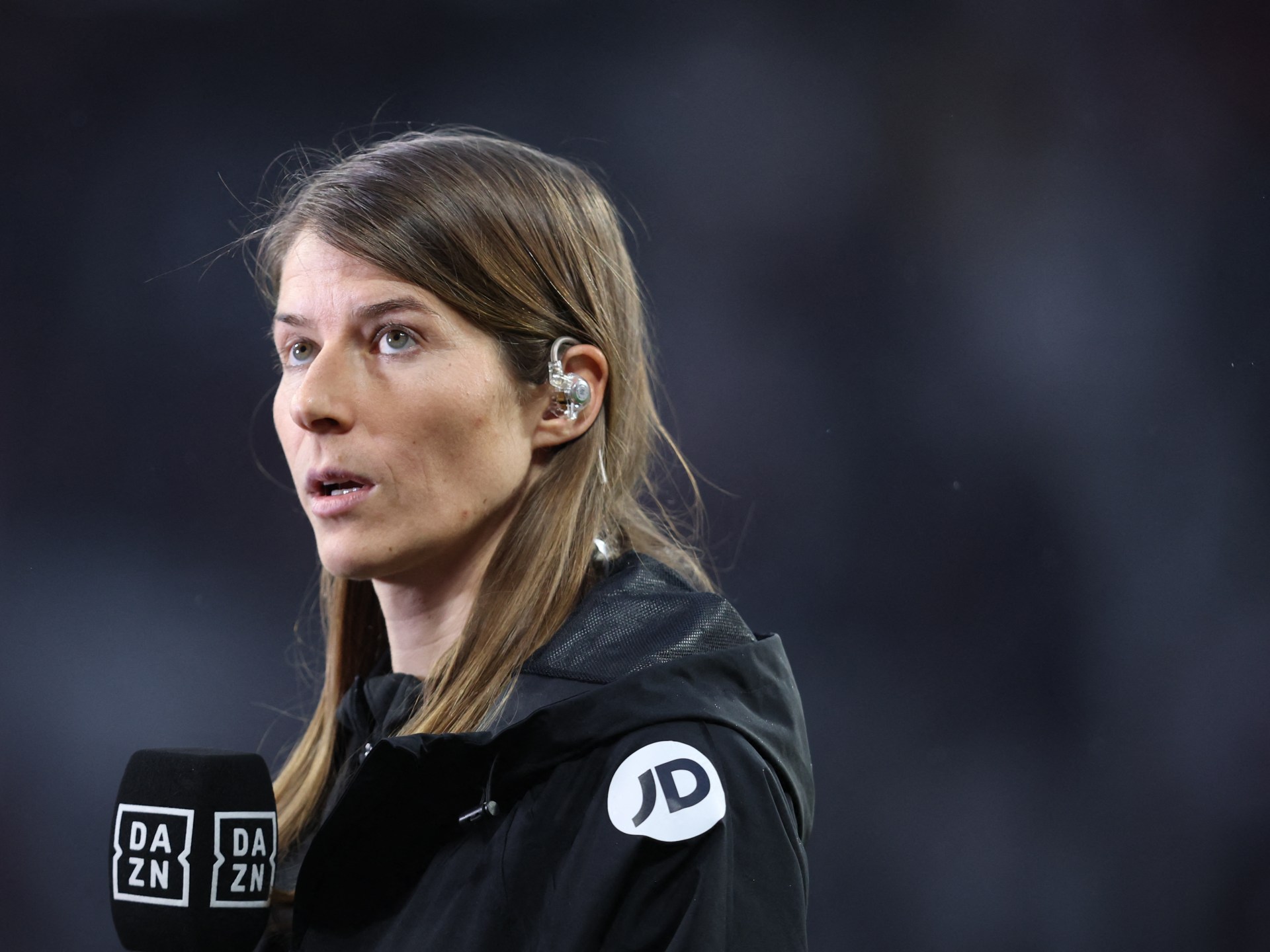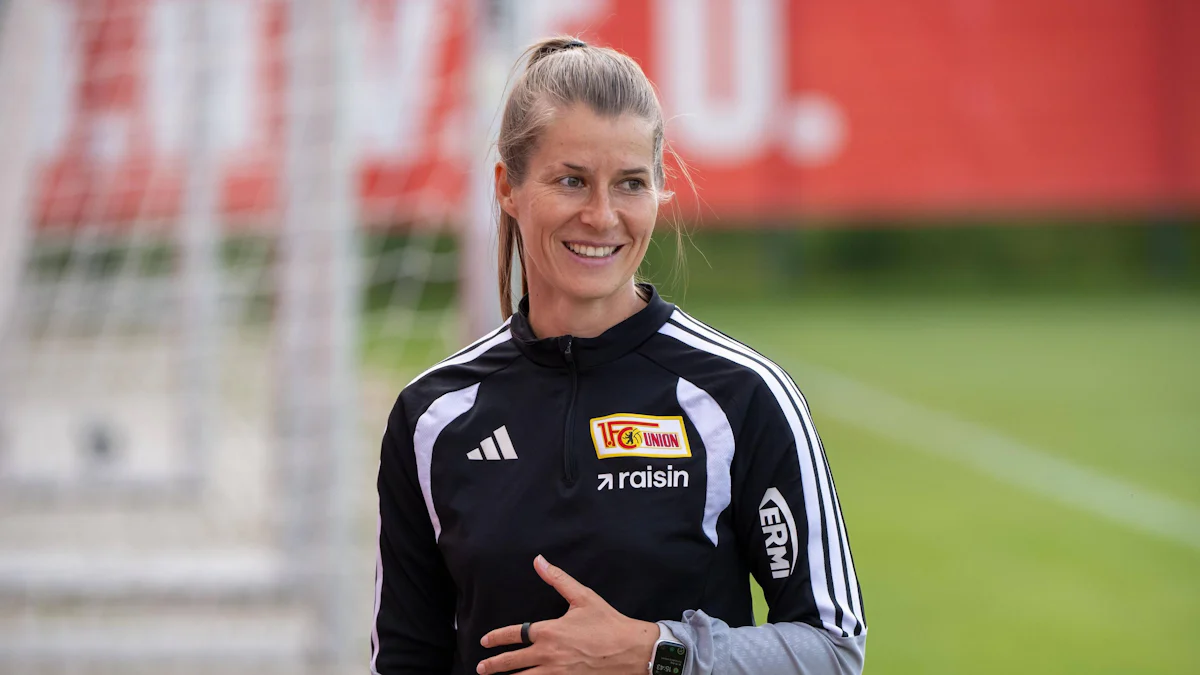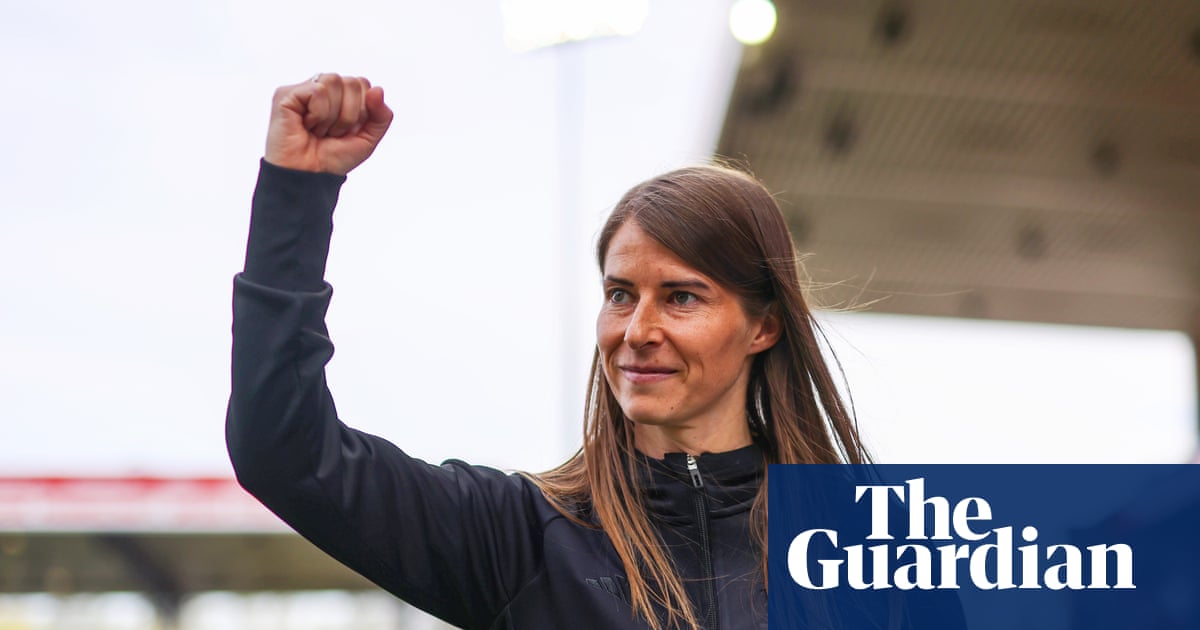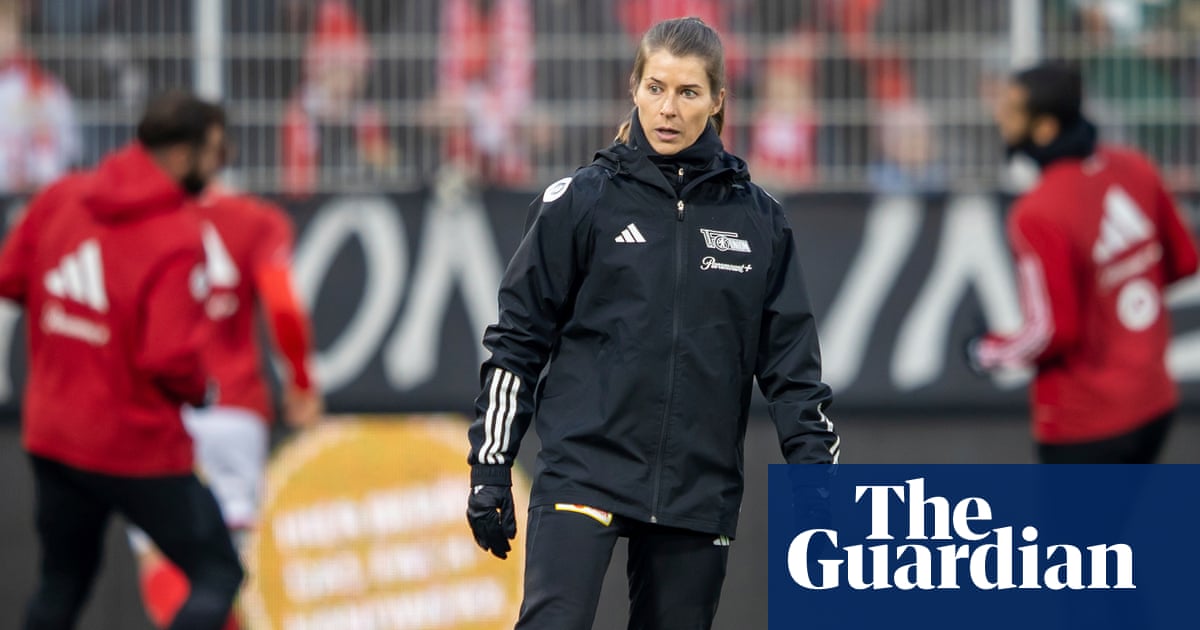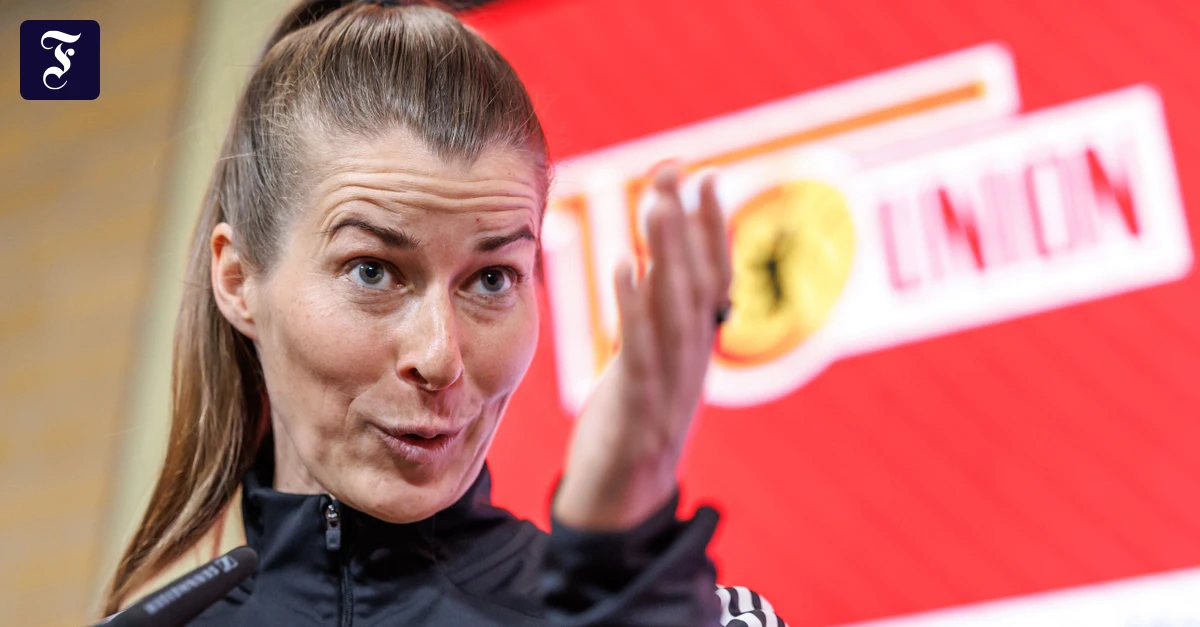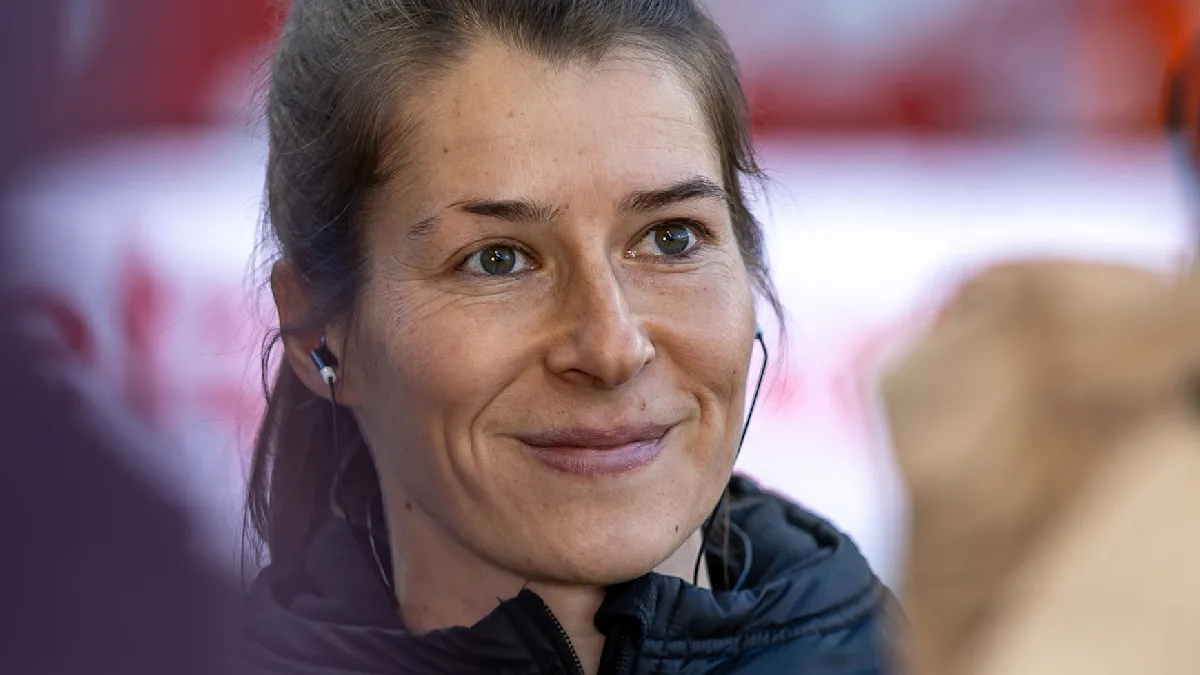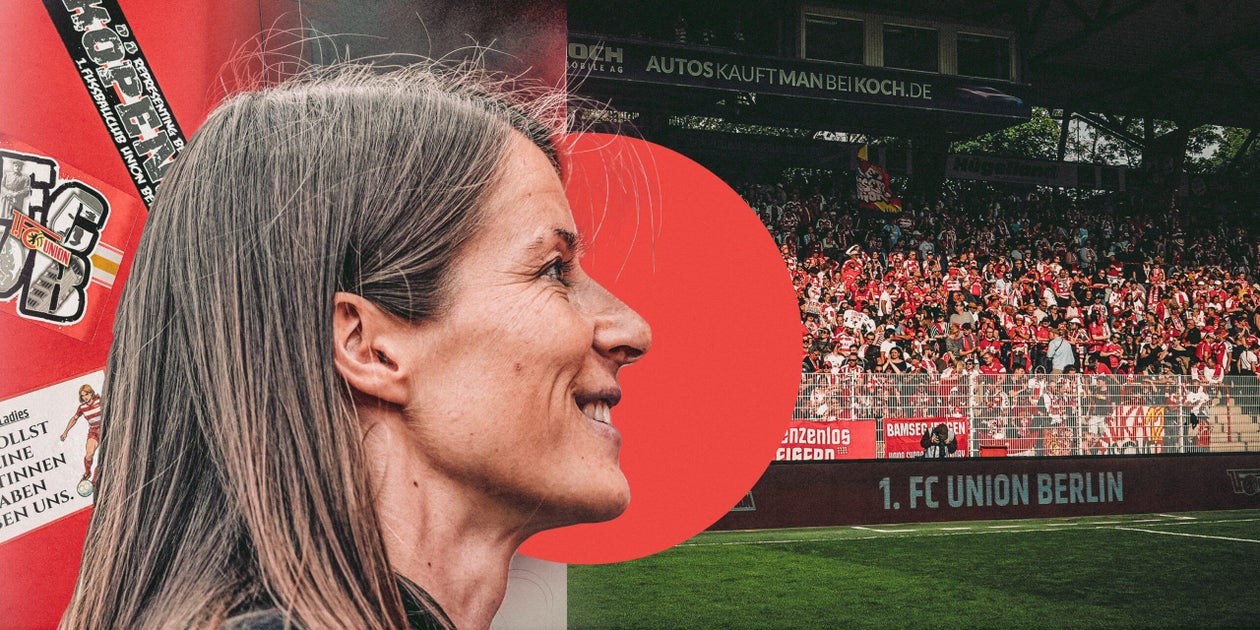
He calls their names one by one. The way he always has. And they are ready on the terraces to respond, the way they always have. This is their pre-match sermon, Christian Arbeit — the stadium announcer — a kind of pastor; the 22,000 supporters inside the Stadion An der Alten Forsterei his congregation, the players their gods.You can make these kinds of references here, in the church of Union Berlin.Fussballgott, football god, they respond as Arbeit reads another player’s name aloud before kick-off.Eventually Arbeit calls her name. And, initially, the communion does not hitch, because the thing about religion is its unwavering solidity, rituals as breaths.Perhaps, Arbeit says into the microphone, we should try again.Fussballgoettinnen, they respond in unison.Because she is a goddess.And like that, Marie-Louise Eta is eternalised.Eta managing Berlin in the Bundesliga (Maja Hitij/Getty Images)It is four months since Marie-Louise Eta stepped onto the pitch before Union Berlin’s 2-1 defeat to Wolfsburg in the Bundesliga, taking over as head coach of Union Berlin following the sacking of head coach Steffen Baumgart in April 2026. In doing so, the former Germany international, Champions League winner and two-time Frauen-Bundesliga champion, not so much broke a ceiling but fractured the natural order.Eta had already been the first woman to be part of the coaching team in a men’s Champions League match, the only woman in her DFB Pro Licence class, the only woman coaching boys’ football in a Bundesliga academy, and the only girl on her youth team.Now she was the first woman to coach a top-flight men’s team in Europe’s top five leagues.On Wednesday, 18 August — three months and two days since the 4-0 win against Augsburg, her final match in charge of the men’s first team — Eta arrives late to her first press conference as Union Berlin Women’s head coach. Bayern Munich await on Friday. Eta is nine minutes and 58 seconds late, to be exact. She does not apologise any more than she should. A player needed her.She is standing in front of a podium in a room of a half-dozen journalists, telling them her thoughts about Union Berlin Women’s season opener against the seven-time reigning champions Bayern Munich. It will be a challenge. Most of her players are available, but some are not. The occasion is huge.The ambition is equally so: high-octane, high-pressing football. Union aren’t kidding themselves. They are only in their second year in the Frauen-Bundesliga. They rose from the Regionalliga Nordost, Germany’s third tier, in 2023-24 to Germany’s top-flight two promotion campaigns later. They are three years into a professionalisation project, announced in 2022.Union Berlin, three years into a professionalisation project, reached the top division.(Megan Feringa / The Athletic)A journalist reminds her that, last season, Union lost 4-0 to Bayern Munich in the first meeting, 3-2 in the second, courtesy of a 90th-minute sucker punch. Forty-four points ultimately separated the league winners from Union upon the season’s end.Yes.But Union are also not kidding around.Germany internationals Lisanne Grawe and Jella Veit left Eintracht Frankfurt and the prospect of Champions League football for a team who were playing in front of 100 people just three seasons ago. Union have twice broken their club-record transfer record in the years since, signing Belgian international Hannah Eurlings last summer, then Amber Tysiak in January from West Ham United. New state-of-the-art training facilities are being built for the men’s and women’s first teams to share from next season.Union also have the second-highest attendance in all of European women’s football, playing all of their games at the club’s main stadium, with an average of nearly 10,000 per match. Player salaries continue to rank comparably to Germany’s top clubs.The aim now is to finish in the top third of the Frauen-Bundesliga this season. This is why Eta is at the helm.“When it was still not clear yet what she’d do, I was like, damn it, I hope she stays. For us,” says Union Berlin’s midfielder Dina Orschmann.“But I got it because in general, for football, for the wider sporting environment, it might also be better to stay with the men.”This was the conundrum roiling through Union Berlin. In February, Eta — then head coach of Union’s Under-19s men’s team — was approached to take charge of the club’s women’s team, now in the final stages of their first top-flight season. The answer wasn’t immediate. “Even (looking at) a menu, for pizza or pasta, I think of the long-term,” Eta tells The Athletic.
The Bundesliga’s first female coach has taken over the women’s team. Her club gave her many reasons to
Marie-Louise Eta broke ground for a female coach in the Bundesliga. Now she's taken over Union Berlin's women's team
2,129 words~10 min read