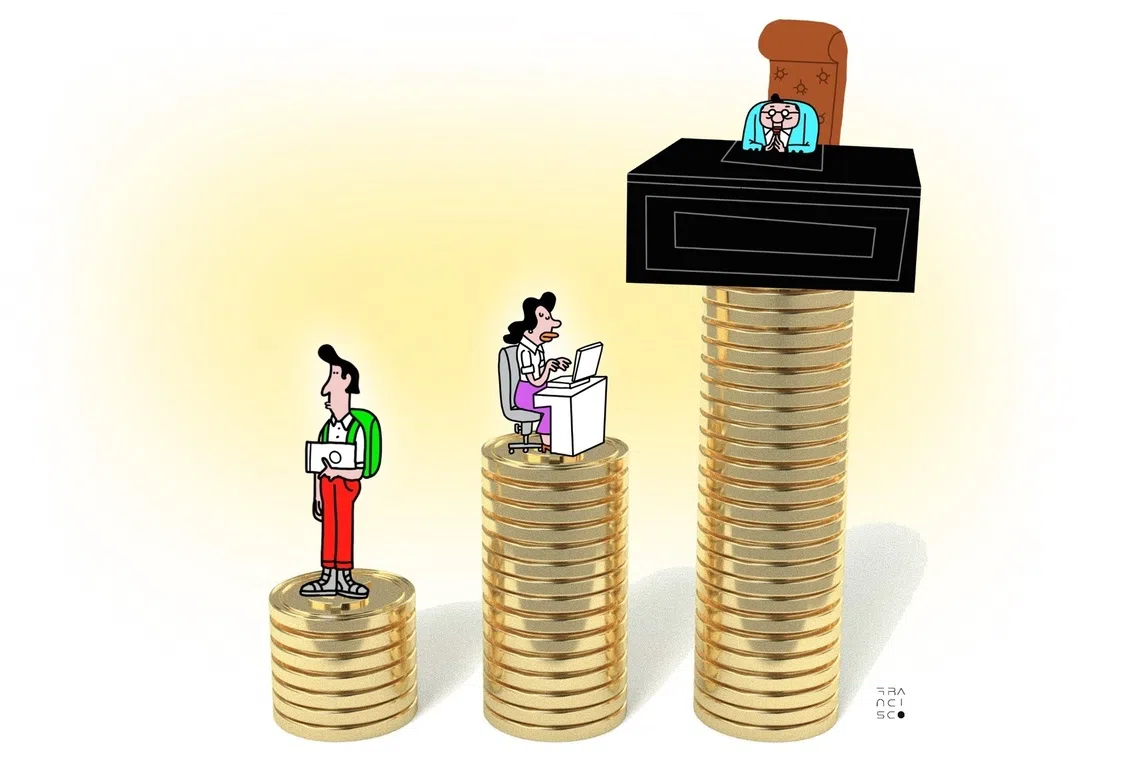
South Africa’s pay transparency debate has entered a decisive new phase, where disclosure is no longer simply a matter of governance maturity but of statutory accountability, investor scrutiny and organisational trust. On May 22 sections 30A and 30B of the amended Companies Act became operational for public and state-owned companies whose AGMs fall within the new framework. Alongside this, King V, South Africa’s latest corporate governance code, frames fair, responsible and transparent remuneration as a clear board accountability issue. Together the developments raise the stakes: companies must now table remuneration policies for shareholder approval every three years or whenever materially amended, and present annual remuneration reports at the AGM that include prescribed pay gap information. The consequences are significant. If shareholders do not approve the annual remuneration report, the company must explain how their concerns were considered. If the report is rejected at two consecutive AGMs, nonexecutive directors on the remuneration committee face statutory consequences, subject to section 30B. Remuneration governance has therefore moved beyond best practice into a matter with direct legal, investor and workforce consequences. The proposed Fair Pay Bill would extend this trajectory by limiting salary history reliance, requiring pay ranges in job advertisements and protecting employees who discuss pay. It remains a bill, but its direction is clear. Globally, the EU Pay Transparency Directive is accelerating salary range disclosure, pay information rights, gender pay gap reporting and corrective action where unjustified gaps persist. However, regulation can only open the door. It cannot help boards explain pay outcomes, managers hold credible pay conversations, or employees assess fairness. That requires pay literacy: the ability to understand how pay strategies are set, how decisions are made, what fair pay means, and how to engage with pay information in an informed rather than reactive way. Transparency without literacy is sensationalismThese disclosures will land in a country marked by severe inequality and weak labour market absorption. Stats SA’s second quarter 2026 Quarterly Labour Force Survey shows the official unemployment rate at 33.6%, with youth unemployment at 47.4%, underscoring how limited employment access shapes the public meaning of pay fairness. Remchannel’s April 2026 Salary and Wage Movements Survey adds the workplace lens: average salary increases were 5.43%, nominally above inflation. However, in a labour market this constrained, even above-inflation increases do not automatically translate into financial security, with two-pot retirement withdrawals signalling pressure from living costs, emergencies and debt. Read together, the labour market and wage data make the same point: pay disclosure will not land in a neutral environment. Most workers have never been equipped to understand total remuneration, let alone whether it is fair. Against that backdrop the vertical pay ratios companies must now publish may expose gaps so stark that they read less as technical disclosures than as evidence of organisational distance between the top and bottom. But a dramatic ratio does not explain itself. Its reasonableness depends on industry, scale, scarce skills, talent strategy, remuneration philosophy and the job architecture behind the numbers. This is why transparency without literacy risks becoming sensationalism: it exposes numbers without equipping people to interpret them. Understanding how pay decisions are made Fair pay is not determined by what an executive or colleague earns, what a recruiter quotes or what a headline suggests. It is built through remuneration philosophy, job evaluation, market benchmarking, salary bands, affordability, strategy, skills scarcity, performance and the overall employee value proposition. Salary surveys are useful only when grounded in proper job matching, validated and current data, adequate samples and consistent methodology. Pay literacy means seeing remuneration in that broader context, including the difference between net pay and total cost to company, and recognising that retirement contributions, risk benefits and incentives are part of total reward, not extras to ignore because they are not immediate cash. Pay literacy is everyone’s responsibility Pay literacy cannot sit in one function. It must become a shared capability across boards, HR teams, managers, employees, shareholders, unions, regulators and educators. Employers should stress-test remuneration policies, ensure job grades and salary bands are defensible, explain pay ratios clearly and equip managers to speak credibly about pay. Publishing numbers without context invites reputational challenge and mistrust. Employees should understand the organisation’s remuneration policy, all elements of total reward, how roles are graded, which market data is relevant and how performance, scarcity and experience influence pay. Job titles can mislead; role value lies more in requirements, contribution and impact. Shareholders now carry binding voting power on remuneration policy, while the implementation vote can affect remuneration committee members. Exercising that responsibility requires understanding total reward, from guaranteed pay to short- and long-term incentives. Trade unions need analytical capability. Company-level disclosures will bring long-hidden gaps into view; negotiators who can interpret remuneration reports effectively will bargain from evidence rather than instinct. Regulators must ensure the law changes behaviour, not only compliance, through accessible guidance, practical tools, skills development and sector-relevant benchmarks. Educators and professional bodies should embed pay literacy so entrants to the labour market understand remuneration before they are asked to negotiate it. National workplace competency Pay literacy matters for everyone, but its absence is not felt equally. It falls hardest on women, young people and historically disadvantaged groups, who are often least equipped to challenge unfair outcomes and most exposed to the long-term consequences of poor pay decisions. South Africa has spent years debating whether organisations should disclose more about pay. The harder test now is whether that information will be understood, trusted and used to accelerate change. Pay literacy is therefore not a technical niche; it is a national workplace competency that should be taught, practised and expected from the boardroom to the shop floor. It is part of economic participation, dignity and agency. • Sebesho is MD of Remchannel. She is a master reward specialist who sits on the board of a JSE-listed company and an institution of higher learning, and is a remco member of a Chapter 9 institution. Business Day
LINDIWE SEBESHO | Pay literacy — the competency SA cannot afford to get wrong
Vertical pay ratios reveal deep divides but true fairness needs workplace education
987 words~4 min read