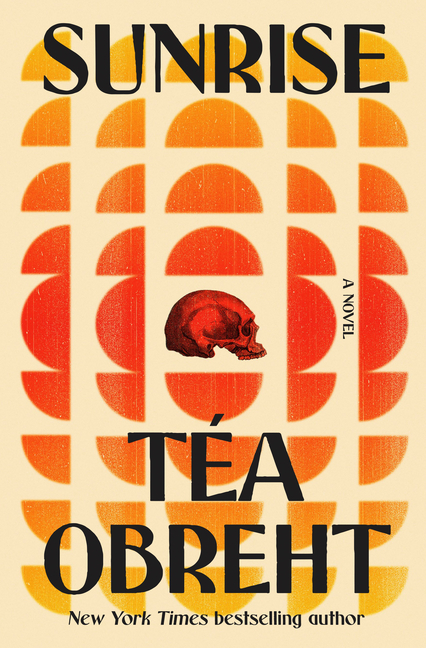
Sunrise Author: Téa Obreht ISBN-13: 9781399644518Publisher: Weidenfeld & NicolsonGuideline Price: £22; 336ppTéa Obreht’s fourth novel, Sunrise, is a propulsive metafiction with an ambitious structure; three protagonists in three time periods, from 1902 to 2024. In 2024, Nina is travelling with her boyfriend Ben on a small plane that crashes into a lake in Wyoming. Nina finds herself alone in a deserted place but decides “the important thing is not to drop to your knees and start wailing”. Her survival tale is as compelling as her wry interior monologue. “That’s right. Get yourself in a tailspin, Neen. That way you can hyperventilate and be your usual useless self.” She rations protein bars and attempts to search for Ben, thwarted by a phone that has no signal. In her hunt for both her boyfriend and help, Nina stumbles upon a seemingly abandoned but well-kept town called Sunrise where “nothing seems to have moved in years”. In 2003, local man Coll is preparing for a historical re-enactment play about the town of Sunrise, which is a place “so far from anywhere, it’d take a week or more for the law to reach”. An author arrives with questions for Coll about the town’s important figures. The investigation is unwelcome and it is in this strand that issues of narrative authority, heroes, villains and myth-making come to the fore.The earliest section of the plot takes place in 1902 and focuses on Anton Vargas, a returning local hero gunslinger who joins in the search for a missing boy. But who Vargas turns out to be does not tally with local lore. The building thesis as to who has the authority to write history, and what is at stake for those authoring and/or perpetuating certain versions of events, becomes Obreht’s central inquiry.The language is evocative with “sun . . . melting drowsily behind the fog” and “huddled pines . . . tilting ever so slightly… like black-clad mourners". And the characters are richly drawn. If readers can exercise patience in puzzling through how the three storylines are connected, they will be rewarded with a plot that hurtles along to convincingly converge the intricate narratives. This is a novel that delivers a rewarding denouement and in turn confirms Obreht’s unusual genre-blending as a success. Catherine Higgins-Moore is a PhD candidate at Queen’s University Belfast’s Seamus Heaney Centre
Sunrise by Téa Obreht: Timelines converge successfully in absorbing novel
Rewarding denouement confirms author’s unusual genre-blending as a success
389 words~2 min read