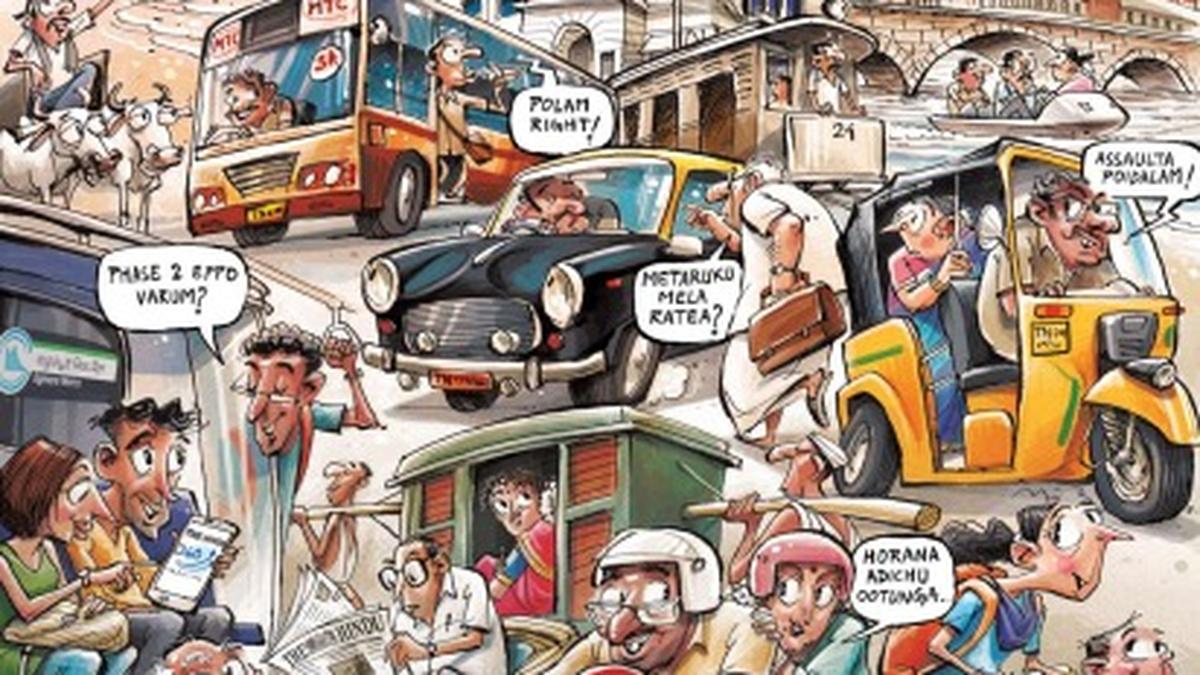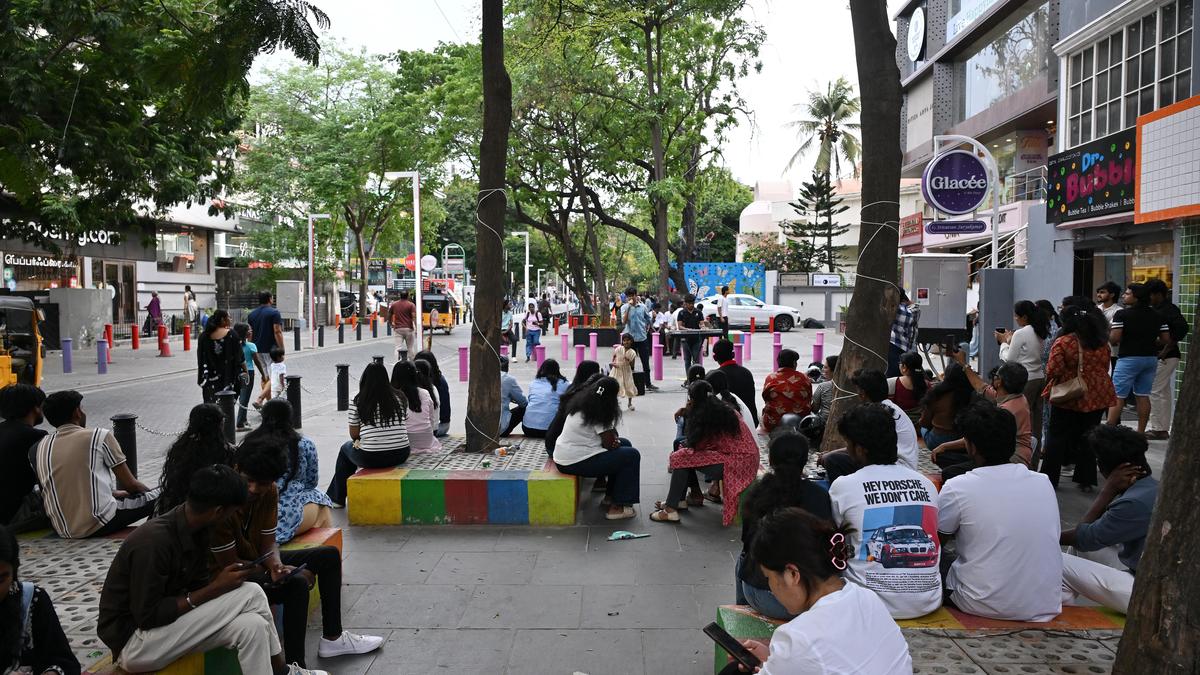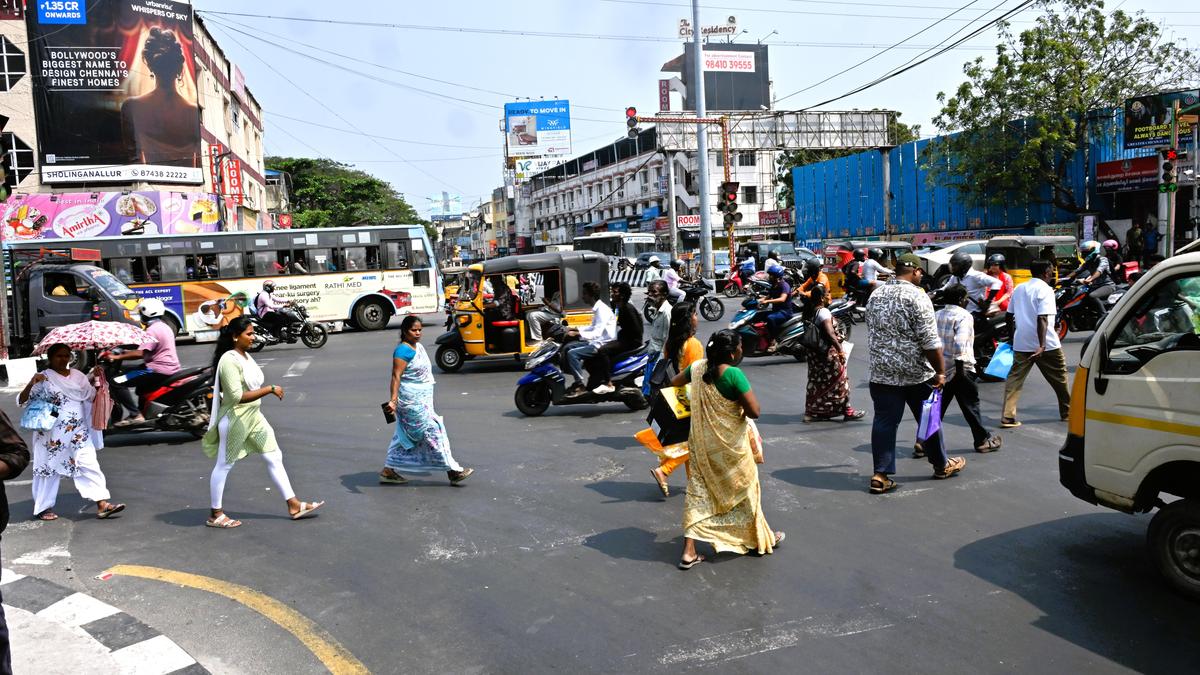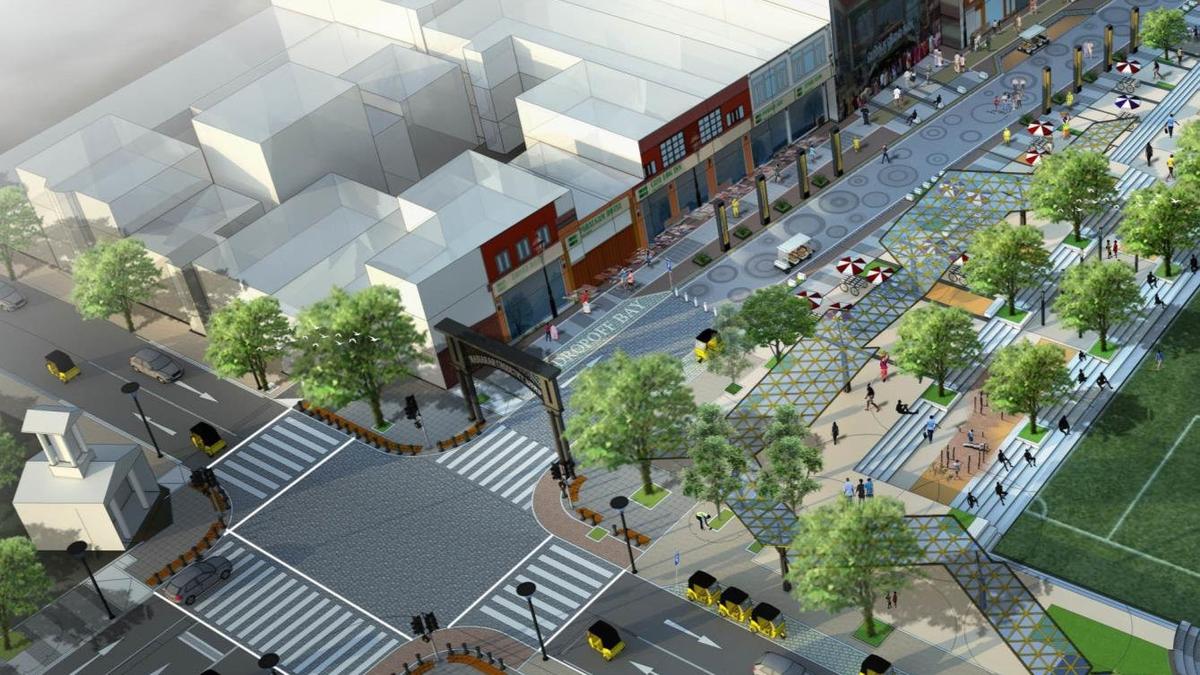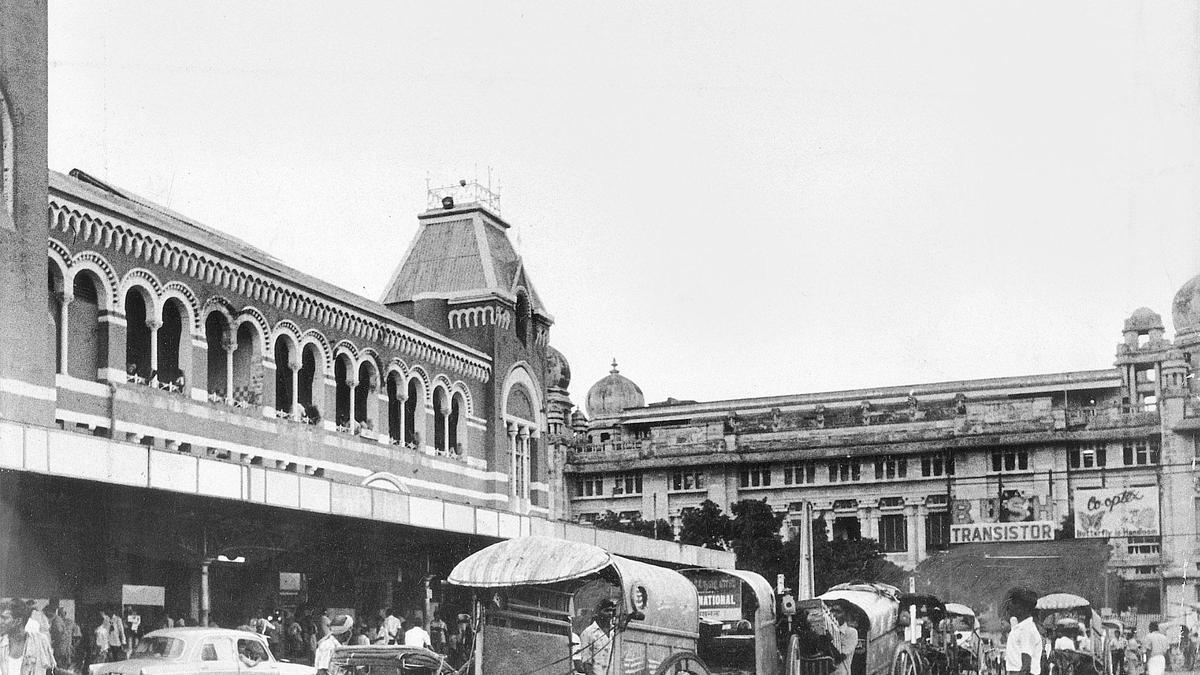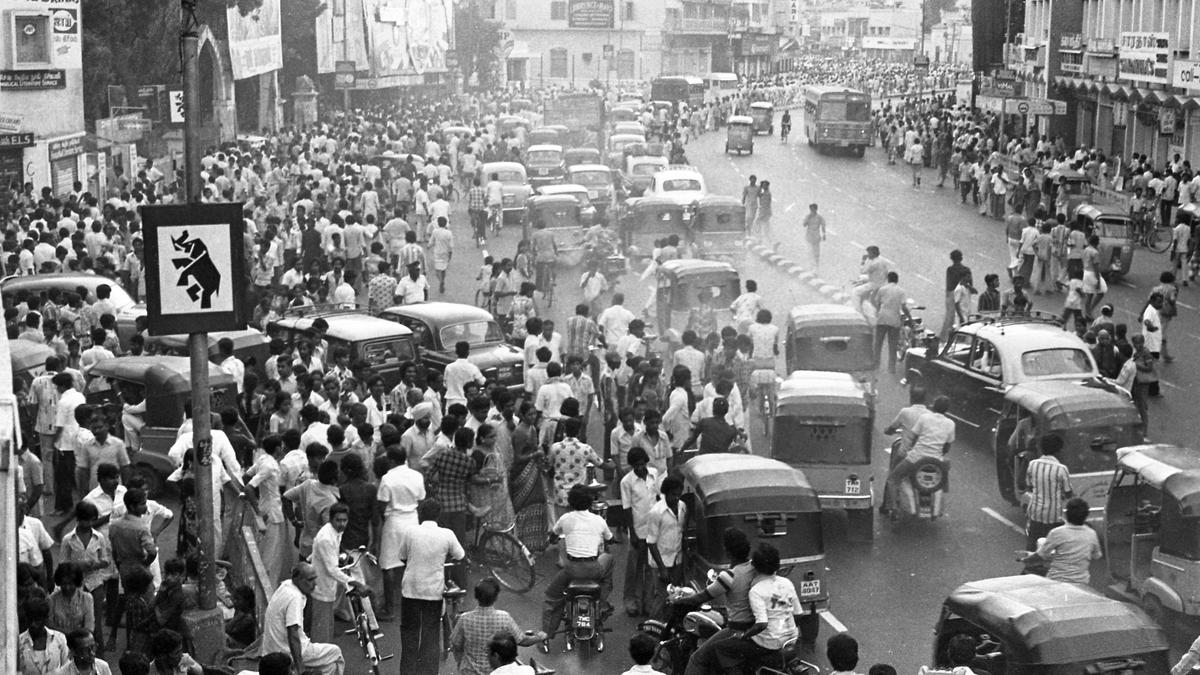
According to The Hindu Centre for Politics and Public Policy, the infrastructure that is in place for road users is skewed against non-motorised transport, either pushing pedestrians to the margins of the road networks, or even worse, compelling them to jostle for space with motor vehicles, thereby exposing them to injury or death.
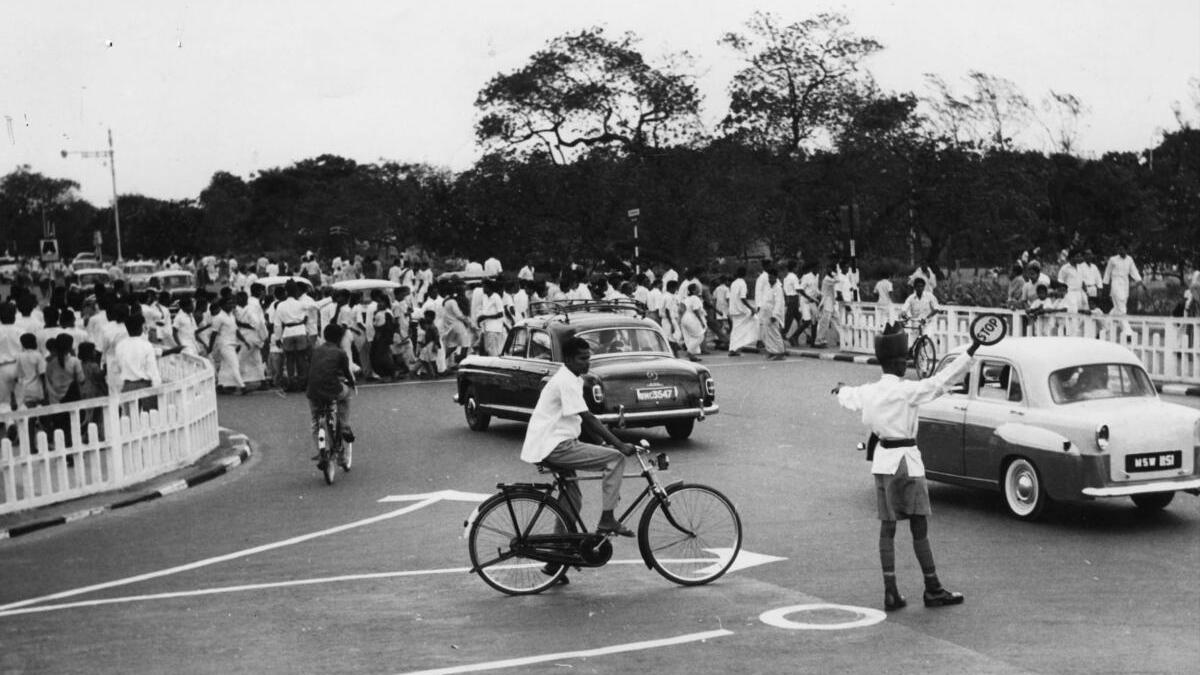
| Photo Credit: The Hindu Archives
Pazha Athiyaman’s book Chennaikku Vanthen is a compilation of articles by famed authors on their first impressions of Madras. In it is a short story, Vaithikar Pattina Pravesam by Kothamangalam Subbu. The narrator goes to Central railway station to receive an orthodox Brahmin, who is on his maiden visit to the city. They emerge from the station and wait at a bus stop.Vaithikar: “Why are we waiting?”Narrator: “Bus will come.”Vaithikar: “How far is your home?”Narrator: “Around a mile.”Vaithikar: “It is no use blaming you. The city has corrupted you. Imagine not walking this short distance in the morning. Come on lazybones!”Going about on foot was very much the norm in rural areas while the city demanded transport. Before the various villages became Madras, walking was the only mode of transport. Bhakti poetry on the areas that became Madras, which comprise early evidence in writing of community living, is replete with references to pathways. Mylapore for instance was synonymous with its ‘Mada Veethis’, even though the present four are not the ones being referred to. Sambandar in his Tevaram sings of their festive atmosphere in the 7th Century.A close reading of the 12th Century Periyapuranamreveals a much-frequented route by the sea during the time of the Bhakti saints. Appar (Thirunavukkarasar), travels it from Kanchi, going to Thirukazhukundram, Thiruvanmiyur, Thirumayilai, and Tiruvottiyur in that sequence. His contemporary, Gnanasambandar takes the same route but in reverse, setting out from Tiruvottiyur and proceeding to Thirumayilai and Thiruvanmiyur. These were not solo journeys. The Periyapuranam states that scores of devotees walked this route. That the paths were amenable to such journeys is evident from descriptions of the surroundings – plenty of shade-giving trees and orchards lined the route. The Christian legend of St. Thomas again has a walking route for it is said the apostle proceeded on foot from his cave at Little Mount to Mylapore every day. In the 16th Century, following the arrival of the Portuguese, these stories gained greater currency, and a location in Mandaveli was recognized as the place where St. Thomas rested during this daily walk. On it was built the 17th Century church known as Descanso, which means ‘rest’ in Portuguese. In Tamil, it became the Ilaippatriya Mada (Fatigue removing Virgin) Koil, which is today Ellapatha Mada Koil (Border facing Virgin). The modern name is not far from the truth as Mandaveli borders Mylapore. This must have been a historic route from Saidapet to Mylapore. Cut from those walk-friendly times to now. Public transport may be needed for long distances within the city but what about short journeys? Why can they not be by walk? ‘Walking in Indian Cities-A Daily Agony for Millions’ was the title of an article published on June 15, 2022, by The Hindu Centre for Politics and Public Policy. “India is a land of walkers,” it said. “An estimated 45 million walk to work daily, compared with a mere 54 lakh, who used motorised personal transport. However, the infrastructure that is in place for road users is skewed against non-motorised transport (NMT), either pushing pedestrians to the margins of the road networks, or even worse, compelling them to jostle for space with motor vehicles, thereby exposing them to injury or death.”