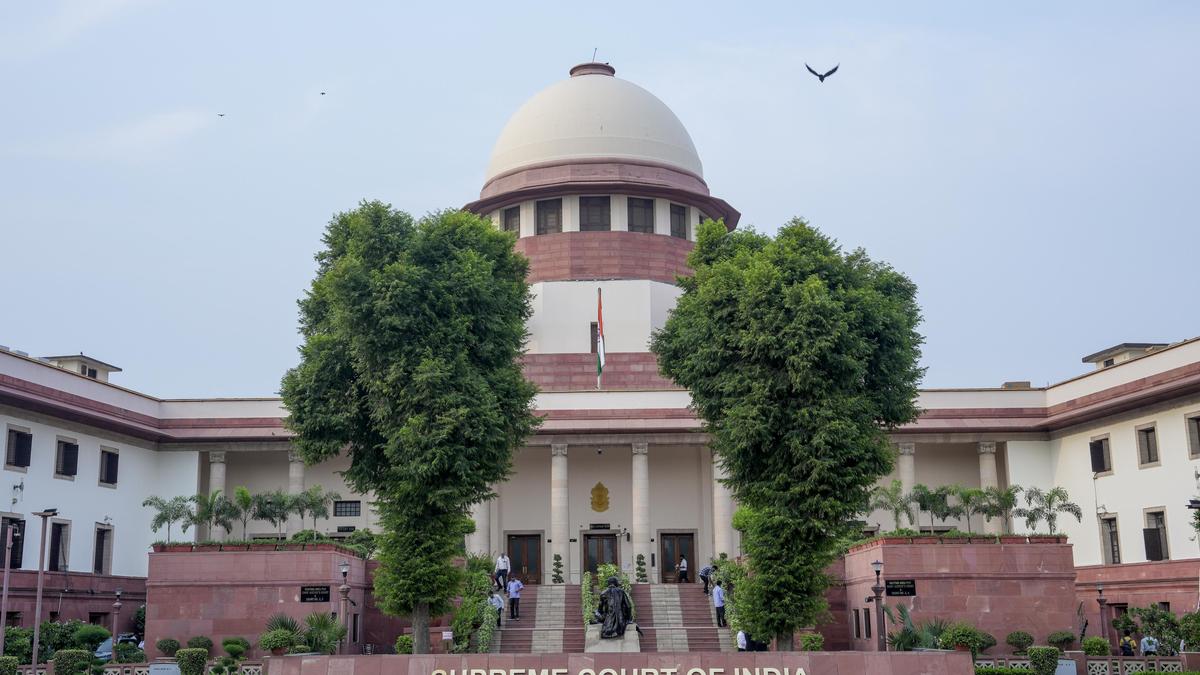
The Tribunals Reforms Bill, 2026, is presented as the next chapter in India’s effort to reform its tribunal system. It promises a National Tribunals Commission (NTC), greater institutional oversight and a more coherent framework for appointments and service conditions. But there is a more fundamental question to be asked before the Bill is celebrated as a new phase of reform: how much of it is actually new?The answer is: surprisingly little. The 2026 Bill retains the same 16 tribunals in its First Schedule. It retains the basic legislative approach of prescribing common qualifications, selection, appointment and conditions of service for those tribunals. But the Central government remains an important part of the appointment architecture. The material changes? The proposed NTC, an increase in tenure from four years to five, and the removal of the minimum age of 50 years. The five-year tenure and removal of the minimum age address two features of the 2021 framework that had attracted serious Constitutional criticism. But they do not, by themselves, constitute a fundamental reconstruction of the tribunal system. The more accurate description would be that the 2026 Bill is a revised edition of the 2021 model, with some important repairs and a new institutional layer in the form of the NTC.The bottle, therefore, may be old, but the label is new. The real question is whether the cork has changed — whether the appointment mechanism will actually function differently, and whether it will alter the balance between the Executive and the tribunals.What changed in 2021?The 2021 Act was itself the second stage of a longer process of tribunal rationalisation that began with the Finance Act, 2017, through which several tribunals were abolished or merged and their number reduced. The 2021 legislation moved the needle further, abolishing five more tribunals. For the tribunals that remained, it sought to create a uniform statutory framework for qualifications, selection, appointment, tenure, salaries and allowances, resignation, removal and other conditions of service.The 2021 Act’s fatal flaw was its bureaucratic hubris, the assumption that a one-size-fits-all statutory regime could displace the Constitution’s demand for independent adjudicatory institutions. In Madras Bar Association v. Union of India, the Supreme Court struck down provisions of the 2021 framework on grounds including separation of powers and judicial independence.The 2026 Bill is, therefore, in part, a response to that judicial intervention. Its Statement of Objects and Reasons expressly acknowledges the Supreme Court judgment and the direction concerning a National Tribunals Commission. But that raises the central question: has the government redesigned the tribunal system, or has it merely excised portions of the 2021 framework that did not survive constitutional scrutiny?What is new in 2026?The changes introduced by the 2026 Bill are important, but limited. The most visible innovation is the creation of the NTC, proposed as the institutional body responsible for the selection process for tribunal members, review of tribunal performance, oversight of inquiries into complaints and maintenance of a National Tribunals Data Grid. The change in tenure from four years to five years is also welcome, as is the removal of the minimum age requirement. Search-cum-Selection Committees remain part of the appointment mechanism, albeit within the new NTC structure. These changes respond directly to some of the difficulties that had arisen under the 2021 framework. But beyond them, the basic architecture remains the same, with the same 16 tribunals covered.The real test lies in the appointment mechanism. The NTC’s creation should not, by itself, be mistaken for a complete restructuring of tribunal governance. The Central government continues to have a significant role. What happens if the government does not appoint the candidate recommended by the NTC? Or if it sits on the recommendation? Or simply seeks a fresh list? The answer to these questions will determine whether the NTC has actually altered the balance between the Executive and the tribunals, or has merely inserted another institutional layer into an essentially familiar framework.The NCLT omissionThere is, however, one feature of the 2026 Bill that is difficult to explain. An institutional schizophrenia, so to speak. NCLAT is included in the First Schedule.NCLT is not. The 2026 Bill simply carries that position forward from the 2021 Act, without explaining why.The omission is difficult to reconcile with the stated objective of creating a coherent and uniform framework for tribunal governance. NCLT is the Adjudicating Authority under the Insolvency and Bankruptcy Code and exercises substantial jurisdiction under the Companies Act. NCLAT is its appellate tribunal. Yet, the Bill proposes to bring the appointment and service conditions of NCLAT within the new regime while leaving NCLT outside it.The inconsistency becomes more striking because the 2026 Bill expressly amends section 417A of the Companies Act to provide that the qualifications, selections, appointment, salaries, removal and other conditions of service of the Chairperson and Members of NCLAT will be governed by the new legislation. There is no corresponding provision bringing NCLT within the framework.Notably, the Statement of Objects and Reasons does not even explain the exclusion. If the omission in the 2021 framework was inadvertent, reproducing it in a Bill intended to repeal and replace the framework is difficult to justify. A legislation intended to create uniformity in tribunal governance should not reproduce an unexplained distinction between a tribunal and its appellate tribunal. The government should therefore explain why NCLT has once again been left outside the reform framework and, if there is no substantive reason, correct the omission before the Bill becomes law.Reform or repair?The Tribunals Reforms Bill, 2026, is therefore best understood as a measure of correction rather than a fundamental redesign. It increases tenure, removes the minimum age and introduces the National Tribunals Commission. Those are meaningful changes.But the basic architecture remains largely intact. The same tribunal universe remains, the Executive continues to occupy an important position in the appointment structure, and an unexplained omission from the 2021 framework has been carried into the 2026 Bill.Tribunal reform should ultimately be judged by whether it produces institutions that can tell the government, ‘No’. On that test, the 2026 Bill may be a step forward. But whether it is genuinely a new bottle will depend on whether Parliament is prepared to address the structural questions that the 2021 experiment left unresolved.The writer is a lawyer and former Judicial Member of the National Company Law TribunalPublished on August 22, 2026
Tribunal reform 2026: Old wine in a new bottle
The 2026 Bill adds an NTC, extends tenure and removes the minimum age, but leaves the basic architecture of the 2021 law largely intact
1,049 words~5 min read