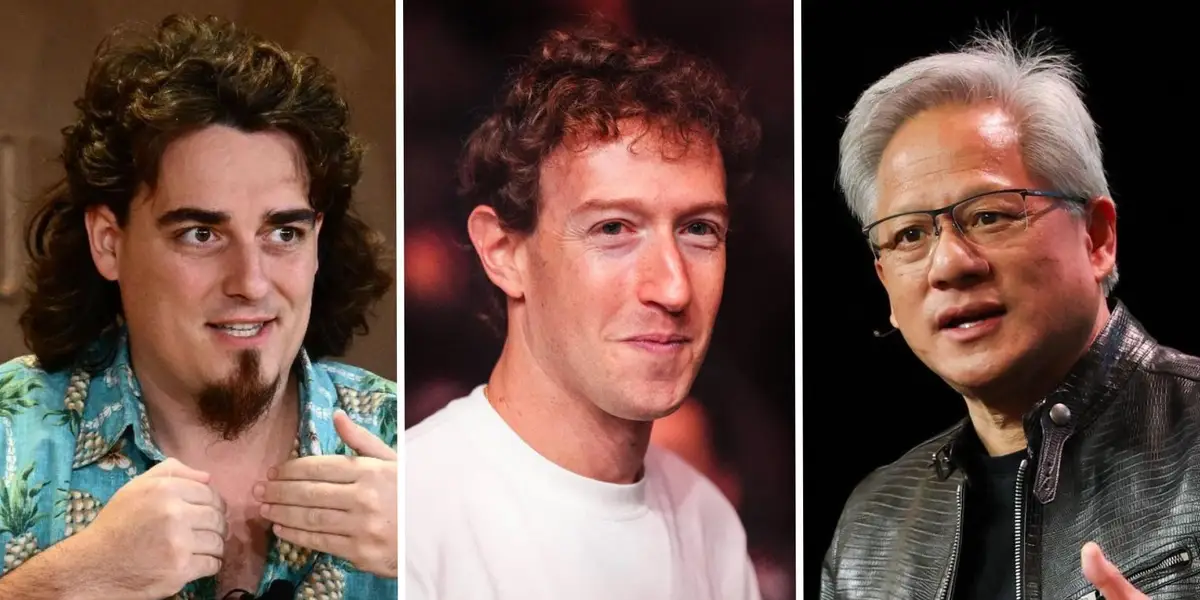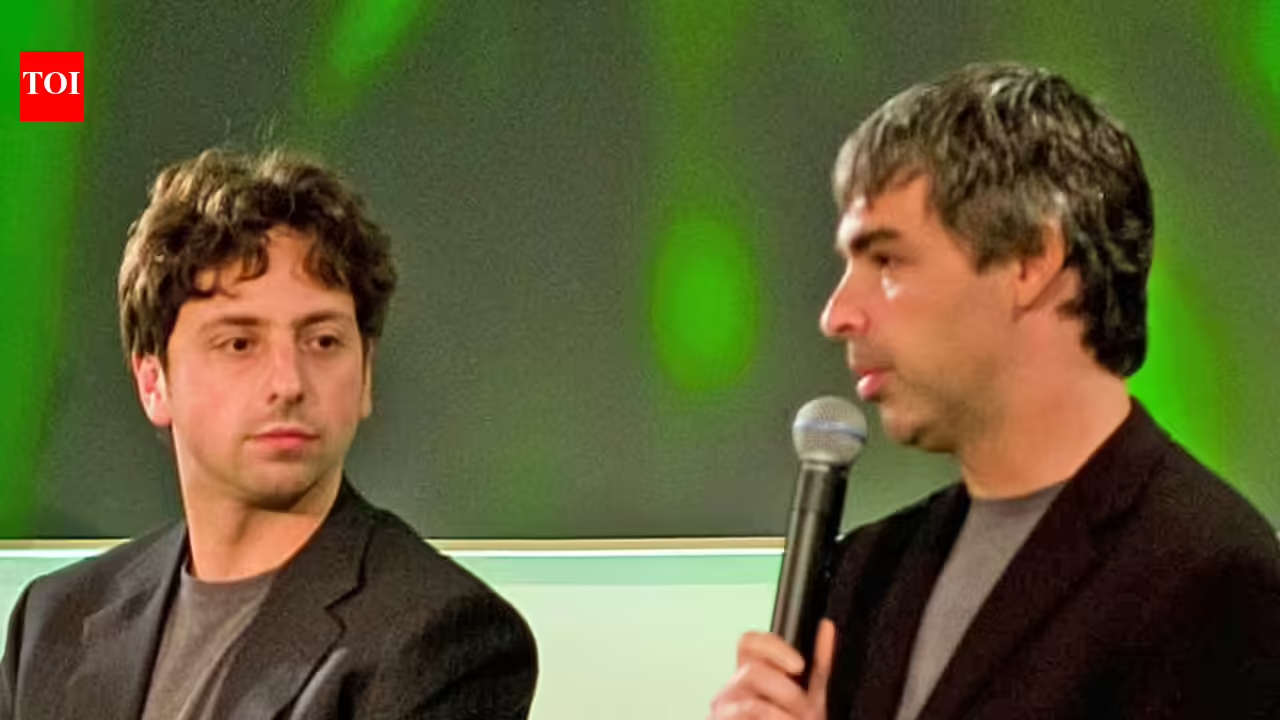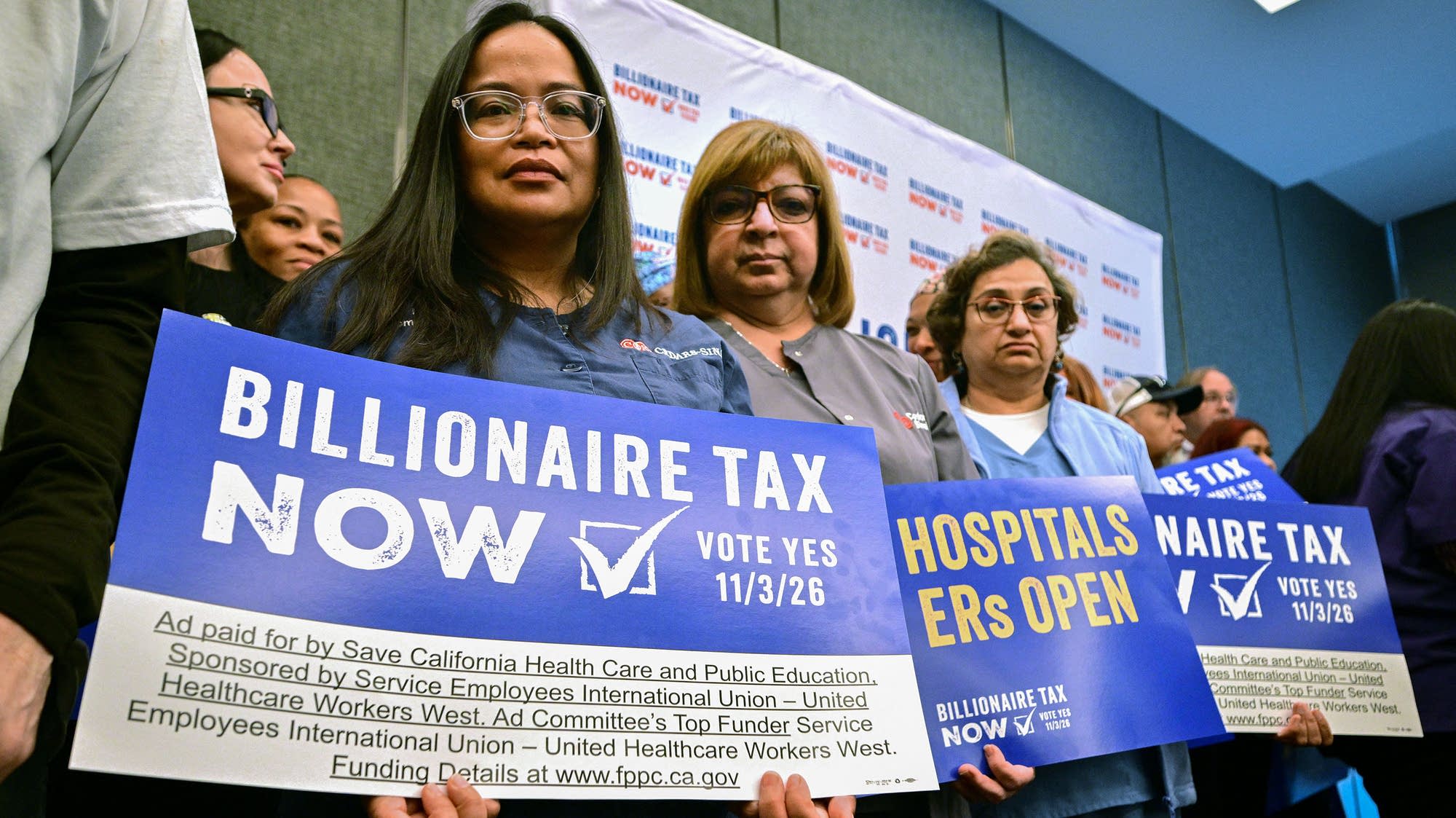
Sergey Brin, no. 4 on Forbes' billionaires list, and Gerelyn Gilbert-Soto at the 2026 Met Gala at the Metropolitan Museum of Art in May.Getty Images for The Met Museum/VogueIf someone published a serious Oxford University Press book called “The Case Against Everyone Named Teresa,” I would take it personally. So I have sympathy for California’s super rich, who were confronted with the 2023 book “Against Inequality: The Practical and Ethical Case for Abolishing the Superrich,” by economist Tom Malleson. And, three years later, they face a ballot measure aimed at their net worth. Defensiveness is human. But higher-order concerns about pressing humanitarian problems can and should overcome defensiveness. California is about to test one of the most contentious ideas in modern economics: whether the state’s roughly 200 billionaires should pay a one‑time tax of up to 5% to help close a $30 billion gap in Medi‑Cal funding. The fight over Proposition 40 has become a real‑world experiment in the three claims billionaires often make against taxing extreme wealth — that they earned it, they’ll leave, and they’ll block it anyway.Did Billionaires Truly Earn Their Wealth?The just deserts case, made prominently by Harvard’s Greg Mankiw, holds the rich deserve their wealth because markets pay people what they contribute. Malleson’s rebuttal is that great fortunes rest on other people’s labor, public infrastructure and luck. Voters, whether explicitly or not, wrestle with this philosophical fight. No one feels it is fair to take away something that belongs to someone; ask a 3-year-old. But it is unlikely, according to economic research, that people simply get what they deserve. Many of the working poor work extremely hard. And the stock market has nearly doubled the wealth of asset holders in a decade — whether they worked or not.The Federal Reserve’s Distributional Financial Accounts show the top 1% now hold a record 31.7% of U.S. wealth, the highest since records began in 1989. The bottom half of Americans hold 2.5%. The distribution of wealth does not represent a distribution of effort or smarts by any reasonable assessment.MORE FOR YOUThe wealthy holding on to super wealth also happens in a context where most workers have no significant wealth. The UC Berkeley Labor Center finds half of the state’s private-sector workers own no retirement assets at all. And the Economic Innovation Group shows California is among the states with the highest share of workers lacking access to an employer retirement plan, reflecting its large low-wage workforce; nationally, 42% of full-time workers lack access. Whatever theory of desert you hold, it strains to explain why the janitor mopping Nvidia’s floors deserves zero and the man upstairs deserves $160 billion. Desert is doing a lot of lifting here. (Luck may be doing more, as economist Robert Frank showed in “Success and Luck: Good Fortune and the Myth of Meritocracy.”)Will The Rich Leave Or Stop Working?The second claim is practical, not moral. It is the genuine concern that if you tax the rich too much, they flee or slack off. Some of the super rich have changed addresses. Sergey Brin claims Nevada; Larry Page bought Miami waterfront. But as I wrote in an earlier column about billionaire flight, where I assessed the economic evidence, companies do not relocate in response to a tax on personal wealth, and the super rich people mostly stay too.Nvidia’s Jensen Huang, facing a bill near $8 billion if the billionaire tax proposition wins, told Bloomberg, "We chose to live in Silicon Valley, and whatever taxes they would like to apply, so be it. I’m perfectly fine with it." Nvidia stays, he said, because that’s where the talent pool is. In contrast, Google’s Sergey Brin — who would face an estimated $13 billion bill against a fortune near $270 billion — is fighting the measure. He has not yet made a public case for why the tax is wrong. I would like to read one.Will Billionaires Block The Tax Anyway?Malleson’s third argument is also practical. It says fairness and efficiency are beside the point: Billionaires have lawyers and power and will stop every attempt, so why bother? Perhaps the billionaire group spending millions to defeat the proposition is making that point.Building a Better California, the group Brin funds, has raised more than $118 million, over $100 million from Brin alone. Of that, it has funneled more than $50 million each to two rival ballot measures, Props 41 and 42, engineered to nullify Prop 40 by outpolling it, and just $5 million so far to the committee actually campaigning against the tax.Prop 42: The Billionaire-Backed Measure Branded As Retirement ProtectionProposition 42 is the anti-billionaire-tax measure, and it especially concerns me because of its name: the Retirement and Personal Savings Protection Act. As I explained in my column last month, the labels run backward. Prop 42 shields the asset forms billionaires hold, like business interests and financial control, while Prop 40 is the measure that funds Medi-Cal, the program that pays for long-term care when middle-class savings run out. The billionaire tax’s own drafters excluded qualified retirement accounts from its base, so 401(k)s are not touched. Calling a billionaire shield "retirement protection" in a state where half of private-sector workers have no retirement assets is not messaging. It is misdirection.The Missing Alternative: No Billionaire Plan To Fix Medi-Cal CutsHere is what $118 million did not buy: an alternative. Governor Newsom spent four months in quiet talks with the union behind the measure, hunting for an off-ramp. The union publicly called on the state’s 200 billionaires to step up. No counter-proposal came from the billionaires, only blocking measures. Had they sat down with the governor and financed serious inquiry by the state’s top experts into patching the $30 billion federal hole created in Medi-Cal by last year’s tax-cut law, they would be heroes today, and Prop 40 might have never made it to the ballot. The stakes of doing nothing are concrete. The drafters’ analysis warns that as many as 1.6 million Californians could lose Medi-Cal coverage if the hole goes unfilled.Billionaire Money Went To Kill Switches, Not SolutionsInstead of solving the humanitarian problem the billionaire money went to kill switches. In a defeat for the handful of billionaire opponents, on Sunday, August 2, the California Democratic Party endorsed Prop 40 over the objections of its own governor and its own endorsed candidate for governor. When $118 million cannot hold a party whose leaders agree with you, the money is not persuading anyone. It is confirming the thesis.Malleson’s third argument was supposed to be the pessimistic one: the rich always win these fights. California’s billionaires are testing a corollary he did not consider. Spend enough blocking a tax, offer nothing in its place, and you become the best argument for it. The November election will be a testing ground for the political clout of a minority of California billionaires. If California's billionaires believe this tax is unwise, unfair, or unworkable, they should say so — in public, in detail, with an alternative for the 1.6 million Californians at risk of losing coverage. Make the case.
What Are California's 200 Billionaires So Afraid Of?
California’s Prop 40 tests billionaire claims about wealth, taxes and migration as the state weighs a one-time levy to help close a major Medi-Cal funding gap.
1,175 words~5 min read