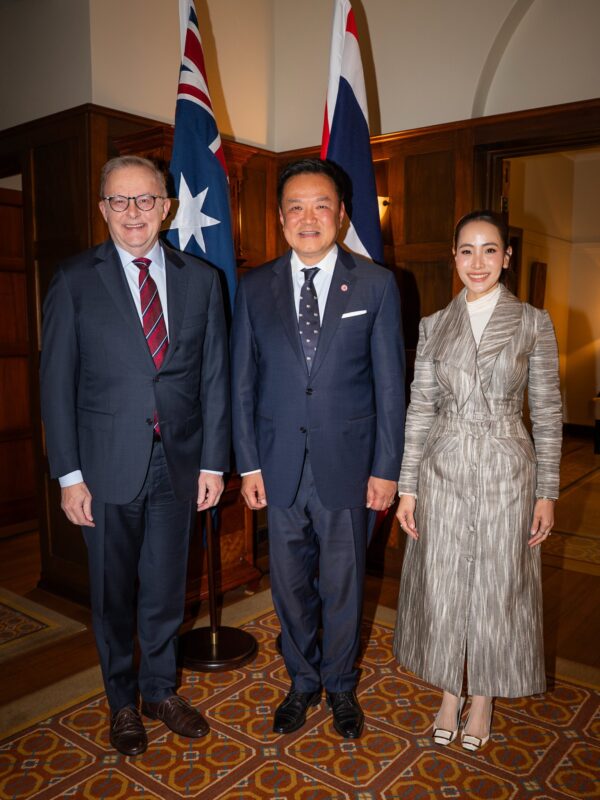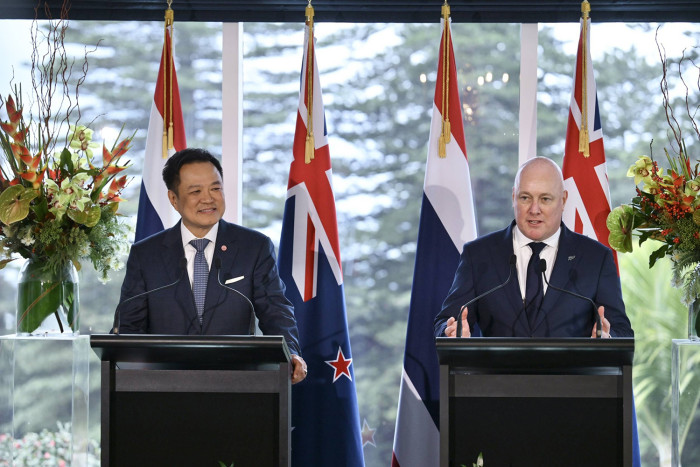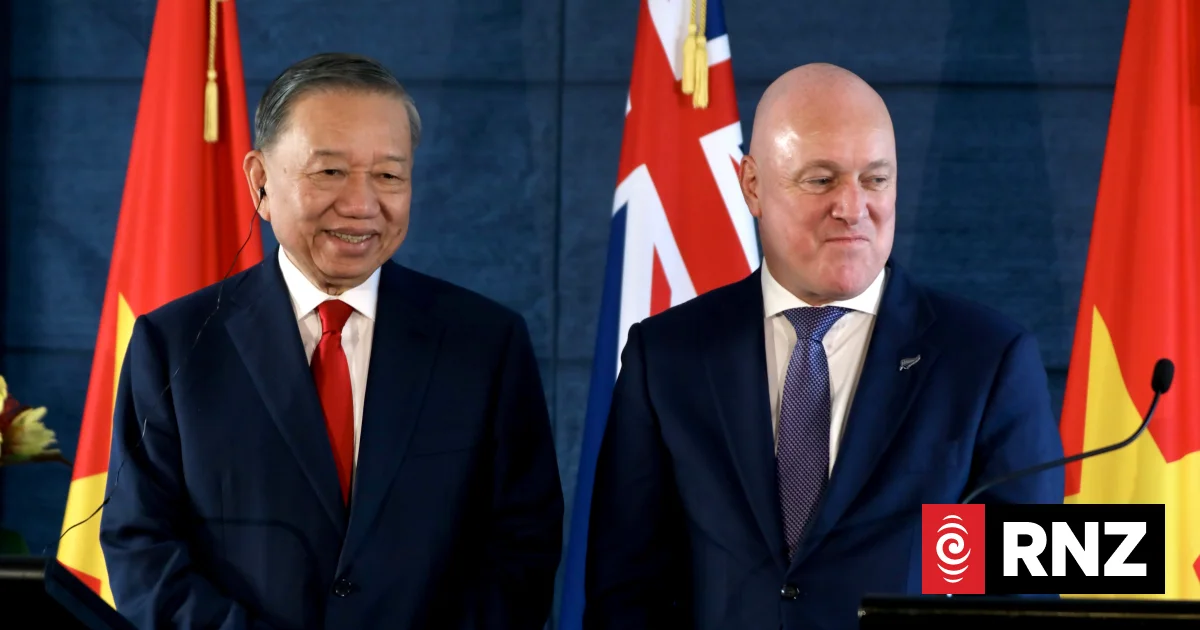
As the great superpowers battle for supremacy, power dynamics in Southeast Asia are shifting - and for New Zealand, that means strengthened partnerships with countries across the SEA region.A recent flurry of diplomacy with countries across Southeast Asia shows how New Zealand is trying to diversify its relationships as great power rivalry grows in the Pacific region.But we are also part of those countries' diversification strategies too.Countries around the world are figuring out how to navigate the changing geopolitical environment as China and the US seek spheres - or rather, hemispheres - of influence.This week on The Detail, we look at the ways many countries are "hedging" and trying to maintain good relationships with both powers, at the same time as forging new links and fortifying existing ones."Across Southeast Asia and frankly across the whole world, I think there's really an urge to diversify, to do whatever you can to get out from under the pressure of the two great superpowers by building relationships with other countries," says Damien Cave, who is Vietnam bureau chief for the New York Times and often writes about regional dynamics."So you see Southeast Asian countries increasing trade with each other. You see them reaching to, you know, Australia, New Zealand, to Europe," he says, a strategy that's being called "multi-alignment"."You know, it's an effort to kind of really build robust networks in trade, economics, security, migration across a broader range of countries so that if something goes haywire with the United States or China or some other country, there's ways to sort of secure and hedge against that."It's mass hedging and mass multi-alignment."New Zealand is a part of that.This week the prime minister of Thailand, Anutin Charnvirakul, has been in New Zealand to mark 70 years of diplomatic relations and launch a strategic partnership."It will strengthen trade and business connections between our two countries, as we both work towards the shared goal of tripling two-way trade by 2045," Prime Minister Christopher Luxon said before Anutin's arrival.He pointed to the economic opportunities: Thailand is one of New Zealand's top 10 trading partners, buying $1.6 billion of our products in the year to March. (Though that's a long way from the $20b in exports we sell to China.)Last week, Vietnam's most powerful leader in decades, Tô Lâm, was in New Zealand to talk trade and stronger ties. New Zealand upgraded its relationship with the Philippines last month, and the government is talking about elevating our relationships with Indonesia and Malaysia.These are all opportunities for us."There has been an incredible amount of activity around Southeast Asia," says Suzannah Jessep, the chief executive of the Asia New Zealand Foundation.This is partly because we are now celebrating milestone diplomatic relationships with these countries - in Vietnam's case, 50 years of formal relations - but also because of the "considerable pressure" in the region."So we're seeing rules tested, we're seeing countries grappling with shocks like Iran, Ukraine, and so on … and economic challenges such as US tariffs," Jessep says."I think these visits and these partnerships that we're seeing really reflect a sort of new era of regional diplomacy," she said.These countries are growing quickly - eight percent for Vietnam last year - so the economic opportunity is real.But there's also a lot of opportunity for broader relationships across the arts, sports, science, education and other people-to-people exchanges. Cultural ties and 'soft power' can make these relationships diverse and vibrant, helping maintain ties when politics change or differ, Jessep says.New Zealand is much smaller than these countries - Vietnam and the Philippines have more than 100 million people, and Thailand more than 70 million - but has a lot to offer them.From agritech and geothermal energy to satellite technology and expertise in Antarctica, they also see value in us, Jessep says.This is hugely valuable for Vietnam in particular, where Lâm has laid out ambitious economic plans: he wants at least 10 percent annual growth over the next five years and for Vietnam to reach high-income status by 2045.Lâm is "a leader in a hurry", says Cave."He's trying very, very hard to get Vietnam to change as quickly as possible, to become more efficient."That's why you see him all over the world stage. And he's trying to kind of project Vietnamese growth and economic prosperity into the region and into the world in new ways."Lâm has South Korea - which industrialised quickly by backing big conglomerates like Samsung and Hyundai - as his model, Cave says.But as in the case of China - and to some extent, Singapore - booming economic growth doesn't necessarily lead to full democracy. Vietnam remains a communist state and Lâm has consolidated power: since April he has held both top posts in the Vietnamese system, the first time in four decades one person has done so.Cave says that means there's still a "tension between openness and control" in Vietnam.Check out how to listen to and follow The Detail here.You can also get in touch with us by emailing thedetail@rnz.co.nz
In a 'great power rivalry', NZ gains friends
As the great superpowers battle for supremacy, power dynamics in Southeast Asia are shifting - and for New Zealand, that means strengthened partnerships with countries across the SEA region.
833 words~4 min read