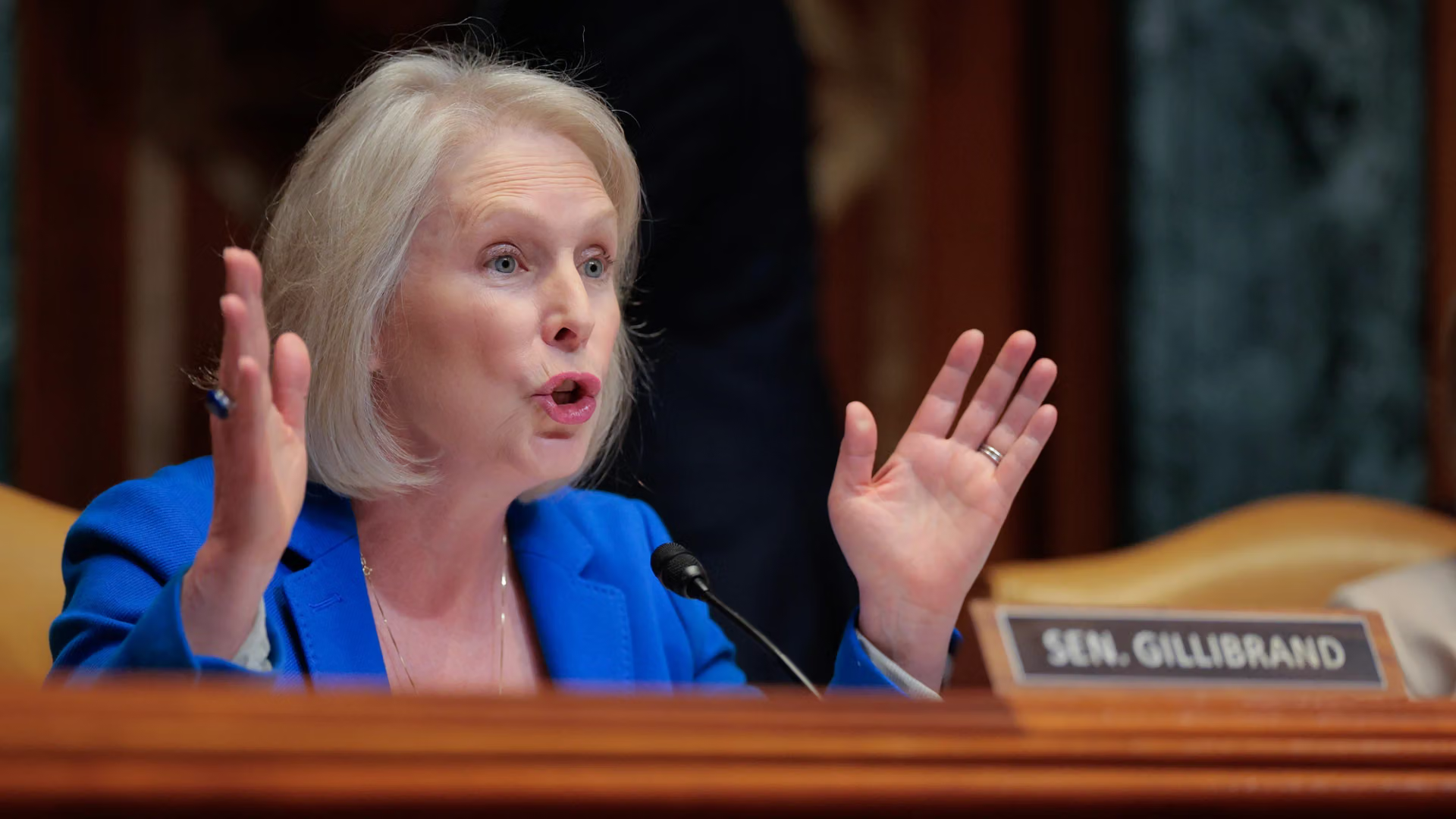
19 min ago4 min readSen. Kirsten Gillibrand (D-NY) has played a key role in shaping the Clarity Act (Getty Images/Chip Somodevilla)In a recent op-ed, American Bankers Association CEO Rob Nichols says America's banks want to strengthen the Clarity Act, not kill it. I'll take him at his word, but time is short, so let's look at the calendar.On September 15, less than four weeks from now, the Senate will vote on whether to debate this bill. That vote needs the OK from 60 senators. Afterward, the Senate has less than three working weeks before the fall spending fight dominates the Senate calendar and the legislative window effectively closes ahead of the midterms. That’s a very tight window to get this bill over the line. With that in mind, the big banks are introducing a demand to reopen a provision that had been negotiated over many months, with their representatives at the table the entire time. Reopening it now would not improve the bill. It would restart a negotiation nobody has time to finish. We feel that this “discussion” is simply a delay to kill the legislation.Summer Mersinger is CEO of the Blockchain Association and a former commissioner of the Commodity Futures Trading Commission.A "handful of word changes" is actually a major policy changeMr. Nichols presents two of ABA’s proposed changes as modest: replace the bill’s existing standard with “substantially similar” and strike the word “solely.” Neither change is modest."Substantially similar to interest" is a legal standard, and an elastic one. Almost any program returning economic value to a customer can be made to look substantially similar to interest by a regulator inclined to see it that way. Banks understand this, because they run programs that would struggle under the test: cash-back rates that climb with spending or loyalty tiers keyed to balances. No bank would accept a statute leaving its own rewards hostage to that phrase."Solely" comes from the GENIUS Act, which barred issuers from paying yield "solely in connection with the holding, use, or retention" of a stablecoin. The word limits the prohibition to rewards made for holding the coin itself. Take it out and the provision reaches conduct Congress deliberately placed outside it.Both edits would change what the bill does. That is a nontrivial ask of the bill drafters, and it deserves to be argued on its own terms rather than presented as a simple language fix.I spent three years as a CFTC commissioner. I know what ambiguous statutory language looks like, and what it costs an agency when Congress hands it a vague standard and walks away. ABA’s proposal would replace a negotiated standard with new ambiguity and leave regulators to sort out the consequences.The evidence problemMr. Nichols argues that the absence of deposit flight since GENIUS passed is "irrelevant" because we haven’t finished full regulatory implementation. ABA is asking senators to act on a forecast while dismissing the only real-world data anyone has. And that evidence is stark. The latest available FDIC data shows that U.S. deposits have grown [fdic.gov] every quarter since GENIUS was enacted. In fact, in the three full quarters reported since GENIUS became law, domestic bank deposits have grown by over $800 billion.If contrary evidence can always be waved off as premature, no evidence could ever settle the question, and the dire forecast wins by default.The real competition for deposits is already here, and it has nothing to do with crypto. Money market funds have pulled in trillions [ici.org] by paying savers a genuine, market-leading return. Banks usually answer by raising their own rates to better compete for those accounts. They have never asked Congress to cap what a money market fund may offer.What protecting consumers actually meansStablecoins are not FDIC-insured, but GENIUS did not leave holders unprotected. The law requires one-to-one reserves in cash and short-dated Treasuries, bars issuers from lending those reserves out, mandates monthly attested disclosure certified by the CEO and CFO, and gives holders a priority claim on reserves if an issuer fails. Now apply that standard to the rest of the market. Sixty-seven million Americans hold digital assets, and outside of stablecoins, no federal framework governs how the platforms holding them are required to act. No federal rule ensures that a platform segregates customer funds from its own, discloses its financial condition, or refrains from trading against the customers it serves.The Clarity Act would write those standards into law. The legislation draws a clear jurisdictional line between the SEC and the CFTC, requires platforms serving American customers to register, mandates segregation of customer assets, and imposes disclosure and conflict-of-interest rules.Consider, then, that ABA's proposed amendment would not protect consumers from any particular risk unaccounted for in the current bill text. It would remove an option consumers currently have. The provisions that would actually protect them sit in the same bill, waiting on the same vote.Take yes for an answerMr. Nichols says the United States can be both the banking capital of the world and the crypto capital of the world. He is right, and I would go further: that line is already dissolving. Banks are building on this technology today, and the framework in front of the Senate is one they will use.The guardrails and consumer protections Mr. Nichols is calling for are already before Congress. Lawmakers have spent years negotiating this framework, working through difficult issues and making hard-fought compromises. The bill is written. The work has been done. And on September 15, the Senate has a chance to move it forward.Pass it.Note: The views expressed in this column are those of the author and do not necessarily reflect those of CoinDesk, Inc. or its owners and affiliates.12345678910Anvil: The Missing Collateral LayerAnvil: The Missing Collateral LayerAnvil is a shared on-chain collateral layer built on a programmable letter of credit: reserve assets as a guarantee -no loan, no interest, keep custody & yield.Jul 29, 2026Anvil is a shared on-chain collateral layer built on a programmable letter of credit: reserve assets as a guarantee -no loan, no interest, keep custody & yield.Why it matters:Anvil is a shared on-chain collateral layer built on a programmable letter of credit: reserve assets as a guarantee -no loan, no interest, keep custody & yield.View Full Report
Pass the Clarity Act
Reopening a settled provision four weeks before a vote would sink the bill, argues Summer Mersinger, CEO of the Blockchain Association.
1,034 words~5 min read