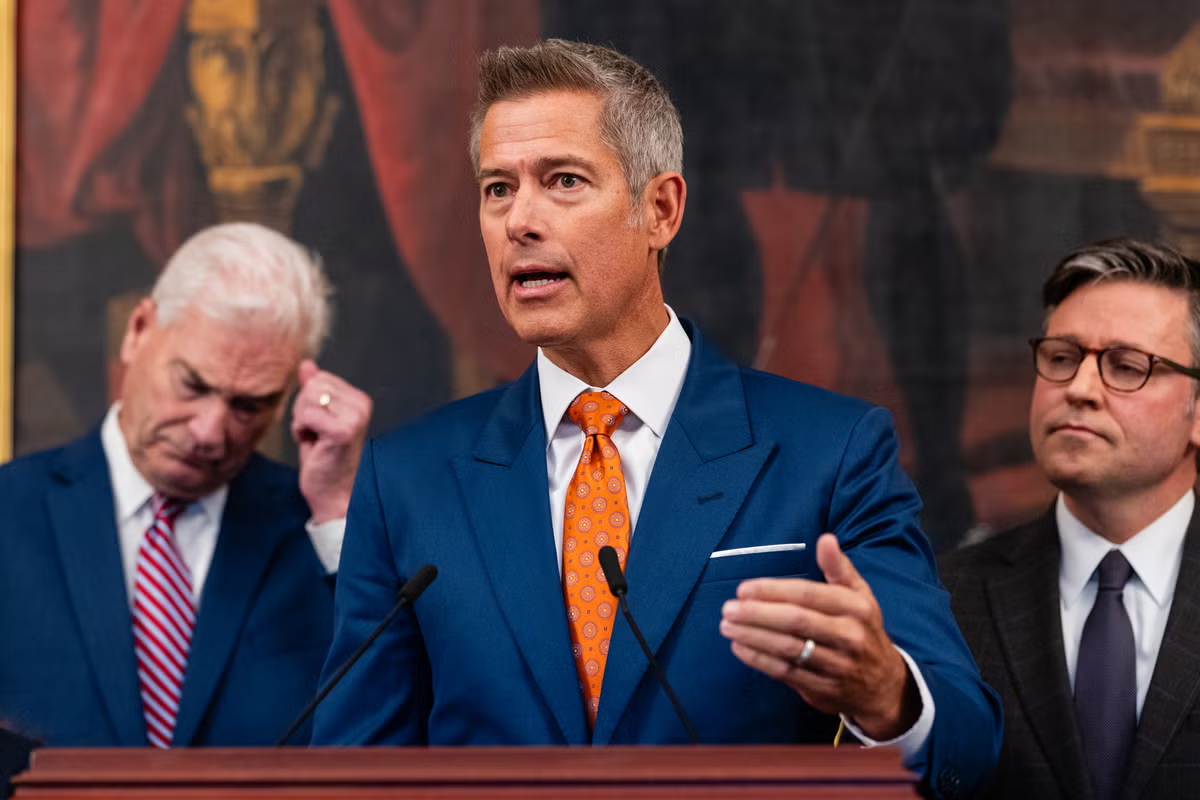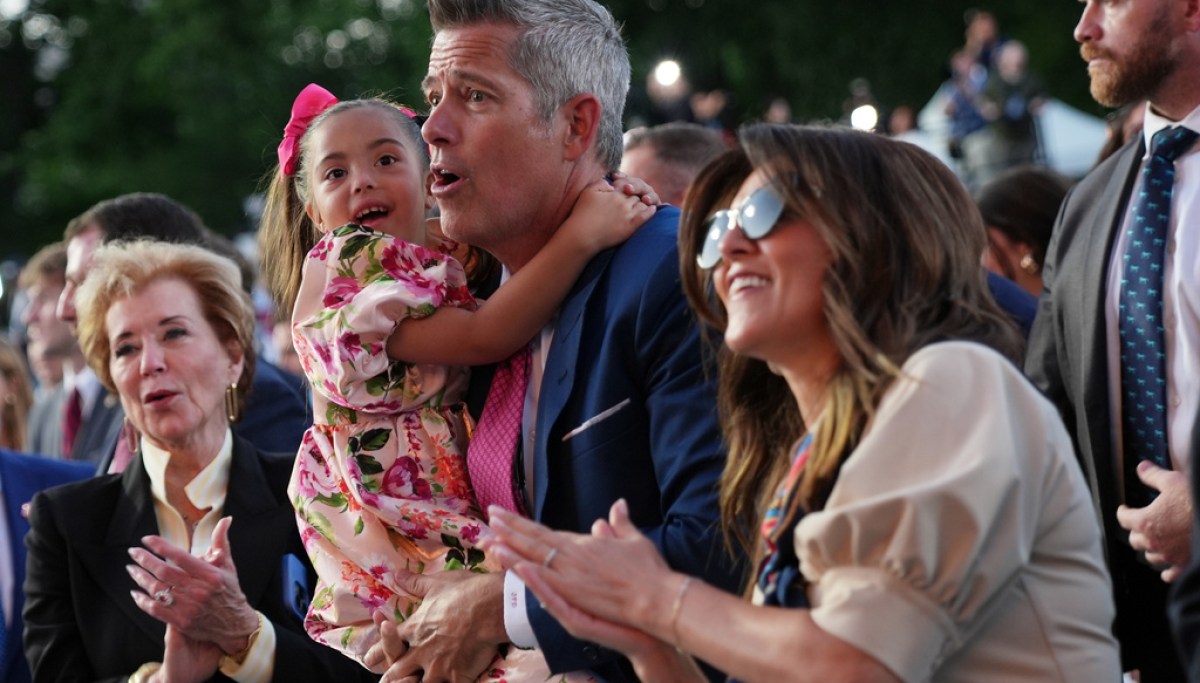
Rachel Campos-Duffy caused a stir online with her eyebrow-raising marriage advice.In a widely shared clip from “The Great American Road Trip” that circulated on social media this week, the Fox News host and wife of Transportation Secretary Sean Duffy declares: “The key to a good, long-lasting marriage is to marry somebody very good-looking that you’re attracted to because marriage involves a lot of forgiveness, and it’s easier to forgive someone when you’re very attracted to them.”The advice prompted some strong reactions, with many ridiculing Campos-Duffy and her approach to relationships as “shallow” and “embarrassing.” This emphasis on looks from the Duffy family certainly aligns with President Donald Trump’s well-documented fixation on appearances and “central casting” ethos.Marriage advice from Rachel Campos-Duffy: "The key to a good, long-lasting marriage is to marry someone very good-looking that you're attracted to because marriage involves a lot of forgiveness, and it's easier to forgive someone when you're very attracted to them." pic.twitter.com/ORAKEjhUIc— BulwarkClips (@BulwarkClips) August 19, 2026HuffPost asked relationship therapists ― and one divorce lawyer ― to weigh in on the advice. And they certainly had thoughts. “As a couples therapist, I don’t fully agree with it,” licensed marriage and family therapist Gayane Aramyan told HuffPost. “Yes, attraction is important, but it isn’t the full picture. What is more important is that you are able to respect each other’s differences and able to value each other.”Divorce attorney Marilyn Chinitz agreed, noting that a person’s most important qualities have nothing to do with appearance.“Looks evaporate very quickly, so you’d better find many more interesting things to make a marriage work,” she said. “I think it is humorous advice, and really, rather than focusing solely on marrying an attractive person, prioritize marrying a spouse who’s good-looking on every other level: funny, kind, giving, respectful. That is what makes up the beauty of a person.”So although appearance is part of romantic connection, people are also drawn to qualities like sense of humor, work ethic, etc.“[Campos-Duffy’s] advice suggests that physical attraction will make forgiving easier, which is, quite frankly, a shallow viewpoint,” said Monica Cwynar, a licensed clinical social worker with Thriveworks. “While attraction can certainly help soften the frustration of a disagreement in the short term, it is not enough to sustain a couple through significant life challenges, such as financial hardship, health crises, parenting struggles or major personality clashes. If forgiveness is only granted because of physical attraction, then what happens as your appearance changes over time?”She emphasized that long-term relationship success is rooted in deeper factors like shared values, mutual respect, emotional safety, friendship and commitment.“Attraction and desire tend to wax and wane throughout the course of a lifetime due to a wide variety of factors, including major life transitions, stress, illness, hormone changes and so forth,” said Lauren Maher, a licensed marriage and family therapist. “Individuals deserve empathy and compassion regardless of their appearance, and someone’s appearance can ― and will ― change throughout the course of a lifetime. Marriage involves weathering life’s storms together and a deep commitment to honoring one another’s humanity over the years.”The experts were eager to note that forgiveness, while essential, is more complicated than Campos-Duffy’s framing suggests.“Marriage involves a lot of priority, time investment and compromise,” Chinitz said. “Forgiveness is important, but not on a regular basis. What are you forgiving and how often? If it’s a repetitive act, you have to stop forgiving it, because that’s why it’s repetitive. If your spouse is repeatedly requiring forgiveness, especially for actions like lying or adultery, that’s problematic, because it will continue.”Maher echoed that concern, noting that there might be a limit to patience and how much you’re able to let go. “If you find that someone is repeatedly hurting you to the point where you need to forgive them constantly, there may be something else going on in the marriage that is worth examining,” she said.Madison Segarra, a professional clinical counselor intern at Kindman & Co., offered a more expansive view of what forgiveness actually looks like in long-term relationships. She noted that it doesn’t necessarily stem from doing big or unforgivable things to one another. “A lot of forgiveness is actually about the smaller moments of being human together ― misunderstandings, needs that weren’t met, saying something the wrong way or realizing that something landed differently than we intended,” she said. “Partnership asks two people to be able to sit with one another during difficult times and talk about those missed connections rather than immediately seeing them as evidence that something is wrong with the relationship.”Taylor Hill via Getty ImagesRachel Campos-Duffy said the secret to marriage is “to marry someone very good-looking that you’re attracted to.”Throughout the course of a marriage, there will be mess-ups, negotiations around needs and times to grow together and apart.“The best marriages are those where each partner is able to assume positive intent in the other,” said Sabrina Romanoff, a clinical psychologist and relationship expert with the dating app Hily. “Sometimes this is referred to as the halo effect with attractive people, but it’s not such a strong effect when it’s only rooted in outer looks. We can apply the halo effect to the most important relationships in our lives by actively focusing on our loved ones’ strengths, their sacrifices and times they showed up for us, instead of focusing on the hurt and bad in the relationship.”She stressed that forgiveness is a choice, and it’s one people in relationships must feel safe enough to make and trust that it will inspire more love. “I can’t deny that being attracted to your partner might make forgiveness a little easier, but I don’t think attraction is what makes forgiveness possible. And it certainly doesn’t take away the difficulty of doing the work,” Segarra said. “I also think it’s important to distinguish forgiveness from tolerating harm. Healthy relationships require repair, accountability and a willingness from both people to do something differently moving forward.”Basically, you don’t have to abandon your needs or repeatedly accept behavior that hurts you just because you’re attracted to your partner. “Forgiveness should never become a substitute for accountability,” said relationship therapist Joy Berkheimer. “Attraction shouldn’t become anesthesia for incompatibility, betrayal or mistreatment.”So what actually creates the conditions for forgiveness in a long marriage? Berkheimer said it starts with attraction, but not in the way Campos-Duffy described.“I don’t think the value of attraction is simply that you’ll be more willing to forgive someone later,” she said. “I think attraction can help create the conditions for the kind of intimacy that makes forgiveness possible.”She pointed to the importance of curiosity as the bridge between attraction and forgiveness. “When we’re deeply attracted to someone, we often want to know them,” Berkheimer explained. “We want to hear their stories, understand their childhood, learn what frightens them, what makes them jealous, how their family handled conflict, how they learned to give and receive love. Over time, that curiosity creates intimacy, and intimacy gives us context.”When you truly know and understand the context and the whole human behind a hurtful behavior, that doesn’t make said behavior acceptable, but it does make forgiveness and repair more possible. It’s easier to work through differences when you understand the other person’s reality. “It’s important to communicate about your differences, talk about your feelings and your needs,” Aramyan said. “I also believe that love languages are important to discuss as most people operate from different love languages.”Building a resilient marriage is about qualities that facilitate partnership, like emotional safety. “A marriage is built on trust and the knowledge that your partner has your back,” Cwynar said. “When both partners feel secure and valued, forgiveness becomes a natural byproduct of empathy, not a transaction based on physical attraction.”She also recommended looking for a partner with genuine emotional intelligence and interest in growth. Find someone capable of self-reflection, taking responsibility for mistakes and communicating without attacking.“The goal is not to avoid conflict, but to learn how to ‘fight fair’ ― listening to understand rather than to win,” Cwynar said. “Without the capacity to let go of resentment and move past conflicts, these small grievances can accumulate into deep-seated bitterness. This is why you need to seek out a much deeper connection than physical appearance.”In this way, the experts were quite aligned: Attraction is the starting point, not the destination. “Choose someone you are attracted to, but also choose someone you genuinely like,” Segarra advised. “Choose someone you can laugh with and be vulnerable with. Someone you enjoy being around when you’re not doing anything particularly exciting. Someone you respect and feel safe being yourself with. Someone who can collaborate with you when life gets difficult rather than expecting either of you to navigate everything perfectly.”Compatibility and stability require things like collaboration, vulnerability and the ability to repair. Chinitz recommended paying attention to how someone responds in different situations, including ones that reveal who they’ll be as a parent or a partner under pressure.“When choosing a partner, ask yourself what core qualities are important to you,” Chinitz advised. “Is it somebody who’s generous, supportive, hardworking, driven, funny? If they check those boxes, then chances are they’re a good person for you to invest your time in.”So whether Campos-Duffy’s advice was meant to be humorous or earnest, the oversimplification prompted a more nuanced discussion of what really makes marriages last. “Attraction and desire are important parts of many romantic relationships, just as the ability to forgive and work through difficult moments is,” Segarra said. “But neither exists in isolation. What makes a relationship lasting is how those pieces come together with friendship, vulnerability, communication, collaboration and a willingness to keep choosing and understanding one another.
Sean Duffy’s Wife Gave MAGA-Coded Marriage Advice In A Now-Viral Clip — And Therapists Spot Red Flags
The Fox News host’s marriage advice is not just cringe but problematic, according to experts.
1,609 words~7 min read