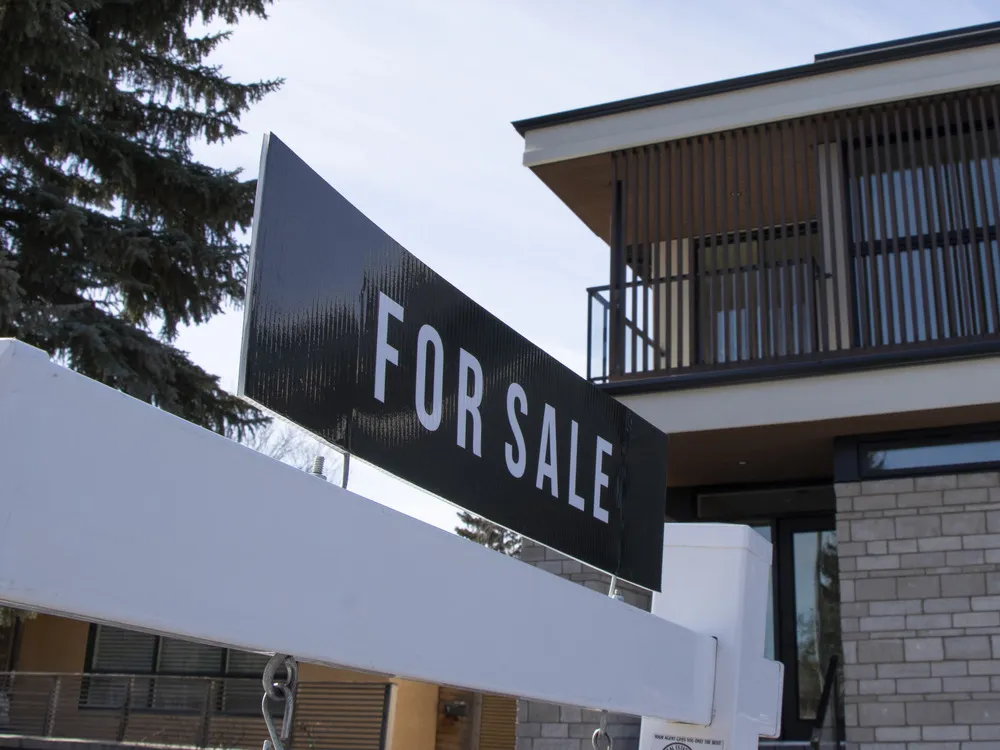
Skip to Content News Archives Economy Energy Oil & Gas Renewables Electric Vehicles Mining Commodities Agriculture Real Estate Mortgages Mortgage Rates Finance Banking Insurance Fintech Cryptocurrency Work Wealth Smart Money Wealth Management Investor Personal Finance Family Finance Retirement Taxes High Net Worth FP Comment Executive Women Puzzmo Newsletters Financial Times Business Essentials More Innovation Information Technology FP500 Podcasts Small Business Lives Told Tails Told Shopping Financial Post Store Obituaries Place a Notice Advertising Advertising With Us Advertising Solutions Postmedia Ad Manager Sponsorship Requests Classifieds Place a Classifieds ad Working Profile Settings My Subscriptions My Offers Newsletters Customer Service FAQ News Economy Energy Mining Real Estate Finance Work Wealth Investor FP Comment Executive Women Puzzmo Newsletters Financial Times Business Essentials HomeReal EstateMortgagesTrade deal could give stagnant housing market a boost, but the list of unknowns remains longRobert McLister: More certainty should mean more buyers, but mortgage rates are still at the mercy of U.S. bond market volatility, among other factorsLast updated 8 minutes ago If you’re rooting for higher prices, this week’s overdue trade deal could be positive for real estate stability — unless rates shoot up out of a cannon and hurt credit accessibility. Photo by Blair Gable/PostmediaThe real estate market may have caught a break: a potential trade deal with America’s Tariff Don appears to be taking shape.Subscribe now to read the latest news in your city and across Canada.Exclusive articles from Barbara Shecter, Joe O'Connor, Gabriel Friedman, and others.Daily content from Financial Times, the world's leading global business publication.Unlimited online access to read articles from Financial Post, National Post and 15 news sites across Canada with one account.National Post ePaper, an electronic replica of the print edition to view on any device, share and comment on.Daily puzzles, including the New York Times Crossword.Subscribe now to read the latest news in your city and across Canada.Exclusive articles from Barbara Shecter, Joe O'Connor, Gabriel Friedman and others.Daily content from Financial Times, the world's leading global business publication.Unlimited online access to read articles from Financial Post, National Post and 15 news sites across Canada with one account.National Post ePaper, an electronic replica of the print edition to view on any device, share and comment on.Daily puzzles, including the New York Times Crossword.Create an account or sign in to continue with your reading experience.Access articles from across Canada with one account.Share your thoughts and join the conversation in the comments.Enjoy additional articles per month.Get email updates from your favourite authors.Create an account or sign in to continue with your reading experience.Access articles from across Canada with one accountShare your thoughts and join the conversation in the commentsEnjoy additional articles per monthGet email updates from your favourite authorsSign In or Create an AccountorThe less welcome news is that the real estate market still faces a long list of unknowns.To a large degree, sentiment drives real estate values.Bank of Canada staff research estimates that in the median Canadian city, a one per cent rise in housing demand pushes prices up roughly 0.45 per cent. But economic uncertainty has been a persistent problem. Among Canadians looking to purchase a home last year, Royal LePage found that 49 per cent said the ongoing trade dispute with the U.S. had caused them to postpone their home-buying plans.SUBSCRIBER EXCLUSIVE: FP West: Energy Insider brings you behind the oilpatch’s closed doors with exclusive insights from insiders every Wednesday morning.By signing up you consent to receive the above newsletter from Postmedia Network Inc.A welcome email is on its way. If you don't see it, please check your junk folder.The next issue of FP West: Energy Insider will soon be in your inbox.We encountered an issue signing you up. Please try againWhatever the exact figure, tens of thousands of buyers went on strike, doubtful about spending six or seven figures on a home amid so much market uncertainty.With the tariff clouds beginning to clear (assuming the deal is signed) and employment already improving, the labour market could receive a further boost, which usually generates additional real estate demand.That is, unless the next factors kick in.Good economic news can eventually put upward pressure on borrowing costs.If a workable trade deal is finalized by Saturday’s deadline, Canada should see more investment and employment, all other things equal.That tends to be inflationary, something that keeps interest rates higher than they’d otherwise be.Mind you, it’s possible that as job growth improves housing demand, rising rates pull it the other way.But it depends on why rates are rising.If rates climb gradually as the economy rebounds, with incomes and jobs keeping pace, history says prices generally rise — or at least drift sideways.That relationship generally holds right up until the economy overheats and the Bank of Canada intervenes with rate hikes to control inflation.But if one examines rates, unemployment, population and home prices going back to at least 1980 (the extent of my available data), it reveals an interesting pattern.Average national home prices rose 3.7 per cent over the following year during stretches when the five-year bond yield was rising (as it is now) and unemployment falling (as it is now), versus 7.2 per cent when yields were dropping.The thing is, if rates jump more than expected because inflation has overheated, that’s a shock, and it becomes a whole different conversation. In that scenario, incomes and demand fail to keep up, and housing gets none of the usual benefit.The takeawayIf you’re rooting for higher prices, this week’s overdue trade deal could be positive for real estate stability — unless rates shoot up out of a cannon and hurt credit accessibility.For those praying for cheaper homes, hope might rest on two rather grim possibilities:An ongoing oil shock that forces the Bank of Canada’s hand with rate hikes; and Canadian bond market contagion driven by fears of unsustainable U.S. debt (which just hit a frightful US$40 trillion and is growing by US$91,000 per second).Of course, wishing for economic disaster and the potential loss of hundreds of thousands of jobs merely to purchase a home more cheaply is questionable karma. But people do it.For now, let’s hope for a modest trade win — or, failing that, a modest loss with a side of stability. That recipe would give labour and real estate a decent shot at firming over the next 12 months.Robert McLister is a mortgage strategist, interest rate analyst and editor of MortgageLogic.news. You can follow him on X at @RobMcLister.For the best national insured and uninsured mortgage rates, updated daily, please visit our mortgage rate page here. Join the Conversation This website uses cookies to personalize your content (including ads), and allows us to analyze our traffic. Read more about cookies here. By continuing to use our site, you agree to our Terms of Use and Privacy Policy.
Trade deal could give stagnant housing market a boost, but the list of unknowns remains long
Robert McLister: More certainty should mean more buyers, but mortgage rates are at the mercy of U.S. bond market volatility. Read here now
TL;DRAI
Potential U.S.-Canada trade deal could unlock housing market stalled by 49% of Canadian buyers postponing purchases due to tariff uncertainty. Recovery hinges on mortgage rates: if the stronger economy triggers inflation and rate hikes, the boost evaporates, leaving prices hostage to Bank of Canada policy.
1,120 words~5 min read