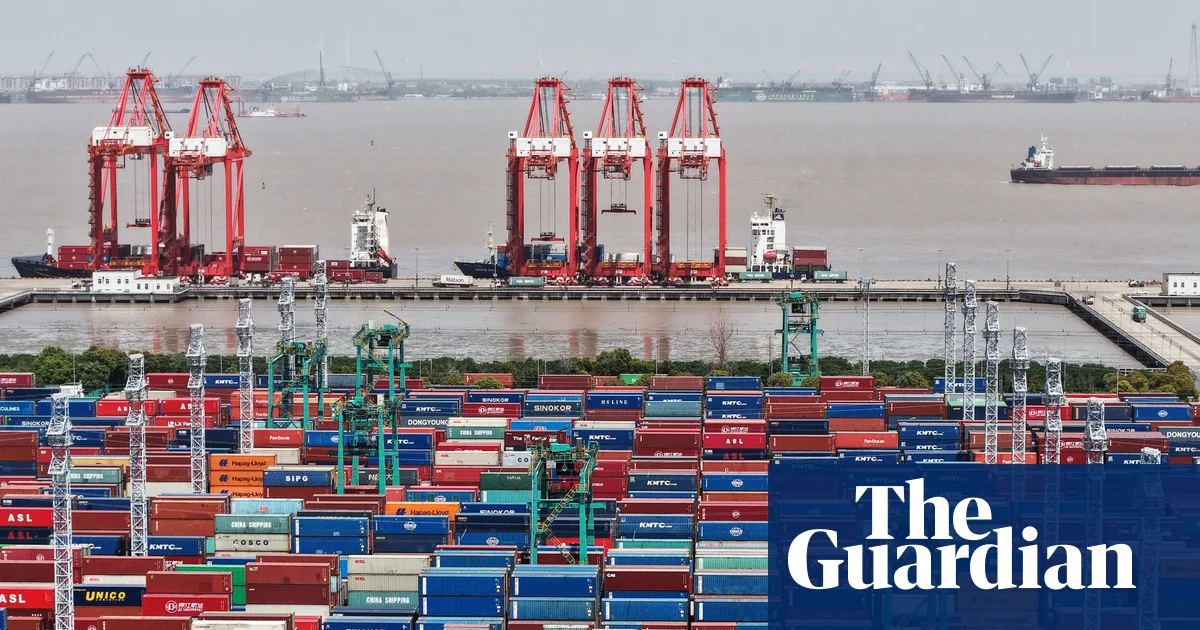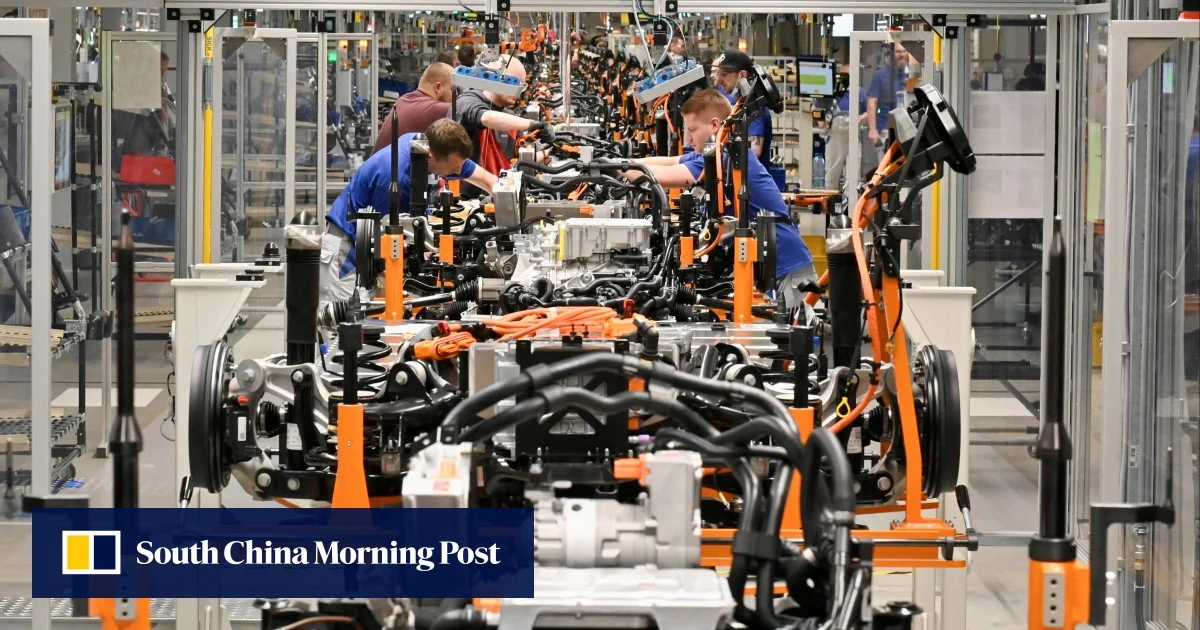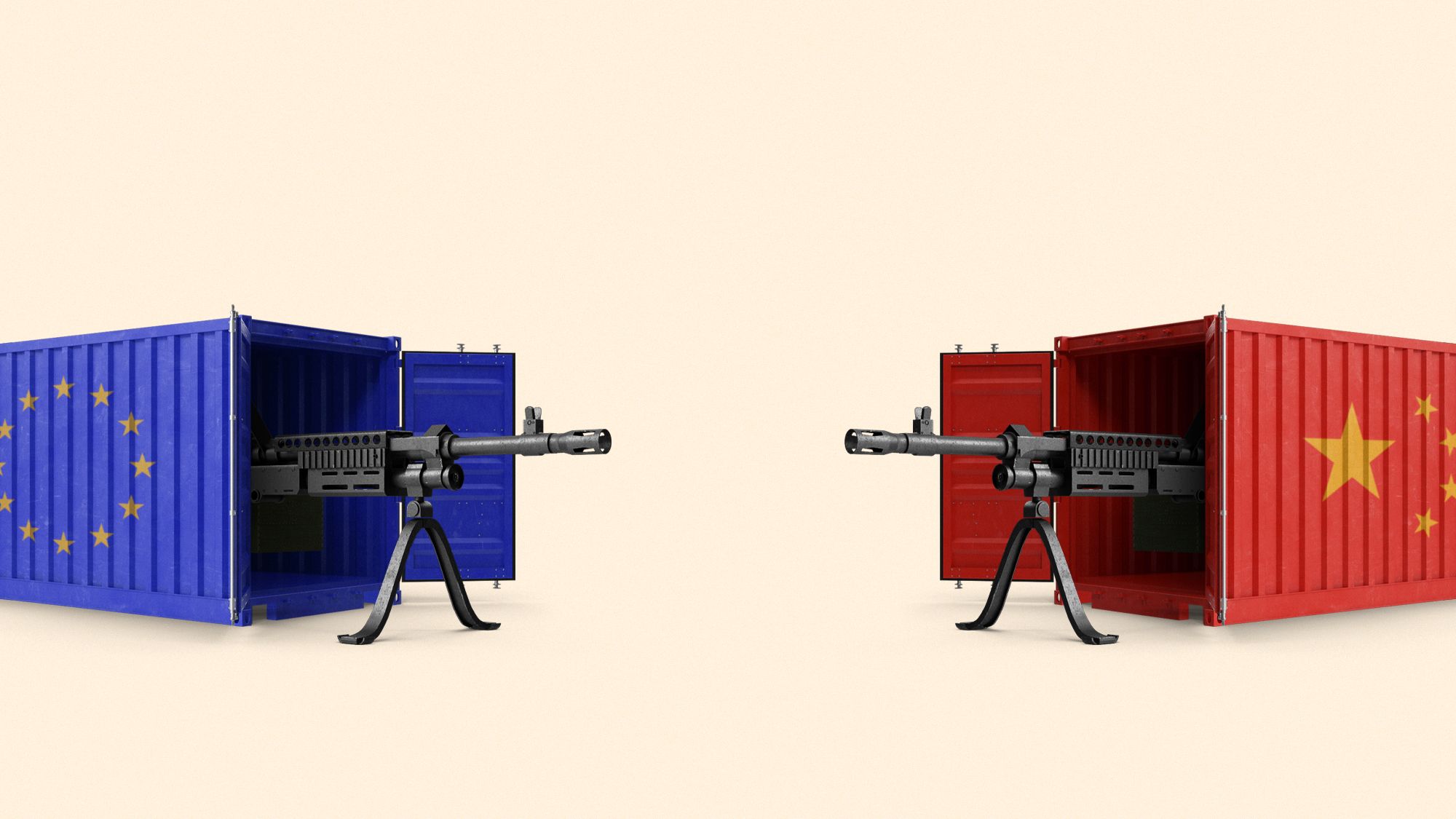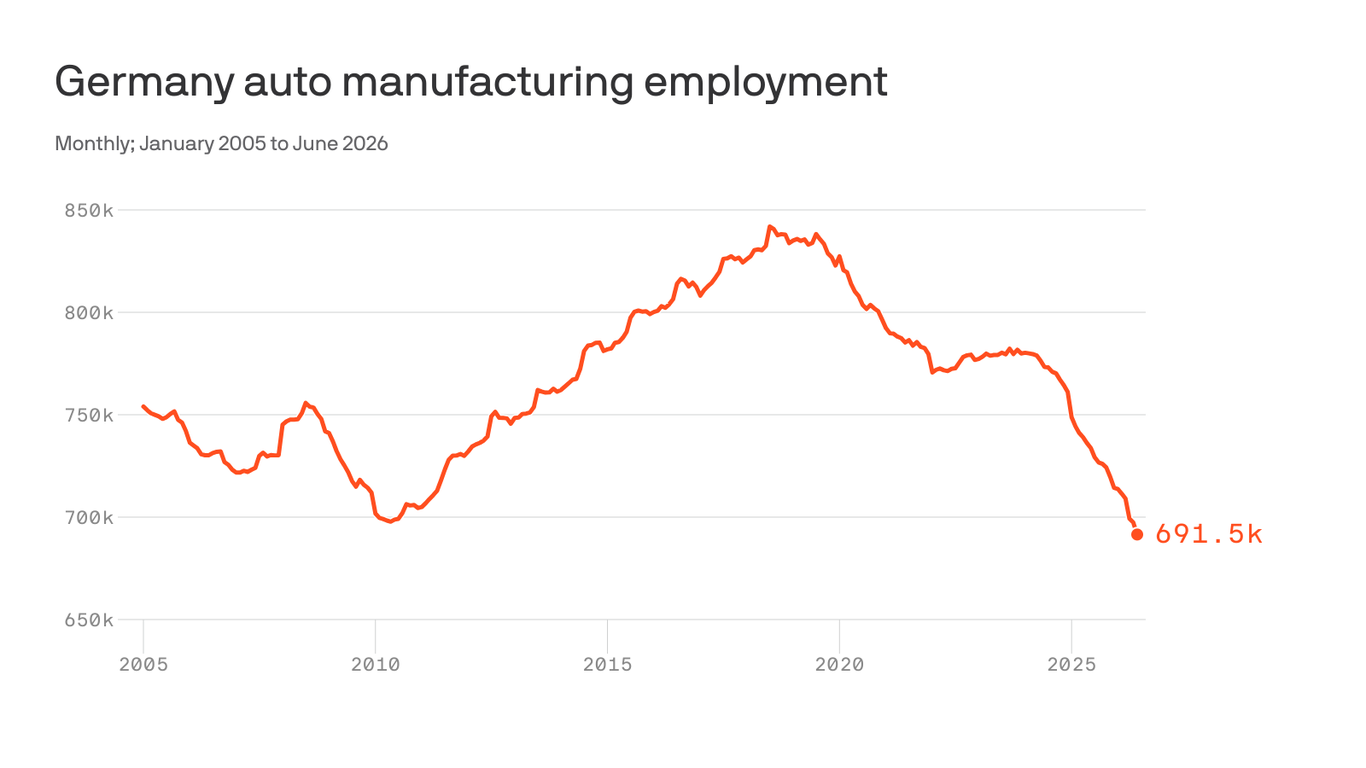
The China-fueled economic upheaval that helped transform American politics is now hitting Europe.Why it matters: The new strain on European industry is building pressure for the continent to embrace the type of China crackdown it has long resisted. It is the next big test of whether China's export boom will push other major economies toward the more protectionist approach that the U.S. embraced years ago.Europe is actively debating whether, and how far, to follow the U.S. playbook by erecting broader barriers against Chinese goods.What they're saying: "The concept of the 'China shock' is becoming more international," former EU trade commissioner Cecilia Malmström tells Axios, referring to the surge of Chinese imports after China joined the World Trade Organization in 2001, battering some U.S. manufacturing industries and communities."What is happening to European industry, with tens of thousands of manufacturing jobs in Germany disappearing every month — it is forcing the politicians to reassess. We're at the beginning of this right now," says Noah Barkin, a senior adviser at the research firm Rhodium Group. "They would love to have a tool like Section 301 tariffs — and they would love to have a green light from the member states to use it," Barkin adds, referring to the U.S. trade law used to impose sweeping tariffs on China and other trading partners.The big picture: China's factories churn out goods far faster than its sluggish domestic economy can absorb, unleashing a wave of exports that is putting historic pressure on Europe's critical industries.Chinese manufacturers can often undercut European rivals on price, aided in some industries by extensive state support.The pressure is especially acute in Germany, whose economy was built in part on selling cars, machinery and other high-end manufactured goods to China. Chinese rivals are now taking market share in many of the same industries that powered Germany's economic success.The intrigue: U.S. tariffs have done little to slow China's export machine. Exports hit a record $3.8 trillion last year and are up 14% through July this year, even as shipments to the U.S. plunged.China has made up ground elsewhere, including Europe — though the European Central Bank says Trump 2.0 tariffs explain only part of the broader export surge.Three stats help tell the story:Europe is accumulating trade deficits with China at a record pace of roughly $1.15 billion per day, which the EU's top trade official calls "clearly unsustainable."Germany now buys more high-end machinery and factory equipment from China than it sells there, a reversal of a decadelong pattern. Its trade balance in those goods swung to a $600 million deficit from a $900 million surplus in less than one year, according to the WSJ.EU imports of cars from China topped 1 million for the first time last year, an increase of roughly 30% from 2024, according to the European Automobile Manufacturers' Association.Zoom out: Europe is already pushing back, with tariffs on Chinese EVs and new barriers in industries from steel to medical devices.Officials are considering going further, including new powers to quickly impose tariffs or quotas on Chinese goods, akin to tools used by the U.S.Volkswagen, which opposed the EU tariffs on Chinese EVs two years ago, is now pressing European policymakers to move faster to protect the industry from Chinese competition."We have no time to lose," CEO Oliver Blume told investors last month, adding that he expects European policymakers to act this year.When the head of Germany's biggest automaker is pushing for greater protection from China, Barkin of the Rhodium Group says, "that is a signal that this has reached a new level."The bottom line: The U.S. responded to China's economic rise by erecting increasingly broad trade barriers. Europe is now confronting the same question, but it is far from clear that it is willing to go as far."Just smashing China with big tariffs — that is not the European style," Malmström says.
"China shock" strains European industries
Pressure is building for Europe to embrace the type of China crackdown it has long resisted.
641 words~3 min read