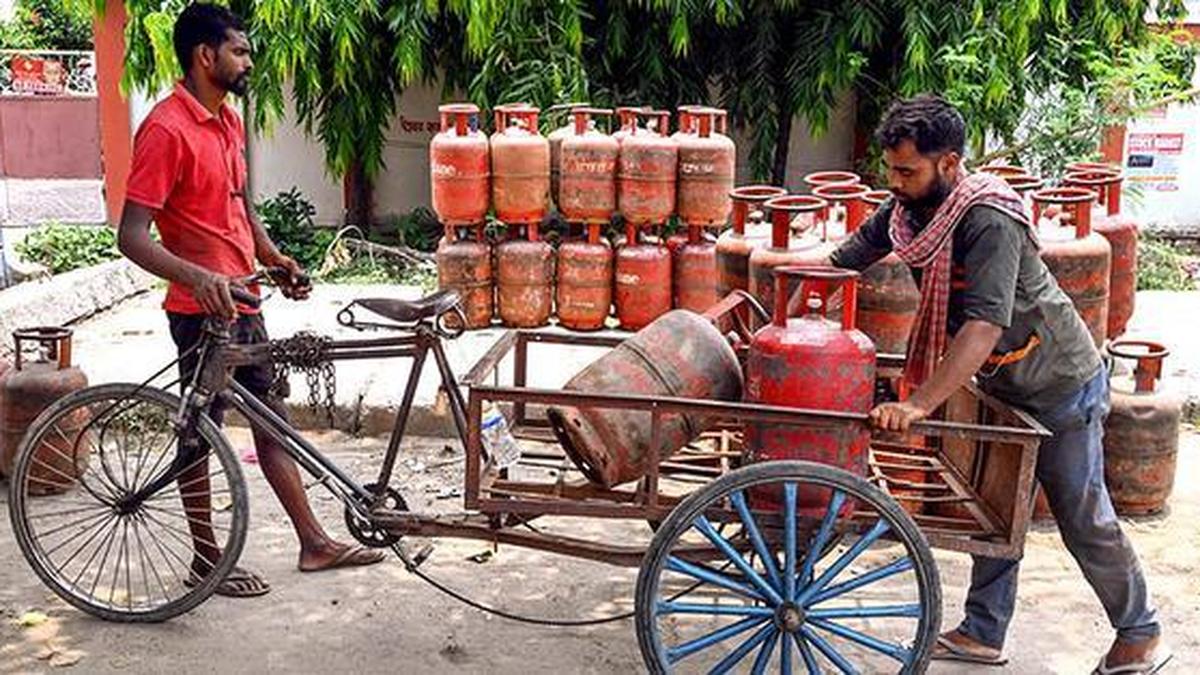
PNGRB has been driving the agenda for the elimination of primary movement of LPG by road to bottling plants
The Petroleum and Natural Gas Regulatory Board (PNGRB) said on Friday that it has authorised roughly 1,800 km of new LPG pipeline infrastructure to strengthen India’s energy security at an investment of ₹7,000 crore. This will expand the common carrier pipeline network to roughly 9,500 km.The pipeline infrastructure traverses Telangana, Maharashtra, Uttar Pradesh, Uttarakhand, Karnataka and Goa. India imports bulk of its LPG supply at coastal locations from where it needs to be transported across the country, said the regulator in a statement. These authorisations mark another significant milestone in strengthening India’s energy infrastructure. They build upon the earlier authorisation of the Kandla-Gorakhpur LPG pipeline — the country’s longest LPG pipeline of around 2,757 km — and will further expand and strengthen the pipeline network, it added.The projects also include the Cherlapally-Nagpur pipeline (556 km), Jhansi-Sitarganj pipeline (611 km) and the Shikrapur-Goa & Hubli pipeline (633 km), the regulator informed. The projects have been authorised for development by GAIL (India), and upon completion, the PNGRB-authorised common carrier LPG pipeline network in the country will increase from around 7,700 km to roughly 9,500 km, representing an increment of nearly 23.5 per cent.“Pipeline transportation is globally recognised as the safest, most economical and environmentally sustainable mode for transporting LPG. These projects will substantially reduce the movement of LPG tank trucks, thereby improving road safety, lowering logistics costs, reducing traffic congestion and significantly decreasing carbon emissions through a modal shift from road to pipelines,” PNGRB emphasised.energy securityPNGRB has been driving the agenda for the elimination of primary movement of LPG by road to bottling plants, the regulator stressed. Beyond these operational benefits, the projects assume strategic importance from the perspective of India’s energy security. As the country continues to rely significantly on imported LPG, an extensive pipeline network provides inherent system resilience, it pointed out.Pipelines also function as a line-pack storage system, enabling continuous product movement, enhancing supply reliability and improving the nation’s ability to respond effectively during supply disruptions, emergencies and periods of heightened demand, PNGRB added.Published on August 21, 2026