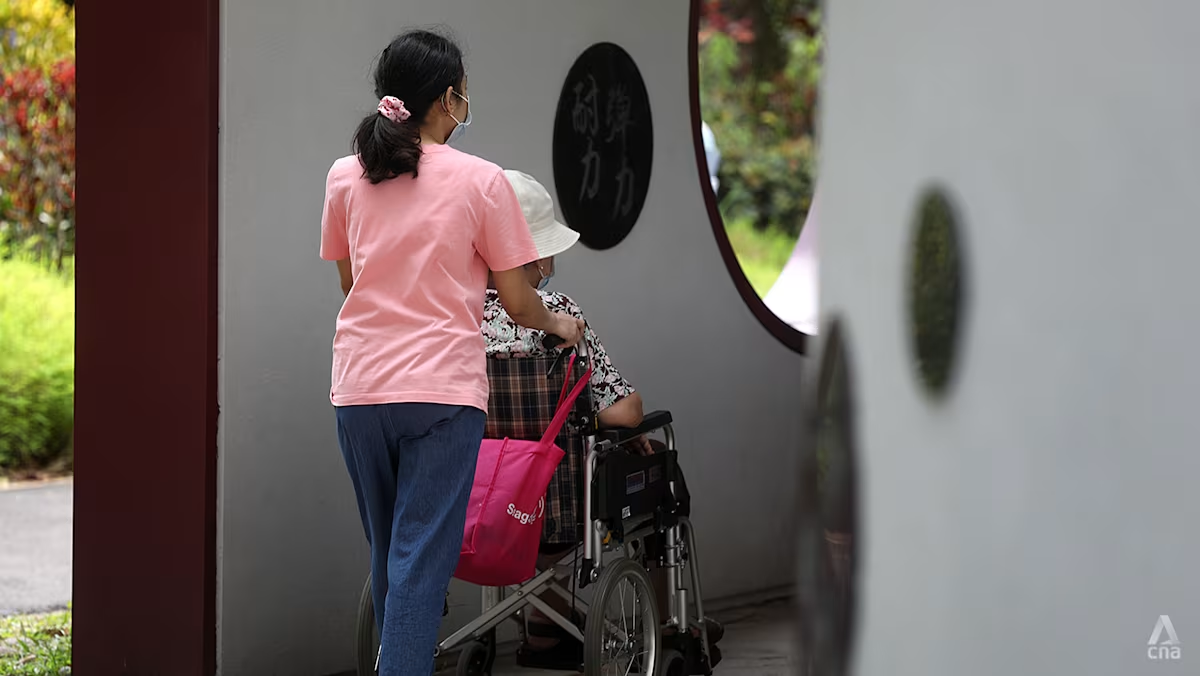
Anna (not her real name) came to Singapore in 2023 from Myanmar after securing a job as a domestic worker, with an interest in taking care of seniors.Her first two jobs quickly showed her how demanding caregiving could be – especially for a newbie lacking in both experience and training.She was first assigned to be the sole caregiver of a woman in her 80s who had dementia."I had no experience; it was very difficult. I (didn't) know what to do," the worker in her 40s said. "I never learnt how to take care of such a patient."
The older woman had no family in Singapore, because her daughter was overseas. "So it was only her and me," Anna recalled. "It was quite scary."
Early in Anna's employment, the older woman fell and became wheelchair-bound, growing more dependent on her for daily tasks.The heavier workload, compounded by the woman's deteriorating memory and mood, placed further mental and emotional strain on Anna."I just came to Singapore; I had no friends. So I told the agent and the (woman's) daughter (about my struggles). They told me just to try my best to be patient."After about a year, she requested a transfer. She was placed with another family to care for a bedridden man with dementia.This job took a significant physical toll on her, because her new charge was bigger and taller than her. She again asked to end her employment after about a year and eventually transferred to another employment agency."I like taking care of the elderly, but with no training or experience, it was very stressful."Anna and some other migrant domestic workers who spoke to CNA TODAY asked to remain anonymous, as they either did not have their current employer's permission to speak to the media or wanted to maintain good relations with their former employers.