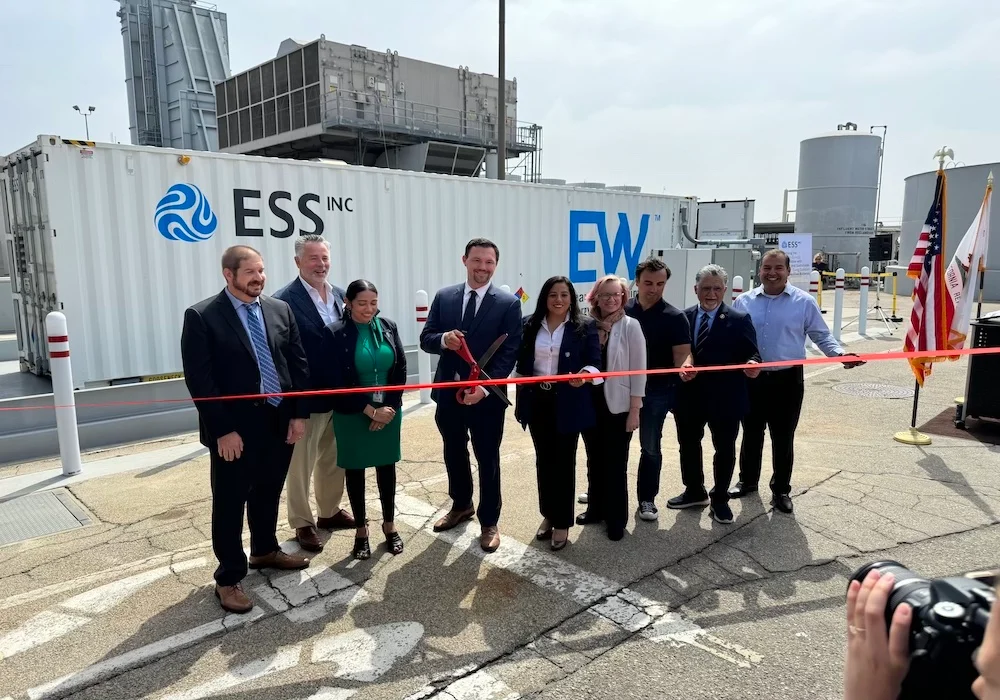
Iron flow battery worked in the lab, but commercial deployment was more difficult
Energy-Storage.news: When you joined a year ago, the company had been struggling for a few years to get its technology out into the market. Like a lot of new energy storage technology companies, there are always pipelines and deals announced, but for many of them, these rarely translate into firm orders and revenues. ESS has been one of those companies.
So firstly, fair play for taking on the challenge. Talk to me about how you’ve decided to approach the company and the corporate transformation you undertook on it—how you’ve been doing that and how you’re trying to position ESS to carry on as a going concern.
Drew Buckley: Absolutely, it’s a fair question. That is one of the challenges we face today. I’ll step back and talk about the last year and my vision for it. That is one of the difficulties ESS faces now as we’re making this transformation. A lot of these companies came with promises in the 2021-2022 period when everything was SPACing and a lot of money was going in. We haven’t seen, outside of lithium-ion, any other battery technology really show that it can sustain commercial agreements and make profit and sustain themselves as a business.