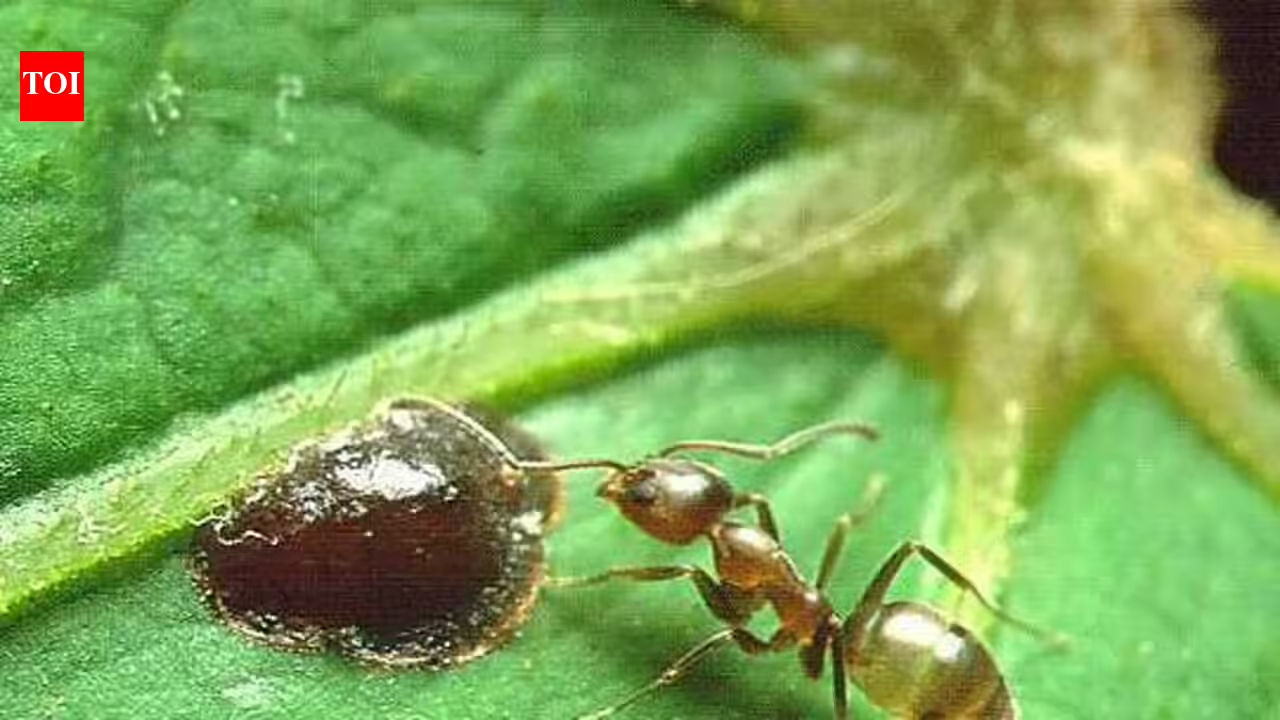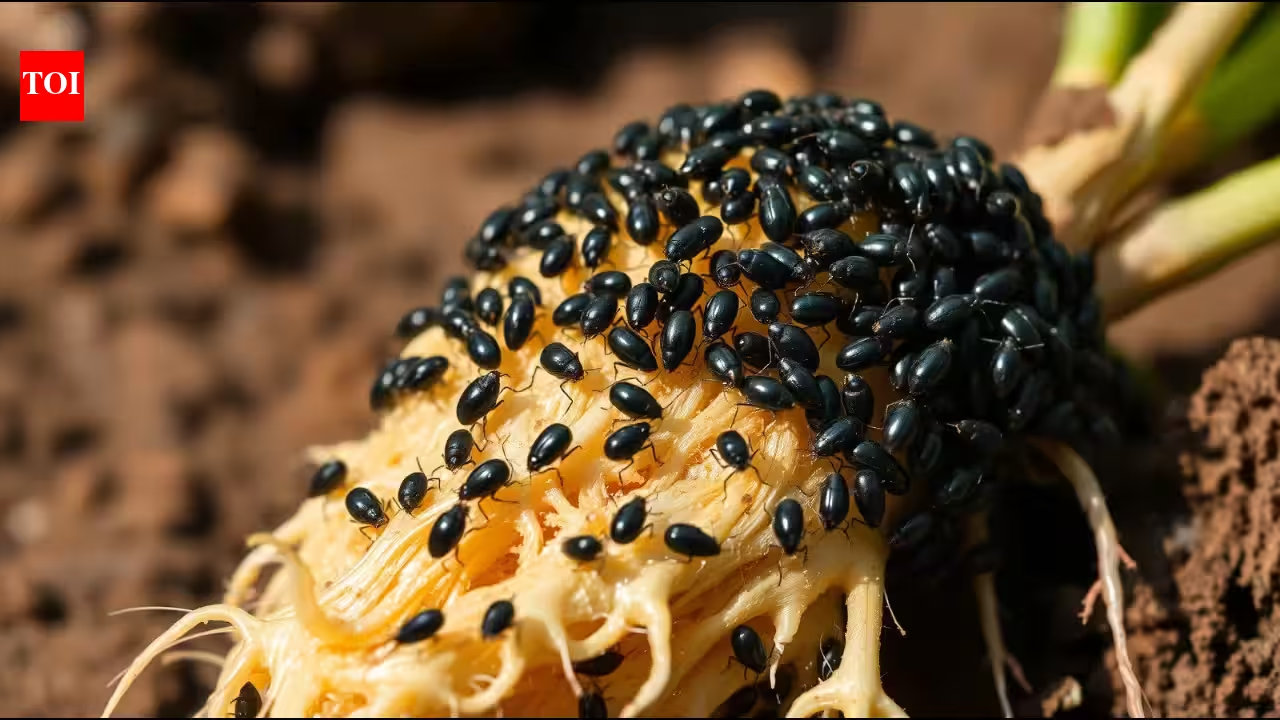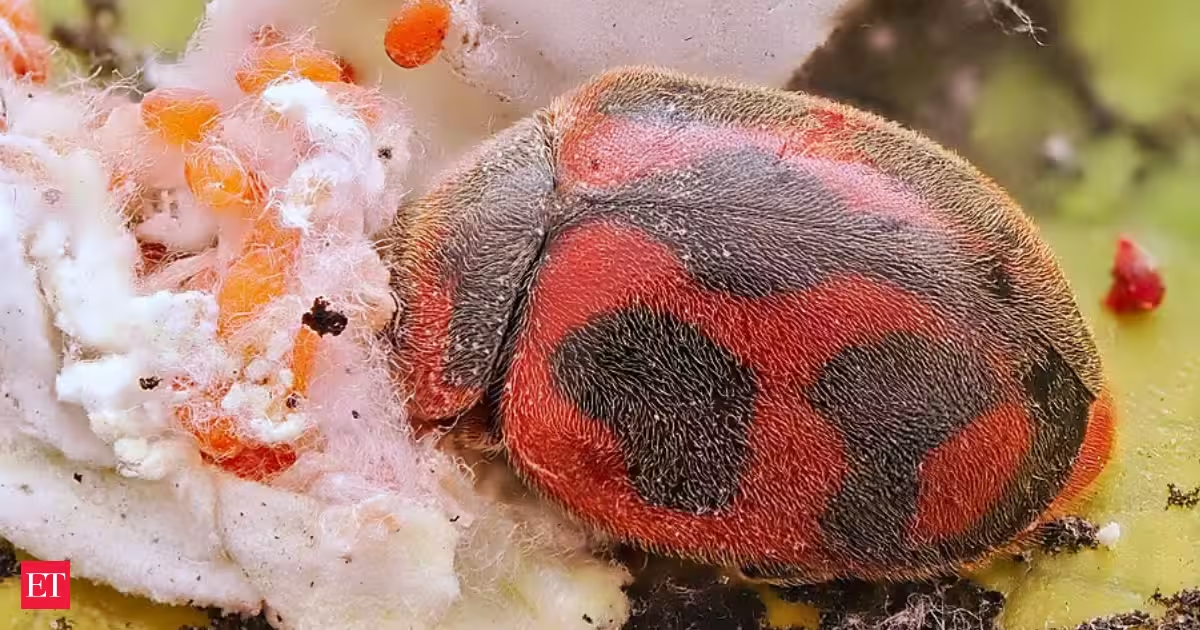
California’s citrus growers were staring ruin in the face. The cottony cushion scale was a tiny, sap-sucking insect that had spread through orange and lemon groves, and nothing appeared to stop it. So the United States Department of Agriculture (USDA) did something unusual: it sent a scientist to Australia to bring back a beetle. This story is documented in the Charles Valentine Riley Collection, a USDA National Agricultural Library archive. What followed became an important case in pest control and is still discussed today.A pest that arsenic and kerosene could not killThe cottony cushion scale, scientifically known as Icerya purchasi, was first recorded in California in 1868 after arriving from Australia. According to an overview published in Biological Control, the insect was ravaging citrus groves in southern California by 1886. Growers tried arsenic sprays, kerosene, and tent fumigation, but the methods were largely ineffective and often damaged the trees themselves. Charles Valentine Riley, the USDA's chief entomologist then, had an idea of his own. He reasoned that if the pest came from Australia, it probably still had natural enemies there too. So in 1888 he hired entomologist Albert Koebele to make the voyage across the Pacific for them.Covered in a waxy white coating, the cottony cushion scale drained citrus trees of sap and devastated orchards in the 1880s. Image Credits: Wikimedia CommonsThe hunt in AustraliaKoebele's trip paid off fast. Research from the Applied Biological Control Research program at the University of California, Riverside, titled "Biological Control of Icerya purchasi with Rodolia cardinalis in the Galapagos," recounts the original California case as background for a later introduction of the beetle to the Galapagos. It says Koebele found a small red-and-black ladybird beetle feeding on the scale near Adelaide on October 15, 1888. It was known then as Vedalia cardinalis, and it is called Rodolia cardinalis today. He also found a parasitic fly, Cryptochaetum iceryae, which was later sent to California in larger numbers. The same program notes that Koebele shipped the beetles home in three small batches: 28 arrived on November 30, 1888, 44 more on December 29, and a final 57 on January 24, 1889, for a total of 129 beetles.Beetles inside a tent, and a fast turnaroundScientists needed to observe the beetles before releasing them more broadly, so a handful were placed in a large tent over one infested citrus tree at the Wolfskill Orchard near Los Angeles. It did not take long. Records from UC Riverside show that by April 12, 1889, the infestation on that one tree was visibly reduced, so the tent was opened and beetles were bred more widely at insectary stations across the region. What happened next was remarkable. By June 12, 1889, just six and a half months after the arrival of the first beetles, approximately 10,500 of the original beetles had been bred and were being released into citrus groves throughout the region. Wherever they were released, scale populations declined rapidly.The tide had turned within monthsIn a 1989 review published in the Annual Review of Entomology, entomologists Caltagirone and Doutt say the vedalia beetle’s suppression of the scale in 1889 is one of the most dramatic events in the history of entomology, and the demonstration that established biological pest control as a practical method. By the end of 1889, fewer than twelve months after the first beetles reached California, the scale was no longer a serious threat to the state’s citrus industry.Barely the size of a grain of rice, this beetle changed the way the world fights crop pests. Image Credits: Wikimedia CommonsWhy this tiny beetle still mattersThe project is widely considered an early example of classical biological control, the use of one living creature to control another organism. Riley was referred to as the father of such a control method, while the vedalia beetle was its most popular representative. Viewed through the lens of sustainability and scientific problem-solving, the case remains influential more than a century later. Resistance to pesticides and the ecological impact of chemical spraying of crops are the issues that are still being considered by farmers all around the world. The vedalia beetle suggested that nature sometimes has a built-in solution if scientists take the time to look for it. It is still used today in some countries, including in conservation programs in the Galapagos Islands.A small beetle, a big lessonThere is something oddly comforting about this story. An industry worth millions of dollars was saved not by a newly invented substance, but by 129 beetles put in boxes and shipped across the ocean. The story suggests that nature can offer useful solutions to modern agricultural problems, from pest control to more sustainable farming.
In 1888, USDA sent an entomologist to Australia to collect vedalia beetles for California’s cottony cushion scale; within a year, the pest had sharply declined
In 1888, the USDA discovered that the vedalia beetle could control the cottony cushion scale pest in California's citrus orchards, saving the industry and paving the way for biological pest control methods.
776 words~4 min read