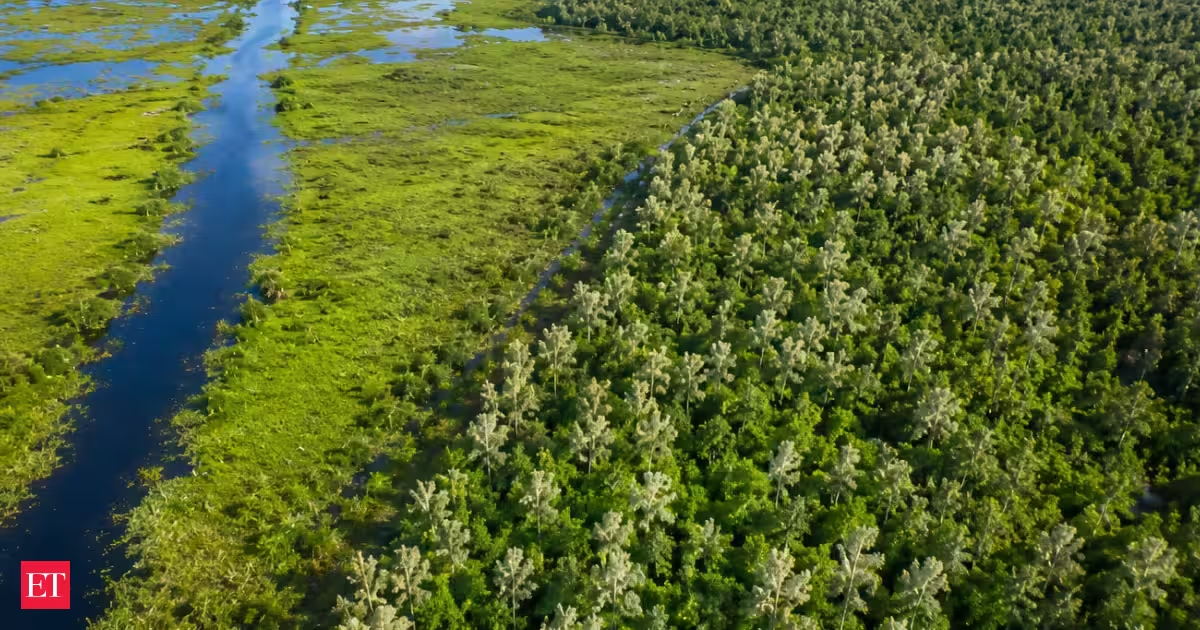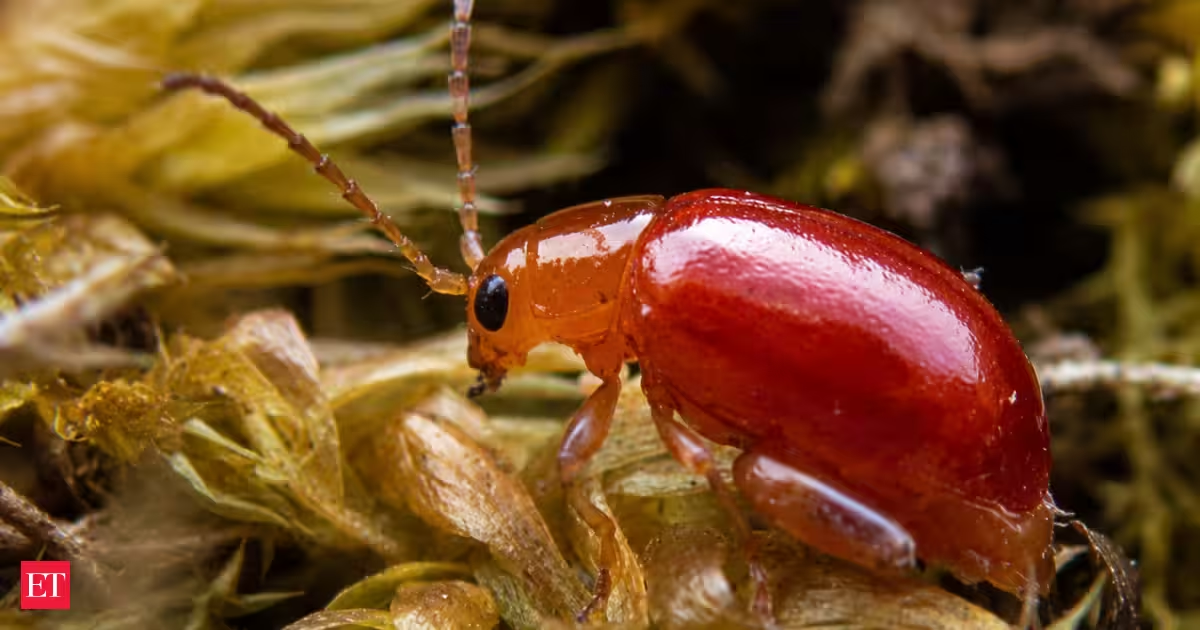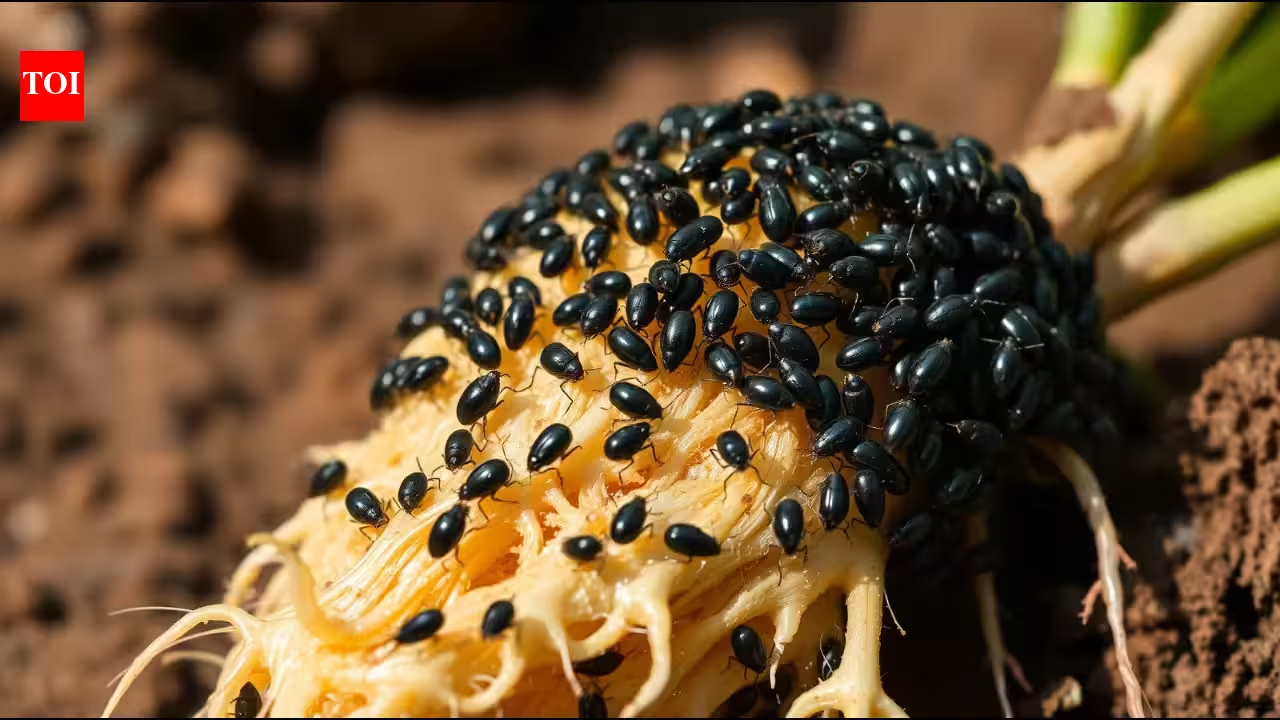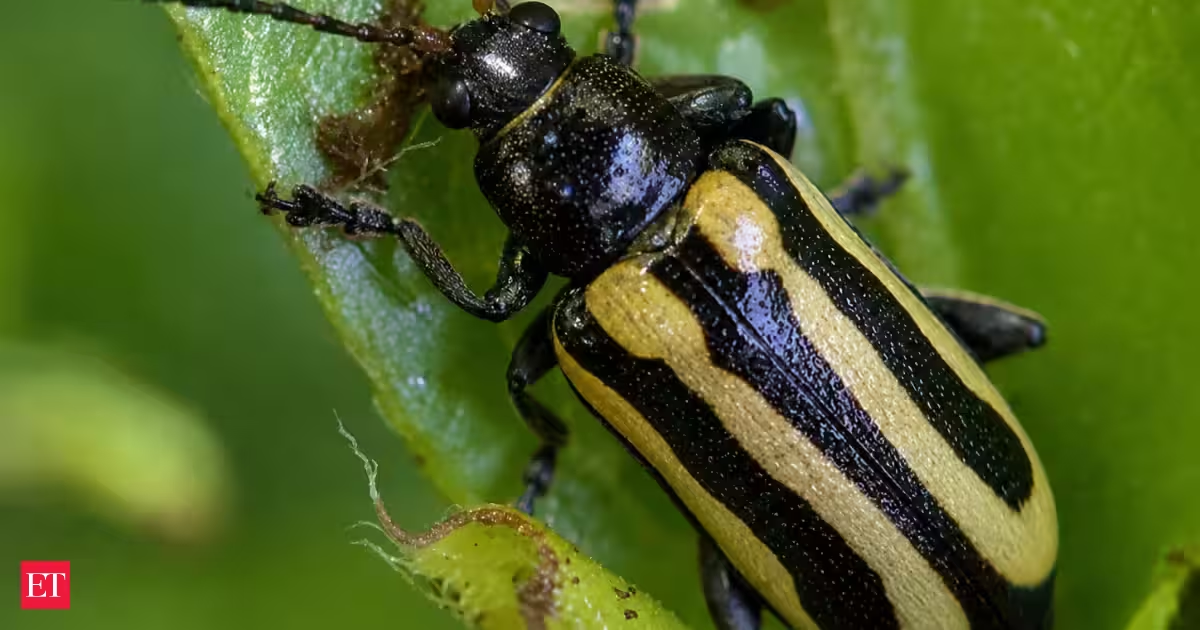
A tiny black-and-yellow beetle is doing a job most machines can't do. It devours an invasive weed so aggressively that entire mats turn brown and die within months. This insect, the alligatorweed flea beetle, was the first bug ever studied specifically to control an aquatic weed, according to a profile published by the University of Florida’s Institute of Food and Agricultural Sciences (UF/IFAS). It’s what Florida has relied on since 1965.The weed that would not stop spreadingAlligatorweed is not native to the United States. This species was introduced from South America and gradually colonized the rivers, canals, and lakes in the southeastern states since the beginning of the 20th century, as UF/IFAS reports. It grows rapidly, can form dense floating mats, and fragments easily; a single small stem fragment can establish a new population elsewhere. According to the CABI Compendium, this weed is among the worst invaders because it thrives in both aquatic and terrestrial habitats. Dense mats impede boat traffic, plug drainage systems, shade out native vegetation, and block sunlight from reaching submerged plants and fish.Enter a beetle smaller than your fingernailThe alligatorweed flea beetle, scientifically named Agasicles hygrophila, is about 5 to 7 millimeters in length. The same profile shows that it was approved for release in the US in 1963 but did not establish on Florida's alligatorweed until 1965. The first successful Florida release was along the Ortega River near Jacksonville, Florida, from beetles collected from Ezeiza Lagoon near Buenos Aires, Argentina. The bulk of the beetles released at later Florida sites were direct descendants of that original batch.Native to South America, alligatorweed has spread across the southeastern US, Asia, Australia, and Europe. Image Credits: Wikimedia CommonsThis insect feeds on a single host plant. Researchers note that alligatorweed is the only host plant of the alligatorweed flea beetle. It is precisely this fact that made scientists choose the alligatorweed flea beetle because an agent whose host plant is just one is much safer to introduce in the wild, as it will not accidentally damage crops or nearby native vegetation.How three months of feeding brings down a matThe life cycle of the beetle is short and productive. Females begin to lay eggs about 6 days after becoming adults in neat rows on the undersides of leaves. The study notes that a female can lay more than one thousand eggs, with an average of 1,127 eggs per life cycle of approximately 48 days. The larvae hatch in four days and start feeding on the fresh leaves of the plant. As they grow, they feed more heavily, and when the leaves are gone, they chew on the stems. When beetle numbers build up, the damage shows up quickly. Mats that were once thick and green turn yellow, then brown, before the plants fall over. The report says this process, from healthy infestation to collapse, can occur in about three months once the beetle population is established.A female alligatorweed flea beetle lays her eggs in neat rows on the underside of leaves. Image Credits: Wikimedia CommonsWhy this beetle cannot fight the coldThere is, however, one caveat. It can’t survive the cold winter, as it has no way to stop its life cycle during the cold months. When temperatures drop and the alligatorweed dies back to the waterline, the beetles starve. That’s why the insect thrives in Florida and other warm, coastal parts of the southeastern U.S., but not in colder, inland areas. The USGS Nonindigenous Aquatic Species database reports that the beetle generally needs winters averaging 11.1°C (52°F) or warmer to survive long-term. This is why the US Army Corps of Engineers periodically releases fresh batches of beetles into Florida's cooler, northern pockets, restocking nature's own pest control team as needed.A lesson bigger than one weedThe lesson extends beyond Florida’s canals. It shows how one carefully selected species has provided free, non-chemical weed control for over six decades, no fuel, no herbicides, no plastics, just an insect doing what it evolved to do. This beetle is a reminder that the smartest solution might not always be a new invention. Sometimes it's just knowing nature well enough to let nature do its thing without creating new problems in the process.
Since 1965, Florida has used the alligatorweed flea beetle to control invasive mats; once established, it can cause them to collapse within about 3 months
Discover how the alligatorweed flea beetle has effectively controlled invasive alligatorweed in Florida's waterways since 1965, offering a natural solution without chemicals or machinery. Learn about its unique life cycle and the ongoing importance of biological pest control.
698 words~3 min read