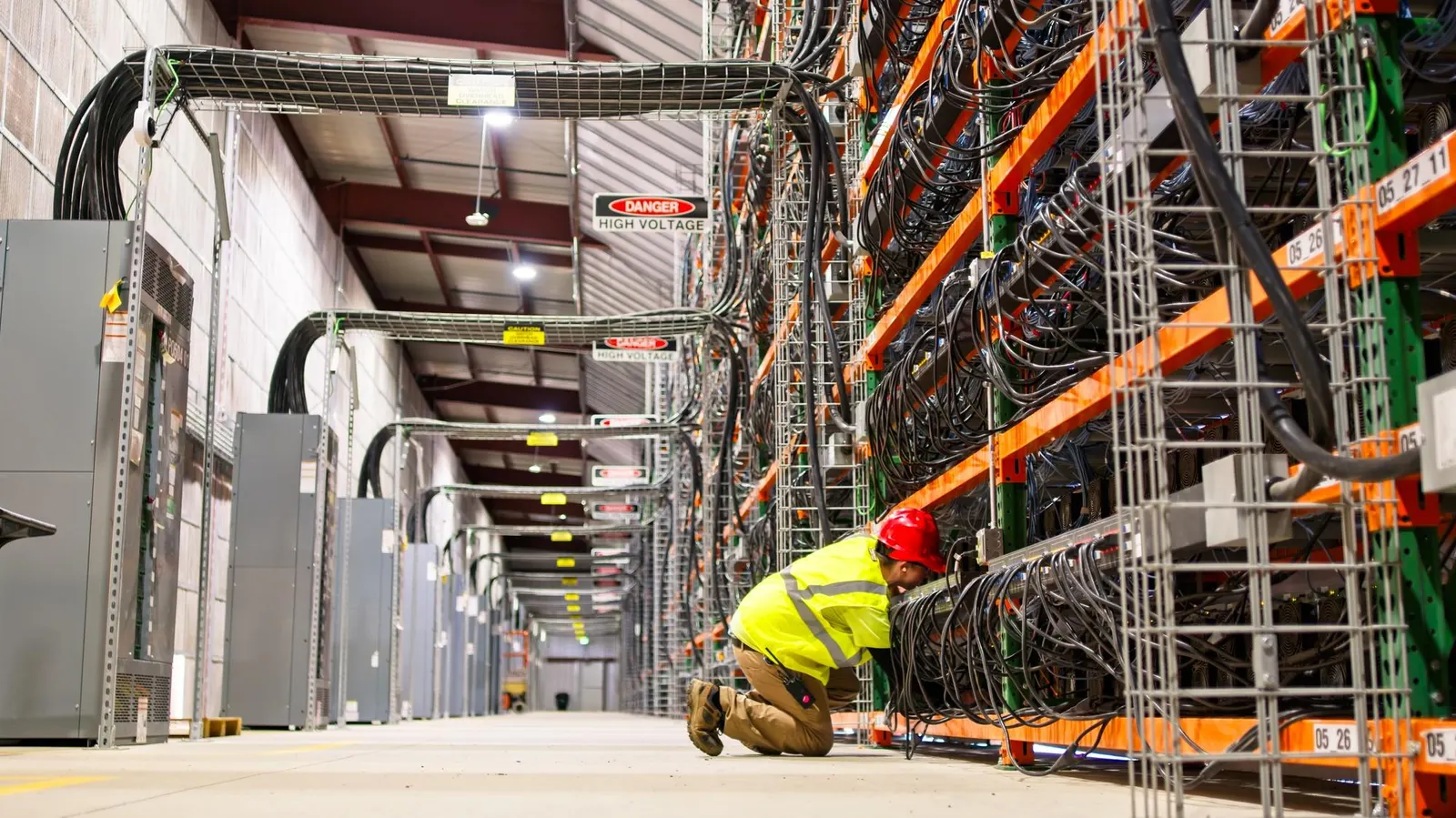
Companies like OpenAI and Google are investing heavily in data center, creating thousands of jobs for American workersgettyWithin six years: 35,000 jobs…That’s the number of new AI jobs OpenAI is expected to create through 2032, in addition to 2,500 long-term operational roles.There’s just one catch. The 35,000 roles are construction jobs.Generac announced investing $250 million in its factory expansion and expects to add 1,000 employees to its headcount as data center orders continue to roll in. This follows Micron's announcement of a $10 billion investment in a research campus that can host hundreds of researchers and lead conferences and programs for customers and key players in the semiconductor industry.The Trump administration has also made it clear that it wants the U.S. to lead the AI arms race, and these investments and job-creation opportunities are positioning the United States for that goal. In fact, the U.S. data center market is expected to more than double in revenue from $126 billion (2025) to $276 billion by 2033, according to Grand View Research.This is the largely unanticipated side of the AI job boom. The World Economic Forum predicted that the AI revolution would create a net increase of 78 million jobs. What we are now seeing is that an increasing proportion of those jobs--the roles that seem to benefit the most from the AI job boom--are not the white-collar knowledge work professions you’d expect.Those roles are seeing the most impact and disruption.The jobs benefiting the most are blue-collar careers, the kind that’s based on a floor rather than a screen, as Challenger, Gray, and Christmas put it.I interviewed Google’s VP of recruiting, Brian Ong, earlier this year, and he said Google shares a similar sentiment. The Big Tech firm is heavily pushing its data center jobs, especially for entry-level professionals.In a flip to the AI economy, blue-collar workers — the very professionals who work in the most accessible careers because they need little more than technical training, hands-on experience, and at most an associate degree — are benefiting as their skills soar in demand. Demand that is likely to last at least the next 10 years.What’s Driving The Blue-Collar AI Jobs Boom?Here’s exactly what’s behind this blue-collar job rebound and why AI needs more blue-collar workers:Behind the AI boom that’s driving transformation across industries, there’s something less sexy that’s needed to power LLMs and powerful superintelligence and AGI models that the large tech players aspire to:Data centers.Data centers, semiconductor chips, compute-intensive memory…these are the backbone of the AI economy. Without them, the chatbots and tools you use every day for work would break.Who Will Benefit?At first glance, the immediate beneficiaries of this AI boom are power and energy companies, construction firms, and semiconductor and chip companies (think Nvidia, Micron, etc.) Big Tech players are also cashing in as key market players.But beyond big tech corporations, professionals with limited access to knowledge-work opportunities — blue-collar workers — can tap into the enormous demand for their hands-on skills.Incentives For Joining The AI Blue-Collar Job MarketThe AI job boom in the skilled trades sector is particularly attractive because of these core incentives:Blue-collar roles in manufacturing, construction, energy, etc. are better positioned to resist disruption and automation, offering long-term career insulation.These AI roles are the backbone of the infrastructure that enables compute-intensive AI work, making them mission-critical players in the AI economy.Pay ranges from modest to high; in the U.S., the average salary for a data center technician is $74,447, above the median income for American workers. Meanwhile, Google advertises its data center facilities manager role in Reno, NV, as paying between $ 122,000 and $ 173,000, plus a 15% bonus target, in addition to equity and benefits. Its data center technician, operations job, advertised as suitable for early career starters with as little as two years of experience diagnosing and troubleshooting operating systems and completion of Google IT Support Professional Certificate (which is available via Coursera), pays between $86000 - $118000--quite a lucrative six-figure pay rate for an entry-level role.Some blue-collar careers are accessible and pay six figuresgettyThese roles are more accessible, especially if you haven’t been able to afford a four-year degree. You can secure these roles through trade schools, hands-on technical training and experience, microcredentials (like a Google career certificate), and/or an associate degree, depending on the role.What’s also interesting is that Gen Z is becoming more interested in blue-collar work — partly because of its accessibility and relative immunity to the layoffs so prevalent in the tech and business services sectors, but also because many roles support causes such as renewable energy and climate change.About 30% of Gen Z and 20% of Millennials have seriously considered moving into skilled trades and blue-collar work, per a Resume Genius survey of 1,000 U.S. jobseekers conducted in March this year.So, how can you cash in?How To Get Hired For One Of These In-Demand AI JobsFirst, figure out what genuinely excites you.Are you motivated by the prospect of long hours working in a data center? These blue-collar roles may pay well and offer attractive entry routes, but they can also be physically demanding for long periods.You might choose to pursue other openings that require less physical strain, such as data center project manager, technical program manager, construction project manager, or site lead.Analyze the role's hard-skill requirements. You'll need some foundational awareness and working knowledge, such as Linux and networks, operating systems, or energy industry and cooling systems knowledge. You may notice that it boosts your prospects of employment to gain hands-on experience in a local college or trade school before applying for a role at one of the big tech or semiconductor companies.Finally, set a goal for when you’d like to complete gaining your experience and hands-on training, and the target salary you’d like to achieve.Then, use the high demand to your advantage and apply, making sure your resume and application highlight your attention to detail, hands-on experience, and any certifications you’ve earned along the way.
35,000 New AI Jobs And A $10 Billion Bet—OpenAI And Others Are Hiring
OpenAI announced the creation of more than 37,000 new jobs through 2032, with most of these roles being construction jobs. Here's how to cash in on the AI job boom.
TL;DRAI
OpenAI plans 35,000 construction jobs by 2032 as Google, Micron, Generac invest billions in data centers; U.S. market reaches $276B by 2033. For IT managers, infrastructure capacity is now the AI bottleneck, not talent—budget priorities must shift to compute and facility partnerships.
989 words~4 min read