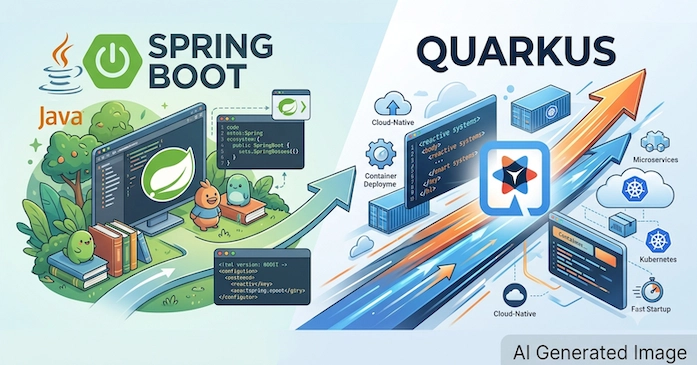
You're starting a new Java service in 2026. The requirements look familiar: REST endpoints, a Postgres connection, deployed to Kubernetes, autoscaling on load, and a budget that charges you per megabyte of RAM your pods sit on. Ten years ago there was one obvious answer. Today there are two, and both just shipped major releases.
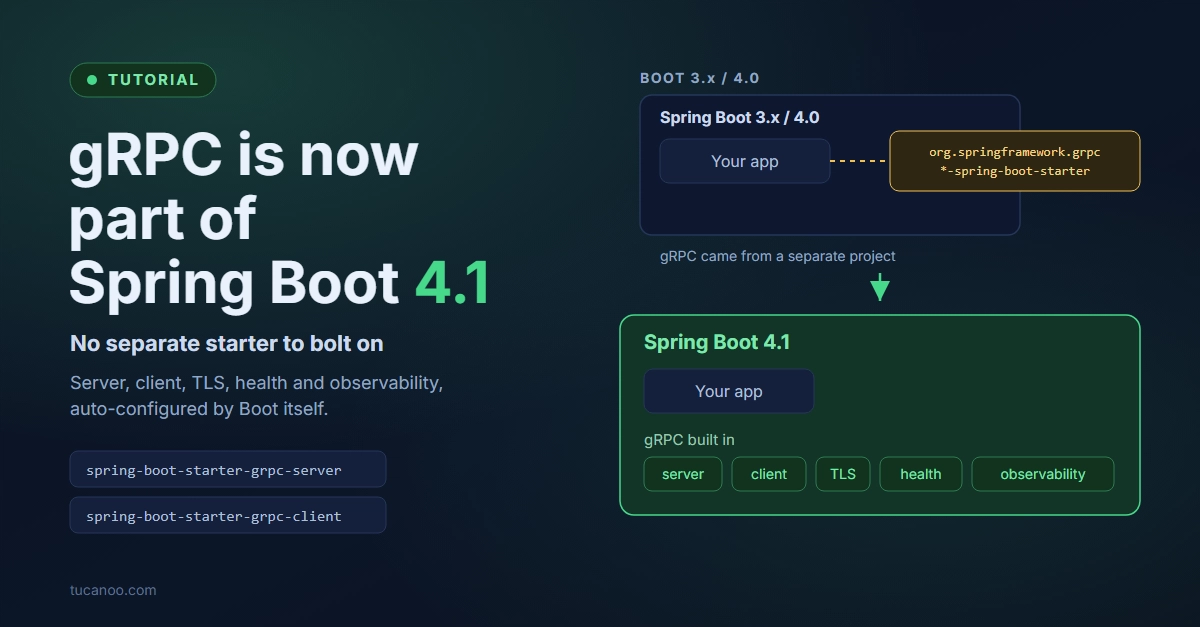
Spring Boot 4 arrived in November 2025, followed by Spring Boot 4.1 in June 2026, rebuilt on Spring Framework 7 and Jakarta EE 11. Quarkus countered with Quarkus 3.27, its new LTS release, patched as recently as August 2026. Both frameworks now support Java 25, both compile to GraalVM native images, and both claim to be the right home for cloud-native Java.
The marketing from both camps sounds identical. The tradeoffs are not. This comparison breaks down what actually changed in each release, what real benchmarks say about startup time, memory, and throughput, and which framework fits which kind of service.
Full disclosure: the analysis here is based on release documentation, official benchmark data, and independent comparisons cited throughout, not on running both frameworks side by side in a production environment.
What Spring Boot 4 Actually Changed