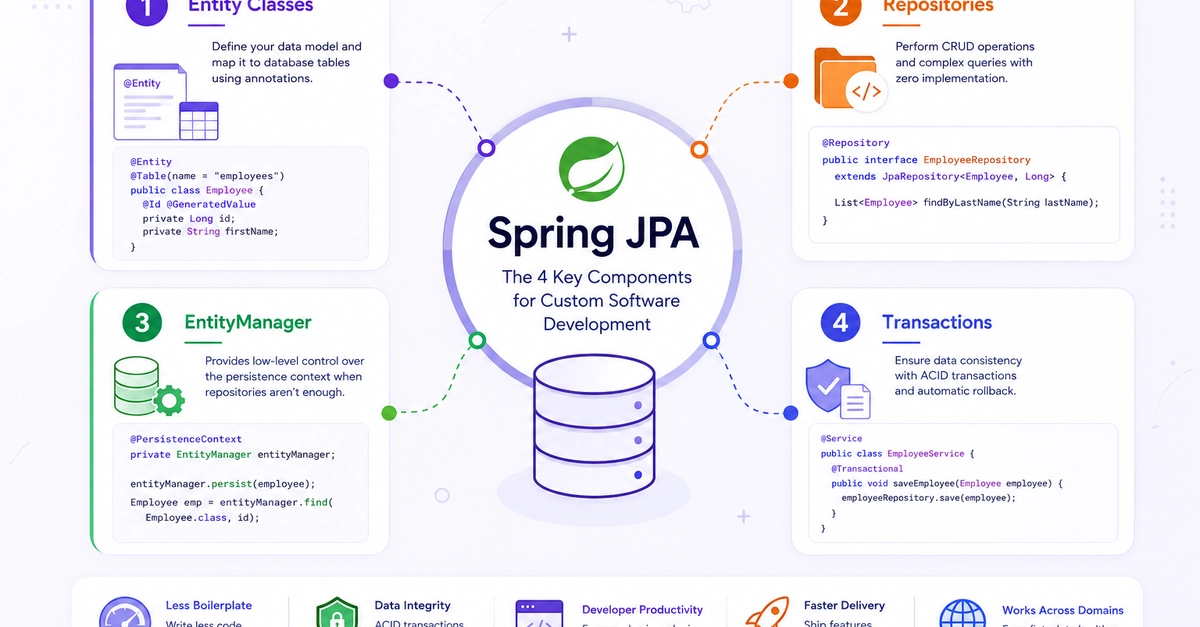
If you've spent any real time building Java backends, you've probably felt the moment where your database layer starts eating your codebase alive. Spring JPA exists to stop that from happening. It wraps the Java Persistence API in clean, sane abstractions — and its four core pieces (Entity classes, Repositories, EntityManager, and Transactions) each solve a specific, real problem. This piece covers all four — with working code and the kind of context you don't always get from the official docs.
Key Takeaways
Boilerplate is basically gone — A new entity's full CRUD layer, done in under ten minutes. Once you've seen what raw JDBC looks like, this feels almost unreasonable.
@Transactional is carrying more weight than most devs realize — One annotation in the right place means a failure mid-operation triggers a full rollback. You won't appreciate how much this matters until you've cleaned up a half-committed transaction at 2am.
It travels across domains — The same four components show up in banking systems, healthcare platforms, SaaS products. The problems look different on the surface. The data access patterns underneath are surprisingly similar.