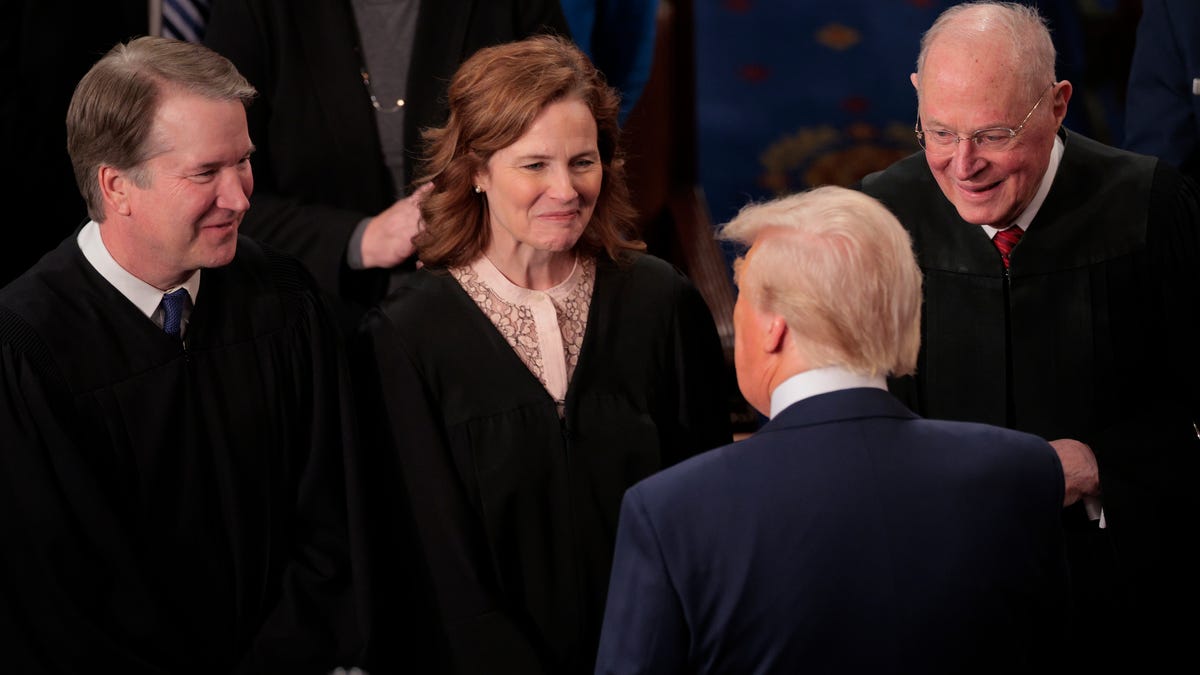
During her Senate confirmation hearings in October 2020, Justice Amy Coney Barrett enjoyed enthusiastic support from the Right and received harsh criticism from the Left. It was entirely expected. She was President Donald Trump‘s third nominee to the Supreme Court, not long before the presidential election, much to the chagrin of Democrats. Abortion-rights advocates were incensed by the selection. As a Catholic and mother of seven with privately held conservative and pro-life beliefs, Barrett represented much of what they feared. Nearly six years later, however, Barrett has confounded her share of Supreme Court observers on both sides of the political aisle.Barrett was confirmed 52-48, continuing the trend of closely divided Supreme Court confirmation votes. The split shows once again how deeply ideological the Supreme Court confirmation process has become.Since Barrett took her place on the high court, she has become something of an enigma. The second woman nominated to the Supreme Court by a Republican president doesn’t neatly fit into the box of expectations either side had for her. For Republicans and Democrats alike, the only other example of what to expect from a female justice nominated by a Republican is Justice Sandra Day O’Connor. As years have passed, it’s become apparent that the comparison to O’Connor doesn’t quite work.
Amy Coney Barrett defies easy categorization
The second woman nominated to the Supreme Court by a Republican president doesn't neatly fit into the box of expectations either side had for her.
2,470 words~11 min read