August 07, 2026
9 min read
Add topic to email alerts
Receive an email when new articles are posted on
Please provide your email address to receive an email when new articles are posted on .
The emergence of biologic therapies ushered in an era of unprecedented positive outcomes for patients with rheumatic and autoimmune diseases. However, 30 years after the start of rheumatology’s “biologic era,” many patients still fail to respond to those medications, giving rise to a group of patients often described as “difficult to treat.”
August 07, 2026
9 min read
Add topic to email alerts
Receive an email when new articles are posted on
Please provide your email address to receive an email when new articles are posted on .

Biologics coordinators exert much control over the medications used in rheumatology clinics, with 80% reporting “significant”…
For decades, biologics have been the gold standard for psoriasis treatment. Now, the psoriasis therapeutic landscape is…

Novel therapies may allow more patients with lupus to reach remission or low disease activity, according to a presenter at the…
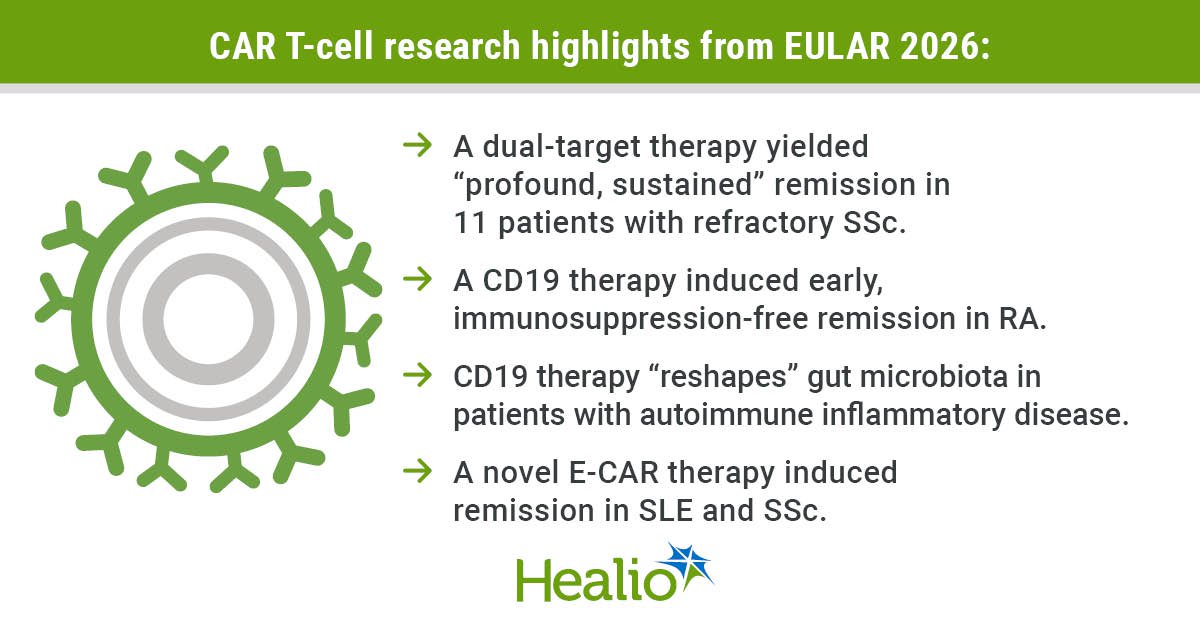
A dual-target CD19/BCMA chimeric antigen receptor T-cell therapy yielded “profound, sustained” remission in 11 patients with…
DESTIN, Fla. — New treatments have improved outcomes in lupus, but preventing disease in the early stages remains elusive,…
There were three turning points in my early training that led me to rheumatology. The first was in medical school during didactic…