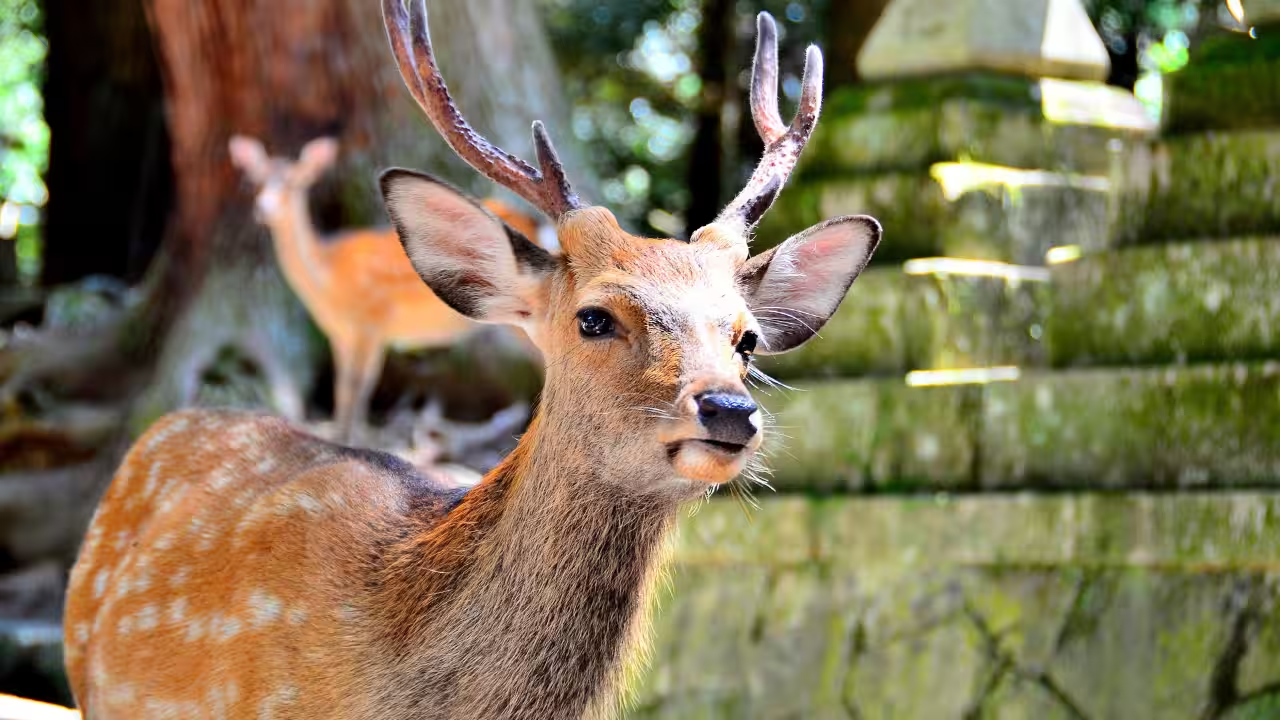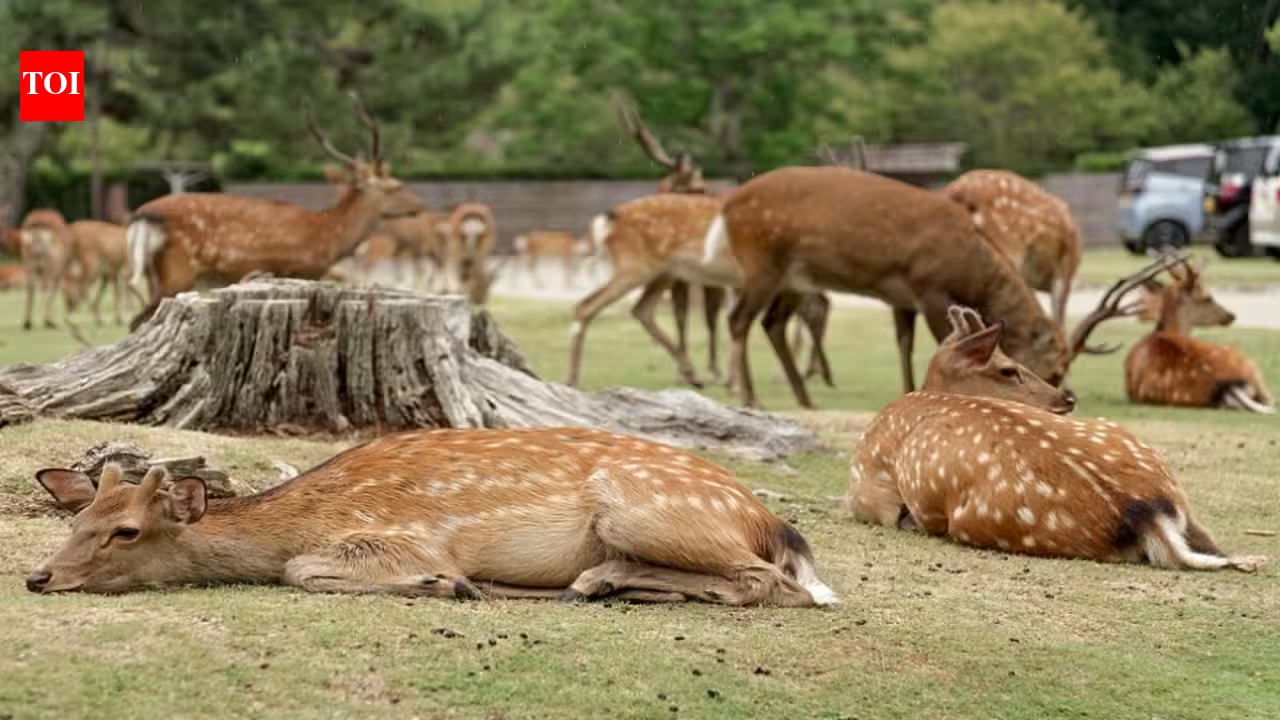
Sika deer in Nara, Japan. Credits - Wikimedia Commons In 1916, five or six Japanese sika deer were released on James Island in Maryland's Chesapeake Bay. That small introduction became the foundation of a population that would eventually spread across much of the lower Eastern Shore. Sika deer are native to southern Japan, but Maryland's population began with the animals brought to James Island. Maryland's wildlife agency now records sika deer in Dorchester, Wicomico, Somerset and Worcester counties, as well as on Assateague Island. The Maryland Department of Natural Resources identifies Henry's release of five or six animals as the start of the state's population.Few people could have expected such a small introduction to change the region's wildlife. Sika deer are smaller than native white-tailed deer and are often recognised by their dark coats and white spots, which they can retain into adulthood. They are comfortable in marshes, wetlands and wooded areas, habitats that are common along Maryland's lower Eastern Shore. Their ability to thrive in these habitats helped the animals move beyond James Island and onto the mainland. A later genetic study found that the modern Maryland population has relatively low genetic diversity, reflecting its origins from a very small number of founders. Even so, the deer have remained healthy and expanded their range.How a handful of deer spread across the Eastern ShoreThe population soon spread beyond James Island. Sika deer were soon reported on nearby parts of Dorchester County, and by the 1920s some of the animals were moved to Assateague Island. Four sika deer were introduced to Assateague Island in 1923 from a captive population in Cambridge, Maryland, according to the National Park Service. By the late 1960s, the island's population had grown to more than 1,000. (National Park Service)The deer also continued expanding on the mainland. Their preferred habitat helped them avoid some of the competition they might have faced with white-tailed deer in more open upland areas. Maryland wildlife managers later found that sika deer tended to spend much of their time in marshes, swamps and wet woodlands rather than using exactly the same areas as white-tailed deer. That reduced direct competition between the two species, though concerns remained where their ranges overlapped.Assateague became one of the best-known places to see the introduced deer. The island is famous for its wild horses, but sika deer also became a regular part of its wildlife. They live in the island's forests and salt marshes and can sometimes be seen moving between vegetation and open areas. The National Park Service describes them as a non-native species introduced during the 1920s. Their presence has also created a management challenge because the same habitats support native wildlife and vegetation.What makes the story unusual is the contrast between the tiny original release and the deer’s later range. The first animals did not arrive as a large herd. A few deer reproduced; some were moved to new locations, and their descendants gradually occupied suitable habitat. That pattern has been seen with other introduced species, but deer are large animals, so their spread is easier for people to notice once populations become established.Sika deer in the town of Nara, Japan. Credits - Wikimedia CommonsA popular game animal with a complicated legacySika deer eventually became popular with hunters, particularly in Dorchester County and on Assateague Island. Their arrival also created a management question that Maryland continues to deal with: how many should remain, and where should their numbers be controlled? Wildlife managers have used hunting to keep populations at levels that balance recreational hunting with concerns about agricultural damage, habitat and competition with native deer.Sika deer are now an established part of Maryland's lower Eastern Shore, and hunting them has become an important recreational activity. At the same time, they are still an introduced species, and managers have to consider their effects on plants and other wildlife. A population that began with only a few animals can become difficult to control once it spreads through marshes, forests and agricultural areas.The Maryland population began with roughly five or six deer, yet the animals eventually spread through four counties and became established on Assateague Island. Another four were deliberately introduced on Assateague in 1923, helping establish the island's population. Their story shows how misleading the size of an initial release can be.More than a century after the first Maryland release, sika deer are now established across part of the Eastern Shore. They occupy a much larger part of the Eastern Shore and have become a familiar sight on Assateague. What began with a handful of Japanese deer has therefore become a permanent part of Maryland's wildlife-management story: an introduced animal that found suitable habitat, multiplied and spread far beyond the place where people first put it.
In the Early 1900s, a Maryland landowner released just five or six Japanese sika deer, and their descendants spread across four counties and Assateague Island
In 1916, five or six Japanese sika deer were released on James Island in Maryland's Chesapeake Bay. That small introduction became the foundation of a population that would eventually spread across much of the lower Eastern Shore.
790 words~4 min read