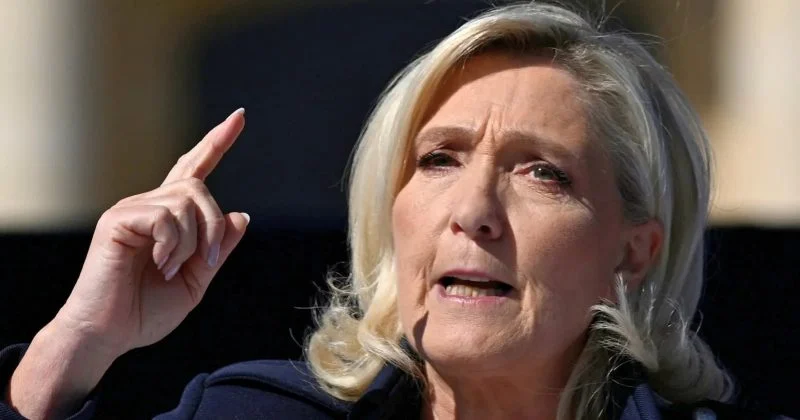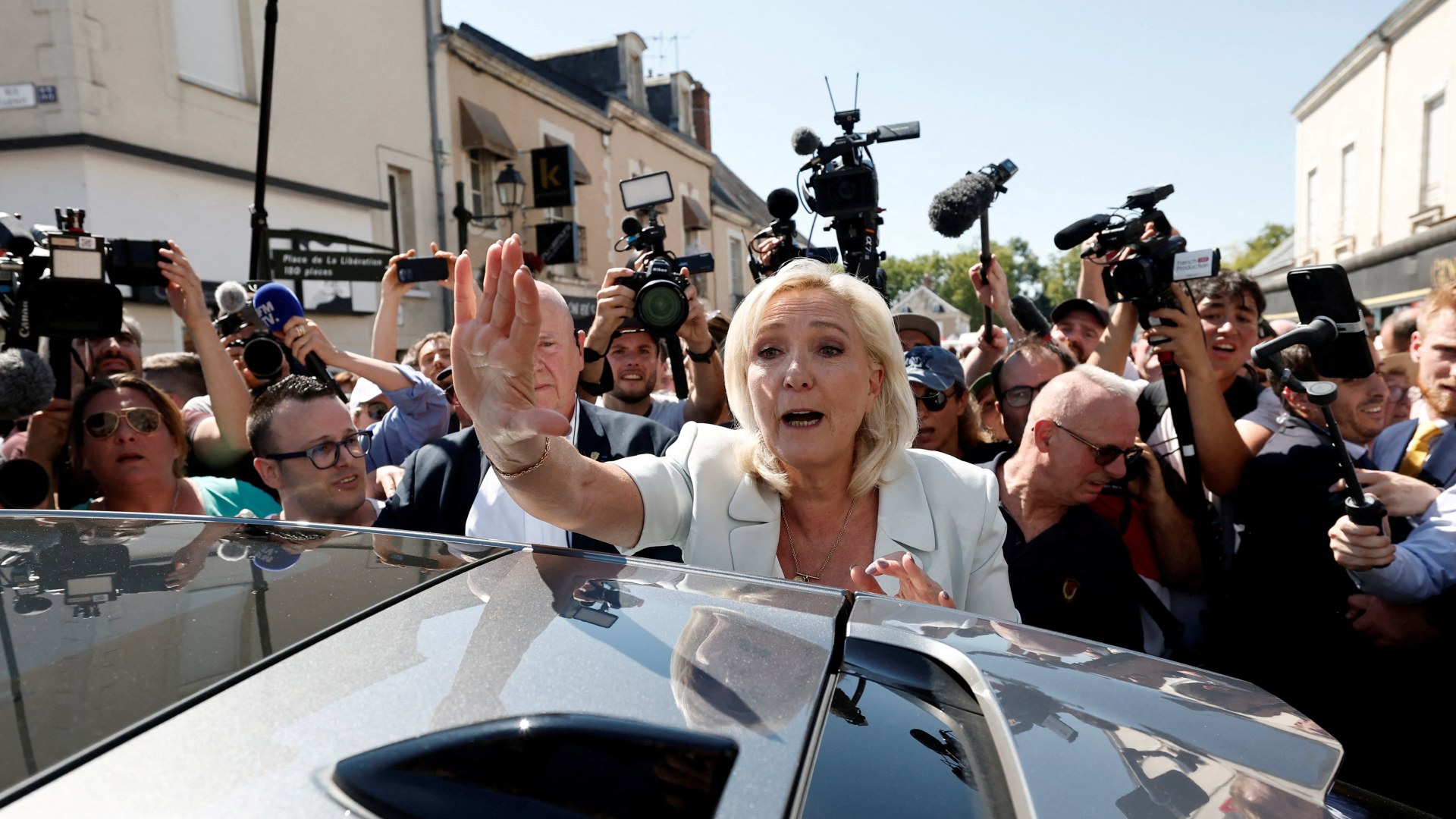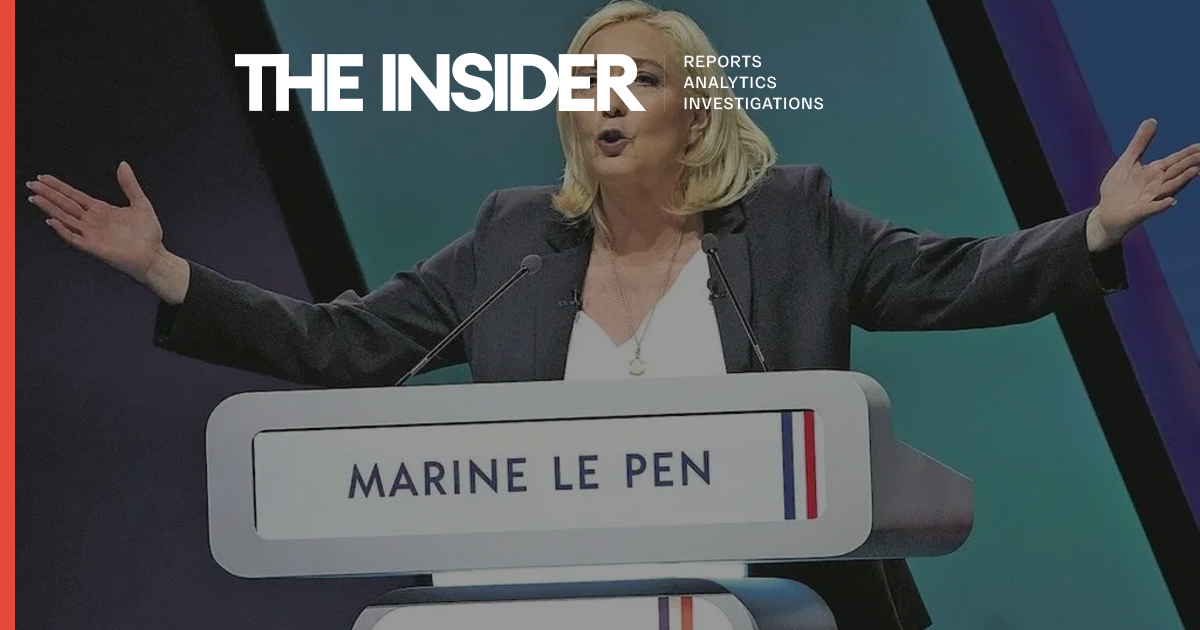
Nine months from now, France will elect a new president. Incumbent Emmanuel Macron is term-limited, and the country's political centrists are scrambling to find a consensus coalition capable of defeating the country's radicals at the ballot box – Marine Le Pen on the right and Jean-Luc Mélenchon on the left. Until recently, it seemed that Le Pen had effectively withdrawn from politics, ceding her place atop the National Rally to a new generation. But a relatively lenient court ruling has given her another chance to run for president, and, judging by the polls, her place in the second-round runoff to be held next May appears all but inevitable.Contents1.The Le Pen trial2.France’s largest party3.Young and ambitious4.Everyone against Le PenThe Le Pen trialIn March 2025, a verdict was handed down in Paris in a case concerning the National Rally party's misuse of European Parliament funds. In popular discourse, the courtroom drama was often referred to as the “Marine Le Pen trial” — even though, in total, the court’s guilty verdict also named 23 other people, as well as the party itself. The prosecution sought a prison sentence (which, under French law, would in any case have been suspended) and a fine, but the central question was whether the judiciary would ban Le Pen from public office, leaving her ineligible to stand in the 2027 presidential election. It did, barring her from electoral politics for a period of five years. It is important to emphasize that the prosecution did not seek to prove that Marine Le Pen had personally enriched herself, as it had no substantial evidence to support such a claim. The case instead concerned her party's systematic use of European Parliament funds for its own internal needs rather than to support the work of MEPs. Thus, despite the undeniable violations and Le Pen’s central role in organizing such a scheme, the seriousness of the offense did not appear particularly great — not only to National Rally voters but also to a substantial part of the wider public. Critics of the first-instance court’s ruling argued that Le Pen should be defeated at the ballot box, not in court.Marine Le Pen must be defeated at the ballot box, not through legal proceedingsLe Pen's public statements predictably accused various dark forces of working to bring about her “political death.” She and her allies challenged the verdict on appeal. But the slow pace of the French justice system offered little hope that the case would be reconsidered quickly enough for the politician to take part in the 2027 presidential election.Then a miracle occurred. The appeals court agreed to deliver its verdict in the summer of 2026 — effectively dispelling any suspicions that the government was manipulating the justice system in order to eliminate a political rival. The ruling satisfied everyone: the guilty verdict was upheld, but Le Pen's ban on standing for election was eased. For the leader of the National Rally, the path to the most important election of her life was once again open.France’s largest partyIn 2011, Marine Le Pen inherited the National Front from her father, taking over a party in crisis. On the one hand, Jean-Marie Le Pen was well known, an eloquent speaker, and was recognized as an authority in right-wing conservative circles. On the other, his party’s reputation as a xenophobic, far-right movement prevented it from attracting broad electoral support.The daughter Le Pen worked to rebrand the party, including changing its name and sidelining her aging father. However, its populist rhetoric was retained: the party continued to criticize the traditional political elites, the project of a united Europe, and any policy that could be conceivably portrayed as pro-immigrant. At the same time, the party abandoned any outright xenophobic rhetoric while actively reaching out to potential voters at the local level. Essentially, the National Front underwent a process of “normalization." Its candidates began winning races, and the public saw that the sky did not fall as a result. Le Pen herself made it to the second round of the presidential election against Emmanuel Macron twice, in 2017 and 2022, improving her result each time. The name change to National Rally in 2018 symbolized the party's partial break from its past.The National Front underwent a process of “normalization,” becoming part of the routine political landscape
The prodigal candidate returns: Marine Le Pen's political comeback and the battle for 2027
Nine months from now, France will elect a new president. Incumbent Emmanuel Macron is term-limited, and the country's political centrists are scrambling to…
2,282 words~10 min read