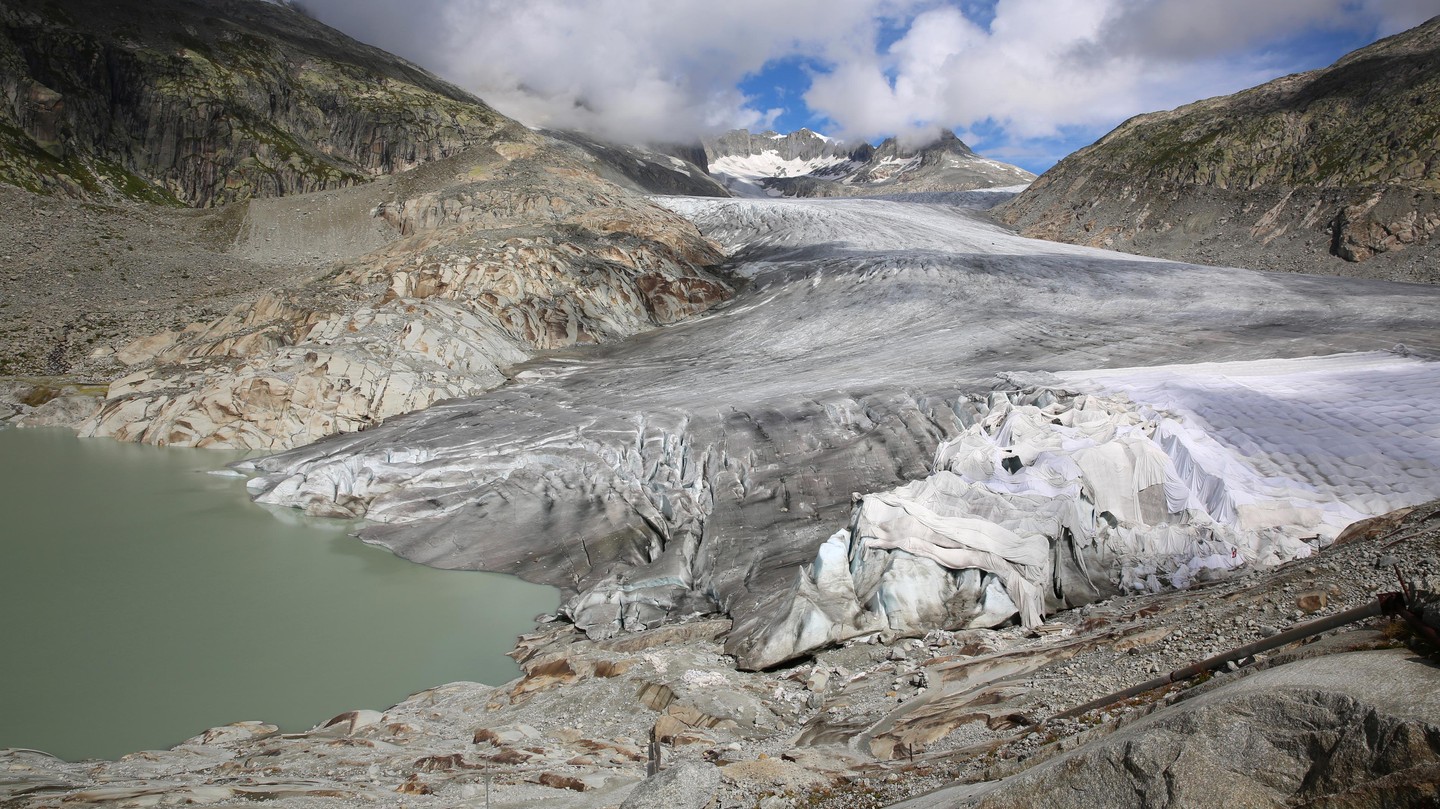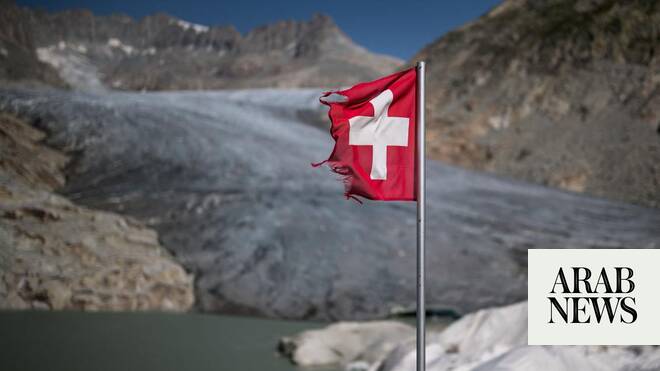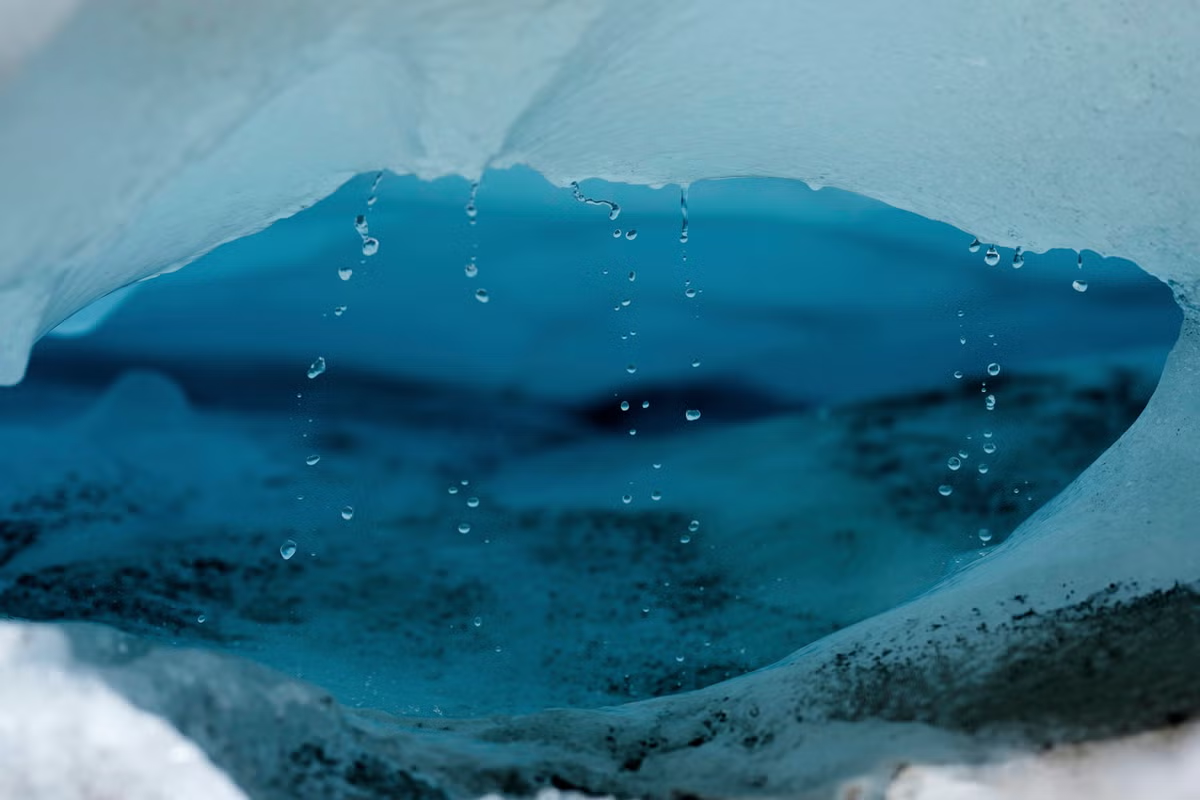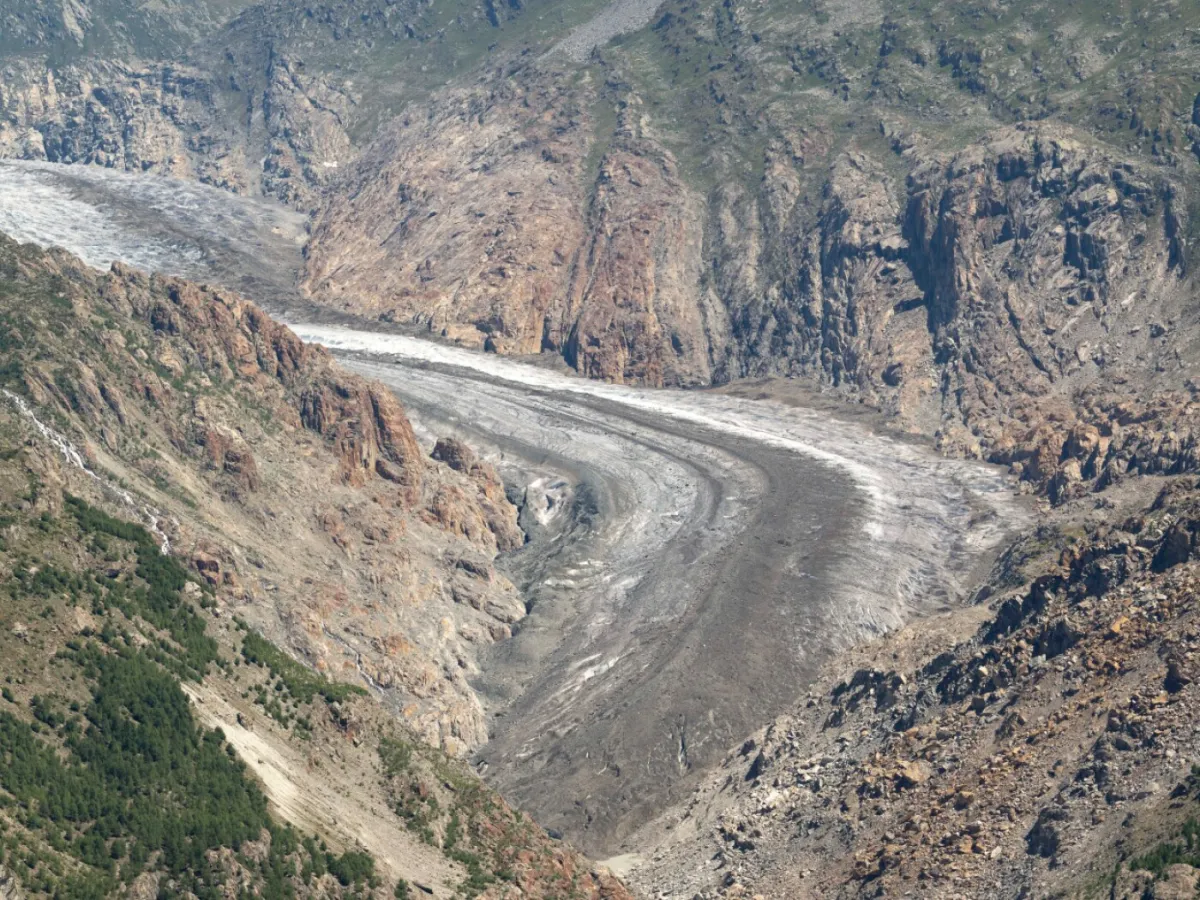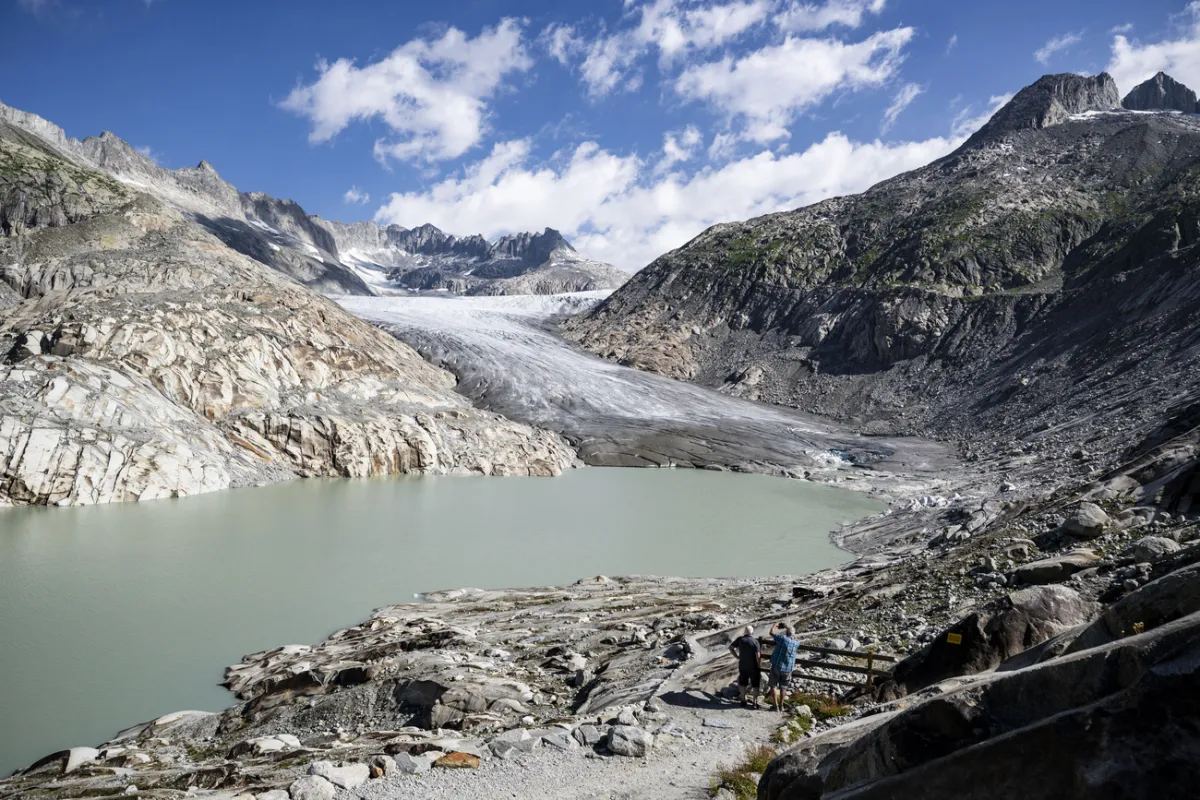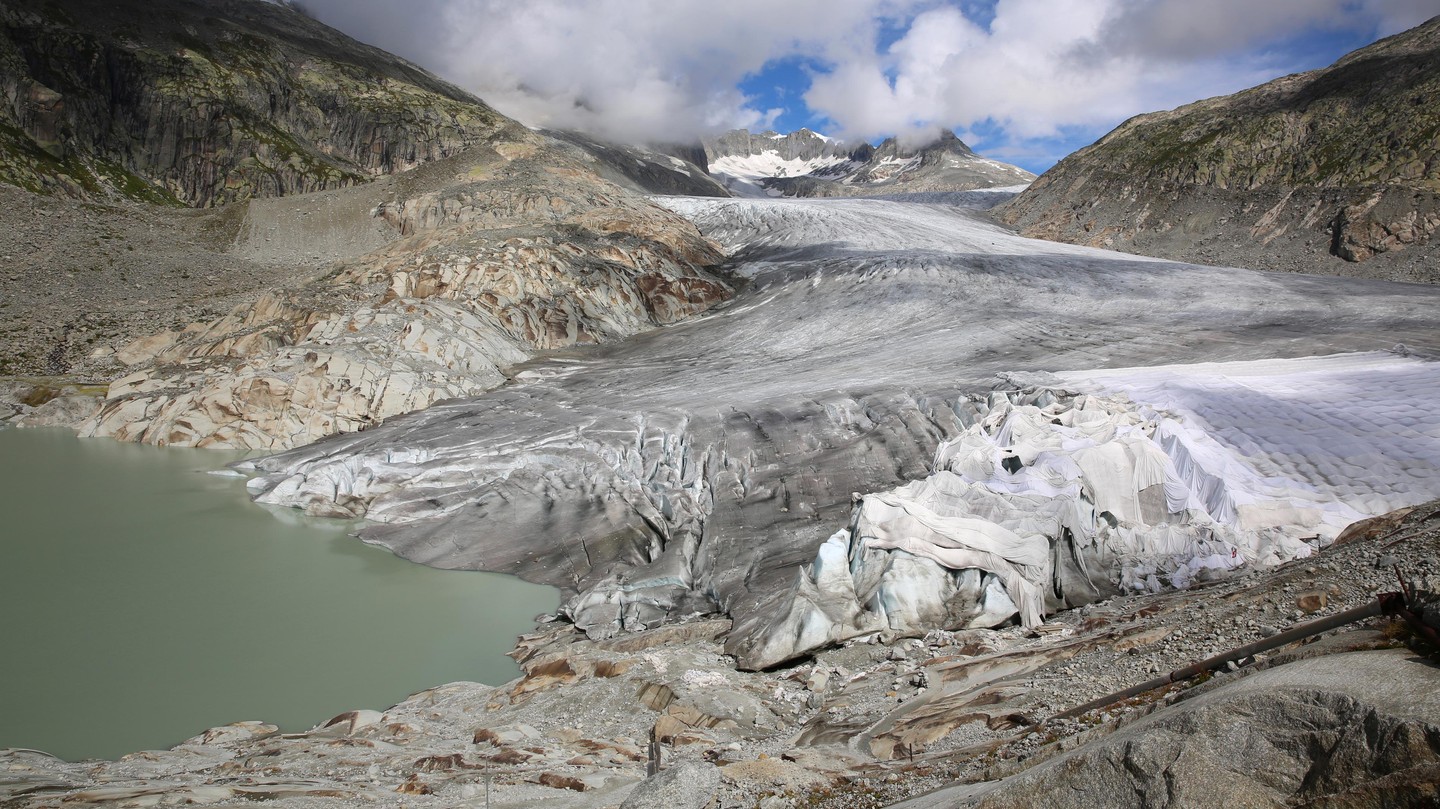
Some 40% of Switzerland’s glacial reserves have disappeared in the past 25 years. That means the country is losing not just a water and energy resource but also living ecosystems that we’re only now discovering. Two EPFL researchers describe the scope of the issue. These days, when you talk about glaciers, the conversation invariably turns to glacier melt. According to Glacier Monitoring in Switzerland (GLAMOS), over 1,100 of the country’s small glaciers have vanished since the early 1970s, and those that remain are melting at a rapid pace. They’ve lost 40% of their volume since 2000, shrinking from 75 km3 to 45 km3 by the end of 2025. Switzerland could be nearly glacier-free by 2050–2070, with only a few giants, such as the Aletsch and Rhône glaciers, surviving to the end of the century.These figures raise a number of environmental, economic and landscape-related questions, but perhaps the most tangible problem has to do with Switzerland’s energy supply. What does glacier melt mean for a country that gets nearly 60% of its energy from hydropower? Giovanni De Cesare, a civil engineer and head of operations at EPFL’s Hydraulic Constructions Platform, has been studying hydropower dams for over 30 years. “The problem isn’t just that there will be less water,” he says. “Today, glaciers melt all summer long, providing a steady stream of runoff. When they’re gone, we’ll have to rely directly on precipitation – rain and snowfall – which is much less predictable.”The Grande Dixence, world’s tallest gravity dam, is a case in point. Some 540 million m3 of water flows into its catchment area per year, mostly from glacier-fed streams, and fills the dam’s 400 million m3 reservoir. Scientists estimate that this inflow could shrink by 30% by the end of the century. If the glacier that regulates the flow of water disappears, the reservoir – sized for the original glacier runoff – won’t be able to compensate for the difference between the wet and dry seasons.Making dams higher One option for mitigating the impact on the energy supply is to build more dams. Construction began on the Trift dam in the Bernese Oberland, for example, around 12 years ago. But this is a slow and often controversial process. Instead, De Cesare suggests another approach: raising the height of existing dams. This has already been done successfully at Mauvoisin (raised by 13 meters), Vieux-Émosson (21.5 meters) and Luzzone (17 meters). Those are relatively small additions considering that the dams are around 200 meters high, but they’ve been effective at expanding the reservoirs’ capacity due to the V-shape of the dam walls. The capacity of the Luzzone dam, for instance, grew from 87 million m3 to 107 million m3. Thirteen such dam-raising projects are currently under consideration in Switzerland.Today, glaciers melt all summer long, providing a steady stream of runoff. When they’re gone, we’ll have to rely directly on precipitation – rain and snowfall – which is much less predictableDams also face another, more insidious enemy: sedimentation. “Rock flour” tends to deposit at the bottom of dam reservoirs, but, recently, the morainic deposits have been getting larger, forming deltas and steadily reducing the reservoirs’ capacity. In a study carried out on the Gries dam in the canton of Valais, De Cesare found that this problem is getting worse as glaciers retreat. “Solutions do exist, such as sediment bypass systems, or tunnels that direct sediment-laden floodwater around a dam reservoir,” he says. “But building them is expensive and they have to be incorporated into a dam’s initial design, which is rarely done.”De Cesare believes that, in the future, dams will need to serve a variety of functions. Reservoir water is currently used mainly for power generation, but it could also be employed for irrigation, producing artificial snow, flood protection and more. “The process of generating hydropower doesn’t actually consume water – it just harnesses the fluid’s energy as it flows and falls,” he says. “Only a few dams in Switzerland are designed so that the water can be used for other purposes, but that should change.”When greening is not a good signIn addition to providing valuable stores of water, glaciers are also full of life. Tom Battin, a professor of environmental science and head of EPFL’s River Ecosystems Laboratory, studies the microorganisms contained in glaciers. “When I tell glaciologists that millions of living cells lie beneath their feet when they walk on ice, they’re often stunned,” he says. “Glaciology is still thought of largely in terms of physics. Cryosphere biology is the next frontier!”Battin spent five years traveling the globe as part of the Vanishing Glaciers Project funded by the NOMIS Foundation. He and his team took samples from 170 glacier-fed streams on every continent and found a much more diverse microbiome than expected. Their research was published in Nature and Nature Microbiology in early 2025.Microorganisms in glacier-fed streams live in biofilms, which are matrices of a gelatinous material clinging onto rocks. Battin describes them as “sticky megalopolises.” These communities include microbes that are experts in survival: they’ve evolved over thousands of years to withstand near-freezing water, intense UV radiation and an environment with almost no nutrients. “We call them ‘rock-eaters’ because they feed on minerals, iron, sulfur and gases in the air,” says Battin. “But from an energy perspective, it’s much more viable to feed on organic carbon – these microbes are extremely vulnerable to changing conditions.”And, as we know, conditions are changing. Mountain streams are becoming clearer, calmer and warmer as glaciers disappear. In some cases, algae are proliferating and the ecosystems are turning from gray to green. Battin studied this “green transition” in research published in Nature Geoscience in 2024, analyzing samples from 154 glacier-fed streams worldwide. For instance, he found that streams fed by the Rwenzori glacier in Uganda, one of Africa’s last remaining glaciers – and one that’s at a much more advanced stage of retreat than Alpine glaciers – are already mostly green. This gives scientists a glimpse of what’s likely to occur in Switzerland in a few decades.“By the end of this century, the land freed up by disappearing glaciers will be home to streams that, if put together, will be 40 to 60 times longer than the Nile – the world’s longest river,” says Battin. That will be a visible consequence of a permanent loss: the microbes that have adapted to extreme conditions will steadily be replaced by more general ones moving upstream. “We stand to lose all that biodiversity – and with it, a genetic treasure trove,” says Battin.Biological assets worth conserving If it’s too late to save the glaciers, can we at least preserve their biological heritage? “It’s our moral duty!” says Battin. That’s why he introduced the Microbial Initiative for the Cryosphere, an international initiative led by EPFL together with Institut Pasteur and the European Molecular Biology Laboratory. The goal is to protect and study the diverse microbiome contained in glaciers before it disappears. Battin’s idea is simple yet ambitious: he intends to build up a biobank – a kind of Noah’s Ark for microbes – containing bacteria, viruses, fungi and algae collected from glaciers around the world. This will allow scientists to examine how these organisms have evolved and leverage their biotechnological potential. “That would enable the development of low-temperature enzymes, new forms of antibiotics and biomaterials,” says Battin. “These streams harbor a wealth of genetic possibility, and it’s slipping away before we’ve even had a chance to document it.” Battin hopes to set up the biobank at EPFL’s ALPOLE center in the canton of Valais, giving scientists who don’t have a glacier nearby the opportunity to conduct research in this area.When I tell glaciologists that millions of living cells lie beneath their feet when they walk on ice, they’re often stunnedBattin’s research group isn’t the only one at EPFL working to preserve glaciers’ natural assets. Jérôme Chappellaz, a professor of environmental science at EPFL Valais Wallis, introduced the international Ice Memory initiative in 2015. This initiative, backed by UNESCO, is being conducted jointly by seven top-tier research centers, including CNRS and the Paul Scherrer Institute. Scientists are collecting ice core samples from glaciers under threat – from the Alps to the Andes, and from the Caucasus to Svalbard – and keeping them in natural storage at –50°C at Concordia Station, a French-Italian research facility in the Antarctic.Time to actIce Memory is based on the idea that glaciers can be read like history books – the air bubbles they contain can be hundreds of thousands of years old and, by analyzing them, scientists can learn about changes in the climate and the composition of the atmosphere over vast time periods. Chappellaz is certain that, one day, technology will be developed that’s capable of extracting information from glacier samples we currently can’t interpret. But this assumes the samples will still exist when such technology is ready.Considering the impending changes to our water supply, De Cesare likes to remind people of a little-known fact: 98% of the liquid freshwater on Earth is contained right under our feet, in the water table. “That’s our strategic reserve – and it’s what we’re in the process of contaminating,” he says. “River water can renew itself naturally in just a few hours, depending on how fast the river flows. A body of water like Lake Geneva takes around a dozen years to renew. But for the water table, we’re talking about 100 to 10,000 years. So the water we contaminate today will be with us for centuries. We’ll become aware of the value of this water only when it starts to become scarce.”Battin adds: “We need to act now, not 20 or 30 years from now. We have the knowledge and technology. Unfortunately, we’re our own worst enemy.”EPFL+ECAL Lab reaches new heightsHow can mountain regions best respond to the challenges of climate change? This is the ambitious question that the Mount- Resilience project, funded by the EU’s Horizon Europe program, aims to answer. The project brings together 47 partner organizations in nine countries, from Lapland in Finland to the Italian Alps. The Swiss team is based in Val de Bagnes in the canton of Valais and led by the EPFL+ECAL Lab. There, scientists – including those at the RIVER lab headed by Tom Battin – and engineers are working with interaction designers, policymakers and water-system users (such as farmers, tourism companies and residents) to study this natural resource.“We’re increasingly knowledgeable about the environment, but, as a society, we’re taking that knowledge less and less into account in our decisions,” says Nicolas Henchoz, head of the EPFL+ECAL Lab. “With MountResilience, we want to connect people on the ground – not just experts – with environmental science and data.” To that end, the project team is developing a web application that will display real-time measurements of the quality and quantity of catchment water, in the form of readily understandable indicators. “The app will also let users share information and receive alerts about these data,” says Henchoz. “And it will include a list of solutions that users can take as inspiration.”Two research papers – one on methods for getting local stakeholders involved, and the other on a prototype of the web application – will be presented at the Regional Mountain Conference this summer in Obergurgl, Austria. The functioning prototype itself will be unveiled at the BlueArk Conference in Châble, Switzerland, in November of this year.ReferencesThis article was published in the June 2026 issue of Dimensions, an EPFL magazine that showcases cutting-edge research through a series of in-depth articles, interviews, portraits and news highlights.
Retreating glaciers are taking entire worlds with them
Some 40% of Switzerland’s glacial reserves have disappeared in the past 25 years. That means the country is losing not just a water and energy resource but also living ecosystems that we’re only now discovering. Two EPFL researchers describe the scope of the issue.
1,924 words~9 min read