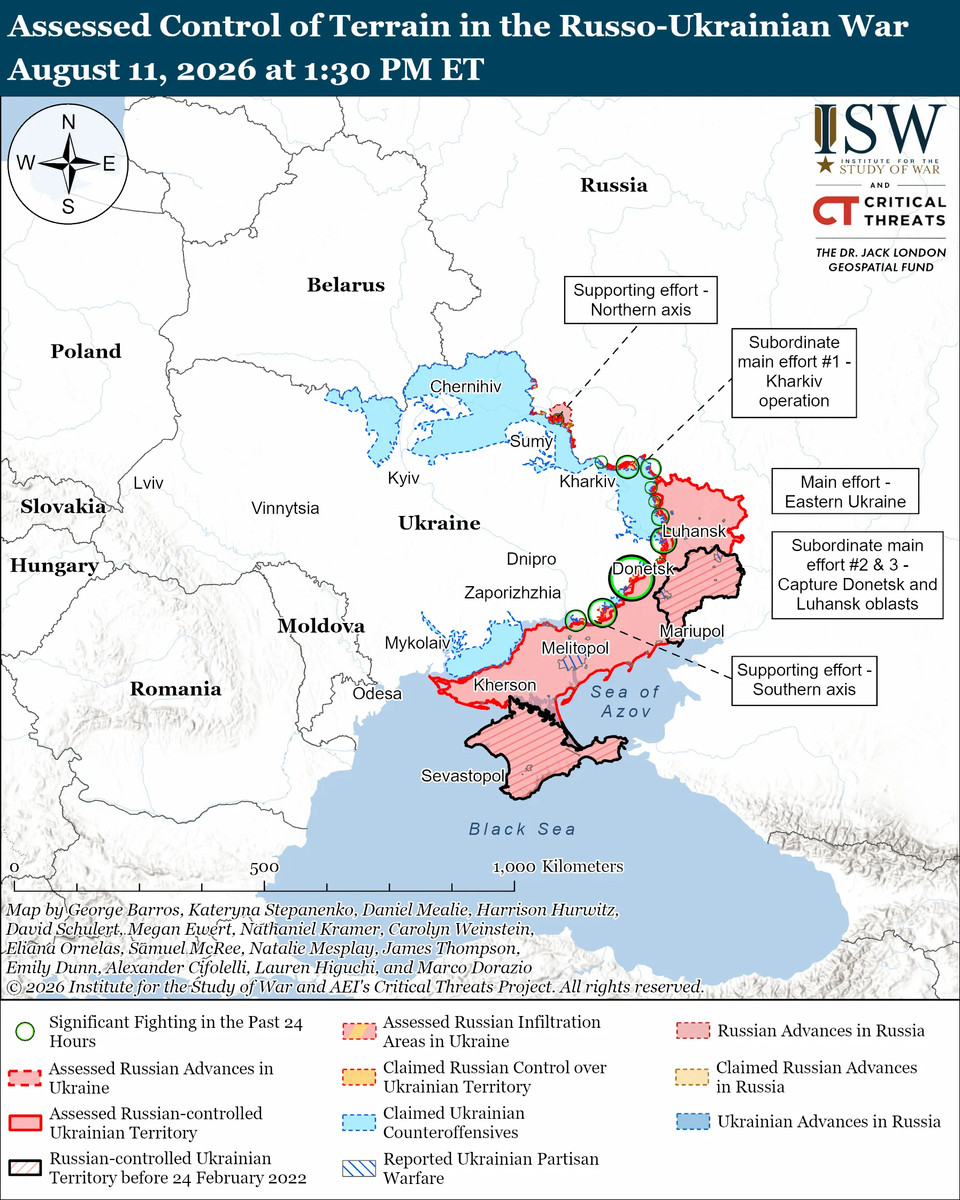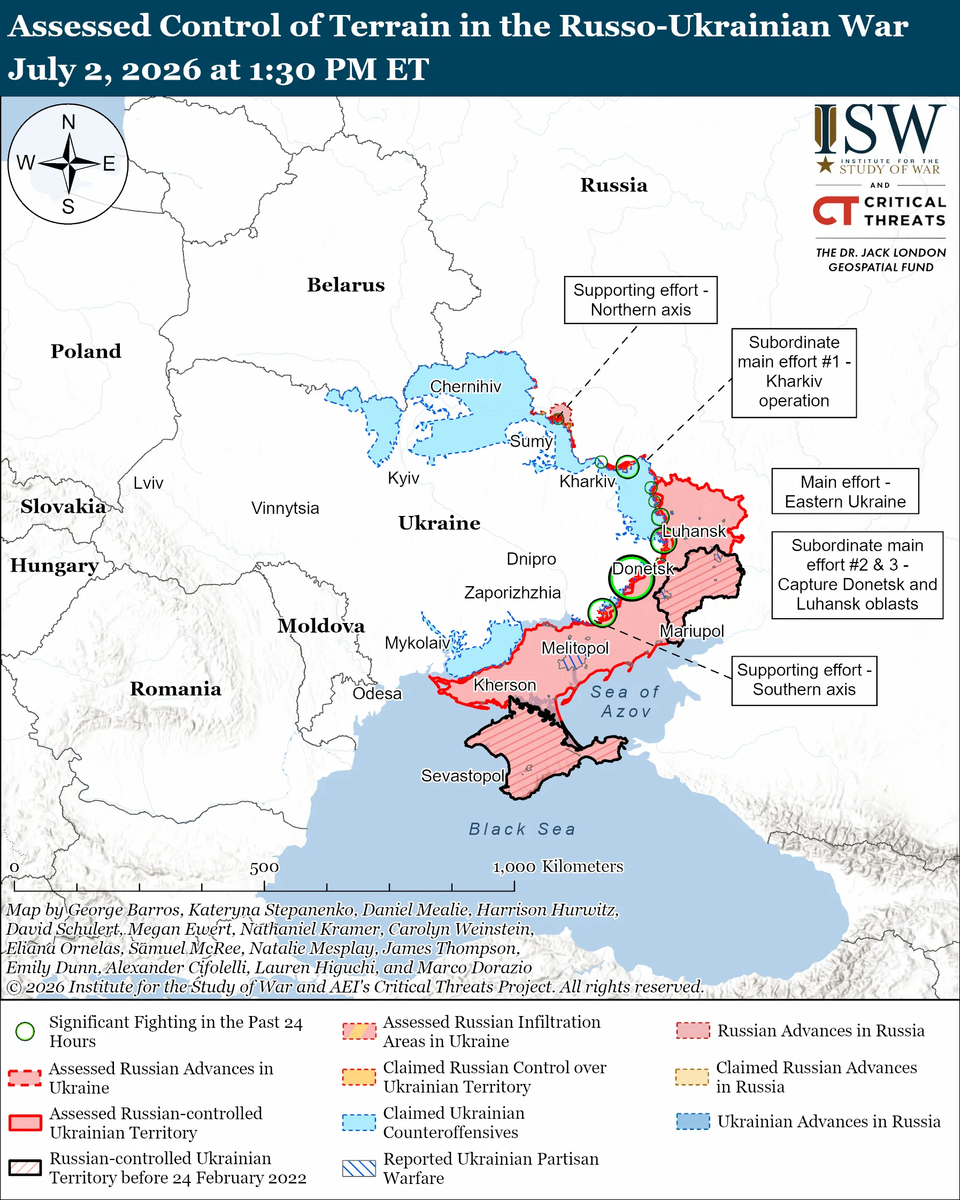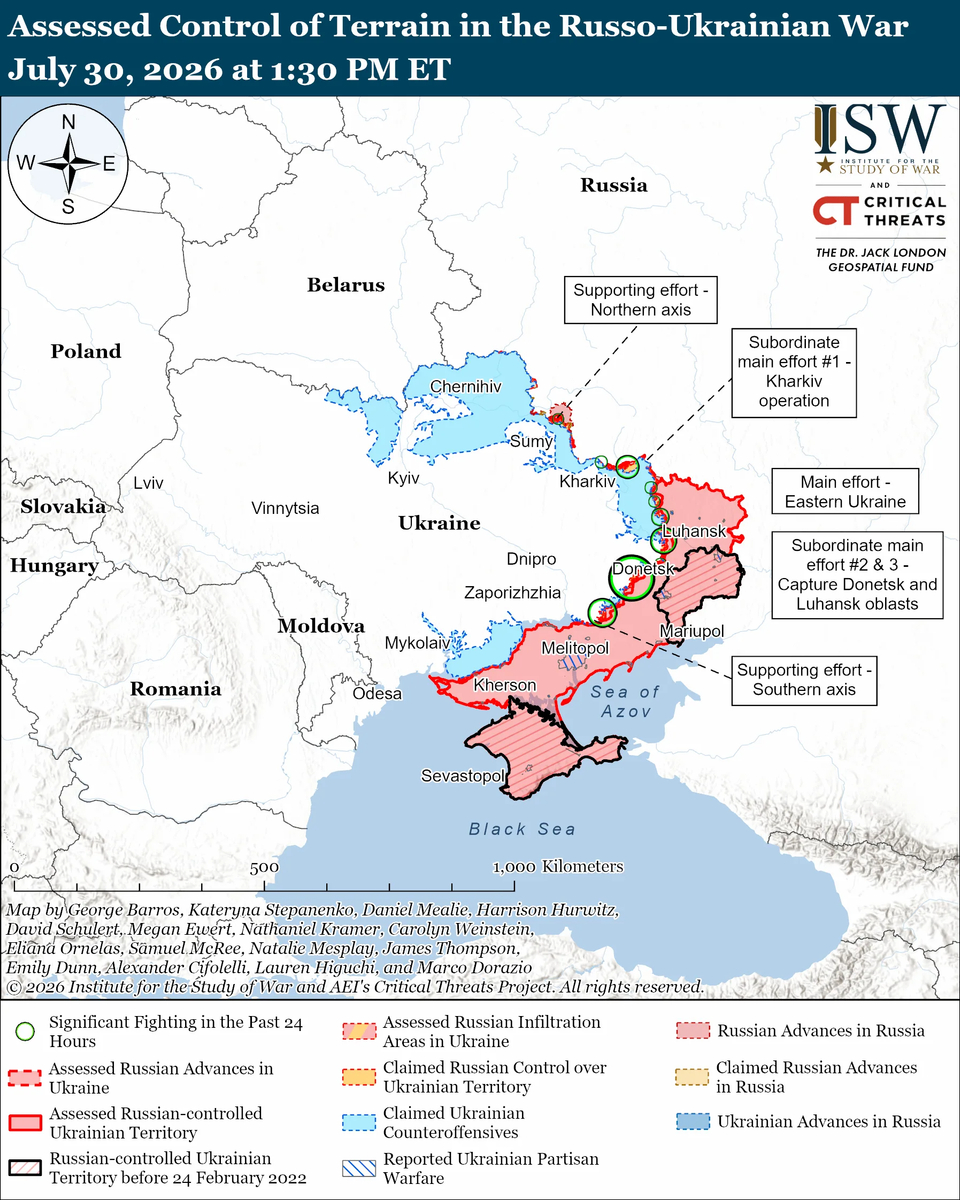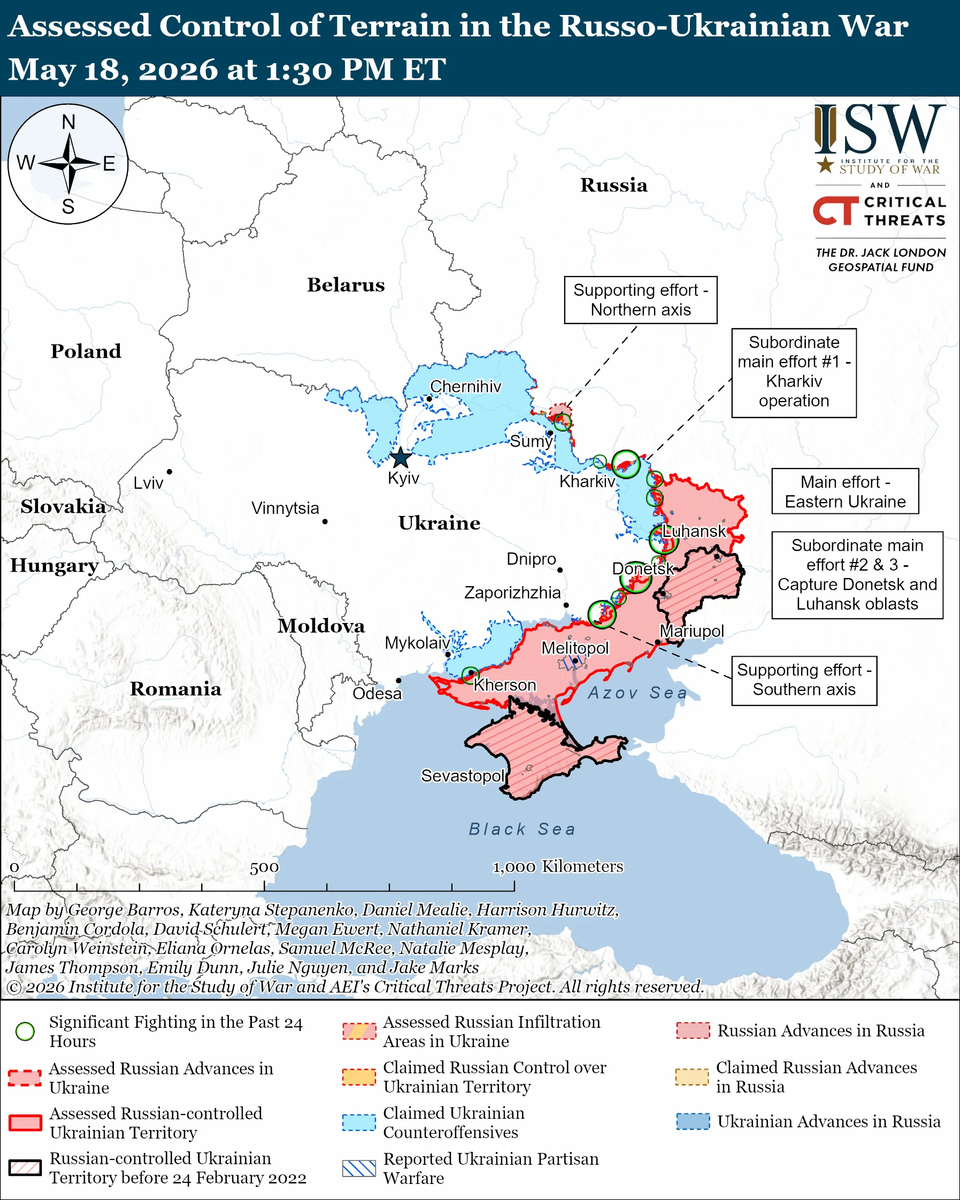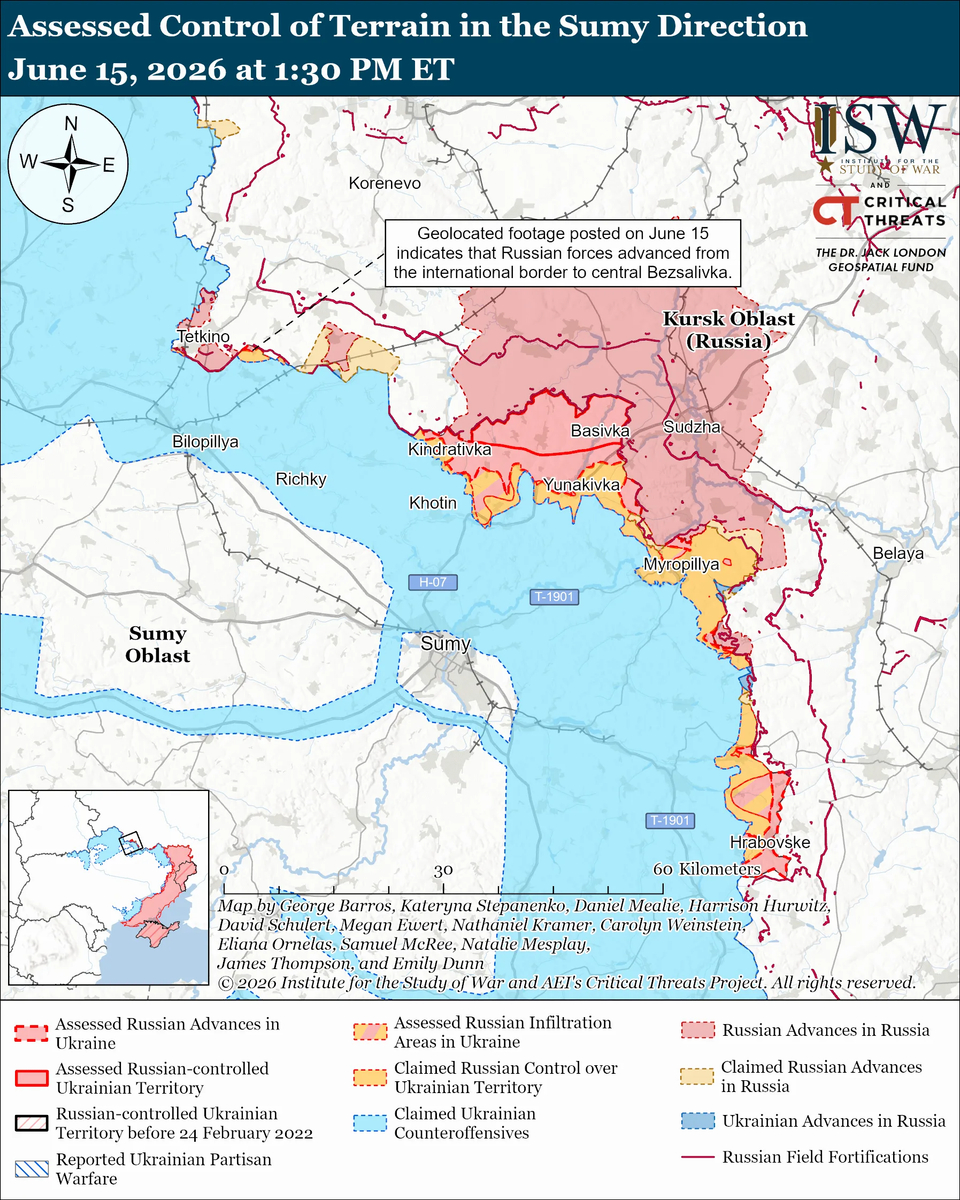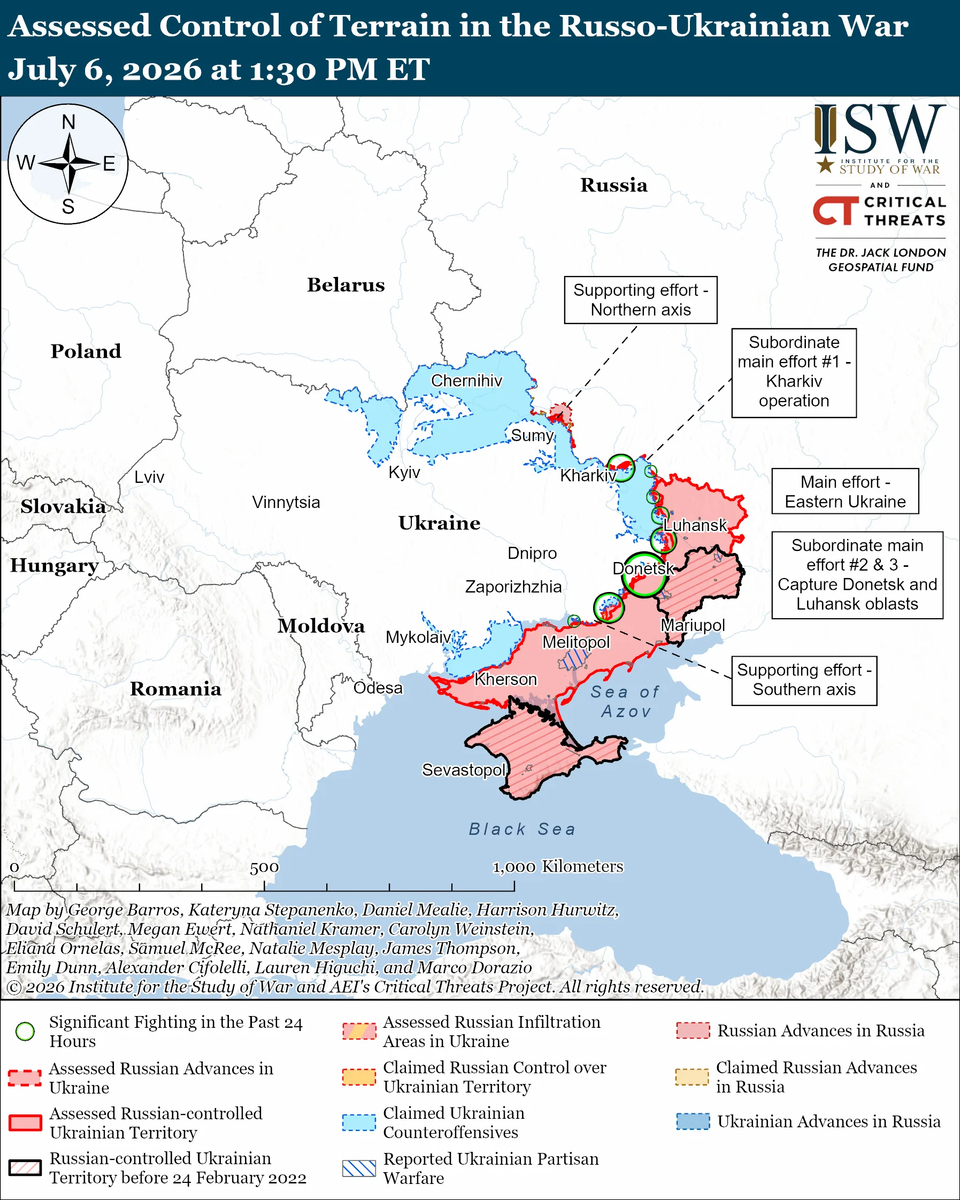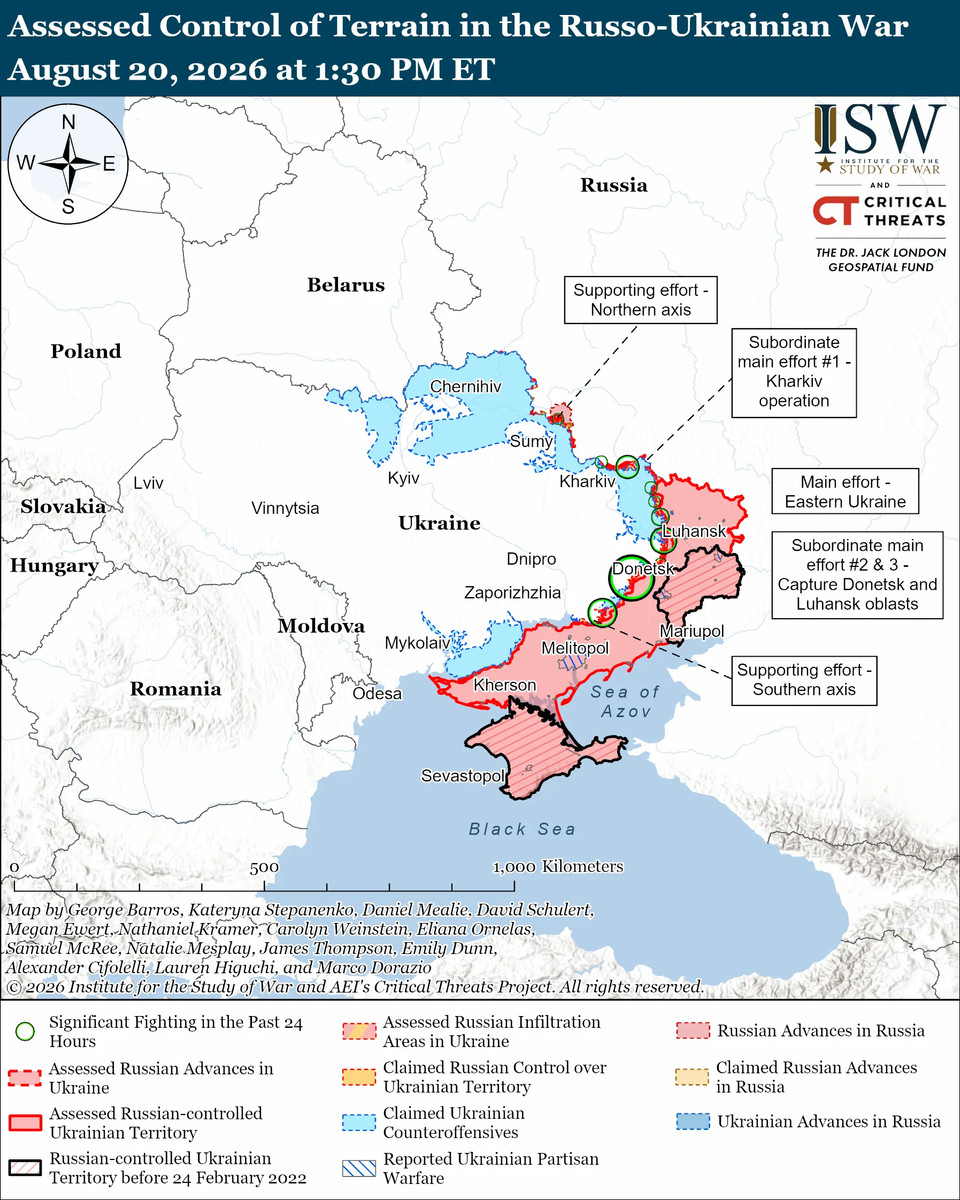
Key Takeaways from the ISW: Russian forces launched a massive, combined drone and missile strike against Ukraine, continuing a pattern of stockpiling ballistic and cruise missiles for several days to amass enough for major attacks that cause significant civilian casualties. Russia continues to set conditions to augment strike packages with North Korean missiles, including with upgraded KN-30 ballistic missiles. Russian aerial drones penetrated Moldovan and Romanian airspace, and a Russian naval drone was destroyed close to a Romanian natural gas platform on August 20, demonstrating that the Kremlin has accepted the risk that its war against Ukraine will cause damage to other states, including NATO states. The Kremlin will likely cause a significant number of Russian combat veterans of the war in Ukraine to be elected to the Russian State Duma in the September 2026 elections, particularly as members of the United Russia Party, as part of a concerted effort to militarize Russian society and cohere a pro-war and ultranationalist elite. The Russian government continues to respond inadequately to gasoline shortages and appears to be focused on mitigation strategies and ad hoc solutions instead of addressing the issue directly. Neither the Kremlin nor Russian milbloggers appear to believe that Russia will be able to fully intercept Ukrainian strike packages any time soon. Ukrainian forces continued their long-range strike campaign against Russian oil infrastructure and military assets on the night of August 19 to 20. Russian forces recently advanced in northern Sumy Oblast and in the Pokrovsk direction. JOIN US ON TELEGRAMFollow our coverage of the war on the @Kyivpost_official. See the original here.
ISW Russian Offensive Campaign Assessment, August 20, 2026
War in Ukraine - Latest update, key takeaways and map from the Institute for the Study of War on August 20, 2026
263 words~1 min read