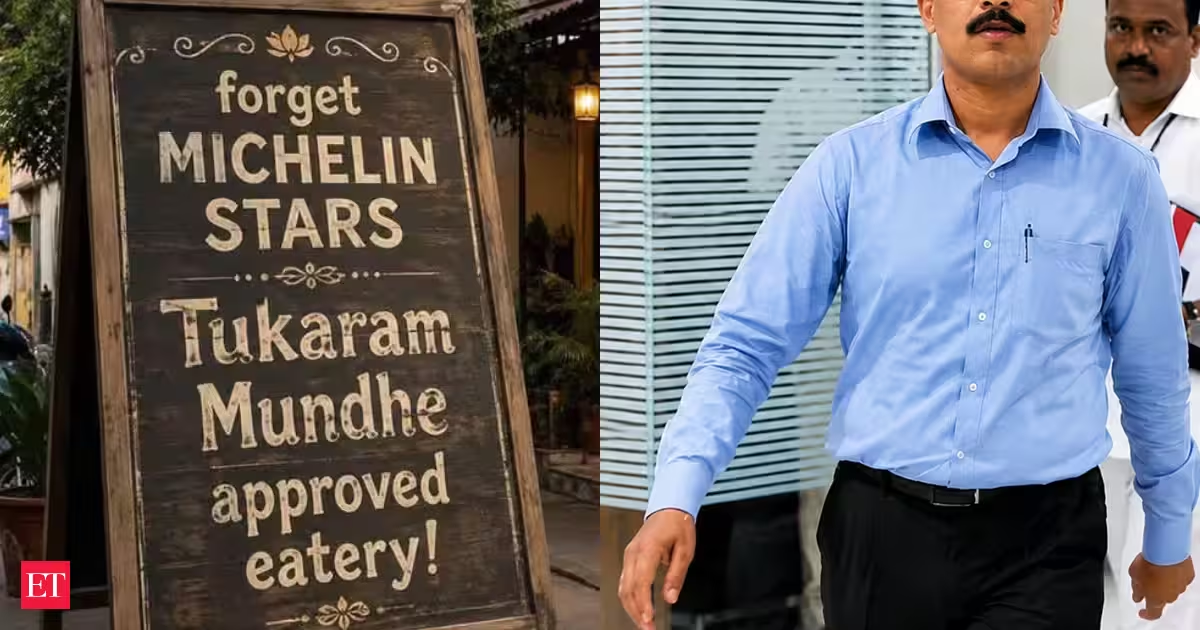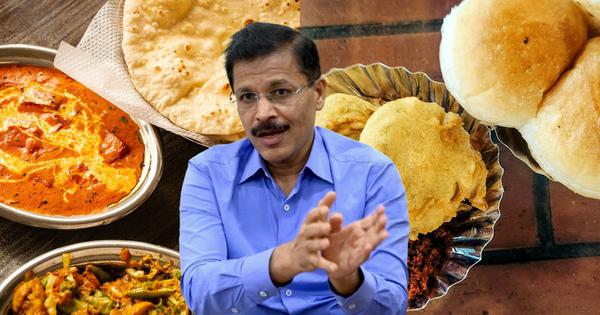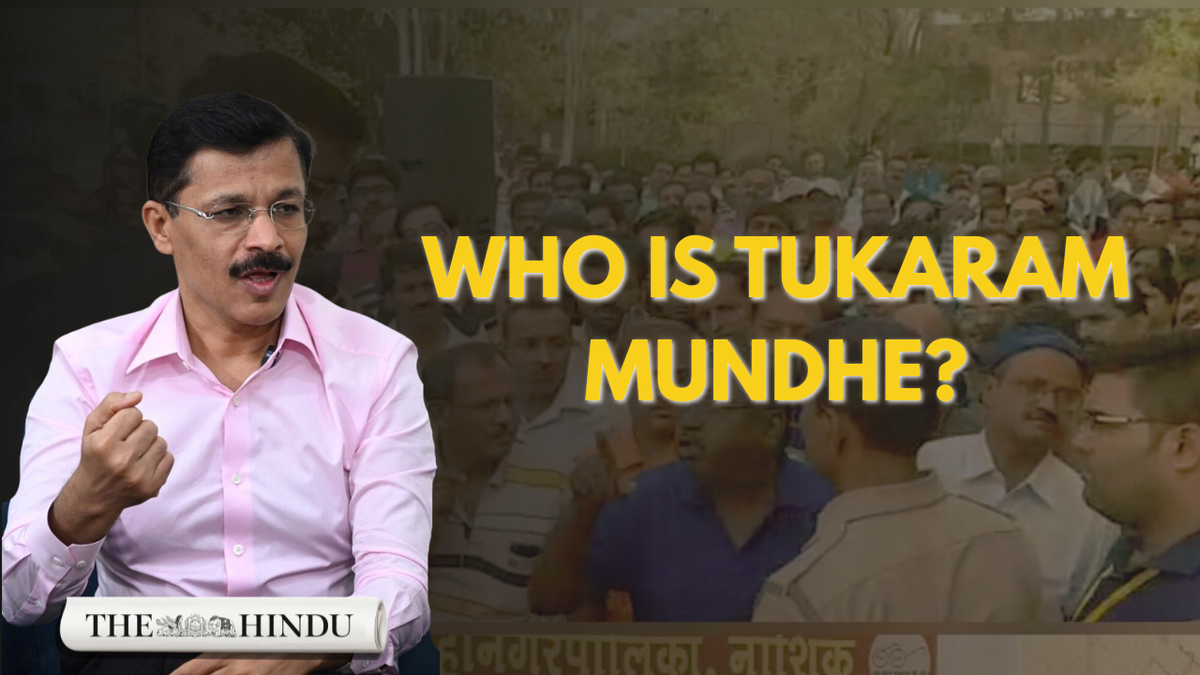
The emergence of Tukaram Mundhe as a hero to the Mumbai middle classes got me thinking about food policy. A decade ago, when a parliamentary election and a series of assembly polls sent India hurtling back to the Middle Ages, many of us were horrified by a new political obsession with food. The centrepiece of the campaign was originally meant to be beef.
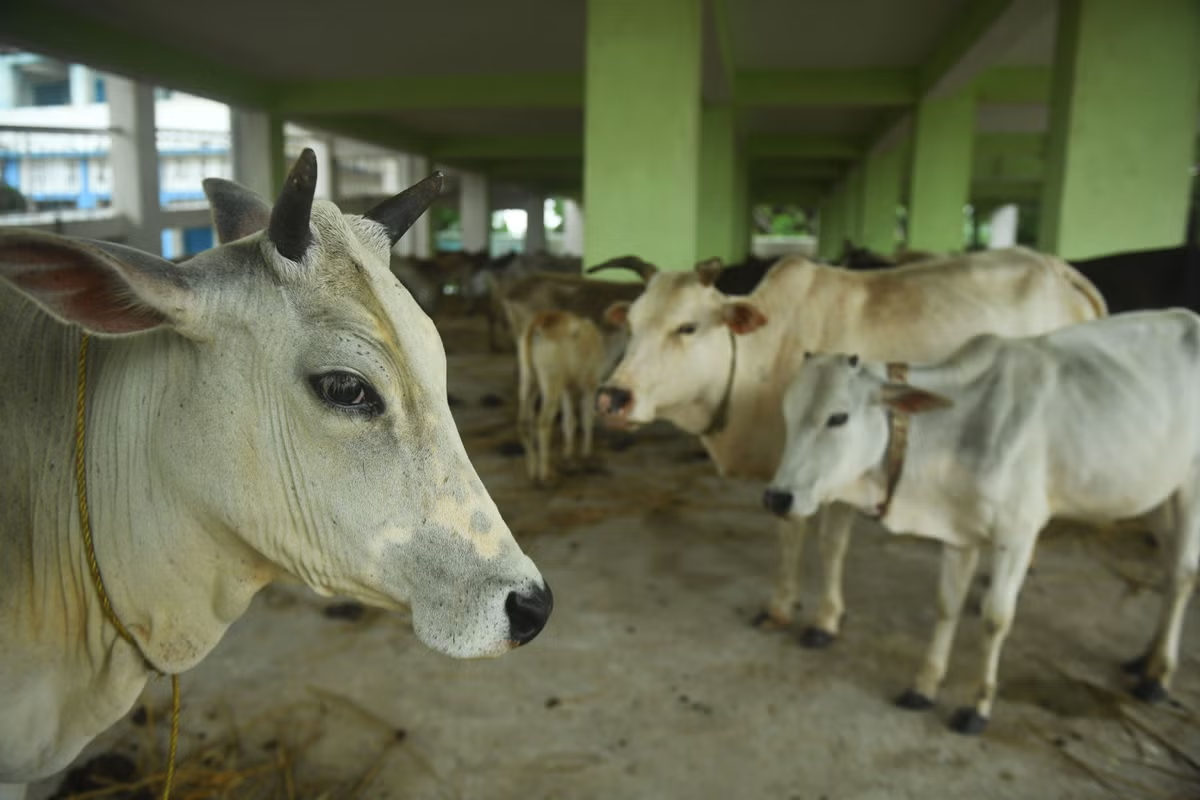
Not only were harsh sentences imposed on anyone selling beef (five years of rigorous imprisonment in many states), but the real agenda of the campaign was revealed when people began to be lynched for possessing or transporting beef.The political obsession was less with protecting the holy cow and more with persecuting poor Muslims, some of whom are beef eaters (beef can be one-third the price of goat meat).
Later, the beef obsession was extended to all non-vegetarian food, and a myth that Hinduism treated vegetarianism as one of its sacred canons was propounded. If a housing society or a landlord wanted to deny accommodation to a Muslim, then it had a ready excuse: it claimed that it did not want non-vegetarians.So hysterical was the campaign that the Delhi police even raided the canteen at the capital’s Kerala Bhavan to check whether beef was being served (it was not), and third-rate news channels organised stings at hotels to trap them into admitting that beef was available.This campaign has now been toned down, though the laws remain on the statute books. But the India-is-vegetarian motto seems like the official position of the government. We are a country where the two most powerful politicians and the two richest men are Gujarati vegetarians (three of them are Baniyas). As is now common, it’s the rich and powerful who set the agenda.Why has the campaign now been toned down? Three reasons. One: it made the BJP seem too much like a Bania party, and it now needs to reach out to other non-vegetarian castes. Two: it had become too self-contradictory. The BJP wants to jail people in North India for selling beef. But in Goa and the North East, it takes the line that beef eating is fine.Three: nobody really cares about food taboos. The anti-beef campaign may have pleased a Hindutva hardcore among BJP supporters and suited so-called gau rakshaks who were looking for justification to beat up Muslims. But I don’t think it made any difference to the average voter who was more concerned with governance and the economy than with the evil properties the BJP attributed to Beef Chilli Fry.Eventually the BJP came to the conclusion that food is a non-issue and moved on to other dog whistles. Except, of course, that the BJP was completely wrong. Food is a major issue.The BJP got it wrong because it believed that people care about what their neighbours are eating. They don’t. But they do care about what they themselves are eating. And the BJP has no interest in that.So food is a big issue. Just not in the way the BJP thought it was.