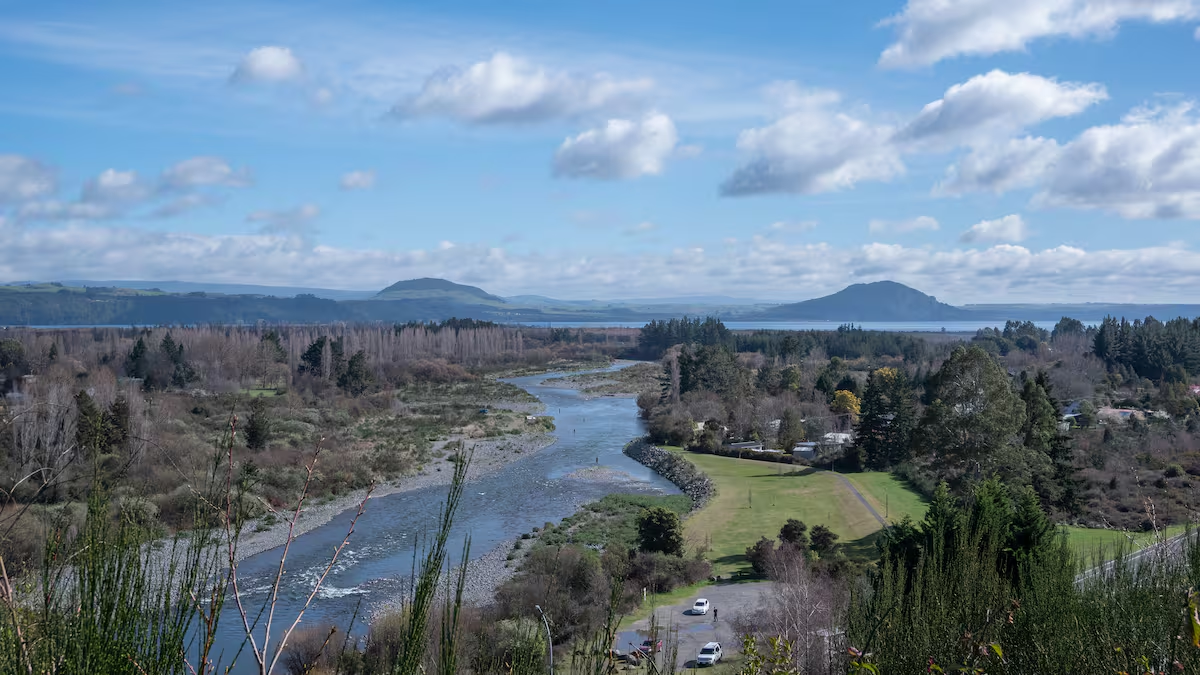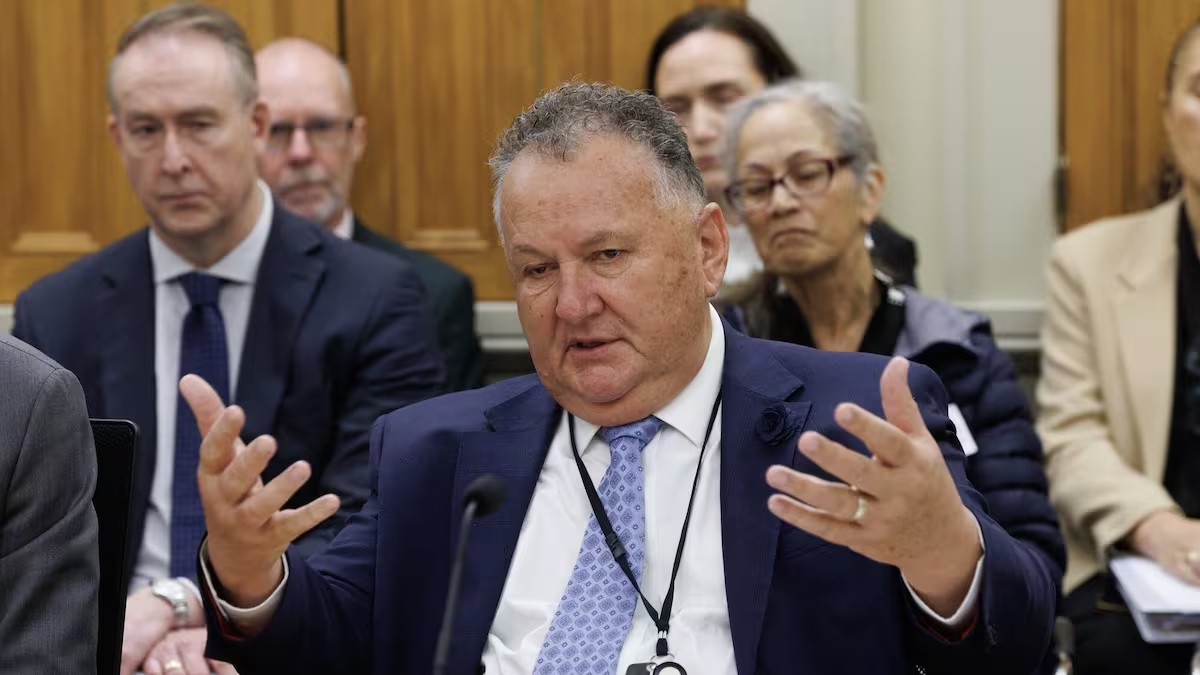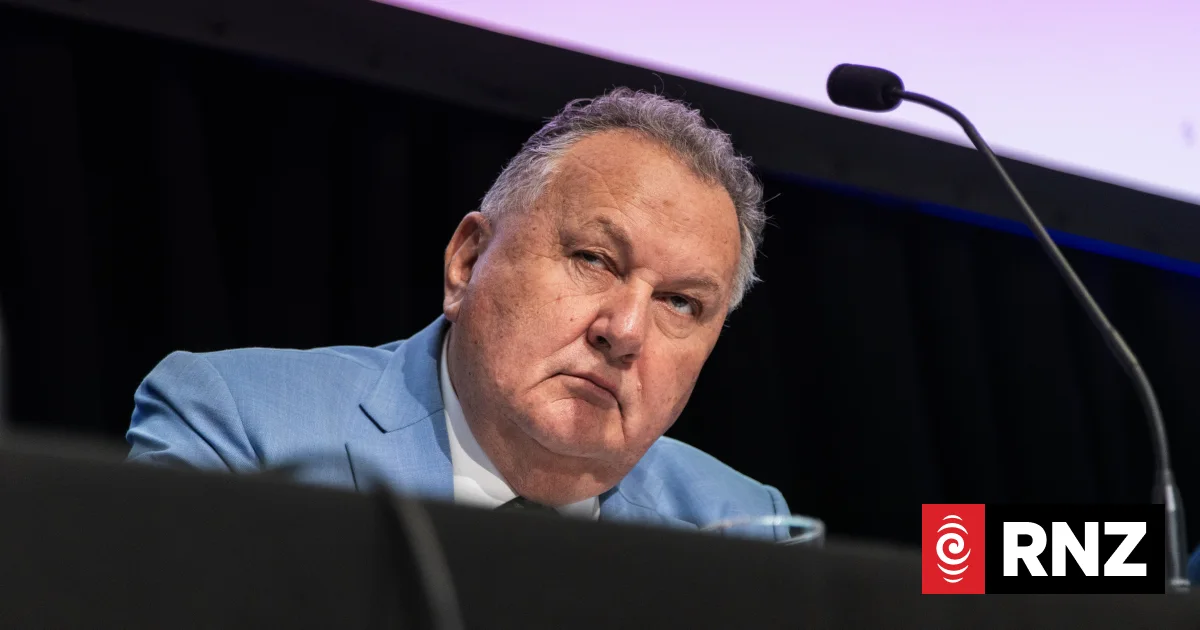
The government is undermining a Treaty settlement and the health of Waikato and Waipā rivers by prioritising its political interests, Waikato-Tainui says.The major iwi said it was "unacceptable" to pause Plan Change 1 provisions until 2032, that doing so overrides judicial decisions in favour of the government's donors, and would subject the catchment to "another six years of degradation".But the Resources Minister Shane Jones argues the new planning system would achieve much the same outcomes, and was promising to campaign on spending $50 million to help eradicate koi carp in the area.Federated Farmers was also hailing the pause, saying it gave farmers "much needed breathing room" while the resource management system was overhauled.Ministers on Wednesday announced changes to the Natural Environment Bill replacing the Resource Management Act they said would make the system more practical for food and fibre production."The changes will remove unnecessary complexity, better reflect real-world farming and horticultural practices, and provide greater certainty for investment and day-to-day operations," RMA Reform Minister Chris Bishop said.RMA Reform Minister Chris Bishop. (File photo)RNZ / Samuel RillstoneThat included removing resource caps from the environmental limits framework, expanding what counts as "existing use", extending permits for water infrastructure to 35 years, allowing councils to permit or consent activities already causing adverse effects on waterways (so long as those effects will be curbed over time), and shifting from a model of "no net loss" of indigenous biodiversity to "protect significant indigenous biodiversity".As well as the previously announced removal of Mana Whakahono ā Rohe agreements, Bishop said the amendments would also include "targeted action on Plan Changes 1 and 2 to provide respective certainty for farmers and growers in the Waikato and Manawatū-Whanganui while the new planning system is put in place".Plan Change 1 was a set of farming regulations in the Waikato council's Regional Plan designed to protect the rivers by managing nitrogen, phosphorus, sediment and bacteria across the catchments, requiring farmers and landowners to identify and manage environmental risks through Farm Environment plans and other measures.The Plan Change stems from Te Ture Whaimana o Te Awa o Waikato - the Vision and Strategy for the Waikato River which was negotiated between iwi and the Crown out of the Waikato-Tainui Treaty settlement - and takes precedence over other regional plans and national policy statements.The Environment Court made a ruling in June directing Waikato Regional Council to make 20 specific changes, but confirming that once those were done the plan would have been finalised.In a statement issued as New Zealand First's Deputy Leader early last month, Resources Minister Shane Jones said Plan Change 1 "must be paused before it becomes a bureaucratic death sentence for farmers and growers across the region".He confirmed to RNZ on Friday the RMA changes would put Plan Change 1 on hold until 2032, saying the Treaty settlement for the Waikato River was "not to be deprecated, however food security cannot play second fiddle to any Treaty settlement or any regional council planning initiative"."Plan 1 was going to terminate veggie growing in Waikato, and New Zealand First will never acquiesce with the termination of food production in Waikato."He indicated the pause was likely to become indefinite - effectively a scrapping of PC1."Sadly, Waikato Regional Council and Tainui spent too long on this Plan 1 indulgence, and now the new regime is going to supersede what may have been a good idea in the days of Helen Clark, but life has passed those days by."However, he believed the new planning system would achieve much the same ends."The new RMA system has got statutory criteria that will allow for Plan 1 to achieve, in a different form, various outcomes ... I think all iwi need to accept that farmers and veggie growers-they've vastly improved their growing systems. Science and technology has significantly improved, but those types of improvements now have to be mediated through a new statutory regime."Waikato-Tainui chairperson Tukoroirangi Morgan said the pause "puts political interests ahead of the health of the Waikato and Waipā Rivers and undermines Treaty settlement commitments".Waikato-Tainui chairperson Tukoroirangi Morgan. (File photo)RNZ / Cole Eastham-Farrelly"After 14 years of work by iwi, farmers and growers, councils, industry, environmental and community groups, it is extraordinary that the Government would simply press pause now, when the process has reached its conclusion," he said."We know this is election year, but this is bad news for people and organisations who follow the rule of law and in the next breath have the government step in to override judicial directions at the behest of their political donors.""Our catchments will now be subject to another six years of degradation which is completely and utterly unacceptable."Waikato Regional Council similarly said it was disappointing the government had not sought its advice or input on the decision, saying the plan change had been developed by a group including sector, industry and community interests in response to government direction and an independent audit from the Auditor-General."It is clear those operating lawfully can continue to do so until 2032 when the responsible authority will transition PC1 into the new planning system. It raises questions for the people who have operated unlawfully," chief executive Chris McClay said."PC1 has been one of the most significant and complex planning processes undertaken in the Waikato region. It represents almost $30 million of ratepayer investment and many years of scientific analysis, community engagement, hearings and legal processes."Water quality is one of the region's most significant environmental concerns, reflecting its importance to community wellbeing, cultural values, recreation and the region's economic resilience. Waikato Regional Council remains committed to working alongside central government, iwi, communities, farmers, growers, industry and other stakeholders to protect and improve the health and wellbeing of the Waikato and Waipā rivers."A koi carp. (File photo)Supplied /Stella McQueenJones urged patience and trust."It seems to me at the nub of this issue is that Waikato and Tainui believe they had a deal with the regional council, and this deal they fear is not going to be fully implemented via the RMA."My plea to them is just trust that the new regime - which has the blessings of our Parliament - will deliver the vast majority of what they've sought to achieve for well over a decade."Nothing trumps the supreme lawmaking power of Parliament, and our Parliament is ushering a new RMA regime in, and that regime will create a new set of legal conditions for food production, which will void and make unnecessary plan one."He said Bishop had advised the Cabinet that nothing the government was doing violated any Treaty of Waitangi settlement.Federated Farmers backed the pause, saying it was a "really positive step for Waikato farmers and a direct response to the concerns we've been raising"."We've been saying for months that it made no sense to force farmers into a new set of rules when the Government is in the middle of overhauling the RMA, freshwater rules and the farm planning system," president Chris Woolerton said."Those farmers were staring down a huge amount of uncertainty and compliance cost just to keep doing what they're already doing ... bringing these requirements into line with the national system is a commonsense and pragmatic approach."Woolerton said Federated Farmers was frustrated the government had not gone further by addressing restrictions on land-use flexibility."This is potentially a major issue for vegetable production in the Waikato ... we need farmers to be able to respond when the market needs more vegetables, not have regulations making it harder to change land use."NZ First to campaign on $50m to $100m for tackling koi carp - JonesJones was adamant part of the problem with the rivers' health was koi carp."The threat to the Waikato River is as much to do with the koi carp as well as veggie growers and farmers.The Waikato River. (File photo)RNZ / Libby Kirkby-McLeod"I've been told over many years that the koi carp is an extraordinarily dangerous and destructive pest in the water-based ecosystems of that area, but it's just never attracted enough government capital either towards the council or to the tangata whenua."He intended to do something about it."The thing to also bear in mind and which I'm going to campaign on, I think we should allocate at least $50m to $100m over time - working with Tainui, working with the council - to eradicate as much as possible the main pest in that area ... the koi carp.""This time round, New Zealand First is going to deliver that type of practical assistance."RNZ has sought further comment from Waikato-Tainui.
Shane Jones talks up $50m-$100m koi carp policy amid Treaty stoush over Waikato rivers
The government is undermining a Treaty settlement and the health of Waikato and Waipā rivers by prioritising its political interests, Waikato-Tainui says.
1,412 words~6 min read