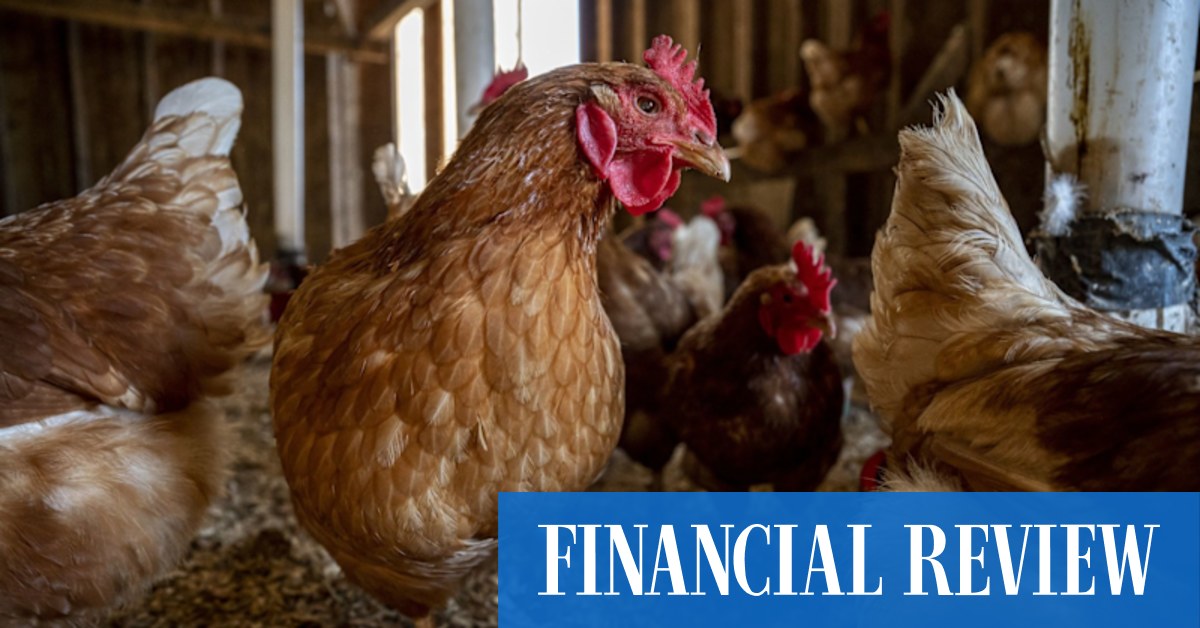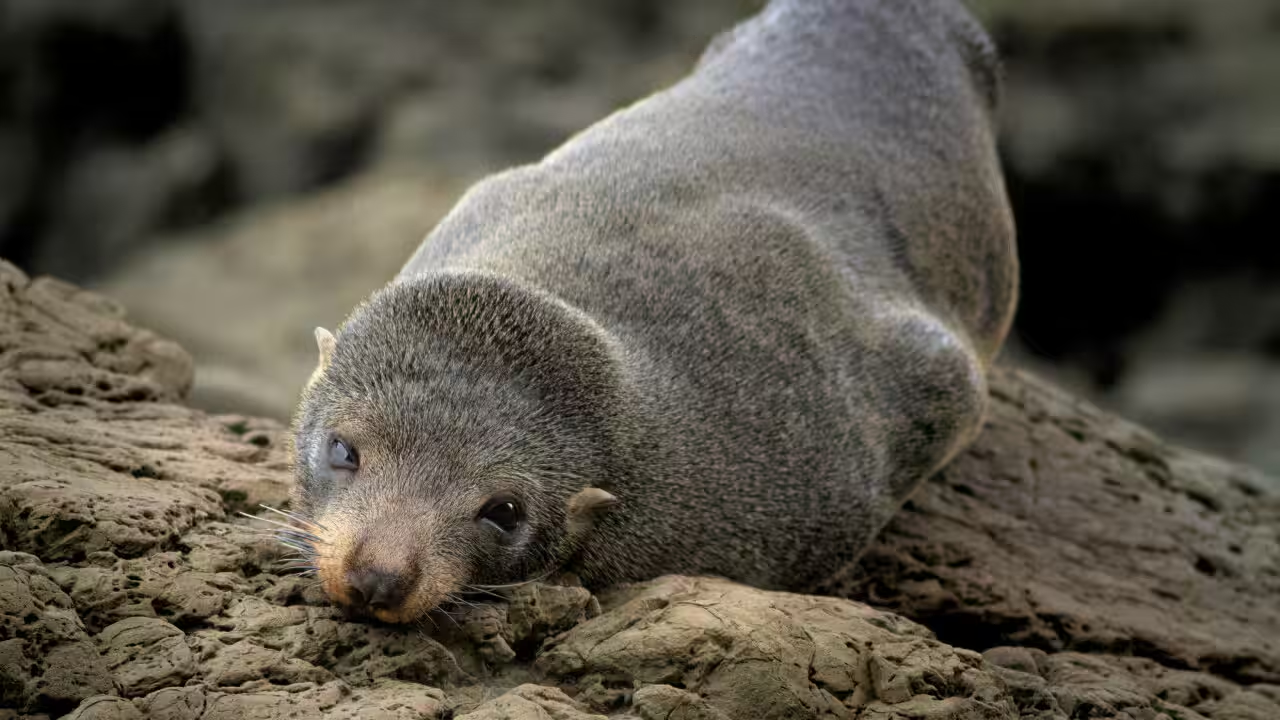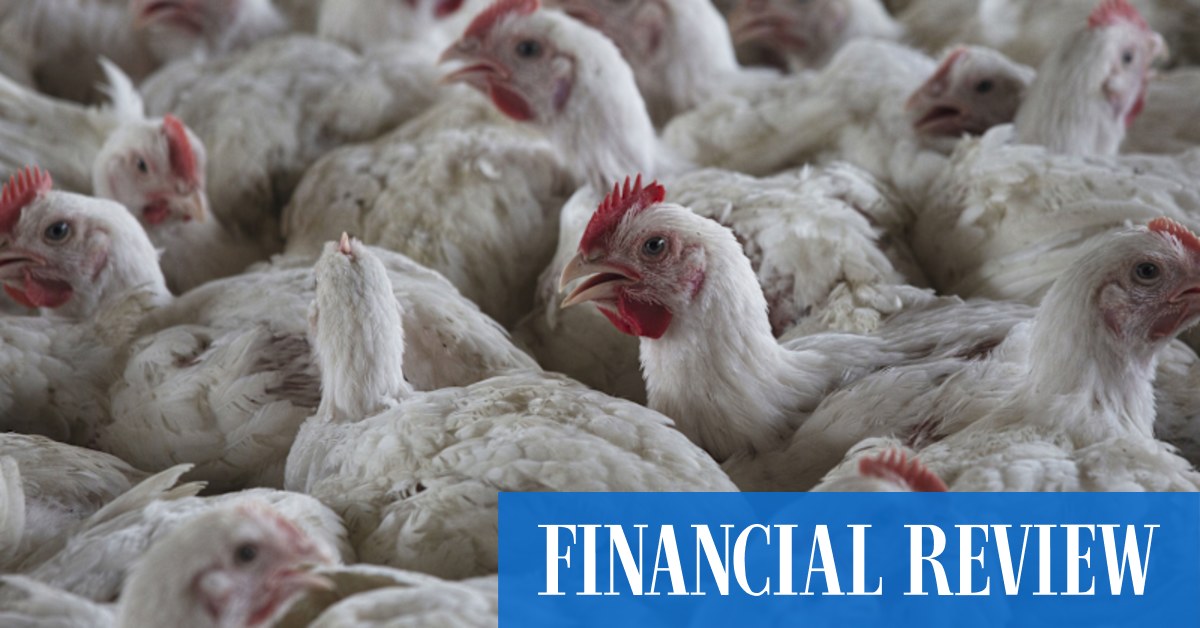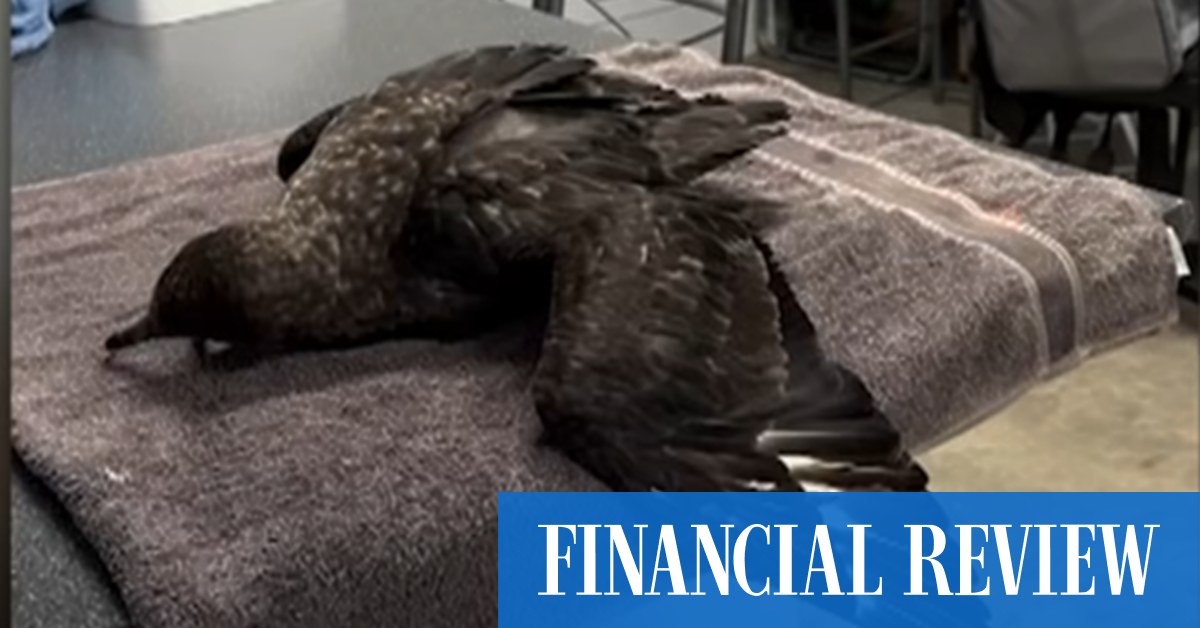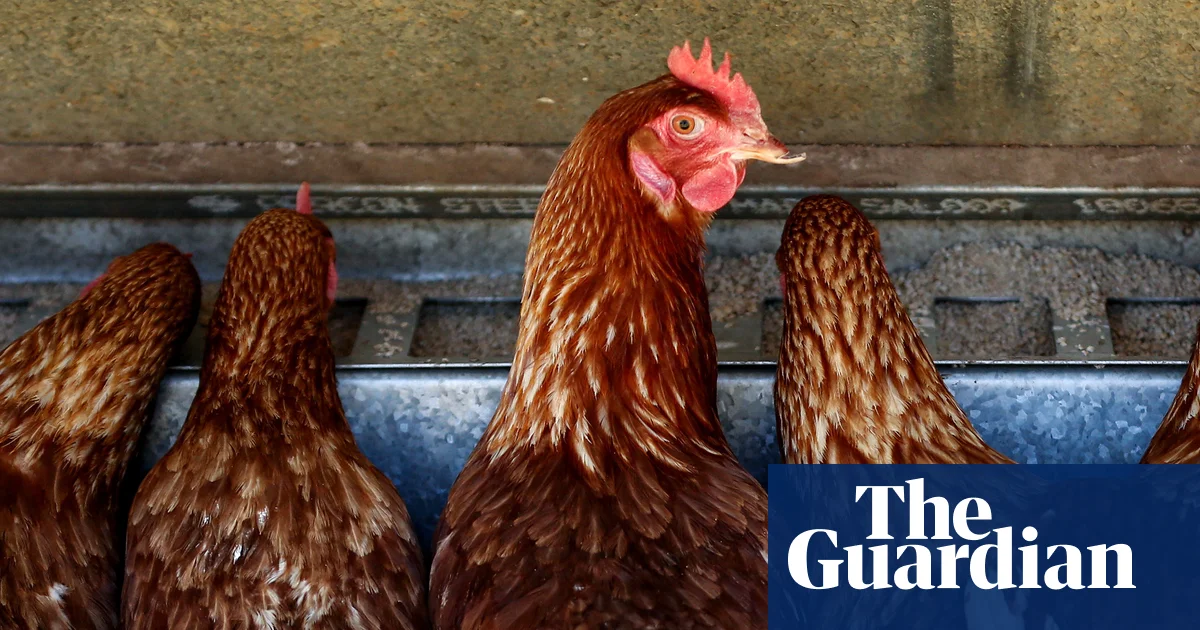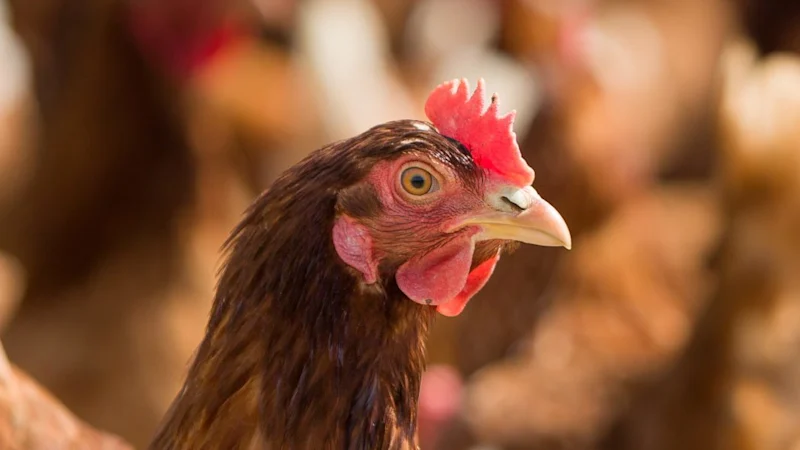
The boss of chicken giant Ingham’s says a dangerous strain of bird flu starting to be found in wild birds will “obviously” make its way into poultry at some point.While the dangerous H5N1 strain of avian influenza has been found in wild birds in every state of Australia, the virus has not been found in any poultry.Speaking on Friday, Ingham’s chief executive Edward Alexander said bird flu would be found at an Inghams farm at some point as confirmed cases in wild birds increase.“Assume bird flu does hit, it’ll hit, obviously, one of our farms,” Mr Alexander said.“And at that point we’ve got separation across farms. Within a two-kilometre radius it’s problematic.”Killing those birds – “depopulating” – would constrain the virus to just that farm’s chickens, he said.Mr Alexander pointed to Ingham’s spread of farms, feed mills, processing and distribution across the country as a key protection for keeping an outbreak contained.“We’ve designed our farms and our spreading of farms with biosecurity in mind,” he said.“I’m not concerned that there’ll be a large-scale breakout at, for instance, a processing facility, because it becomes more of a farming issue.”Ingham’s has also learnt from the European outbreak.The strain re-emerged in Europe in 2021 and has killed millions of birds, seals and sea lions across the globe.More than 700 commercial poultry flocks in 23 European countries were infected in 2025, and 300 infections have been found in 16 European countries this year.“Senior management have spent time in Europe understanding learnings from their experience,” Mr Alexander said.“We know what we would do. We know how we would respond, and we know where the critical decisions ultimately need to be made.“This is a real and a significant risk for the poultry industry, as has been well documented in recent media. We take this risk extremely seriously and we are prepared for it.”Inghams’ largest networks are South Australia and Queensland, with smaller facilities in WA and Victoria.“That means an outbreak in one location does not automatically translate into disruption across our broad network,” Mr Alexander said.“We have the ability to isolate affected areas, protect other parts of the network, and redirect production and supply. We’ve also invested considerable effort in prevention, surveillance, scenario planning and response protocols.”Asked by a financial analyst, Mr Alexander said there was no tangible demand decrease for chicken meat in Australia with the current general concern about bird flu.In Europe, biosecurity on eggs was looser than chicken meat, which translated into lower egg sales than meat amid the European outbreaks, he said.An outbreak of H5N1 in Australian poultry has not been formally included in Ingham’s financial plans for the new financial year.“There is no sensible way to predict precisely where or when an outbreak may occur,” Mr Alexander said.“What I can say with confidence is that Ingham’s enters this period of time with the most resilient national network, well-developed biosecurity controls and a team that is prepared to act quickly and decisively if required.“We can’t fully eliminate the risk, but we can control how well prepared we are for it.”Inghams delivered its full-year financial results on Friday.Net profits fell 61 per cent to $34.6m, because of lower earnings and a $12.7m addition to the company’s tax bill.The company is challenge the additional tax, which relates offsets between 2019 and 2021 and “intends to defend its position”, the company’s annual report says.
‘Will hit’: Ingham’s braces for bird flu
The boss of chicken giant Ingham’s says a dangerous strain of bird flu starting to be found in wild birds will “obviously” make its way into poultry at some point.
559 words~3 min read