Anyone who has worked with SSH private keys has run into an instruction to "set it to 600." Config files, by contrast, often get 644, and executable scripts get 755. What do these three-digit numbers actually mean, and why does the right number depend on what kind of file you're dealing with? This post starts from the mechanics of Unix-style (Mac/Linux) file permissions and works up to the design principle behind them: least privilege.
Permissions as a 2D grid of who and what
Unix-family operating systems express file access as a grid: three kinds of "who" crossed with three kinds of "what."
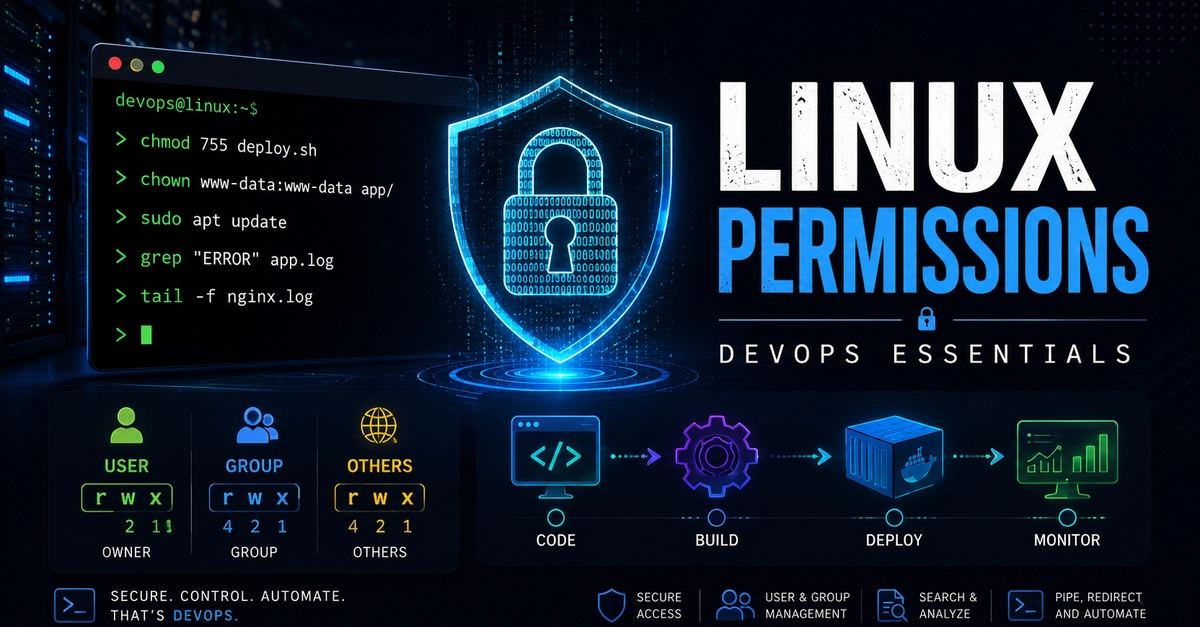
"Who" breaks down into the file's owner, the group the owner belongs to, and everyone else ("other"). "What" breaks down into read, write, and execute. Each cell in that 3×3 grid is either granted or not, and that's exactly what a listing like -rw-r--r-- from ls -l is showing you. Strip the leading character and the remaining nine characters are three groups of three — owner, group, other — each rendered as r/w/x when granted or - when not.
Why a single digit can represent read/write/execute