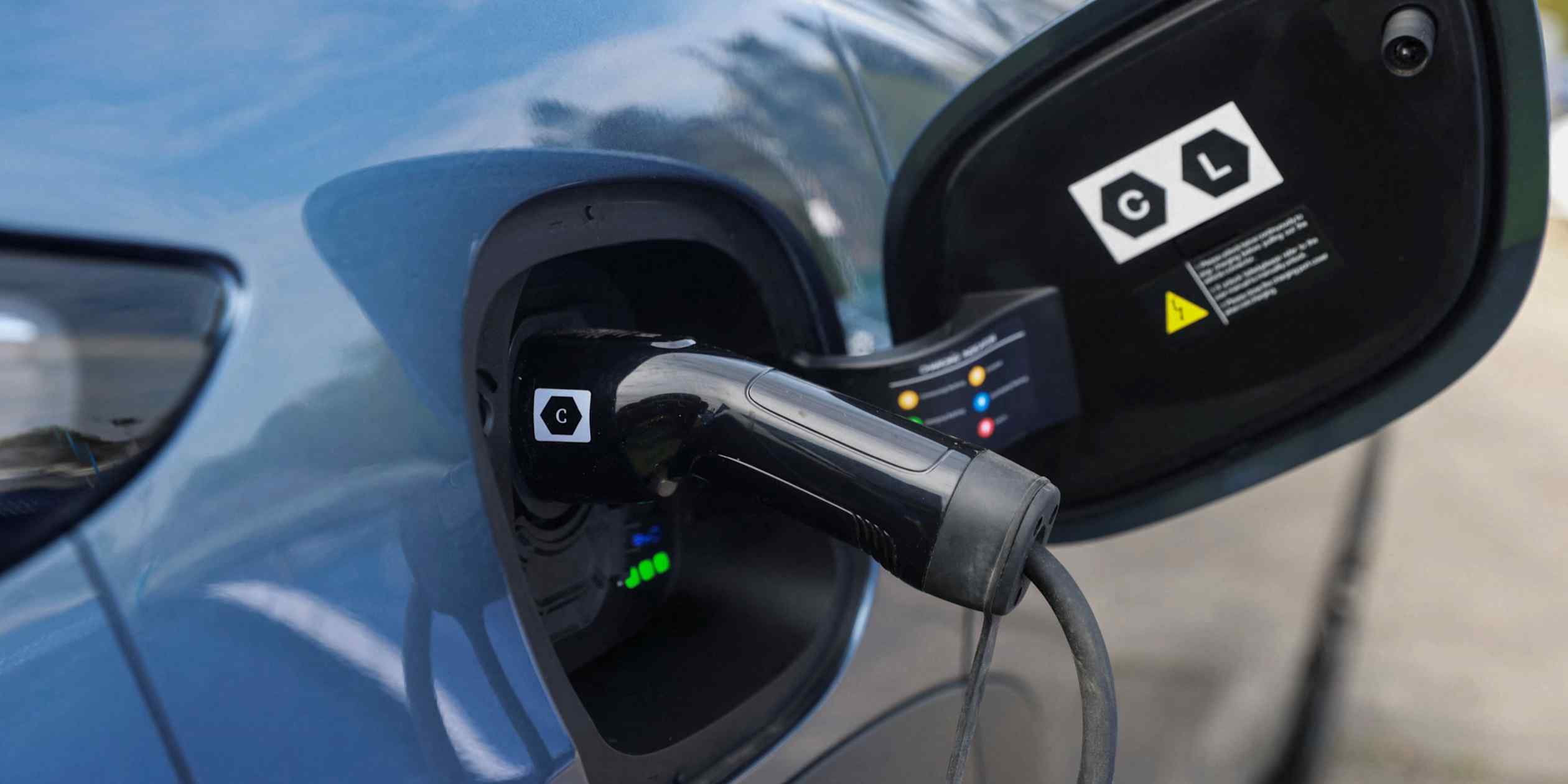
Global electric vehicle sales have surged this year following the oil supply disruption in the Middle East and the second oil price shock in four years.The accelerating EV adoption that began with the spike in oil and fuel prices earlier this year is set to remain a trend in the global markets and could push the share of EVs in the passenger fleet above earlier expectations, analysts at Wood Mackenzie say.Challenges to accelerated adoption still remain, including the need for billions of U.S. dollars in investments in critical battery minerals supply and charging networks. Yet, the longer the Strait of Hormuz crisis roils global fuel markets, the stronger the case for EV adoption could become.Due to the fuel price spikes globally, WoodMac’s analysts have already tweaked their base-case scenario and expect the EV share to jump from 4% of the global fleet today to 25% by 2040.‘Electric Shock’ ScenarioFollowing the worst oil supply disruption in history, the energy consultancy now has a high-case scenario it has dubbed ‘electric shock’, in which global EV adoption could accelerate to 50% above the base case.If governments roll out policies to support EV adoption against future oil market shocks, more consumers switch to EVs due to high gasoline prices, and technology advances faster than previously thought, global EV sales could be jolted even higher, WoodMac reckons in its report “Electric Shock: How electric vehicles could hit the accelerator” published this week.“If these forces converge all at once, the effect on EV adoption could be dramatic,” said David Brown, Director, Energy Transition Research at Wood Mackenzie.Related: Norway’s Oil Output Falls Nearly 200,000 Bpd as Gulf Supply Crisis Drags On“Our electric shock scenario models what happens when policy, consumer behaviour and technology all move in the same direction, quantifying the implications for commodities and power markets,” Brown added.The ‘electric shock’ scenario could have wide-ranging impacts on both the oil and power markets, according to WoodMac. Global oil demand could drop to about 99 million barrels per day (bpd) by 2040, which would be some 5 million bpd below the consultancy’s base case. The decelerated road transportation fuel demand could lead to the early closure of about 40 oil refineries worldwide, the analysts said.The leader in EV sales, China, would see its electric vehicle adoption fast-tracked in case of an ‘electric shock’ in the car market.“Additional Chinese policy measures including new restrictions on gasoline consumption, full purchase tax exemptions and larger purchase credits could cut the total cost of ownership for EVs by about 30%, pushing annual sales from 8.9 million in 2025 to 29.9 million by 2040,” Wood Mackenzie says.The United States risks falling further behind if advanced battery technologies and competitive supply chains are not established and if no targeted policy support boosts domestic manufacturing, the consultancy noted.EV Sales Accelerating So far this year, global EV sales have been booming, with the notable exception of the United States, where the withdrawal of tax incentives slowed electric car adoption rates.Electric vehicle sales could hit nearly 30% of all car sales in the world this year as drivers accelerate a shift to EVs and hybrids amid spiking fuel prices in the wake of the Iran war, the International Energy Agency (IEA) said in its annual EV report in May.Following strong growth in 2025, this year EV sales are set to reach 23 million globally in 2026, accounting for almost 30% of all cars sold worldwide, the IEA said in its annual Global EV Outlook 2026 report.In Europe, EV sales jumped by close to 30% year-on-year in the first quarter of 2026; in the Asia Pacific region excluding China, sales surged by 80%; and in Latin America, EV sales soared by 75% between January and March compared to the same period last year, the agency added.In an update to its May report, the IEA said in July that following a subdued start to the year, EVs jumped in the second quarter after the Middle East crisis slashed crude supply and hiked oil and fuel prices.EV sales rebounded sharply in the second quarter, rising by 35% compared with the first quarter “as the energy crisis sparked by the war in the Middle East brought fuel price volatility back into sharp focus,” the agency said in its report ‘Electric Car Markets in a Time of Uncertainty’.EV sales in the second quarter reached record-high levels in 50 countries as drivers preferred electric vehicles amid soaring fuel prices.In sizable car markets such as Brazil, India, Australia, and Vietnam, electric car sales roughly doubled between March and June compared with the same period in 2025, according to the IEA’s analysis in the report.Moreover, as many as 90 countries saw annual growth in EV sales in the first half of the year.BloombergNEF’s annual Electric Vehicle Outlook (EVO) report expects over a quarter, or 27%, of cars sold globally in 2026 to be electric – up from 9% five years ago. More than half, 52%, of all passenger vehicles would be electric by 2035 globally, BNEF reckons.By Tsvetana Paraskova for Oilprice.comMore Top Reads From Oilprice.comIraq-Syria Oil Pipeline to Bypass Hormuz Is 4 Years and $15 Billion AwayChina's Renewables Boom Faces Record Clean Power Curtailments$100 Diesel Cracks Signal a Much Tighter Oil Market Than Brent Suggests
Hormuz Oil Crisis Accelerates Global EV Sales | OilPrice.com
Global EV sales are surging as high oil and fuel prices accelerate adoption, with EVs expected to approach 30% of new car sales in 2026.
870 words~4 min read