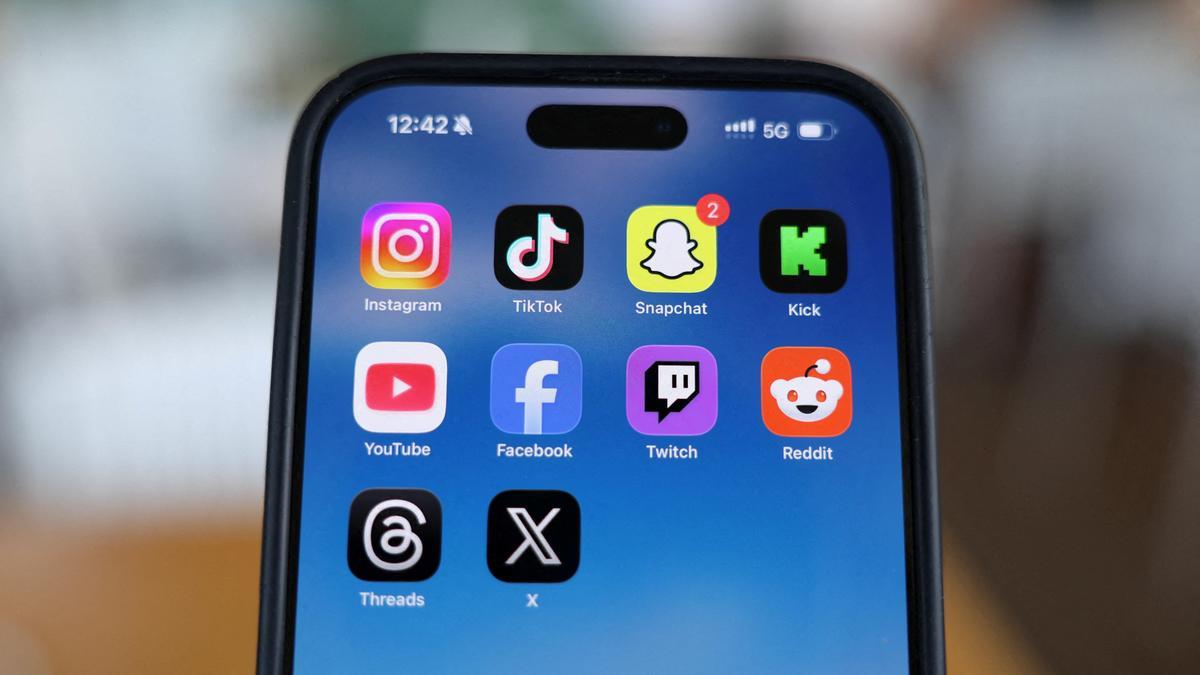
This image is used for representational purpose only.
| Photo Credit: Getty Images/iStockphoto
The Delhi High Court said on Thursday (August 20, 2026) that banning or regulating social media access by children fell within the Centre’s policy-making realm and urged the Government to decide on a further course of action.A bench of Justices V. Kameswar Rao and Manmeet P. S. Arora refused to entertain a PIL seeking to restrict the use of social media by children and asked the Central Government to consider it as a representation.“Their views have to be taken and then it is in the realm of a policy. It is not for a court to give a direction that you should ban this or that. Let them look into it and then pass an order,” the Bench told the petitioner’s lawyer.The PIL sought a direction to the Centre to frame guidelines and enact a law to protect children below 13 years by imposing restrictions on their social media access and regulating content for children from 13 to 16.Addictive contentThe petition was filed by Ms. Kirti Dua, a mother of a three-year-old child, along with a paediatrician. They contend that the easy availability of addictive content on social media poses a serious threat to the physical, mental, and emotional well-being of children.The plea, filed through advocate Anshul Gupta and represented by senior advocate Pinky Anand, stated that India lacks a robust, privacy-preserving digital ID system for minors, and existing parental consent mechanisms are weak and easily bypassed.The counsel for the petitioner raised concerns over the presence of Child Sexual Abuse Material (CSAM) on social media platforms and urged the court to direct the Government to take a call on the representation in a timely manner.The counsel for Meta Platforms assured that it was taking steps to control CSAM on their platform. The counsel informed the bench that over six lakh posts containing CSAM were taken down on Facebook last year and over two lakh such posts were also removed from Instagram. Published - August 21, 2026 02:22 am IST