Free daily briefing on global business news.
Wildfire risk is spreading well beyond California's borders. Cotality's data shows exactly which states carry the heaviest exposure
Nikolay Maslov / Unsplash
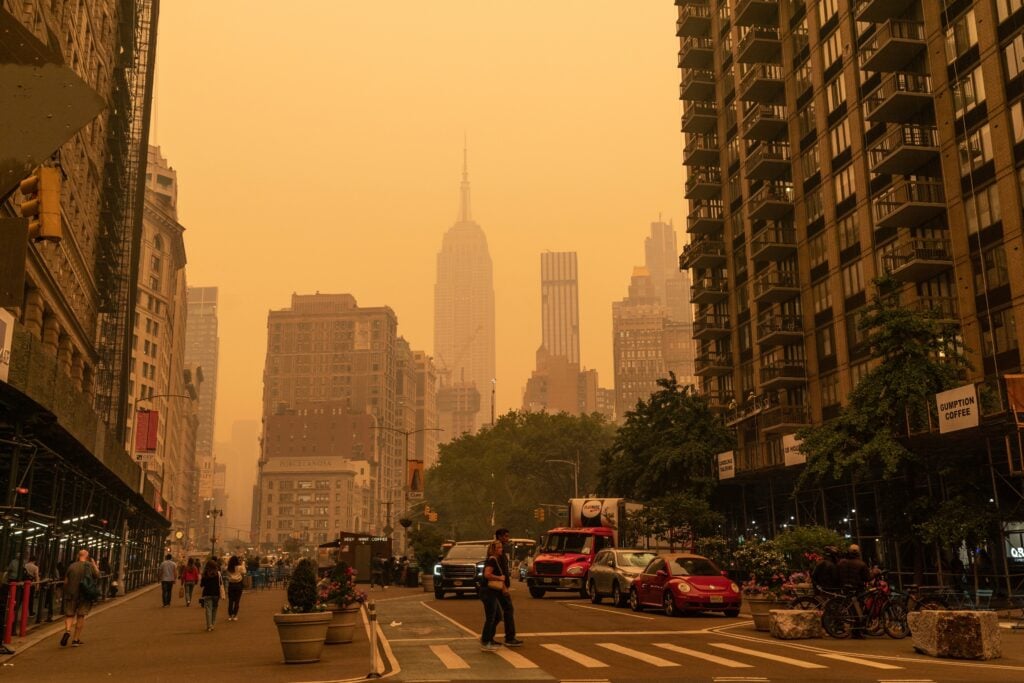
For a long time, wildfire felt like a California problem, something that happened in canyon communities and forested foothills far from most people's everyday lives. That perception is increasingly out of date. Fire risk has crept into ordinary suburban neighborhoods across a much wider stretch of the country, and insurers are recalibrating what they consider safe as a result. A home doesn't need to sit next to a forest to face real exposure anymore. Once flames reach a built-up area, the houses themselves become fuel, and a fire that started miles away in wildland can end up spreading from one roof to the next.
That shift matters because home insurance in fire-prone areas has already gotten harder to find and far more expensive to keep. Insurers have pulled back coverage, raised premiums, or exited entire ZIP codes in some of the hardest-hit markets, leaving homeowners to absorb costs that used to be spread more broadly across the industry. Traditional wildfire models have generally focused on terrain and vegetation, scoring a property's risk based on how close it sits to dense brush or steep, dry slopes. That approach can miss a huge share of the actual danger once fire reaches a neighborhood, where structure density, building materials, and wind patterns start to matter as much as how much forest sits nearby.