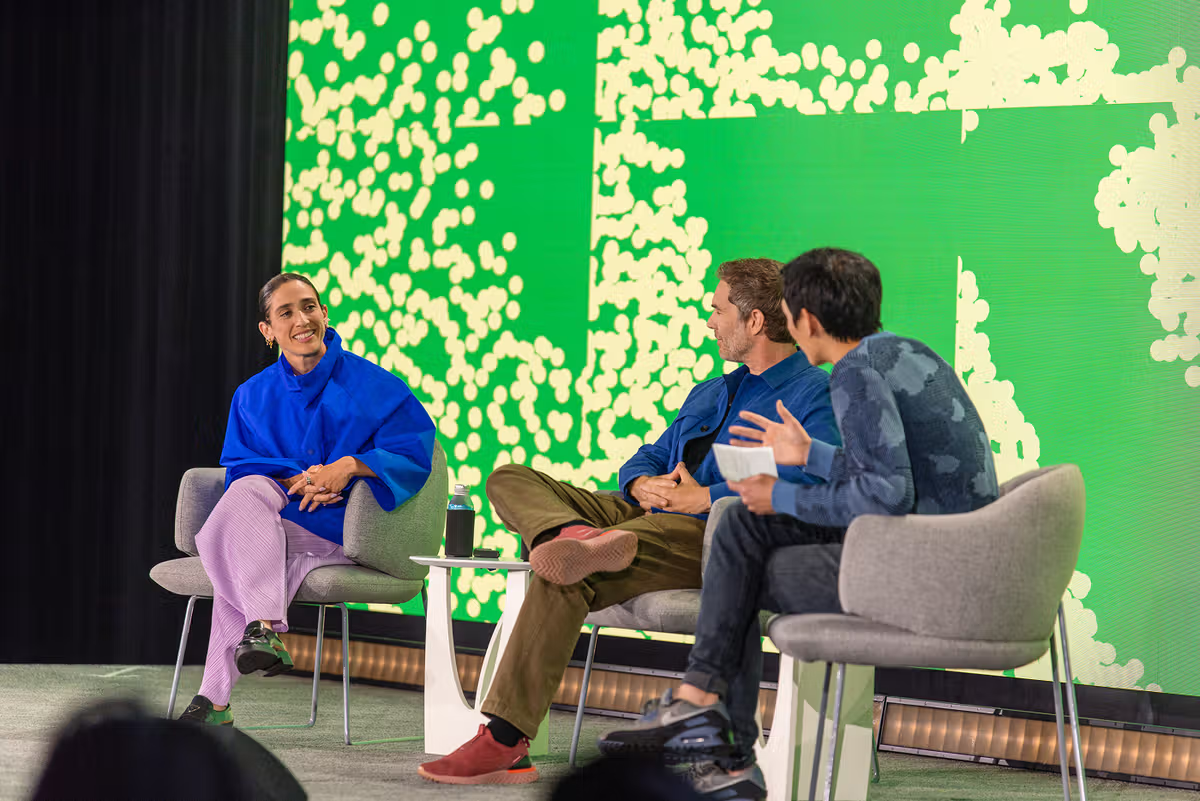
August 20, 2026Agentic products pose a unique set of design challenges. How do you build a tool that’s powerful and knowledgeable enough to be a true partner, while keeping trust and security at the core? Here’s what we’ve heard from leaders.Sightlines is our newsletter for design, product, and engineering leaders. In each issue, we'll bring you the sharpest insights from senior leaders at companies like Cisco, OpenAI, Airbnb, and more on how they're navigating product development and design in the age of AI.Top of mindAcross recent events, from our Leadership Collective talk in Chicago to Config, leaders have been working through what it takes to design agentic products well. Here’s what we’ve learned.Trust is p0. Users are more likely to trust an agent when it shows its work and cites its sources. Leaders should push product teams to bake in a new level of transparency and communication from the outset.Don’t let “perfect” get in the way of shipping. Part of learning is seeing how an agentic product behaves once it’s out in the world. Once it clears the trust bar, leaders should give teams permission to ship and improve from real use.Define checkpoints for governance early. Leaders need to get everyone aligned on what routine work the agent can handle on its own, and what should always keep a human in the loop—like anything involving sensitive health information.Go deeper: Lessons from leaders: Writing the rules of agentic designWorth repeatingA few lines that stuck with us:“[When designing agents,] our goal is not to ensure that we design what AI can do, but to create the conditions and the rules for the system to behave consistently.” Thomas Vidal, VP of Product Design, Accor“You’re not going to launch something that’s perfect on day one, because that’s not how building agents works. You need to learn a lot through actual usage and execution. Rigor around testing and launching is important.” Rachel Been, SVP of Design, Expedia“Fairly soon, we’re going to be giving agents increasingly autonomous control over workflows. We need to make sure a person remains accountable for what those agents do.” Charlie Sutton, Chief Design Officer, Atlassian“The job for leaders isn't to push your team to try harder. It's redefining what good actually means, so that people can see a gap that they couldn't otherwise see on their own.” Jake Albaugh, Developer Advocate, FigmaWhat else is on leaders’ minds:Read: How to harness speed in the right directionHow to move fast toward the right thingWith AI, speed comes easy, but so does tech debt. That’s why the best teams don’t just ship something fast; they consider it carefully, build it efficiently, and make it stand out.Watch: Figma’s Gui Seiz on the Config launches that matter most at the leadership levelRead: Sightlines issue no.1Sightlines issue no.1: Insights from ConfigThe conversations we’re still replaying from Config’s Leadership Collective.Create and collaborate with FigmaGet started for free
Sightlines Issue No. 2: What Leaders Need to Know About Building Agents | Figma Blog
Agentic products pose a unique set of design challenges. Here’s what we’ve heard from leaders.
479 words~2 min read